
The first thing you notice at a Lower Mainland marina in February is never the corroded part itself. It’s the rust bleed: a brown stain running down a concrete float from a single bolt head, or a streak under a cleat that the tenant has been looking at for two seasons. By the time that stain is visible from the dock, the fastener underneath has usually lost more section than anyone expects.
Marine corrosion removal in BC is a different job from shop rust removal, and most of the difference has nothing to do with the metal. It has to do with the fifty centimetres of water directly underneath the work. That single constraint rules out most of the methods a contractor would reach for on an inland site, and it is the reason marinas in Steveston, Coal Harbour and Reed Point end up replacing hardware that could have been cleaned and recoated for a fraction of the cost.
What salt water actually does to dock hardware
Coastal BC corrosion runs on three separate mechanisms, and they need different responses.
Chloride pitting. Salt aerosol lands on the surface, holds moisture against it, and drives localized attack. On carbon steel it shows as general scale. On stainless, it shows as pitting and tea-staining, which is the thing that surprises owners most. Marine-grade 316 fittings are not immune on the South Coast; they just fail more slowly and more locally. A gangway handrail can look sound at arm’s length and have pinhole pits along the weld heat-affected zone.
Galvanic coupling. Marinas are assembled from whatever was available at the time. Aluminum gangways bolted to galvanized steel brackets, stainless fasteners through aluminum plate, a bronze fitting against a steel pin. Every one of those pairs is a small battery once salt water wets it. The less noble metal goes first, and on a dock that is usually the aluminum or the galvanizing.
Coating failure from underneath. This is the expensive one. Paint or galvanizing gets a nick from a mooring line or a dock cart, water gets under the film, and corrosion spreads laterally beneath intact-looking coating. Anything that cleans only the visible rust leaves that undercutting in place, and the new coating fails in a season.
Rain helps on the West Coast by rinsing chlorides off exposed surfaces. That is why the worst pitting is rarely on the open rail. It’s under the flange, behind the bracket, on the underside of the fitting, in the places rain never reaches and salt spray always does.
Why abrasive blasting stops at the waterline
Sandblasting a dock structure means putting spent media and everything it removed into the water column. Under the federal Fisheries Act, depositing a deleterious substance into water frequented by fish is prohibited, and blast media loaded with old coating residue sits squarely inside that definition. Older marine coatings can carry lead or heavy metals; nobody wants that conversation with DFO or with the harbour authority.
You can contain a blast over water. Full shrouding, tarps below, vacuum recovery, a plan for the collected waste. It’s done on bridge work all the time. But the containment is the project. On a bridge that cost is spread over thousands of square feet of steel. On a marina, where the actual target might be forty bollards, sixteen gangway hinges and a run of handrail, the containment costs more than the hardware.
There’s a second constraint that shows up on the work order. WorkSafeBC treats respirable crystalline silica as a designated substance requiring an exposure control plan, and silica sand blasting brings a whole documentation and monitoring package with it. On a site where the public walks past the work zone on the way to their boat, and where the marina wants to stay open, that plan gets thick quickly.
Pressure washing is the other default. It is fine for algae and dirt. It does nothing about pitting, it drives salt deeper into pit mouths and crevices, and it adds fresh water to a structure you are trying to dry out before recoating. The stain comes back in six weeks.
Where laser cleaning fits on a marina
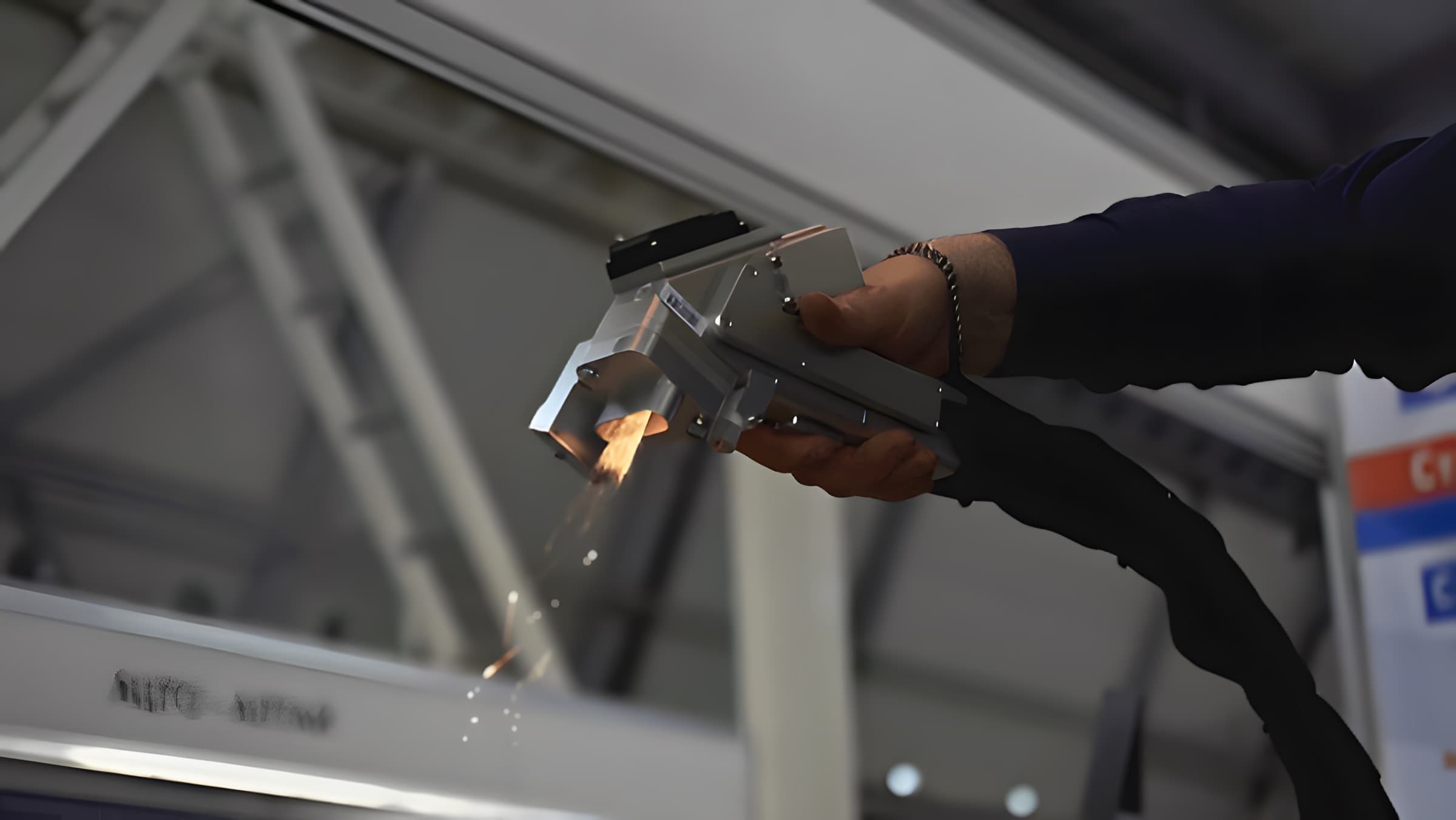
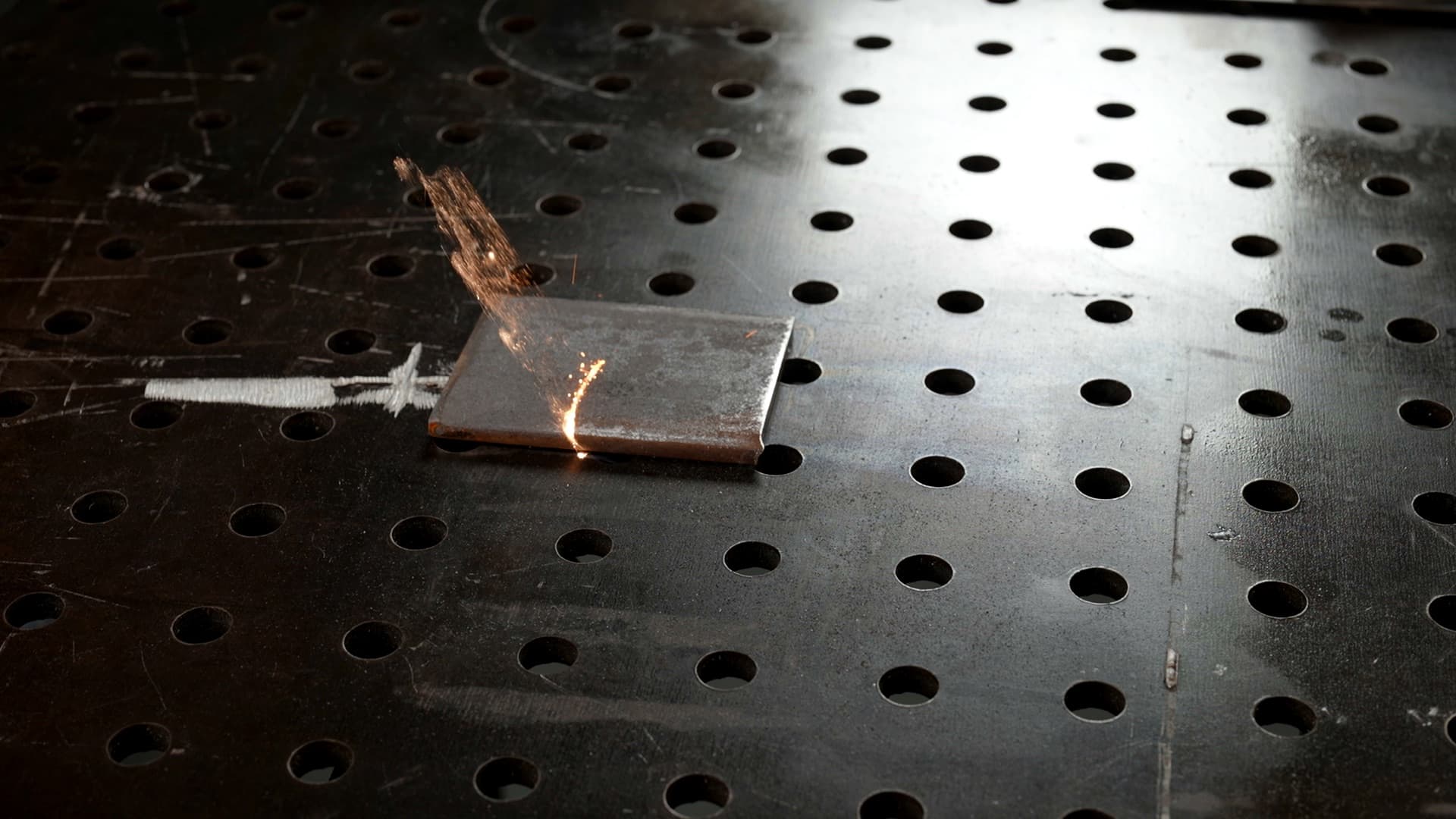
Laser cleaning is the method that actually matches the constraint set here, for one structural reason: it produces no blast media. The rust and coating come off as vapour and fine particulate, captured at the head by a fume extractor. Nothing falls into the water that wasn’t already on the metal, and the volume is small enough that a HEPA extraction unit handles it.
What that means in practice on dock work:
- No containment tarping over the water. Setup is the crew, a generator or shore power, the laser head and extraction. A two-person crew is working within thirty minutes of arriving on the float.
- The substrate survives. On aluminum gangways and thin stainless fittings, this is the whole argument. Abrasive removes base metal along with the corrosion, and on thin-gauge marine hardware that loss is not recoverable. Laser removes the oxide layer and leaves the parent metal dimensionally intact.
- Pit bottoms get cleaned. This is where laser earns its price on marine work. Abrasive bridges over a pit and cleans the rim. Laser energy reaches into pit geometry and takes out the chloride-laden corrosion product at the bottom, which is the material that restarts the process under a new coating.
- Selective removal. You can strip a failed coating from a weld seam and leave the sound coating either side of it. On a handrail where only the bottom third is compromised, that cuts the job in half.
Where it does not fit: full-surface removal of thick, heavy scale over large areas. If you have a hundred square metres of mill scale on a barge deck, laser is the wrong economics. Laser is a precision tool for hardware, fittings, weld zones, connection points and localized damage, which is most of what fails on a marina.
What dry ice handles better
Some marine work is contamination rather than corrosion, and that’s a different tool. Dry ice blasting uses CO2 pellets that sublimate on impact, so again there is no spent media to recover. It’s the better choice for:
- Grease, hydraulic residue and oil film on winches, davits, boat lift machinery and crane components
- Marine growth and biofilm on equipment that has been out of service
- Electrical enclosures, dock pedestals and control cabinets where salt has crept in and you cannot introduce water
- Engine rooms and machinery spaces in a workboat refit
On a Ladner boat yard refit last winter, the split was roughly two-thirds dry ice for the machinery and grease work and one-third laser for the corroded steel and stainless fittings. That mix is typical.
What marine corrosion removal costs in BC
Real numbers, Greater Vancouver rates, per job rather than per hour, because that’s how these get quoted.
Laser rust removal on marine hardware: $1,200 to $6,000 for a typical marina scope. A run of gangway hardware, hinge assemblies and handrail connections on a single float lands near the low end. Multiple floats, davit assemblies and crane pedestals push it toward the top.
Dry ice blasting on marine equipment: $1,500 to $8,000 depending on access and the volume of machinery. Boat lift and winch degreasing on a working yard is generally $2,500 to $4,500.
Mobile crew day rate as a sanity check: a two-person crew with equipment on site runs $2,400 to $4,500 per shift, and most marina scopes are one to three shifts.
The variance on these quotes is real and it is worth understanding before you compare two numbers side by side. What drives it:
Access. Hardware reachable standing on a float is straightforward. The same fitting under a gangway, over water, on a fall-arrest tie-off, is three times the labour. Anything requiring a barge, a lift or a diver changes the category entirely.
Coating history. Original galvanizing cleans fast. Four layers of maintenance paint over failed galvanizing, applied by different crews over twenty years, is slow work and nobody can tell you exactly how slow until the first square metre is done.
How far the corrosion has gone. Surface oxide is quick. Deep pitting with undercut coating means more passes and, on some pieces, an honest conversation about whether cleaning is still the right call. We flag those rather than clean something that needs replacing.
Power and staging. Shore power at 240V on the dock is ideal. If the nearest connection is 200 metres up the ramp, you’re generator-powered and that adds setup on both ends of the shift.
Scheduling around tides, tenants and weather
The window matters on marine work more than almost anywhere else.
Coating work needs a dry surface and a dry forecast. On the South Coast that pushes recoat scheduling to late spring through September, which means the cleaning should be booked ahead of that window, not inside it. Cleaning itself is less weather-dependent than coating, and a covered work area lets it run most of the year.
Tenant traffic sets the hours. Most marinas we work at in Richmond, Delta and North Vancouver prefer weekday work between 8am and 4pm, when recreational traffic is lightest. Working yards are the opposite and want the crew in overnight so lifts and ways stay productive during the day.
Tide affects access to anything below the deck line on fixed structures. Floating docks are indifferent to it, which is one reason float hardware is the easiest scope to price accurately.
What to do with the hardware you’re already watching
If you have a stain list on your maintenance sheet, the practical sequence is: clean back to sound metal, inspect what the cleaning reveals, then decide replace or recoat with the pitting actually visible. That order matters. Deciding to replace a $900 stainless assembly before anyone has seen it clean is how marinas spend money they didn’t need to.
Laser Sharks has been doing industrial cleaning across Greater Vancouver for more than twenty years, and coastal corrosion work has been part of that from the start. We are fully insured, WorkSafeBC compliant with exposure control documentation on file for every site, and we carry the marine liability coverage that harbour authorities and port tenants ask for before a crew steps on the dock. Our crews work around your tenants, not through them.
If you have dock hardware, gangway connections or yard machinery that needs looking at before the recoat season, request a quote or call us and we will come out and walk the floats with you. A site visit gets you a real number instead of a range, and it usually takes about an hour.