Most BC plants don’t get a rust problem fixed. They get it deferred.
The plant manager calls in a sandblasting crew. The crew shows up, sets containment, blasts the affected sections back to bare metal, recoats, packs up. Eighteen months later the same flange is rusting again, only now the steel sits a fraction thinner than it did before the first treatment. Two cycles in, the substrate is measurably weaker. Three cycles in, someone in maintenance starts asking whether that flange should be replaced rather than cleaned.
There is a way to break that loop. It costs more per hour and less per decade. It does not remove substrate. And in British Columbia it is becoming the default choice for industrial sites where downtime, compliance, or substrate integrity matter more than the cheapest first invoice.
TL;DR. Industrial laser rust removal uses a pulsed fibre laser tuned to the ablation threshold of iron oxide. The rust vaporizes. The steel reflects the beam and stays intact. There is no grit, no chemical waste, no secondary cleanup. For BC facilities running marine equipment, food processing lines, heritage assets, or insurance restoration work, this is the only method that removes corrosion without progressively damaging the asset you are trying to protect. Get a free on-site assessment or call 778-372-9924.
Rust is a substrate problem the day it becomes visible
By the time you see corrosion on structural steel, the iron has already given up electrons to oxygen. What looks like a surface stain is the visible edge of a chemical reaction that has migrated into the grain boundary of the metal underneath.
This matters for one reason. Surface cleaning methods are designed to remove what is on top. Laser ablation, when tuned correctly, is the only one that stops at the substrate line and goes no further.
Sandblasting works the opposite way. It removes everything it touches, the rust, the mill scale, and a measurable amount of base metal. Industry data on garnet and aluminum oxide blasting puts substrate loss at roughly 0.025 to 0.05 mm per pass on mild steel, depending on grit size and nozzle pressure. For a flange that has been blasted three times in its service life, you are looking at a real reduction in wall thickness before any corrosion has eaten into it.
For a non-load-bearing decorative surface that is fine. For a pressure vessel under TSSA jurisdiction, or a structural beam carrying a calculated load, it is the start of a paperwork problem.
How laser ablation actually works on rust
Every material has an energy threshold at which it begins to vaporize. The number is called the ablation threshold, expressed in joules per square centimetre.
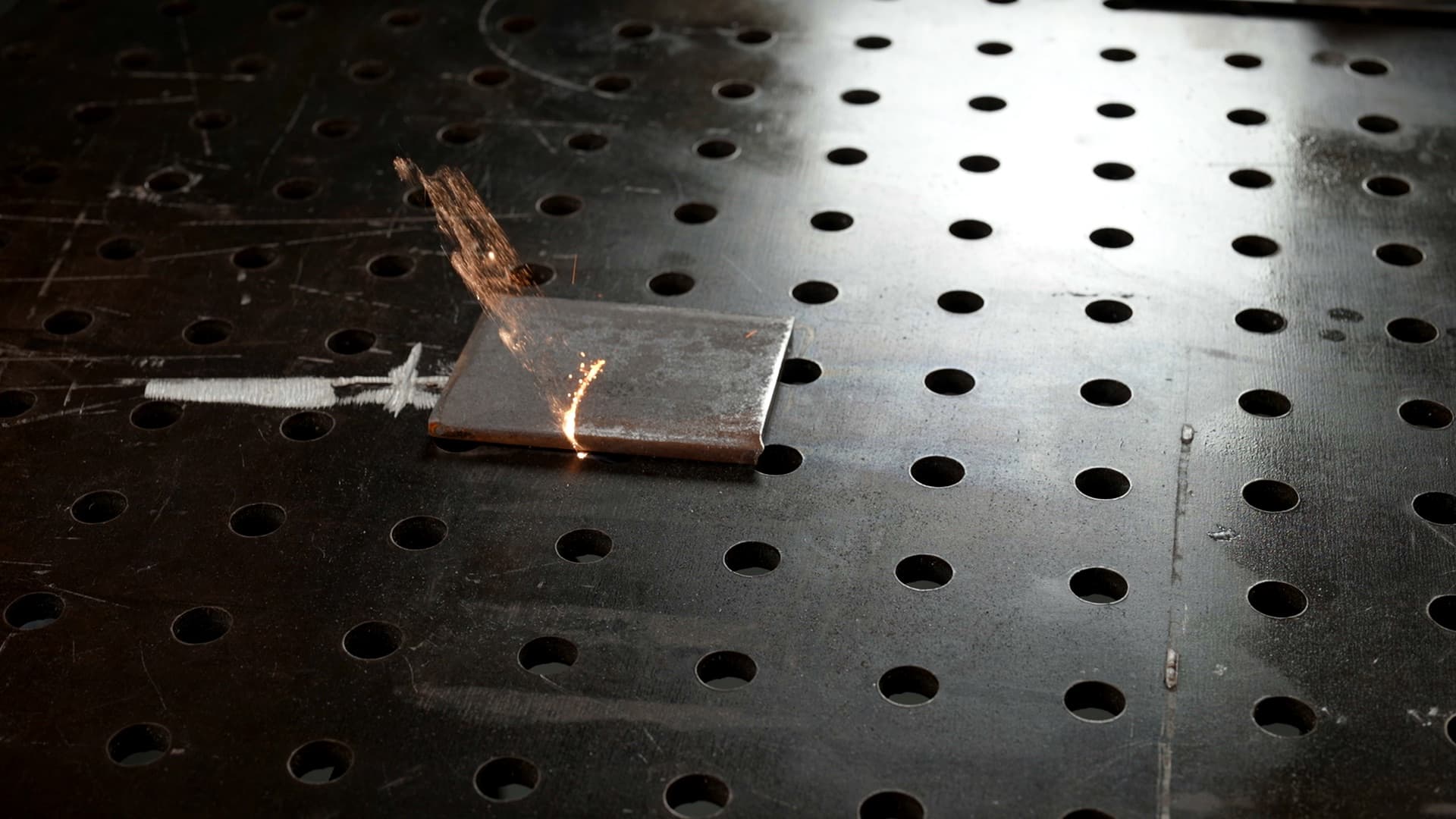
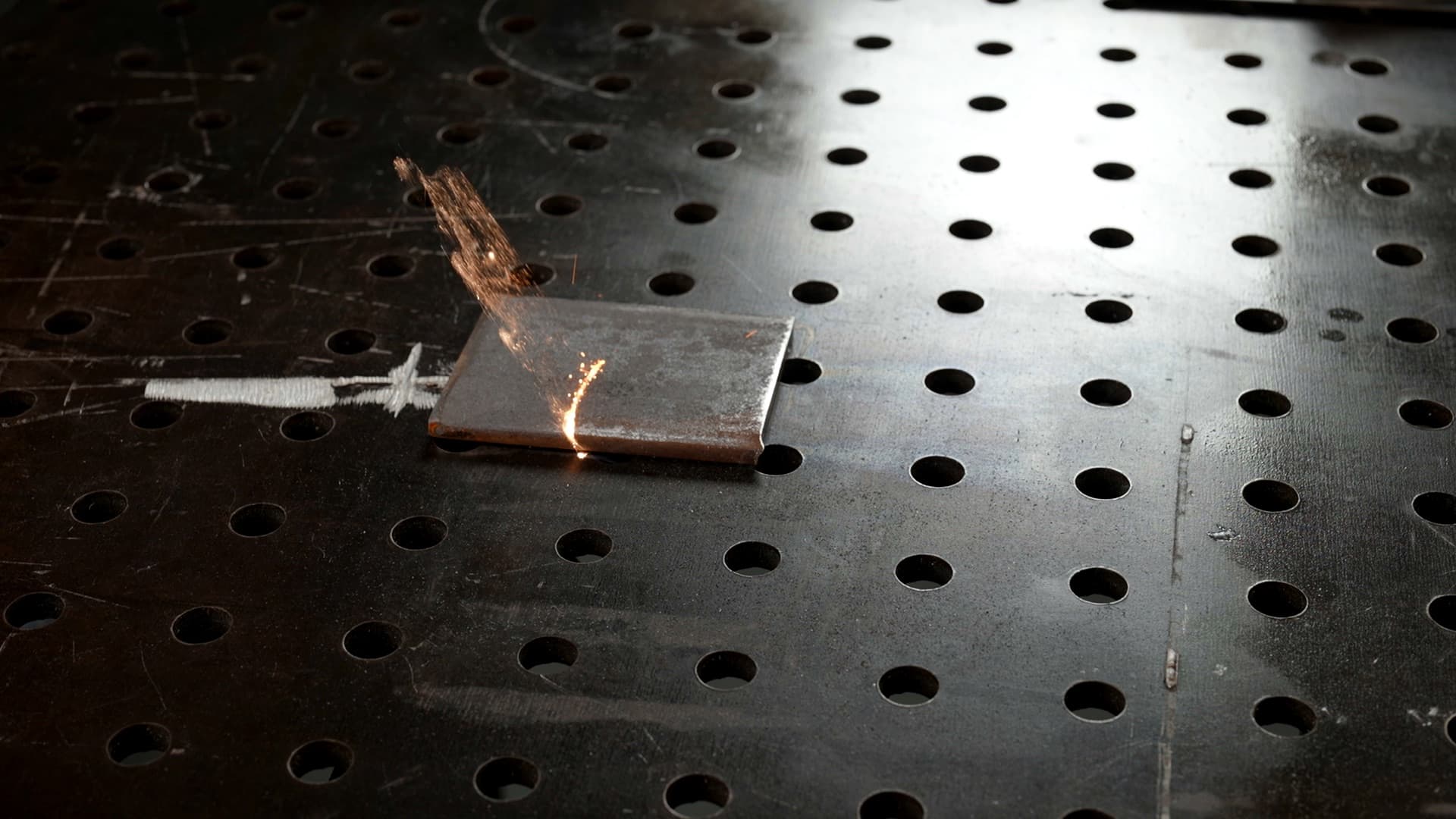
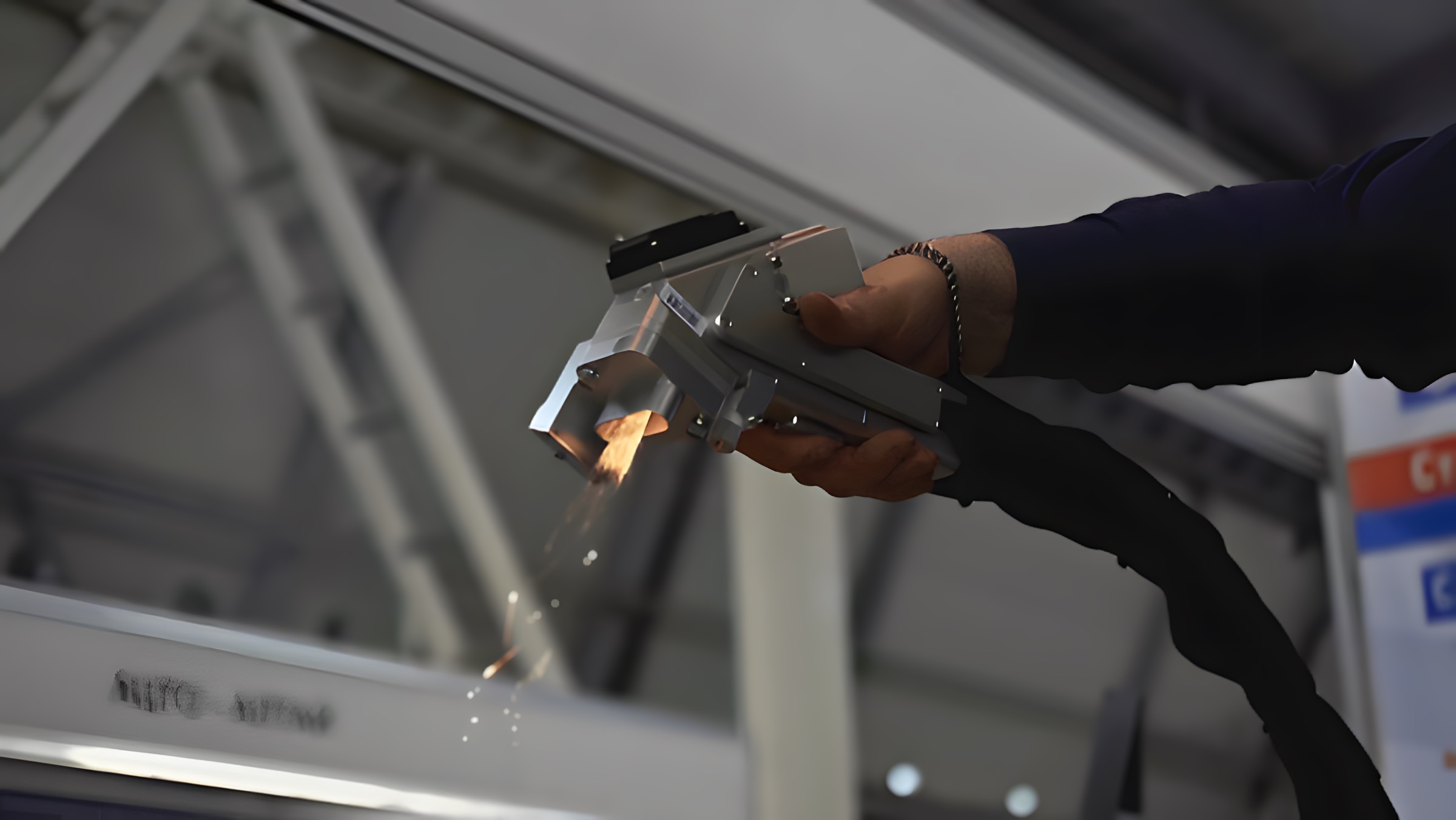
Rust ablates at roughly 0.5 to 1.5 J/cm². Mild steel ablates at 10 to 50 J/cm². The gap between those two numbers is the working window of laser rust removal. We tune the laser to deliver energy density above the rust threshold but well below the steel threshold. The rust absorbs the beam, heats past its boiling point in nanoseconds, and lifts off as vapour and particulate. The steel reflects most of the incident energy and gets warm at most.
This is selective ablation. The laser does not see “the rust” or “the steel” as a human eye does. It sees the difference in how each material absorbs 1064 nanometre infrared light. That difference is the entire mechanism.
Two implications matter on a working job site.
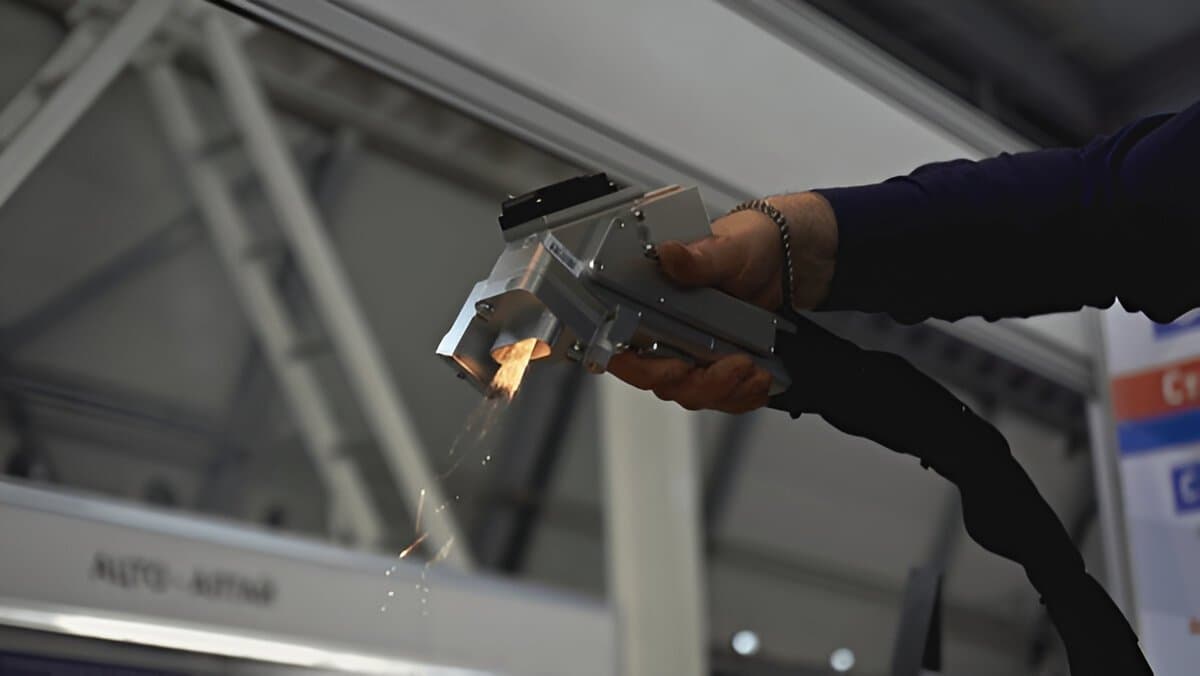
The first is that there is no contact. The laser head sits in a vacuum-style enclosure about 50 to 200 mm from the surface, depending on optic configuration. Nothing physically touches the steel. There is no abrasive embedded in the surface, no media to recover, no grit migrating into adjacent equipment.
The second is that the residue is the original contamination only. Sandblasting leaves you with rust plus spent media, often a hazardous waste classification if the original coating was lead or chrome. Chemical stripping leaves you with rust plus chemical sludge. Laser cleaning leaves you with the rust. A HEPA-rated vacuum captures it and you carry off a small drum at the end of the shift.
Three methods BC plants actually use
In real practice across British Columbia, industrial rust gets removed one of three ways. The right choice depends on substrate, contamination depth, location, and what happens to the asset after the cleaning.
Sandblasting
Still the workhorse for heavy coating removal on thick structural steel where substrate loss is acceptable and disposal is not a constraint. Common media on BC industrial sites: garnet for general use, aluminum oxide for harder coatings, glass bead for finer finishes. Effective on thick rust scale and old paint layers. The full cost is rarely the per-hour rate. It is the containment, media recovery, post-blast cleanup, and waste disposal stacked on top.
When it makes sense: thick coating removal on heavy plate, surface prep for new coatings on heavy-gauge steel, situations where roughened surface profile is desired for adhesion.
When it does not: heritage assets, sheet metal where wall thickness is calculated, food-adjacent environments where silica dust is a non-starter, sites where containment and waste handling exceed the value of the actual cleaning.
Chemical stripping
Acid baths, alkaline cleaners, rust converters. Effective on uniform corrosion and removable parts that can go into a tank. Generates rinsate and sludge as classified waste. Etches the substrate in the process. The steel loses surface material to the chemistry whether you wanted it to or not.
When it makes sense: small parts that can be dipped, situations where geometry blocks line-of-sight tools.
When it does not: in-place equipment, mixed-metal assemblies, anywhere chemical handling and disposal creates more risk than the corrosion did.
Laser cleaning
Tuned to the ablation threshold of the contamination. No substrate loss. No abrasive. No chemical waste. Class 4 laser safety classification means a controlled exclusion zone during operation, but no respiratory or skin exposure concerns beyond the standard protective protocol.
When it makes sense: substrate integrity matters, recurring maintenance where each cycle eats into the asset, food or pharmaceutical-adjacent environments, heritage substrates, insurance restoration where documentation of non-destructive method strengthens the claim file.
When it does not: full-coating removal on heavy steel where the project is one-and-done and substrate loss does not matter, anywhere the per-hour rate cannot be justified against the long-term substrate value.
What actually changes the scope of an industrial rust job
Most quotes Laser Sharks issues land within a predictable range for a given scope. The variables that move pricing are not arbitrary, and knowing them in advance helps you brief us better and get a faster quote.
Contamination depth. A light rust film over mill scale ablates in one pass at full scan speed. Heavy scale that has been growing for ten years takes multiple passes at reduced speed. We can give a tighter quote after a site walk than we can off photographs.
Substrate type and value. Mild steel runs faster than stainless. Aluminum and copper require lower pulse energy and slower scan. Heritage substrates such as limestone, sandstone, bronze, and copper roofing call for the most cautious tuning and the most experienced operator on the team.
Access and geometry. A flat plate at chest height is fast. Confined-space work inside a tank is slow because the operator has to be slow. Heights, awkward angles, and ATEX-classified zones all add hours that are not visible in a square-metre estimate.
Scale. There is a setup time on every job. On a small repair the setup eats the day. On a multi-day industrial cleaning the per-square-metre rate drops sharply because the truck, the operator, and the laser are already there.
Schedule pressure. Standard scheduled work is one rate. After-hours, weekends, or emergency response for insurance restoration carries a premium. We dispatch quickly for active claims because in those scenarios every day of delay compounds the damage.
Post-cleaning requirements. Some clients want the surface ready for immediate recoat. Others want surface profile measurement, documentation, photography for the QA file. The cleaning rate is the same. The deliverables drive the rest.
We do not publish a fixed rate sheet because none of the above is constant across jobs. What we do publish is a free on-site assessment within a 48-hour quote window. You get a fixed price for the actual scope before you commit to anything.
Six sectors where laser rust removal is the right choice
Marine and shipbuilding
Hull cleaning, propeller derusting, deck plate prep, antifouling paint removal before recoat. Salt-water environments accelerate corrosion and turn traditional blasting media into an environmental liability the moment any of it drifts off-site. Laser cleaning leaves the vessel ready for coating and the surrounding water uncontaminated. We see this most on the BC coast on commercial fishing vessels, smaller working craft, and shipyard refit projects.
Food and beverage processing
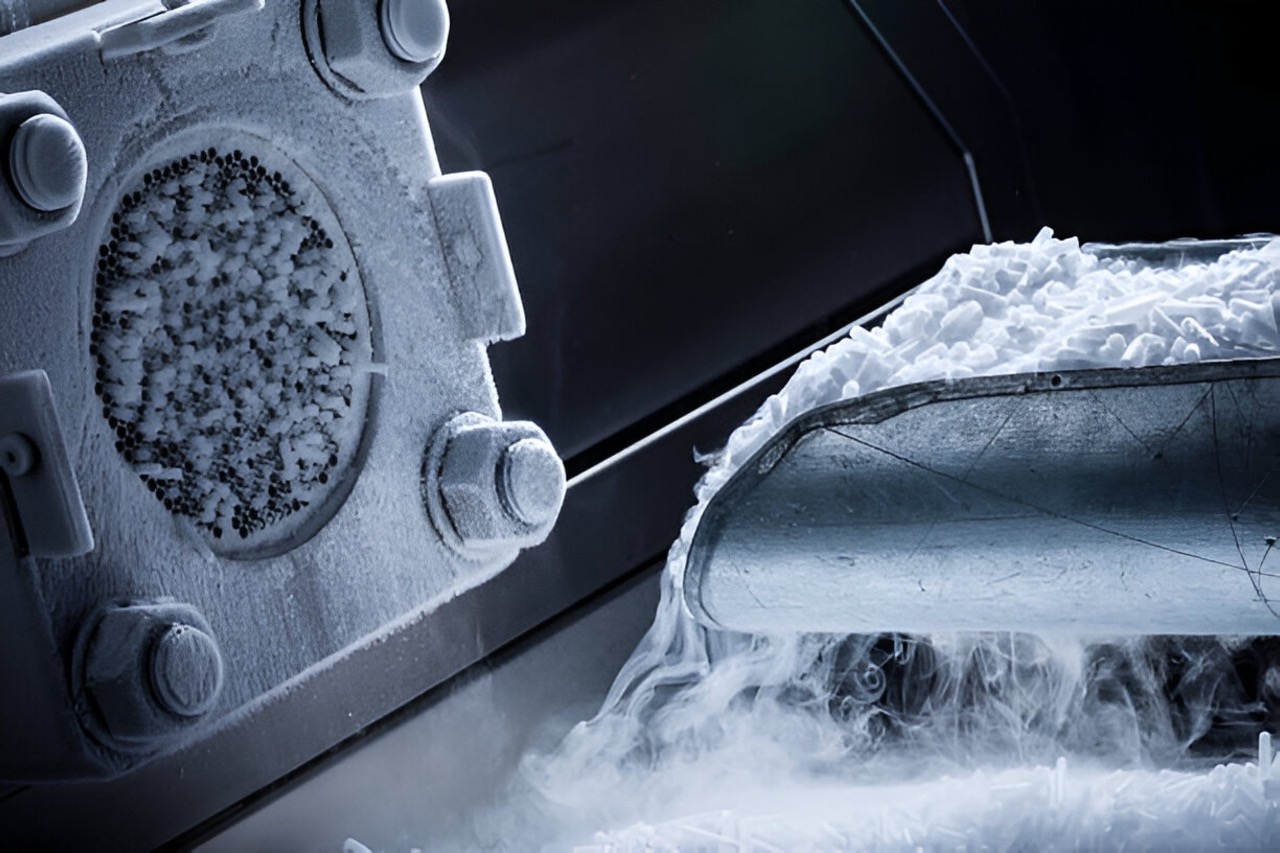
Stainless steel equipment with baked-on residue, biofilm, or surface oxidation. Sandblasting introduces silica and embedded grit, a non-starter under CFIA inspection. Chemical cleaning leaves residue that has to be verified out before production restart. Laser cleaning leaves the surface compliant and the production line ready to run. We also recommend dry ice blasting in many food processing scenarios where the contamination is biological rather than oxidative. The right tool depends on what is on the steel, not the steel itself.
Heritage and building restoration
The hardest substrate category. Cleaning soot from limestone, removing graffiti from sandstone, derusting decorative metalwork on heritage facades. Mechanical methods erode the original material. Chemical methods alter the colour and chemistry of the stone. Laser ablation is the only method that the architectural conservation field consistently approves for grade-A heritage surfaces in BC.
Manufacturing and surface prep
Rust and mill scale removal before welding, pre-coating prep on structural fabrications, decontamination of reusable moulds and dies. Eliminates the masking, containment, and grit recovery that sandblasting demands. Particularly valuable in production environments where adjacent equipment cannot be exposed to abrasive dust.
Automotive and equipment restoration
Stripping rust and old undercoating from chassis and body panels without thinning the sheet metal. For restoration projects where panel thickness is calculated into structural integrity, sandblasting is a measurable risk and chemical stripping damages factory primers underneath. Laser leaves everything except the contamination.
Insurance and fire restoration
Post-fire structural steel cleanup, soot removal from concrete masonry, oxidation removal from equipment that survived a fire event. Time-sensitive work where wet methods drive contamination deeper and traditional methods leave residue that compromises the claim documentation. We cover this in detail in the post-fire industrial cleanup guide.
When sandblasting is still the right call
Worth being direct about this, because anyone telling you laser cleaning is always the answer is selling you, not advising you.
Sandblasting wins on heavy coating removal where the substrate is thick enough that 0.05 mm loss per pass does not matter, where containment and disposal are not the cost drivers, and where you are getting the coating off in one campaign rather than on a recurring maintenance cycle. If the asset is a one-off cleanup of an outdoor structural beam that will then be recoated and forgotten about for fifteen years, sandblasting is faster per square metre and noticeably cheaper.
Where laser cleaning pulls ahead is on the recurring side: equipment that gets cleaned every two to three years, substrates where thickness matters, sites where the dust and waste handling cost more than the actual cleaning, and assets valuable enough that even a small amount of substrate loss per cycle is a real number on the depreciation schedule.
We quote both methods when both are viable. The job goes to the right tool, not the tool we happen to do.
What an on-site assessment looks like
A senior technician drives to your site. You walk the job together. We identify substrate, contamination type, access constraints, surrounding equipment, safety considerations, and the actual scope of work. The visit is free.
Within 48 hours you receive a written quote with method recommendation, time estimate, and a fixed price for the defined scope. If laser cleaning is not the right method for what you have, we will tell you that on the site visit and recommend the contractor we would call for it.
We work with major insurers operating in BC on restoration files. We carry full WorkSafeBC coverage and the liability insurance industrial clients expect. CBRB Best Cleaning Services in BC 2025.
Get a free on-site assessment or call 778-372-9924.
Standard response on quote requests is same-day. Emergency restoration dispatch is.
FAQ
What is industrial laser rust removal?
A non-contact cleaning method that uses a pulsed fibre laser tuned to the ablation threshold of iron oxide. The rust absorbs the laser energy and vaporizes. The underlying steel reflects most of the energy and is not removed. There is no abrasive media, no chemical waste, and no secondary cleanup beyond capturing the ablated contamination with a HEPA-rated vacuum.
Does laser cleaning damage the steel underneath?
No, when the laser is tuned correctly. The ablation threshold of rust is roughly 0.5 to 1.5 J/cm². Mild steel ablates at 10 to 50 J/cm². The working window between those two values is wide enough that proper tuning removes the contamination without affecting the substrate. Sandblasting, by contrast, removes a measurable fraction of base metal on every pass.
Is laser rust removal more expensive than sandblasting?
Per hour, yes. Per total project, often less, once you factor in containment setup, media costs, waste disposal, and post-blast cleanup that sandblasting carries. For recurring maintenance on the same asset, laser cleaning pulls further ahead with each cycle because there is no progressive substrate loss to make up for.
What industries in BC use laser rust removal?
Marine and shipbuilding, food and beverage processing, heritage and building restoration, manufacturing and surface prep, automotive restoration, and insurance fire restoration are the most common in BC. The common factor is that the substrate has long-term value, or the environment cannot tolerate chemical or abrasive waste, or both.
How long does a typical industrial rust removal job take?
Highly dependent on scope. Light surface rust on accessible substrate can run several square metres per hour. Heavy multi-layer corrosion in a confined space runs much slower. A free on-site assessment gives you a fixed time estimate before the project begins.
Is laser cleaning safe to use around food processing equipment?
Yes. The process introduces no abrasive media, no chemical residue, and no moisture into the cleaning environment. It is CFIA-compatible for food contact surfaces and is widely used across stainless steel processing equipment in Canada. The Class 4 laser classification requires a controlled exclusion zone during operation, which is standard practice.
Do you handle insurance restoration work?
Yes. We work with major insurers operating in British Columbia on commercial restoration files and dispatch quickly for active claims. Documentation of non-destructive cleaning methods strengthens claim files where substrate preservation matters to the adjuster.
Related reading
- Structural Steel Rust Removal in BC: Laser vs Sandblast
- Laser Rust Removal in Canada: A BC Manufacturer’s Guide
- Laser Cleaning vs Sandblasting: When Each One Wins
Compare options for your site with our laser rust removal service, or request a quote.