Sandblasting used to be the default answer for anyone stripping industrial paint or rust on the Lower Mainland. In the last five years I have watched that shift. WorkSafeBC silica enforcement got teeth, insurance renewals started asking about containment, and BC facility managers started running the actual math on downtime. The result is a growing shortlist of alternatives to sandblasting that either match its output or beat it on cost once you count everything sandblasting drags along with it.
This is a working list, not a marketing rewrite. Every method below either sits in our trucks or gets subbed out on a real job. Prices are BC ranges from actual quotes we have written or seen inside the last twelve months, in CAD, per job unless noted.
Quick answer: the real alternatives on BC jobs
The methods that show up on real Greater Vancouver quotes:
- Laser cleaning (fibre laser ablation)
- Dry ice blasting (also called CO2 blasting)
- Soda blasting (sodium bicarbonate media)
- Vapour blasting (wet blasting, slurry blasting)
- Needle scaling and mechanical hand tools
- Chemical stripping
None of these are drop-in replacements for every sandblasting job. Each has a real window where it wins and a wider window where it does not. Pick the wrong one and you either overspend or damage the substrate.
Laser cleaning
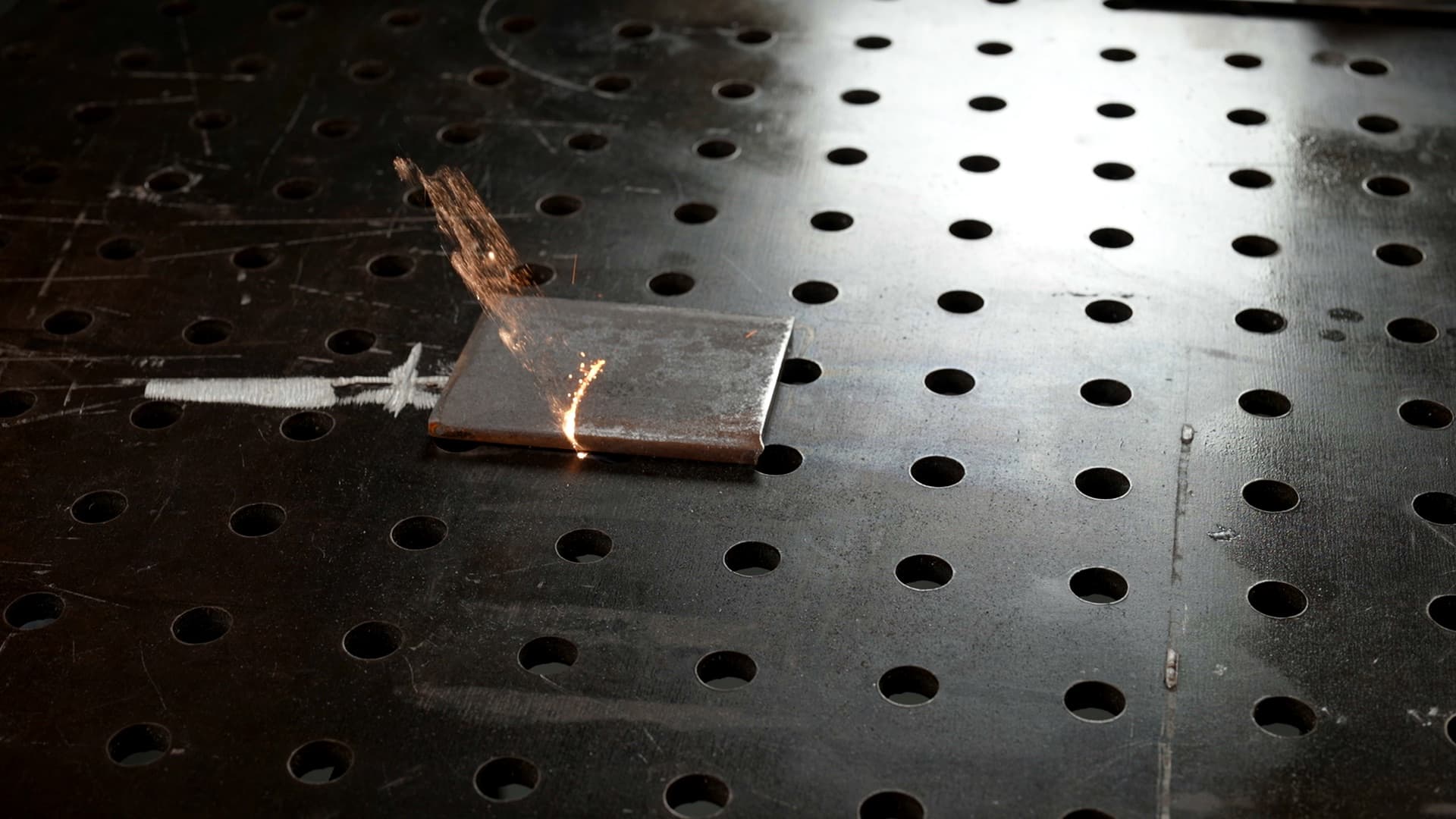
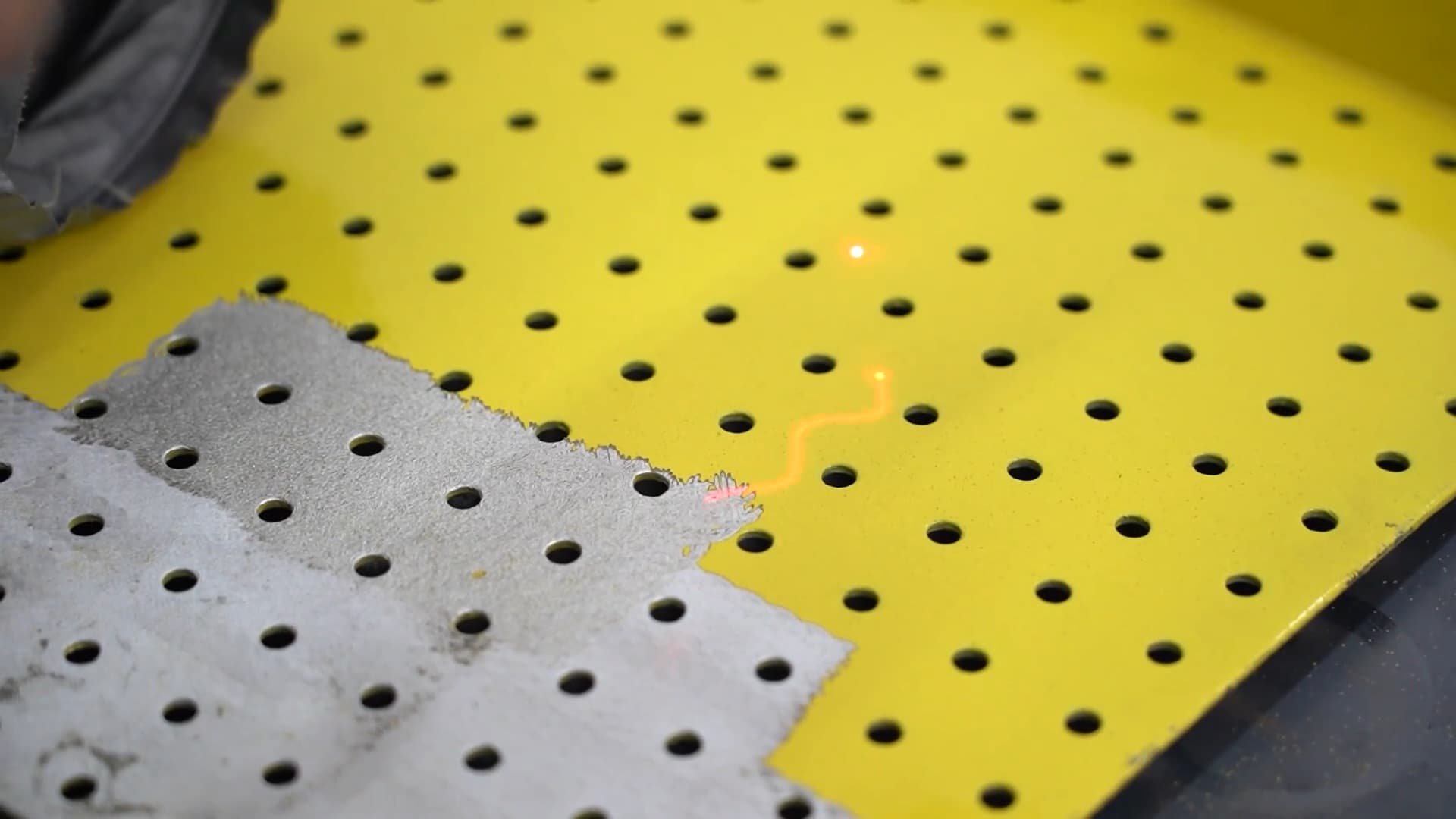
Fibre laser ablation vaporises the top layer of paint, rust, mill scale, or coating without touching the metal underneath. No media, no water, no chemistry. On a Burnaby fabrication shop the setup is a diesel generator, a chiller cart, and a hand-held head on a fibre cable.
Where laser wins: structural steel with mill scale before recoating, fire-damaged steel where the underlying section is intact, weld seams before NDT, aluminum and thin-gauge sheet metal that would warp under abrasive, historic metalwork where the original section thickness matters.
Where laser struggles: thick multi-layer coatings on heavy structural sections still go faster with abrasive. Deep pitting under rust needs mechanical follow-up after the laser opens up the pit. Concrete and masonry sit outside the technology.
BC pricing: per-job quotes typically run $1,200 to $6,000 CAD for a mobile crew on-site. Per-square-metre rates only make sense on large uniform runs like tanks and structural members.
WorkSafeBC angle: no silica hazard. No blast media disposal. No respirable containment build. That last part matters. A full containment build on a downtown Vancouver site can add $8,000 to $25,000 before the actual sandblasting even starts.
For a working overview of the method and what a site visit covers, see our laser cleaning page.
Dry ice blasting (CO2 blasting)
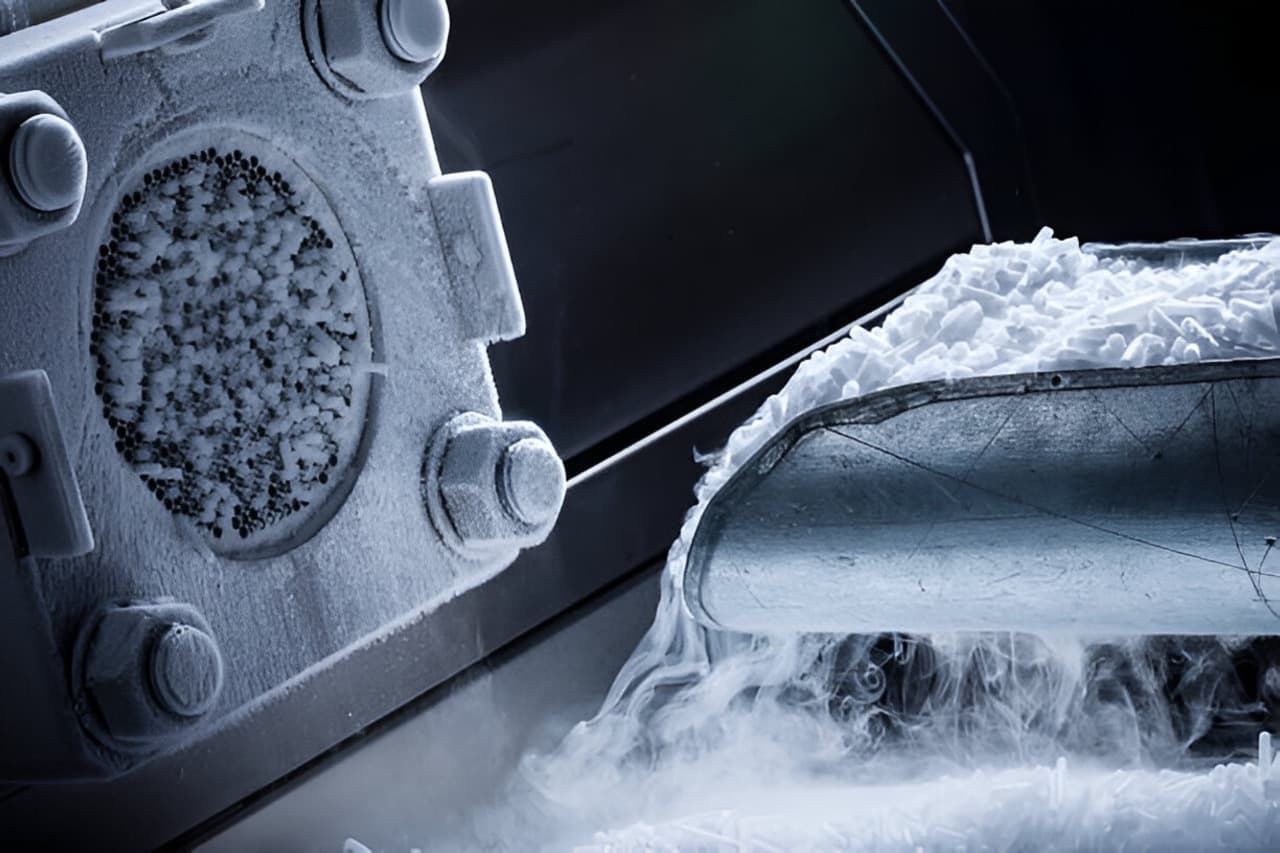
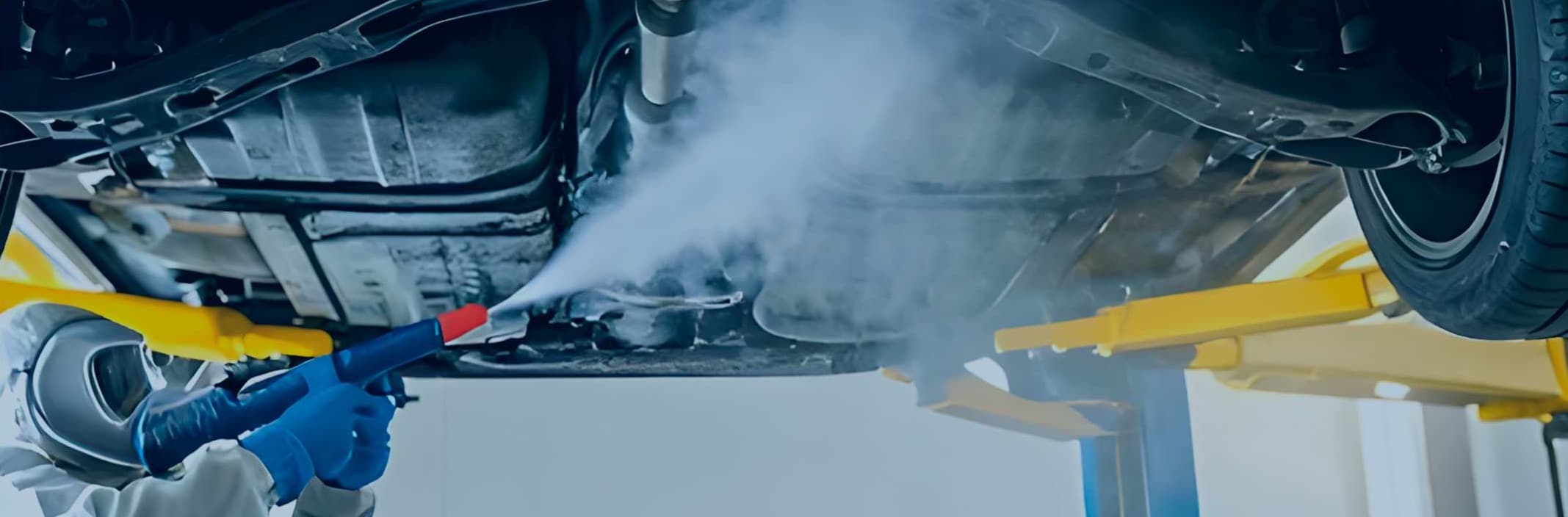
Solid CO2 pellets fired through compressed air. The pellets sublimate on impact and lift contamination off the surface. No secondary waste. The only thing left to sweep up is whatever came off the substrate.
Where dry ice wins: electrical gear (motors, switchgear, transformers), food and beverage equipment where a water rinse means a full sanitation restart, mould on wood framing and concrete, fire-damage soot on porous surfaces, hydraulic and grease residue, paint on rubber and plastic where soda would embed.
Where dry ice struggles: heavy mill scale, thick industrial coatings, deep rust. It cleans the surface layer but does not carry the energy to move a 6-mil epoxy coating in one pass.
BC pricing: $1,500 to $8,000 CAD per job typical, driven by crew hours plus dry ice consumption. On a 500 kg pellet run for a Delta food processor we see about $3,200 to $4,800 depending on shift timing.
Downtime math: for a Richmond craft brewery on a weekend shutdown, dry ice blasting on the packaging line put them back into production Monday morning with no CIP rinse cycle. A caustic wash would have added a full shift.
For the food-grade and process side of this method see our dry ice blasting page.
Soda blasting
Sodium bicarbonate as the abrasive. Softer than silica sand, water-soluble, food-safe once rinsed.
Where soda wins: delicate substrates that need light abrasion. Automotive sheet metal, aluminum boat hulls, fibreglass, some marine engine parts. Fire-damage cleanup on interior trim and cabinetry when dry ice is not on the truck.
Where soda struggles: structural rust removal (too soft), profile requirements for industrial coatings (does not build the anchor pattern most spec sheets ask for), any surface where residual sodium will attack the substrate afterward. Aluminum near stainless welds can pit if the neutralising rinse is skipped.
BC pricing: $1,800 to $7,000 CAD per job. Media cost adds up on larger surfaces. Rinsing and neutralising the substrate afterward is not optional and can double the crew time on some jobs.
Waste angle: soda plus stripped coating still becomes hazardous waste if the coating was lead-based or carried heavy metals. Do not skip the coating test.
Vapour blasting (wet blasting)
Fine abrasive media suspended in water and driven by compressed air. Sometimes called slurry blasting. The water traps dust and drops silica exposure significantly.
Where vapour wins: restoration of machined parts where the original finish matters, marine hardware where residual media would corrode dry, small-component work in a controlled cabinet. Cast-iron restoration shops in Coquitlam and Port Coquitlam use nothing else on some jobs.
Where vapour struggles: in-place mobile work on large structures. The rig needs a controlled setup and the wastewater has to go somewhere. On coastal BC sites near storm drains that is a live Fisheries Act issue.
BC pricing: cabinet work is typically priced per part or per hour, $95 to $180 per hour of cabinet time. Mobile vapour blasting on a Vancouver site is uncommon and expensive when it happens.
Needle scaling and mechanical hand tools
Needle scalers, wire wheels, cup brushes, sanding discs, powered rotary peening. The oldest honest answer to a small rust or paint patch.
Where hand tools win: small spot repairs, tight corners, weld touch-ups, isolated rust nests before a coating patch. Field crews already carry these. On a small callout at a Mount Pleasant machine shop, thirty minutes of needle scaling is faster to mobilise than any powered mobile method.
Where hand tools struggle: anything above about 4 square metres. Operator fatigue, hand-arm vibration exposure under WorkSafeBC, and dust generation all scale badly. The finish is uneven and the profile depends on the operator’s day.
BC pricing: hand-tool prep is usually inside a larger scope, roughly $85 to $140 per crew hour. Not a standalone service most of the time.
Chemical stripping
Solvent or caustic gel painted or sprayed onto the coating, dwelled, then scraped and neutralised.
Where chemistry wins: lead-paint removal under strict containment when abrasive dust is not acceptable, some architectural stripping on carved detail, a narrow set of coating removal jobs where no mechanical method will reach.
Where chemistry struggles: almost every industrial application in BC now. The waste stream is hazardous, worker exposure controls are heavy, the neutralisation step is easy to skip and hard on the substrate if you do skip it. Insurance carriers ask harder questions on chemical strip work every renewal cycle.
BC pricing: widely variable. On heritage brick façades a chemical strip can run $18 to $45 per square foot with waste handling. That is normally more than a laser pass on the same substrate.
When sandblasting is still the right call
This is not a piece that pretends sandblasting has no place. It still wins on:
- Large open structural steel with thick coatings, off-site or in a licensed containment shop
- Bridge decks and heavy civil work under proper WorkSafeBC exposure controls and containment
- Concrete profiling for industrial floor coatings where a shot blaster or steel-grit rig is the specified anchor method
- Any job where the coating spec sheet explicitly requires an SSPC-SP profile that only abrasive will build
The trap is defaulting to sandblasting on jobs where the containment build, media handling, silica monitoring, and downtime cost more than a laser or dry ice pass would have. On a North Vancouver food-plant equipment rebuild we quoted last spring, the abrasive route came in $6,800 higher than dry ice once containment and CIP restart were counted, and it still needed a second cleaning pass before recoating.
How to actually pick
Three questions cut through most of it.
First, is the substrate delicate or historically important? If yes, laser or vapour, sometimes soda. Not abrasive.
Second, is the site occupied, food-grade, or near water? If yes, dry ice or laser. Chemical and abrasive both come with waste and exposure paperwork that gets expensive fast.
Third, is the coating thick, uniform, and on heavy section steel with no adjacent equipment? If yes, sandblasting under proper containment is probably still the cheapest per square metre.
Everything else is a mix. That is what a site visit is for.
What a BC quote should actually contain
If you are collecting quotes for an alternative to sandblasting, ask each vendor for:
- Method named plainly (not "advanced surface treatment")
- Estimated crew hours and shift structure
- Media or consumable cost broken out
- Waste handling responsibility in writing
- WorkSafeBC exposure control plan reference
- Insurance certificate with the right scope of work
- What the substrate looks like when they leave
Quotes that hide those lines almost always come back later as change orders.
We have been running industrial cleaning across Greater Vancouver for over a decade. Fully insured, WorkSafeBC compliant, CBRB Best Cleaning Services in BC 2025. Every quote we write includes those lines above whether the customer asks for them or not.
If you have a job on the calendar and want to see whether an alternative to sandblasting actually fits, request a quote and describe the substrate, the coating, the access, and the downtime window. We will tell you which method matches. When sandblasting is still the right call, we will tell you that too.