It’s 1:40 in the morning on a bridge approach. One lane is coned off, two traffic control persons are working the flaggers, and the closure permit ends at 5:30. The job is rust at the base plates of forty metres of railing. Nobody is worried about the rust. They are worried about the clock, the storm drain two metres away, and the townhouses across the road.
That’s municipal asset cleaning in BC in one scene. The steel is ordinary. Everything around it is not. Public works crews and the maintenance contractors who bid city work already know that the cleaning itself is rarely the hard part. Containment, runoff, noise, traffic and the tender paperwork are what decide the price and the schedule.
This guide is for the people who manage bridges, railings, light standards, benches and other street furniture across the Lower Mainland, and for the contractors who carry those contracts. It covers where laser cleaning and dry ice blasting fit, where they don’t, and what the numbers look like.
Public space changes the method before you pick one
On a plant floor, you can shut the area, tarp it, and blast. On a sidewalk in Burnaby or a seawall in Richmond, you can’t do any of that for long.
Three constraints show up on almost every municipal job:
- Nothing can go down the drain. Storm drains in Greater Vancouver run to creeks, the Fraser or Burrard Inlet with little or no treatment. Paint chips, spent grit and wash water all count.
- The public is right there. Pedestrians, cyclists, dog walkers at 6 a.m. A work zone that needs full enclosure for three days is a problem for the city before it’s a problem for the contractor.
- The window is short. Lane closures, night permits, park hours, event calendars. Whatever method you choose has to set up and pack up inside the window, every shift.
Abrasive blasting and pressure washing both struggle with all three. Blasting on a public railing means scaffold, tarps, a vacuum recovery system and several tonnes of spent media for a modest run of steel. Pressure washing means capturing every litre of water, which on a slope beside a catch basin is harder than it sounds.
Laser cleaning and dry ice blasting remove the media problem entirely. That’s the eco argument, and on municipal work it’s also the practical argument. There is no grit to recover and no water to capture. What’s left is the coating or rust you removed, and that’s a much smaller pile.
What gets cleaned on municipal assets
The asset list is longer than most people expect. On city and regional district work, the requests we see most often fall into a few groups.
Bridge components. Not whole bridges. The targeted work: bearings and bearing plates ahead of inspection, expansion joint hardware, bolted connections with pack rust, and localized corrosion at drainage points where water sits. An engineer can’t rate a bearing through a crust of rust and road grime, so the cleaning is often the first step of an inspection rather than a maintenance item.
Railings and guardrails. Painted steel pedestrian railings, galvanized handrails on stairs and ramps, and older ornamental railings on waterfront walkways. The typical failure is at the posts and base plates, where water, de-icing salt and dog urine all collect. Most of the railing is fine. The bottom 150 millimetres is not.
Light standards and signal hardware. Base corrosion on steel poles, hand-hole covers that no longer seat, and paint failure on signal arms. Spot work, often dozens of poles on one corridor.
Street furniture. Cast-iron bench ends, steel bike racks, bollards, planters, waste receptacles and bus shelter frames. In neighbourhoods like Mount Pleasant or along Hastings, the same items also collect graffiti, stickers and adhesive residue.
Heritage fixtures. Cast-iron lamp posts, cast bronze plaques, fountain hardware and memorial railings. These need the gentlest approach and usually a heritage planner’s sign-off on method before anyone starts.
Our laser cleaning service handles most of the rust and coating work on steel and cast iron. Dry ice blasting takes grime, grease, adhesives and some graffiti, particularly where the substrate can’t take heat or abrasion.
The storm drain rule decides a lot
Most Lower Mainland municipalities have bylaws that limit what can enter the storm sewer to rainwater and a short list of exceptions. Above that sits the federal Fisheries Act, which prohibits depositing harmful substances into water frequented by fish. On a bridge over the Brunette River, or a railing along False Creek, both apply.
For a contractor, this turns into a very specific question on the work plan: where does the removed material go?
With abrasive blasting, the answer is a full containment enclosure, a ground cover, a vacuum recovery unit, and disposal of the spent abrasive mixed with old paint. If the paint contains lead, that whole mixture is hazardous waste.
With pressure washing, the answer is berms, a wet vac, filtration and a disposal plan for the water.
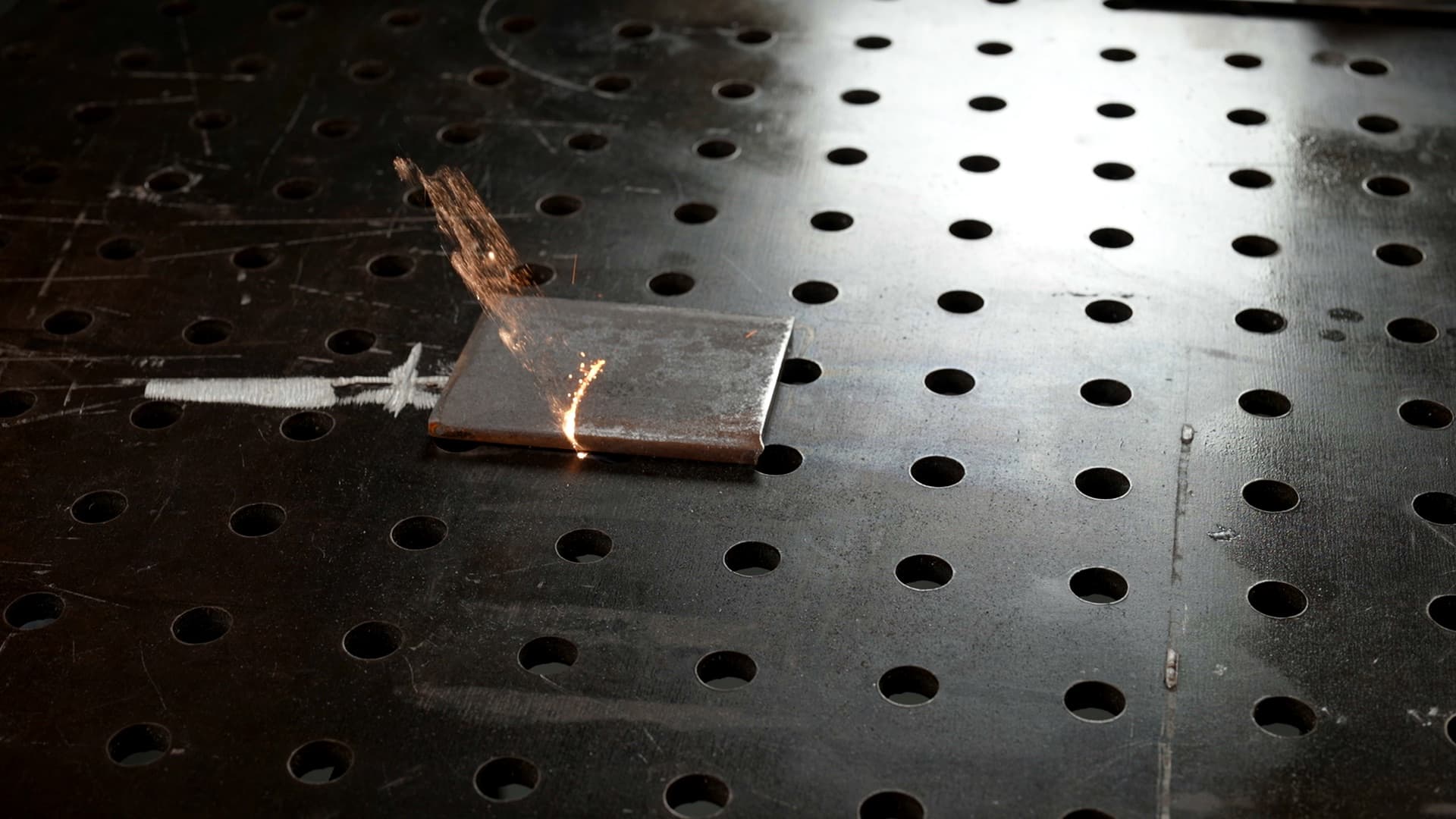
With laser cleaning, the removed coating is mostly vaporized or turned into fine dust at the surface. A fume extractor with HEPA filtration captures it at the nozzle. Larger flakes drop onto a ground sheet. At the end of the shift, the waste is a filter cartridge and a bag of debris.
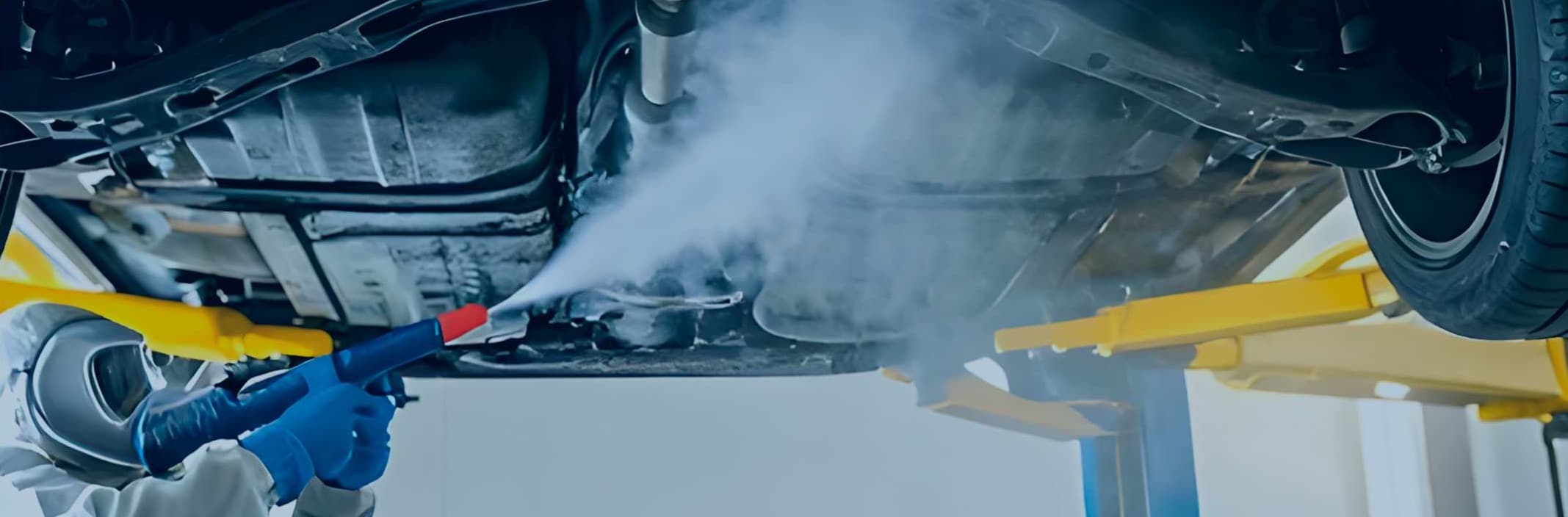
With dry ice, the pellets turn to CO2 gas on impact. The coating or grime falls as chips onto a ground sheet under the work. No water, no grit.
That difference shows up directly in the bid. On a waterfront railing, containment and waste handling for abrasive blasting can equal or exceed the cost of the blasting itself.
Lead paint on older structures
Many bridges, railings and light standards in BC were painted before lead primers came out of use. Assume lead until a test says otherwise.
Laser cleaning doesn’t make lead disappear. It changes where it ends up. The fume extractor captures the lead-bearing particulate at the source, and operators work under a WorkSafeBC exposure control plan with respirators and air monitoring as the assessment requires. The volume of lead-contaminated waste is small, because there’s no abrasive mixed into it.
Dry ice on lead paint knocks the coating off in chips. That’s workable, but the chips have to be collected completely and the ground sheet handled as lead waste. We decide between the two methods based on the coating condition and how close the work is to water.
Abrasive blasting on silica-bearing media adds a second exposure problem. WorkSafeBC’s requirements for respirable crystalline silica apply on top of the lead controls, and in a public space, the dust doesn’t stay inside a half-closed tarp.
Night shifts, noise and lane closures
A lot of municipal work happens between 10 p.m. and 6 a.m. That’s when lanes can close and parks are empty. It’s also when noise bylaws are strictest.
Here’s an honest comparison. A laser cleaning unit is quiet. What you hear is the chiller fan and, where there’s no power available, a generator. Crews can talk at normal volume beside it. Dry ice blasting is loud. The compressor runs hard and the nozzle is well into hearing-protection territory, closer to abrasive blasting than to laser. Near residential frontage at night, laser is usually the method that gets through the noise variance, and dry ice gets scheduled for daytime or for sites away from homes.
Set-up time matters as much as noise. A two-person laser crew can unload, set a work zone with a ground sheet and fume extractor, and start cleaning within about 30 minutes of the lane closing. Tear-down is similar. On a four-hour window, that leaves three hours of real work. Blasting with full containment might spend most of the first night building the enclosure.
Traffic control is usually the biggest fixed cost per shift. Two certified traffic control persons, a sign truck and the closure setup for a Lower Mainland night shift runs roughly $1,500 to $2,500. If a faster method finishes in two nights instead of four, the saving on traffic control alone often covers the difference in cleaning rates.
What municipal tenders ask for, and how to write the spec
Most cities and regional districts post work on BC Bid or their own procurement portal. The paperwork requirements are fairly consistent:
- WorkSafeBC clearance letter showing the contractor is registered and in good standing.
- Commercial general liability insurance certificate, often $2 million to $5 million, with the municipality named as additional insured.
- A site-specific safety plan and exposure control plan, including lead and silica where relevant.
- A traffic management plan for any work affecting lanes or sidewalks.
- An environmental plan covering runoff, waste capture and disposal.
- References from comparable public or commercial work.
For the people writing the spec, one point is worth changing. Many older specifications name an abrasive blast standard, such as SSPC-SP 10 near-white blast. If the spec says blast, a laser or dry ice bid is technically non-compliant, even if the surface ends up cleaner.
Write the spec on outcome instead. State the cleanliness required, the surface profile the coating manufacturer needs, the waste handling rules and the work windows. Then let contractors propose the method. Some coatings do need an anchor profile that laser cleaning alone doesn’t create, and a good bid will say so and include a profiling step where needed. That’s a better conversation than a spec that rules out newer methods by default.
What municipal cleaning costs in BC
Pricing depends on access, coating condition, lead status and the work window more than on square metres. Typical ranges from our BC quotes, in CAD:
- Laser rust removal jobs: $1,200 to $6,000 per job for most targeted scopes, such as a set of bridge bearings or base plates on a corridor of light standards.
- Dry ice blasting jobs: $1,500 to $8,000 per job, depending on area and how the grime or coating behaves.
- Railing runs: a 60-metre painted steel railing with spot corrosion at posts and base plates, done by a two-person crew over two night shifts, usually lands around $3,500 to $6,500 before recoating.
- Street furniture in batches: when 20 or more benches, bollards or racks are done on one mobilization, per-piece costs often come down to $150 to $400. A single bench on its own costs more to mobilize than to clean.
- Night work: expect a shift premium on labour, commonly 15 to 25 percent.
Traffic control, permits and recoating are usually separate line items. Ask any contractor to show them separately so you can compare bids properly.
What pushes a quote up: confirmed lead paint, heavy pack rust between plates, work over water, very short windows, and heritage items that need slow, low-power passes and extra documentation. What brings it down: batching assets by corridor, daytime access on low-traffic sites, and a clear spec that doesn’t require a site revisit to interpret.
Where laser and dry ice are the wrong tool
Some municipal work belongs to abrasive blasting, and it’s better to say so upfront.
A full repaint of a large steel truss bridge is still a job for abrasive blasting inside a proper containment system. The surface area is enormous, the coating system specifies a blast profile, and the project is long enough that building containment is worth it. Laser cleaning at that scale is too slow to compete on cost.
Large areas of weathered concrete, such as full bridge deck soffits, are also better served by other methods. Laser works on concrete for targeted stain and coating removal, but not as a bulk resurfacing tool.
Galvanized steel needs care. Laser and dry ice can remove grime, graffiti and light surface rust from galvanized railings, but aggressive passes will take zinc off with the rust. We run a test section first and adjust power, or recommend a zinc-rich touch-up afterward.
Where laser and dry ice pay off is targeted work in sensitive locations: connections, bearings, base plates, heritage fixtures, anything beside water, traffic or homes, and anything where containment would cost more than the cleaning.
Working with public works and maintenance contractors
We work both directly for municipalities and as a specialty subcontractor to the maintenance contractors who hold road, bridge and parks contracts. The second arrangement is common: the prime handles traffic control and coating, we handle the surface preparation and cleaning in the same closure window.
Laser Sharks is fully insured, WorkSafeBC compliant, and prepares a site-specific exposure control plan for every job, including lead work. We were named Best Cleaning Services in BC for 2025 by CBRB. Crews work across Greater Vancouver and the Fraser Valley, from North Vancouver and Burnaby to New Westminster, Delta and Richmond.
If you’re planning a railing program, a bearing inspection or a street furniture refresh, request a quote or call 236-660-4248. Send us the asset list and the work windows, and we’ll suggest a test section and give you a written scope with the cleaning, waste handling and night premiums shown as separate lines.