October is haul-out month at most Lower Mainland boatyards, and it’s when eco-friendly marine cleaning in BC gets tested in practice. Boats come up on the lift in Steveston, Ladner and along the North Shore, and the usual routine starts: pressure wash the growth off, scrape, sand the bottom paint, then work through the bilge with a jug of degreaser. Almost everything that routine removes, from copper-laden paint dust to emulsified diesel, lands within a few metres of salt water.
We clean boats with two methods that add nothing to that pile. Dry ice blasting takes growth, grime and oil off hulls, engines and bilges, and laser cleaning strips rust and old coatings from keels, running gear and other bare metal. Neither uses chemicals or blast media, and neither makes wash water.
This guide is for marina operators, boatyard managers, yacht management companies and owners of larger boats who want the work done on the hard by an insured crew. It covers what each method does on a boat, where each one is the wrong tool, what the work costs in BC, and what a yard needs in place before we arrive.
Why chemicals and wash water are a problem at the dock
Metro Vancouver’s storm drains carry water untreated to the nearest creek, river or inlet, and at a marina the nearest one is usually under the float. The federal Fisheries Act prohibits depositing a deleterious substance into water frequented by fish, or anywhere it may get into that water. Bottom paint dust, degreaser, diesel and soapy wash water all fit that description. Environment and Climate Change Canada enforces those provisions, and liability falls on whoever let the material reach the water, which can include the facility where the work was done.
Marinas know this. Many Lower Mainland moorage agreements restrict scraping, sanding and hull washing on the floats, and marinas certified under the Georgia Strait Alliance’s Clean Marine BC program are assessed on how they handle haul-out waste and wash water. Boatyards with a proper wash-down pad capture and treat the runoff, but the pad, the separator and the waste hauling all cost money that ends up in the yard’s rates.
Bilge cleaning has its own trap. Soap-based bilge cleaners break oil into fine droplets, so the sheen disappears when the pump runs. The oil is still in the water. Pumping emulsified oil overboard is an oil discharge under federal shipping rules, whatever the surface looks like afterwards.
The useful question for anyone planning eco-friendly marine cleaning is how much material each method adds to what comes off the boat.
Bottom paint: where the waste volume gets decided
Most boats in BC carry copper-based antifouling. Whatever method takes it off, the paint itself is a waste product that has to be caught, bagged and disposed of properly. Methods differ in how much other material gets mixed in with it.
Sanding turns the paint into fine dust. Some lands on the tarp, a lot of it drifts across the yard, and the first rain carries the rest toward the drains. Sandblasting is worse for volume: a 40-foot hull can go through a few hundred kilograms of grit, and every kilo of it now carries copper. That whole pile becomes contaminated waste. If the blaster uses silica sand, WorkSafeBC’s exposure limits for respirable crystalline silica bring air monitoring, respirators and containment for everyone in range, including the owner working on the boat on the next set of stands.
Older boats add one more concern. Hulls painted before tin-based antifouling was phased out can still carry those layers deep in the paint stack, and nobody wants that as airborne dust.
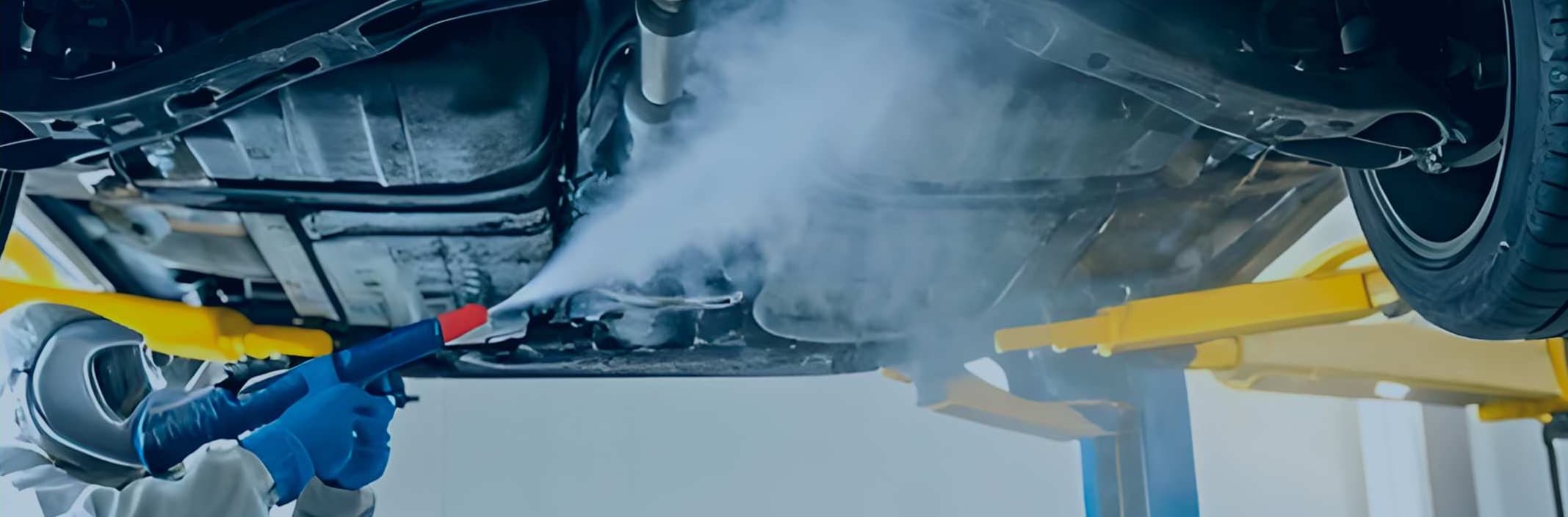
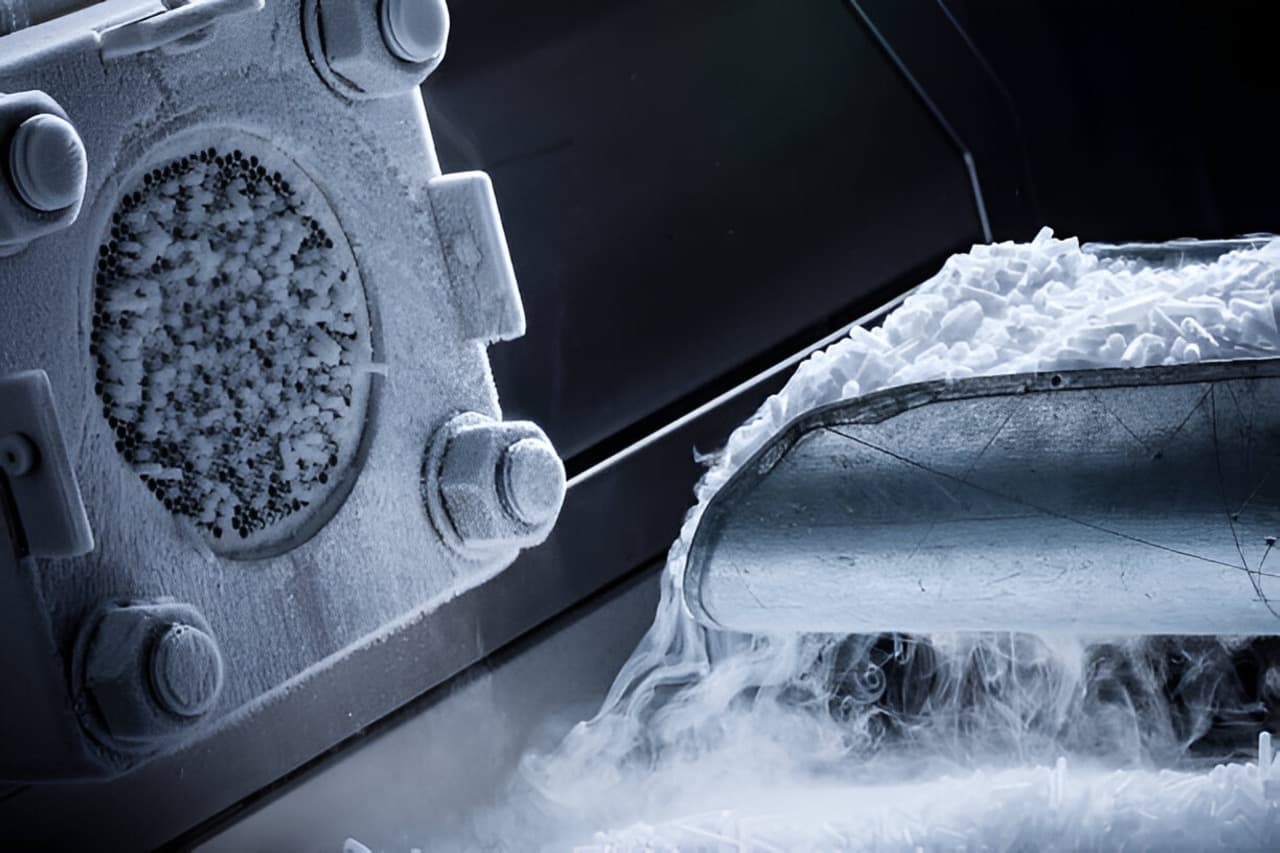
Dry ice changes the arithmetic. The CO2 pellets turn to gas on impact, so the only thing on the tarp is the paint and growth that came off the hull. On a typical 35-foot sailboat that’s a few heavy-duty bags of chips instead of a pile of grit. Bagged, labelled and taken to a licensed disposal site, it’s a small and predictable cost.
There are limits. Dry ice takes off growth, slime, loose paint and soft ablative coatings well. A hard, well-bonded epoxy bottom paint comes off slowly, and on a full strip to gelcoat the hours can add up past what the job is worth. When we see that on a site visit, we say so and price the part we can do efficiently, usually growth removal and loose-paint cleanup before the owner’s painter takes over.
Dry ice on hulls, engine rooms and bilges
Most of our boat work uses dry ice blasting, and the hull is only part of it.
Hull growth comes off easiest within a day or two of haul-out, while barnacles and weed are still soft. Dry ice lifts them off fibreglass without the gouges a scraper leaves in gelcoat, and without driving water into blisters or soft spots the way a 3,000 psi wash can. Running gear, through-hulls and transducers get cleaned in the same pass.
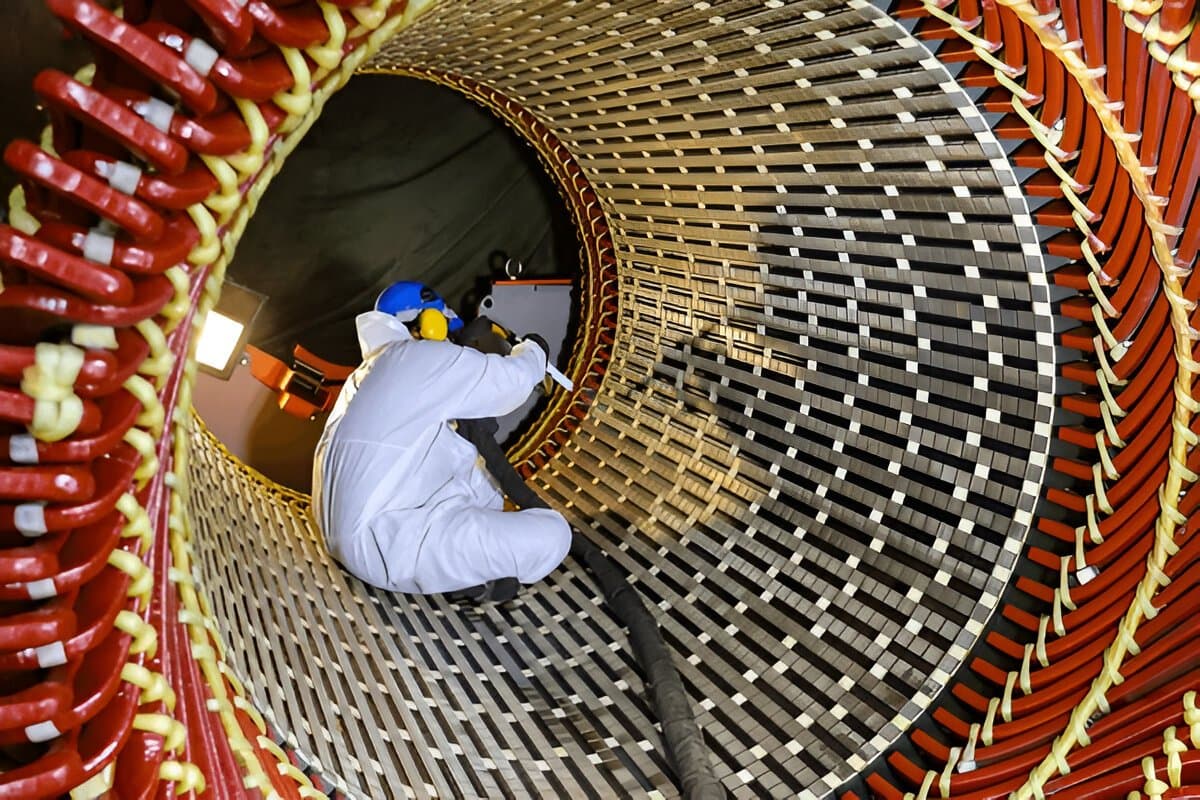
The engine room is where dry ice earns its keep. Diesel soot, oil mist and old grease build up on engines, stringers and the underside of the cabin sole. Cleaning that space with degreaser and a hose means wet wiring, wet alternators and an oily slurry sitting in the bilge until someone pumps it. Dry ice leaves everything dry. The grime falls into the bilge as flakes and sludge, and the crew vacuums it out and bags it. Wiring harnesses, starters and electronics stay in place, although we isolate the batteries and shore power before starting.
Closed-up boats in a BC winter also grow mould in lockers, behind panels and on bare wood in the bilge. Dry ice removes it from wood and fibreglass without adding moisture, which matters on a boat that already holds more damp than anyone wants. Fabric headliners and upholstery are a separate job for an interior specialist.
Engine rooms need care with air. CO2 is heavier than air and pools in bilges and closed compartments, so enclosed spaces get forced ventilation and the crew wears personal CO2 monitors whenever they work below deck. Dry ice blasting is also loud, well over 100 dB at the nozzle, so we agree on working hours with the yard ahead of time, especially where people live aboard nearby.
Where the laser comes in
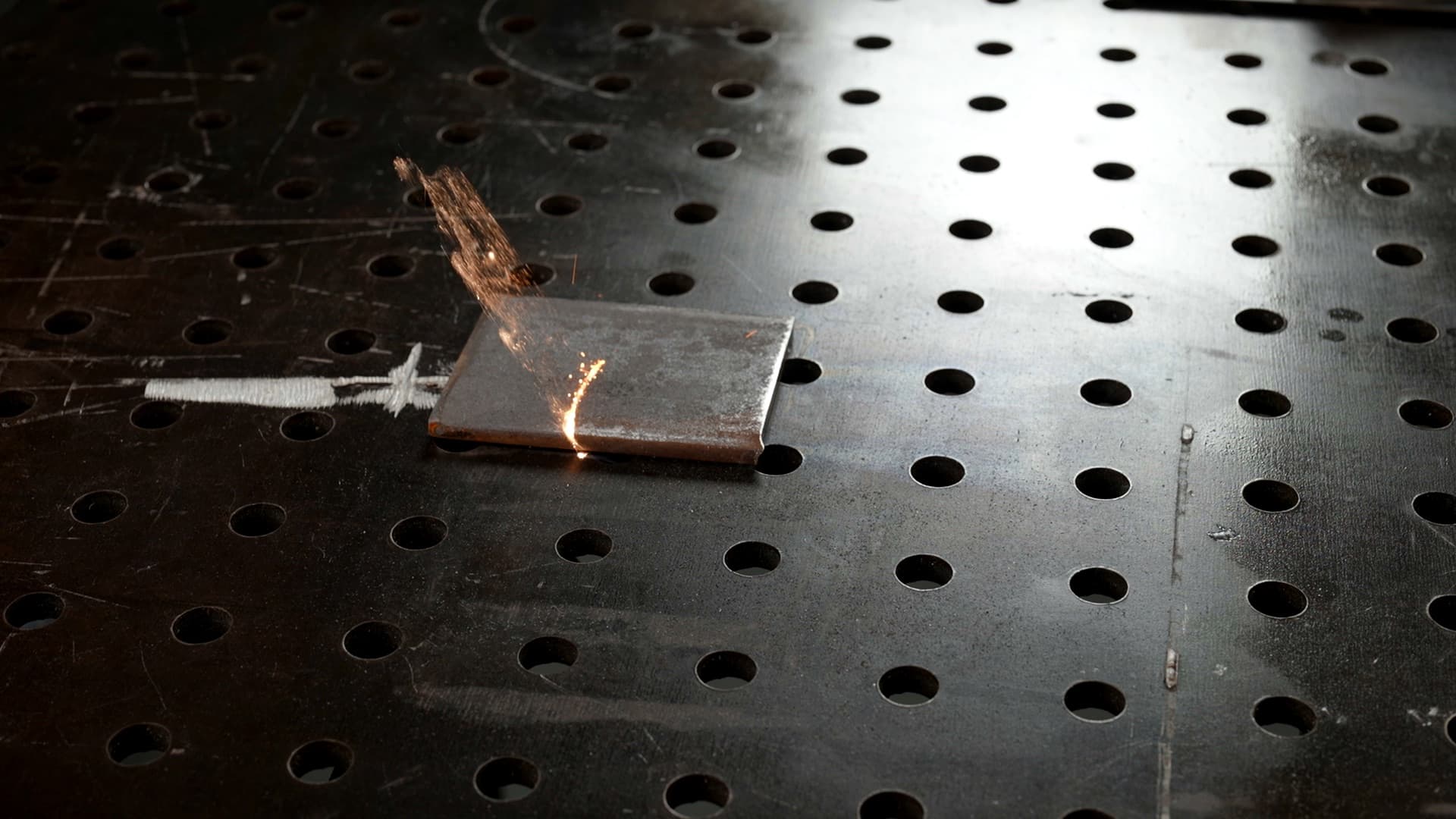
Laser cleaning works on metal, and on a boat that means a specific list: cast iron and steel keels, propellers, shafts and struts, rudder fittings, anchors and chain, steel davits, lifting gear and trailers. Aluminum hulls and fittings are fine at the right power settings.
Cast iron keels are the most common call. BC’s damp air puts a rust bloom on bare iron within weeks, and the usual fix is a grinder with a flap disc, which throws iron dust and old paint across the yard and leaves an uneven surface. The laser takes the keel down to clean metal with no grit and no dust cloud, and the extraction unit collects the fine residue as it comes off. Bare iron flashes fast in Lower Mainland humidity, so we coordinate with whoever is priming and get primer on the same day.
The laser does not go on gelcoat or fibreglass. The resin absorbs the energy and burns. If a boat needs both a hull clean and keel work, dry ice handles the hull and the laser handles the keel, often on the same visit. That combination is the main reason we carry both machines.
What eco-friendly marine cleaning costs in BC
These are Greater Vancouver ranges for work done on the hard, quoted per job:
| Job | Typical range (CAD) | What moves the price |
|---|---|---|
| Hull growth and loose paint, 30 to 40 ft boat | $1,200 to $2,500 | Growth level, paint condition, staging |
| Engine room and bilge degreasing | $1,200 to $3,000 | Engine size, access, time since the last clean |
| Laser on keel and running gear | $1,200 to $3,500 | Keel size, rust depth, paint layers |
| Boatyard or marina day, several boats or lifts | $2,400 to $4,500 per shift | Number of boats, power on site |
Like most contractors in BC, we carry a half-day minimum, because the truck, the equipment and the safety setup cost the same for two hours of work as for eight. Small single jobs land near $1,200 to $1,800 once mobilization is in. Booking two or three boats in the same yard on the same day brings the per-boat cost down quickly, and that’s the cheapest way for a yard or a yacht management company to buy the work.
Quotes on boats swing by up to 50% for a handful of reasons. Growth that has dried hard on the stands for a week takes far longer to blast off than growth cleaned the day the boat came out of the water. A paint stack with ten seasons of layers is slower than one with two. Boats on tight stands with little clearance under the keel slow the crew down. A yard without 240V power near the boat means bringing a generator, which adds setup at both ends of the shift.
Time on the hard is the cost owners tend to forget. Storage and stand rental are charged by the foot and by the week, and a bottom job that waits on a sanding crew or a dry spell can keep a boat out of the water longer than planned. A dry ice hull clean on a 35-foot boat usually takes three to five hours, and the hull is dry and ready for the painter the same afternoon. For a charter operator, that can decide whether the boat relaunches before a booked weekend or the booking gets refunded.
What a marina or boatyard needs to have ready
We work on boats out of the water only. In-water hull cleaning is outside what we do, and many marinas restrict it anyway.
Before the crew arrives, the boat should be on stands or in a cradle with room to work under the hull, and the yard should have approved the work and told us its waste rules. We lay tarps under the hull and around the work area, so the space between boats matters. A 240V outlet within reach saves the generator setup. For engine rooms, the owner or manager should clear lockers and loose gear and tell us about anything sensitive below deck, such as older electronics or varnished trim.
We work across the Lower Mainland, from the Fraser River yards in Richmond and Delta to North Vancouver, False Creek and Port Moody.
Our recommendation
For a marina or boatyard that wants boats cleaned without chemicals on its own lot, book dry ice for hull growth, engine rooms and bilges, and laser for keels and other bare metal. Keep sanding for final fairing before paint, where it still does a job neither of our methods does, and keep the wash-down pad for routine rinses. Strip-to-gelcoat jobs on hard epoxy paint are the one case where we’d tell an owner to price other options first.
For owners, the simplest move is to ask the yard to book the clean for the first day or two after haul-out, while the growth is soft. That one scheduling choice cuts both the hours and the bill.
Getting a price
Laser Sharks crews are fully insured and work under WorkSafeBC requirements on every site, and the company was named Best Cleaning Services in BC 2025 by the CBRB. Send us photos of the hull, keel or engine room, the boat’s length, where it’s hauled out and when it needs to relaunch, and we’ll come back with a price per boat. You can request a free quote or call 236-660-4248.