The health inspector walks in at 11:40 on a Thursday, twenty minutes before the first ticket. That is the point. Routine inspections in this province are unannounced, and the environmental health officer from Vancouver Coastal Health or Fraser Health is not going to phone ahead so you can wipe down the combi oven.
Fire inspection is the opposite. You usually know it is coming.
Most operators I deal with treat those two visits as the same problem. They are not, and the difference is the whole reason commercial kitchen equipment cleaning in Vancouver ends up scheduled badly. One visit judges what your equipment looks like on an average shift. The other judges a paper trail and a duct you cannot see into.
The two inspections, and what each one actually looks at
The environmental health officer is looking at food-contact surfaces, equipment in good repair, and whether accumulated grease and carbon on and around cooking equipment could contaminate food. Hood filters get a glance. Nobody is climbing into your exhaust duct with a flashlight. What gets written up is the carbonized crust on the back of the range, the black film on the rotisserie glass, the fryer surround, the shelving above the flat top.
Fire side, the reference is NFPA 96, which the BC Fire Code pulls in for commercial cooking ventilation. Cleaning frequency scales with how hard you cook. Solid fuel operations, the wood-fired places in Mount Pleasant and the charcoal grills around Richmond, sit at monthly. High-volume kitchens, quarterly. Moderate volume, semi-annual. Low volume like a church hall or a seasonal operation, annual. The certified hood cleaner leaves a label with the date and, importantly, a note of any areas that could not be cleaned.
That last line is where claims go sideways. "Fan housing inaccessible" written on a sticker in March becomes the insurer’s first question after a grease fire in November.
So: health officer judges the equipment. Fire inspector judges the ventilation system and the records. Two different cleaning jobs, two different schedules, and only one of them is predictable.
Where the grease stops being grease
Fresh grease is a degreaser problem. Give it heat and time and it stops being grease at all. It polymerises into a hard carbon layer that bonds to stainless, cast iron, and aluminized steel, and at that point caustic foam just runs off it.
This is the stuff that survives nightly cleaning for two years and then fails an inspection all at once. Oven interiors and racks. Conveyor pizza oven belts and the chamber behind them. Rotisserie spits and drip trays. Smoker interiors. Hood plenum ledges above the filter track. Exhaust fan blades and the housing they spin in. Bakery pans and sheet racks, which is its own category because a rack of blackened pans is a $4,000 replacement decision that most operators make by default.
Carbonized deposit does not respond to more scrubbing. It responds to a method that removes the layer without eating the substrate underneath.
Dry ice, and the reason kitchens like it
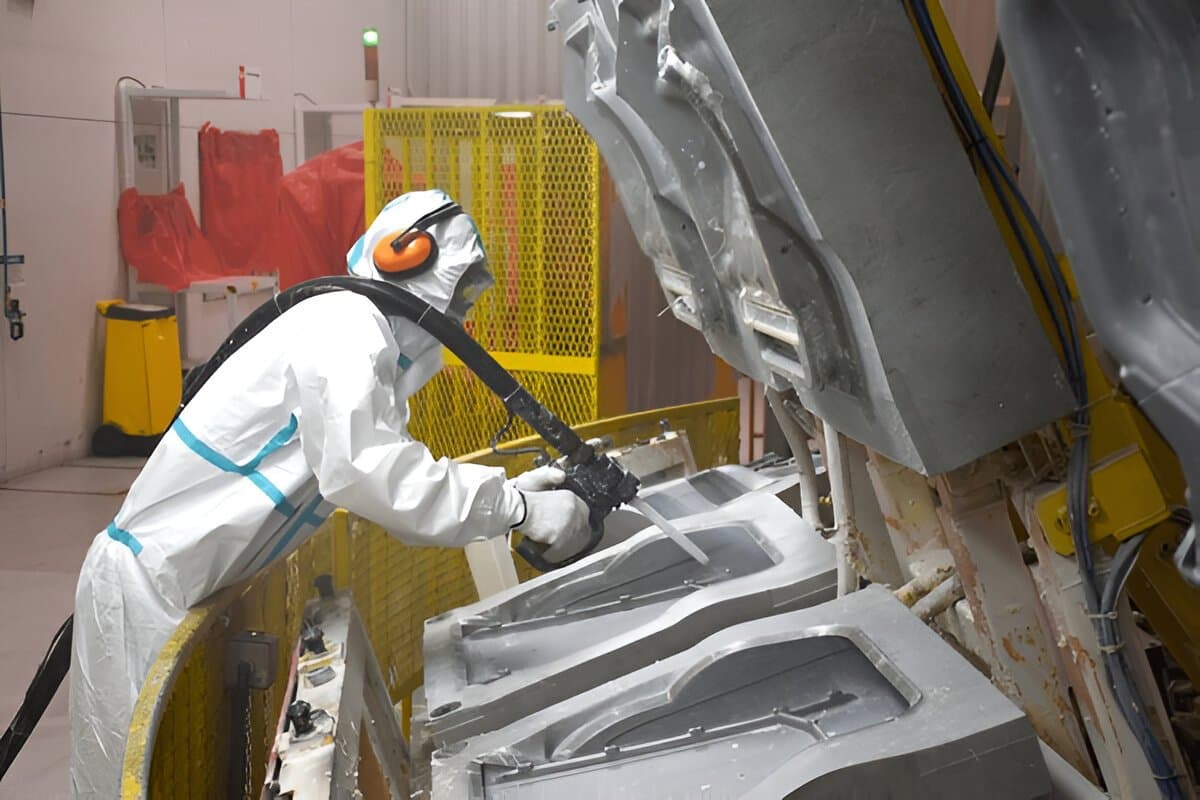
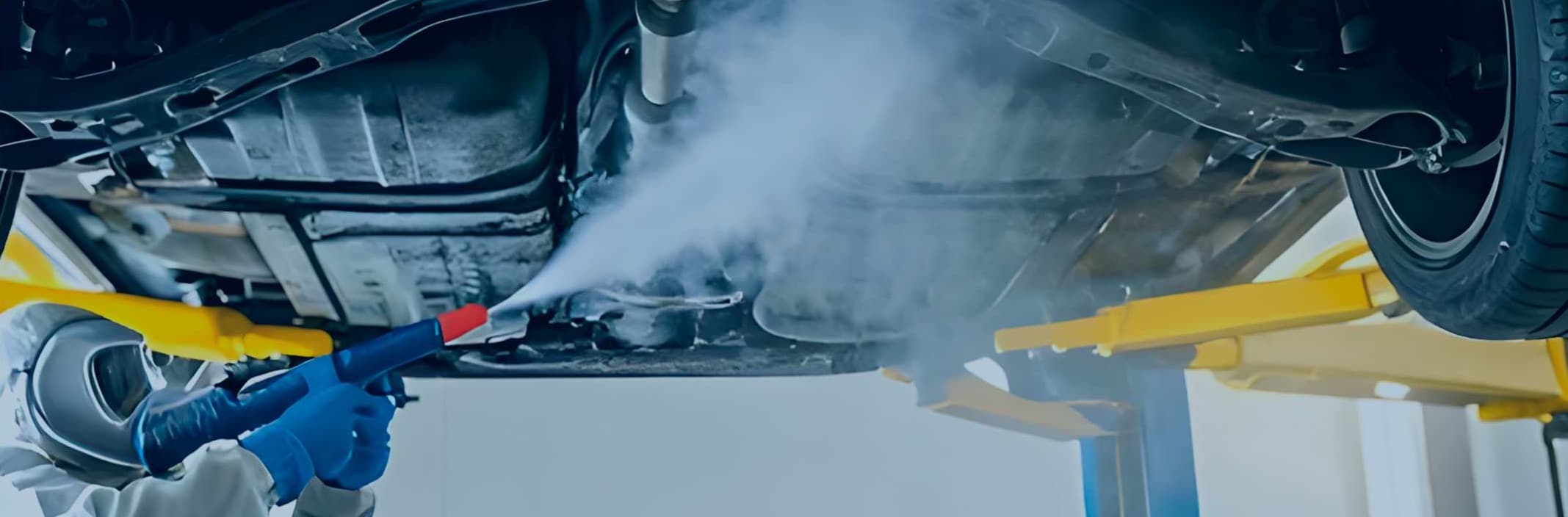
Dry ice blasting fires solid CO2 pellets at the surface. The pellet hits, the thermal shock makes the carbon layer brittle and lifts it off, and the pellet sublimates into gas. There is no blast media left behind. No water, no rinse, no chemical residue on anything that later touches food.
For a kitchen that matters in three specific ways.
No rinse water means nothing going down the floor drain into a grease interceptor that is already marginal. Anyone who has had a Metro Vancouver interceptor inspection knows why that is worth something. No water also means electrical equipment, controls and motors can be cleaned in place instead of being masked, dried and re-energized on a hope. And no chemical means no re-sanitizing step and no waiting period before the line goes back into service.
The equipment stays where it is. Ovens do not get dragged out. Hood plenums get cleaned with the filters out and the fan locked off, and the crew works off the same ladder the hood cleaner uses.
Where dry ice is not the answer: light nightly soil, food-contact surfaces that need a sanitizer cycle regardless, and the interior of horizontal duct runs. That duct work belongs to a certified hood cleaning contractor doing a wet wash with the proper access panels. We scope around them, not over them. Pretending otherwise is how a restaurant ends up with two invoices and one clean duct.
When laser fits a kitchen
Less often than dry ice, but it fits.
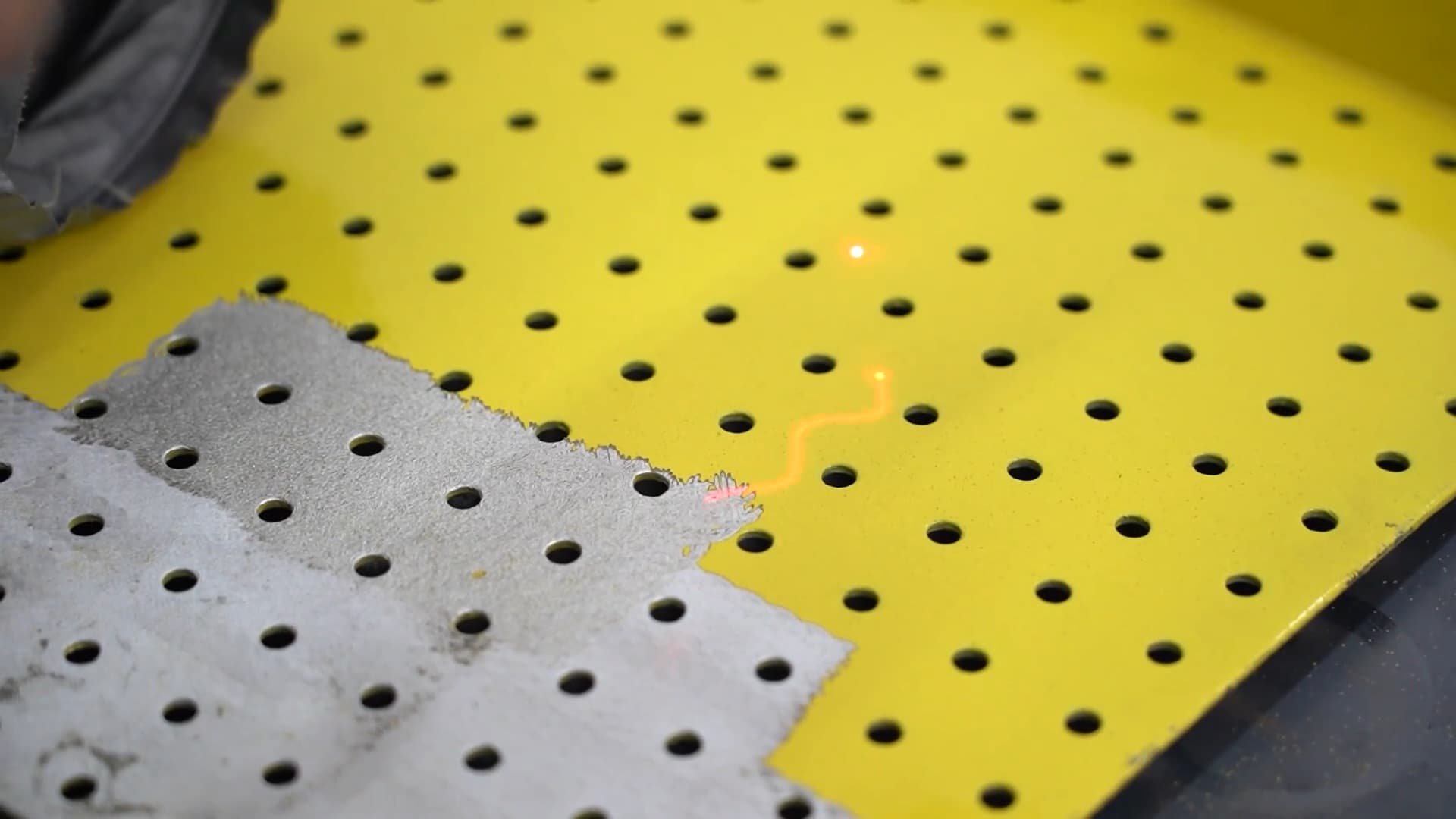
Laser cleaning is slower per square metre on large greasy areas, so nobody should be lasering a hood plenum. Where it earns its keep is precise removal on metal parts: conveyor chains and belts, grill grates, burner assemblies, cast iron that has been seasoned into a different shape entirely. It takes carbon off stainless without leaving the scratch pattern that a wire wheel or a grinding disc does, which matters if the surface is visible to customers or has to stay smooth for cleaning.
Parts work also happens off-site. A Burnaby or Delta commissary can send a pallet of racks and grates out, get them back the next day, and never lose a cooking hour.
Overnight windows and what they cost
Nobody cleans a Gastown kitchen on a Friday at 7pm.
Standard scheduling here is 11pm to 6am, or a Sunday night into Monday morning for places that close Mondays. Crew shows up after last service, the line is cooled and locked out, cleaning runs through the night, and the kitchen is back to the opening cook. On a restaurant clearing $8,000 to $14,000 on a Friday, the arithmetic on closing for a day is not close. Overnight costs more per hour and saves a full service.
Cooling time is the part operators underestimate. Ovens and fryers need to come down to something safe to work on, and that is one to two hours of the window gone before anyone touches equipment. Plan the shift end accordingly.
Confined space is the other planning item. WorkSafeBC treats duct interiors and some plenum access as confined space entry, with the permit, the gas testing and the attendant that goes with it. And because CO2 is heavier than air and settles, dry ice work in an enclosed kitchen runs with the exhaust fan on and a monitor in the room. Any contractor who shrugs at that question is telling you something about the rest of their practice.
How a night actually runs
Worth knowing what you are buying, because the sequence is where contractors differ.
Crew arrives at last service and waits for the line to cool while the filters come out and go into a soak. Fan gets locked off and tagged, hood plenum gets sheeted so nothing falls onto prep surfaces below. Dry ice work starts high and moves down: plenum ledges, fan blades and housing, then the equipment tops, then the sides and the wall behind the cook line. Vacuum recovery runs alongside, because the carbon that comes off has to land somewhere and it should not be your floor.
Ovens and any parts going off-site get pulled and tagged during that same stretch.
Last hour is reset. Filters back in, sheeting out, surfaces wiped and sanitized by the kitchen’s own protocol so the food-contact step is documented under your system, not ours. Photos get shot before the crew leaves.
Opening cook should walk into a kitchen that looks like it was never touched, except cleaner.
What the work costs in BC
Real brackets, Greater Vancouver, in CAD.
A single-line kitchen, hood plenum and fan plus two or three pieces of cooking equipment in one overnight window, runs $2,500 to $4,500. Add a second line or a second hood and you are at $5,000 to $7,500. Large multi-line operations, hotel kitchens, institutional and commissary work, $8,000 to $16,000 and usually split across two or three nights so the facility never goes fully dark.
Pan and rack programs are cheaper and more predictable: $1,200 to $2,200 for a batch off-site, against replacement cost that is several times that.
The things that move a quote by half in either direction are access, cooling time, and how long it has been. Ten years of carbon on a rotisserie is not twice the work of five years, it is closer to four times. Hoods that have never had the fan housing opened take longer on the first visit and much less on the second.
Building the schedule so inspections are boring
Work backwards from the fire inspection you know about. Book the deep clean three to four weeks out, not three days. That gives room for the "area not cleaned" note to turn into an access panel installed and a return visit, instead of a note on a sticker that follows you around.
Health inspections you cannot time, so you manage the baseline instead. Deep clean the equipment on a fixed cycle that matches your volume, and the unannounced visit stops being an event. Kitchens that run semi-annual equipment cleaning alongside their NFPA 96 hood schedule almost never get written up for grease accumulation.
Keep photographs. Before and after, dated, of the plenum, the fan, and each major piece of equipment. Our crews shoot them as standard and hand them over with the invoice. Insurers ask for exactly this after a claim, and so does a landlord at lease-end.
Laser Sharks runs WorkSafeBC-compliant, fully insured crews out of Greater Vancouver, with over twenty years of industrial cleaning behind the trade. We work overnight on kitchens across Vancouver, Burnaby, Richmond, Surrey, North Vancouver and Delta, and we coordinate with your hood cleaning contractor rather than competing with them.
If you have a fire inspection on the calendar or a piece of equipment that has stopped coming clean, ask for a quote and we will come look at it before service one evening. Site visits in the Lower Mainland are free, and the walkthrough takes about half an hour.