Every October the calls start. A property manager in Burnaby opens a crawlspace hatch for a pre-winter check, shines a light along the joists, and finds the underside of the subfloor gone grey-green from the perimeter wall inward. By November it is three or four of those a week across the Lower Mainland.
Attic mould removal in BC runs into a problem that a finished room never has: there is nowhere for water to go. Spray a biocide on a basement wall and it runs down to a floor you can squeegee. Spray the same product up into rafter bays and it soaks the sheathing, wets the insulation it drips through, and sits in a space with almost no air movement. You have treated a moisture problem by adding moisture.
That is the whole argument for doing this dry, and it is why crawlspaces and attics are where CO2 blasting earns its keep more clearly than anywhere else in a building.
Why wet treatment underperforms in framing
Bleach gets recommended constantly and it is the wrong product for wood. Sodium hypochlorite is mostly water carrying a small percentage of active chlorine. On a non-porous surface like a fibreglass shower pan it works fine. On Douglas fir, the chlorine reacts at the surface and stops, while the water carries straight into the grain. What comes back a season later is usually the same colony from hyphae that were never in reach of the product.
Quaternary ammonium products penetrate better and leave a film that keeps working, which is a real advantage on plywood. The trade-off is residue. In an attic over a townhouse, that residue is sitting three metres above a bedroom, and the first question a strata council asks is what happens when the furnace fan pulls attic air down through a leaky ceiling penetration.
Then there is the practical side that nobody mentions in product literature. A crawlspace in a 1970s Richmond rancher gives you 60 to 70 centimetres of clearance. A technician in a full-face respirator, tyvek, and gloves, dragging a pump sprayer on their side across a dirt floor under a vapour barrier, is working at maybe a third of normal speed. Every additional pass costs real hours.
Sanding and wire brushing solves the penetration problem and creates two new ones: it drives spores into the air in a confined space with no dilution ventilation, and on 50-year-old framing it eats structural fibre you would rather keep.
What dry ice blasting does differently up there
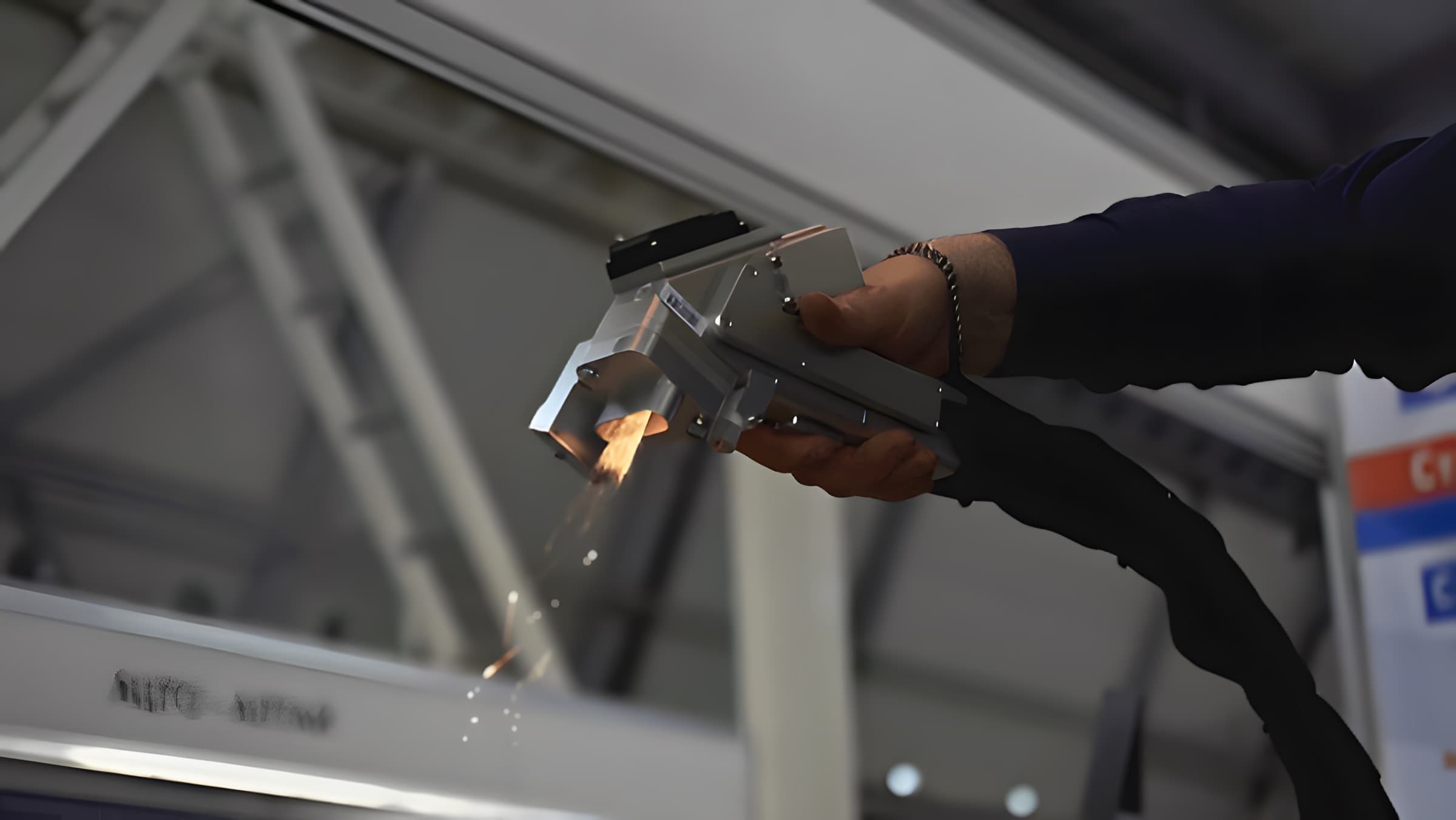
Solid CO2 pellets hit the surface at high velocity, flash from solid to gas, and the volume expansion under the contamination layer lifts it off the wood. The pellet is gone. There is no spent media on the crawlspace floor, no slurry in the insulation, and no rinse step.
Three things follow from that, and they matter more in framing than anywhere else:
The wood stays dry. Surface moisture readings taken right after blasting typically come back within a point or two of where they started. Nothing has to be dried down afterward, which removes two or three days of dehumidifier rental from the schedule.
Geometry stops being the constraint. Joist bays, the gaps behind strapping, the dead space where a rafter tail meets the top plate, the back side of blocking. A nozzle on a 15-millimetre hose reaches into places a brush cannot and a sprayer only reaches by flooding. In an attic, that means truss webs and the sheathing between them get treated at the same standard as the open field.
What comes off is the only thing you handle. The debris is the mould growth and whatever surface staining came with it, dropped onto poly sheeting and collected with a HEPA vacuum. On a Mount Pleasant character house we cleared 90 square metres of attic sheathing and filled slightly more than one contractor bag.
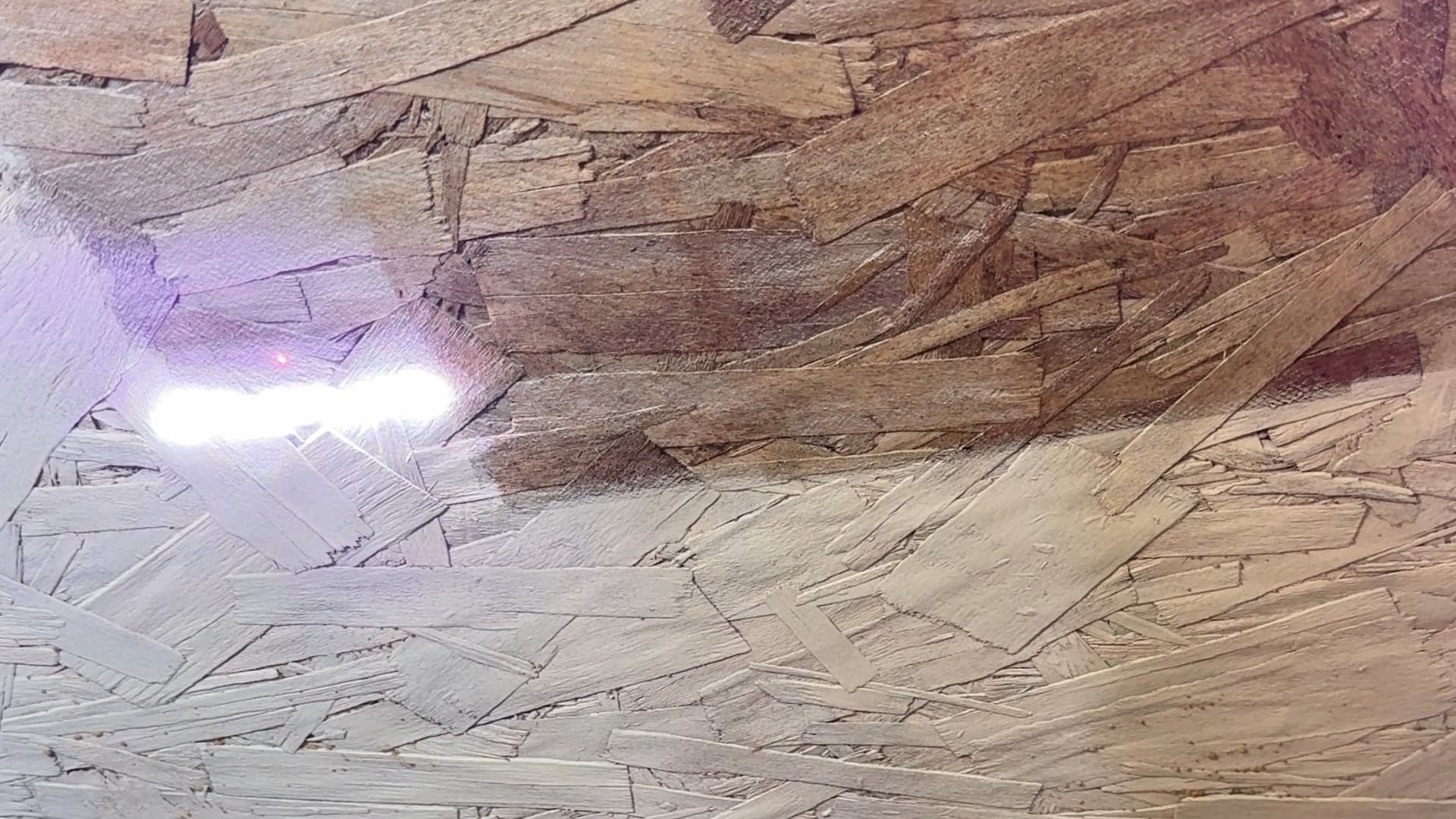
The finish is different from what people expect. Dry ice takes off the growth and most of the discolouration, but deep staining in old water-damaged sheathing can stay as a shadow. That is cosmetic, and a hygienist doing clearance work will tell you the same. If the strata wants uniform colour afterward, that is a coating conversation, not a remediation one.
Access, hose runs, and the CO2 problem
This is the part of the job that gets underestimated on the phone.
The machine stays outside, usually at the truck. Standard hose runs are 25 to 30 metres before pellet feed starts to suffer, which is enough for a townhouse attic accessed through a hallway hatch and enough for most crawlspaces entered from a perimeter door. A long rowhouse block or a crawl that runs under an addition at the far end of the building may need a mid-point relocation, and that is an extra mobilisation on the quote.
CO2 gas is heavier than air and it pools in low spots. A crawlspace is, by definition, the lowest enclosed space in the building. That makes this confined space work under WorkSafeBC rules regardless of how routine the cleaning itself is: written entry procedure, continuous atmospheric monitoring, forced ventilation moving air out of the space for the duration, and an attendant at the access point. Any contractor who wants to run a CO2 nozzle in your crawlspace without a gas monitor on the floor should not be down there.
Attics are the easier case, since CO2 settles away from the working height and gable or soffit venting gives you natural exchange. Even so, a negative air machine at the hatch does double duty: it keeps the space under pressure relative to the living area so nothing migrates down into bedrooms, and it moves gas out.
One hard stop worth knowing before anyone opens a hatch. If the attic insulation is loose grey-brown vermiculite with a glassy sheen, stop. Zonolite-era vermiculite is presumed to contain asbestos, and it is common in BC homes built or upgraded before 1990. That is an abatement job under a completely separate regulatory process, and blasting anywhere near it is not an option. Testing costs a fraction of what getting this wrong costs.
What BC insurers and hygienists ask for
Most attic and crawlspace mould work in this province gets paid for one of two ways: a strata contingency or maintenance budget, or an insurance claim tied to a water event. The second one comes with paperwork.
Adjusters want the source documented as fixed before remediation starts. In practice that is a roof penetration, a bathroom exhaust fan discharging into the attic instead of through the roof, or in crawlspaces a failed perimeter drain or missing ground vapour barrier. Clean a crawlspace in Delta without dealing with groundwater coming up through bare soil and you will be back within eighteen months. The barrier is not an upsell.
They also want before and after photography with moisture meter readings at the same reference points, a written scope of the area treated in square metres, and on larger claims a post-remediation verification by an independent hygienist. That verification is air sampling plus visual inspection, and it is not something the remediation contractor should be doing on their own work. Book it as a separate line item from a third party.
Dry work makes that verification easier to pass for a mundane reason: there is no elevated humidity in the space at the time of sampling to complicate the reading.
What it costs in the Lower Mainland
Ranges below are what these jobs land at across Greater Vancouver, assuming normal residential and small commercial scale.
Localised crawlspace, one bay or a corner under 20 square metres: $1,500 to $2,800. Usually a single day with two technicians.
Full crawlspace under a detached house or small multi-family unit, 60 to 120 square metres: $2,500 to $7,000. Clearance height, whether existing poly has to come out and go back down, and debris removal drive most of the spread.
Attic sheathing and truss webs, typical townhouse or detached, 70 to 150 square metres: $3,000 to $9,000.
Add-ons that move the number: ground vapour barrier supply and install, insulation removal and replacement where it is contaminated or compressed, negative air and containment at multiple access points, work restricted to evenings in an occupied building.
Chemical treatment of the same area quotes lower on the first invoice, often 30 to 40 percent under. The comparison only holds if the treatment lasts. Factor drying equipment rental, the second visit rate on recurrence, and in attics the cost of pulling and replacing insulation that got soaked during application.
What actually decides the quote is a site visit. Clearance height, access route, how much of the growth is surface versus embedded, and what the insulation situation is — those four things account for most of the variance between a $2,500 job and a $7,000 one, and none of them can be assessed over the phone.
The recommendation
For attics and crawlspaces specifically, blast it dry. The confined geometry, the absence of drainage, and the fact that these spaces got mouldy because of a moisture problem in the first place all point the same direction. Chemical treatment still has its place on hard non-porous surfaces and in situations where a residual film earns its place, but framing lumber in an unconditioned space is not that situation.
Fix the water source first. Test before you touch vermiculite. Get the clearance sampling done by someone who did not do the cleaning.
Laser Sharks has been doing industrial and building remediation work across Greater Vancouver for over twenty years, fully insured, with WorkSafeBC-compliant confined space procedures on every crawlspace entry. We work chemical-free by default, which is the reason restoration GCs and strata managers from North Vancouver to Delta call us for the spaces where adding water is the last thing anyone wants.
If you have a crawlspace or attic that came back ugly on an autumn inspection, book a site assessment and we will tell you what the space actually needs, including when the answer is that it is not our job. More on the method itself is on our dry ice blasting page.