Three days after a warehouse fire, the same question comes up on every walkthrough. The adjuster, the restoration contractor and the owner stand under a row of blackened beams, and someone asks whether the steel can stay. Nobody on that floor can answer it. Not yet.
Fire damaged steel cleaning is what turns that question into a decision. Until the soot, the blistered paint and the char are off the members, the structural engineer is looking at a coating, not at steel. And the insurer will not approve a repair scope, or a replacement scope, that is based on a guess. So the first real deliverable after a commercial fire is usually not a repair. It’s a clean surface and a photo log.
Nobody can judge the steel through the paint
A structural engineer assessing fire-exposed steel is looking for a short list of things: distortion, local buckling of flanges and webs, damage at bolted and welded connections, and signs of how hot the member actually got. Some of that is visible through soot. Most of it isn’t.
The paint itself is a rough thermometer. Blistered paint tells you the surface got hot. Paint that has charred to a powder tells you it got a lot hotter. Steel where the coating burned off entirely, showing scale or heat tint, is the zone the engineer will look at first. But those are clues, not measurements. To go further, engineers often take portable hardness readings on the steel itself as a proxy for strength, and a hardness tester needs clean, bare metal to give a usable number.
Here’s the part that surprises owners. Hot-rolled structural steel that stayed straight often keeps most of its capacity once it cools. High-strength bolts, cold-formed sections, and some welds are less forgiving. Which category your building falls into is the engineer’s call, not the cleaner’s. Our job is to give them something to look at.
Undercutting is the other reason to strip rather than wipe. Firefighting water gets under cracked paint, and so do the acidic combustion products. What looks like a sound coating from the floor can be sitting on a layer of fresh corrosion that nobody will see until the recoat fails.
What insurers ask for before they approve the scope
Every adjuster runs their file a little differently, but the questions are consistent. They want to know what was damaged, what the pre-loss condition was, what it takes to restore it, and whether cleaning is cheaper than replacement. Most commercial property policies pay to restore like kind and quality, so the insurer’s interest and the owner’s interest usually line up on one point: if the steel can be saved, saving it is the right outcome.
In practice, the steel part of the claim file needs:
- A pre-cleaning photo log keyed to the building grid. "Column C-4, north face" rather than "a column near the loading door." The same positions get shot again after cleaning.
- Coating test results for older buildings. Anything built before the 1980s may carry lead paint, and that changes the exposure control plan and the waste handling.
- A method statement. What will be used to strip the members, how the waste is captured, and how the work affects the rest of the building.
- A test patch. One representative section cleaned first, photographed, and shown to the engineer and adjuster before the full scope proceeds.
- The engineer’s letter. Written against cleaned surfaces, identifying which members are sound, which need repair, and which need replacement.
- A recoat specification. What surface preparation standard the new coating needs, and whether the cleaned surface meets it.
Claims stall when the order gets scrambled. The most common version: the building gets pressure washed and painted over to look presentable, and then the engineer asks for exposed steel on members that are now under fresh coating. Now you’re stripping twice, and the adjuster is asking why.
Soot, scorch or corrosion: they’re three different jobs
Walk a fire-damaged building with a flashlight and you’re looking at three separate problems layered on the same steel.
Soot and smoke residue sits on top. It’s greasy or dry depending on what burned, and it’s corrosive. Burning PVC, cable jacketing and many plastics releases chlorides, and once that residue meets moisture from the fire hose, bare steel can start to flash rust in days. This is the time-sensitive layer.
Scorched and failed coating is the middle layer. Blistered paint, charred binder, and on fire-rated structures, intumescent coating that has already swelled into a thick char. Intumescent that has done its job has to come off and be reapplied. It will not protect the steel a second time.
Post-fire corrosion is underneath. Flash rust on steel where the paint burned away, plus undercut corrosion beneath coating that cracked from heat.
The method that suits the soot layer is not necessarily the method that suits the other two. That is where a lot of fire jobs go sideways.
Stripping methods on a fire site
Abrasive blasting is the traditional answer for heavy paint removal, and on a fire site it creates new problems. The spent media mixes with soot, char, and possibly lead, and all of it becomes contaminated waste that has to be collected and disposed of. The dust travels through a building that is already a restoration job, into ceiling spaces and equipment the restoration contractor just cleaned. Silica sand brings WorkSafeBC’s exposure control requirements for respirable crystalline silica on top of whatever the lead assessment turned up. Containment becomes the project.
Chemical strippers handle intact paint reasonably well and char badly. They also leave residue on steel that is about to be inspected and recoated, and the rinse water now carries soot, stripper and old coating. Somebody has to capture it.
Wire wheels and needle scalers are fine for a few square metres around a connection. For a building’s worth of beams, they’re slow, loud, and they burnish rather than clean the bottom of any pitting.
Dry ice blasting is the right tool for the soot layer across everything else in the building: electrical gear, racking, machinery, concrete, ductwork. CO2 pellets sublimate on impact, so there’s no media to clean up and no water added to a structure you’re trying to dry out. It will also take loose char off steel. What it won’t do reliably is strip well-bonded paint or intumescent down to bare metal.
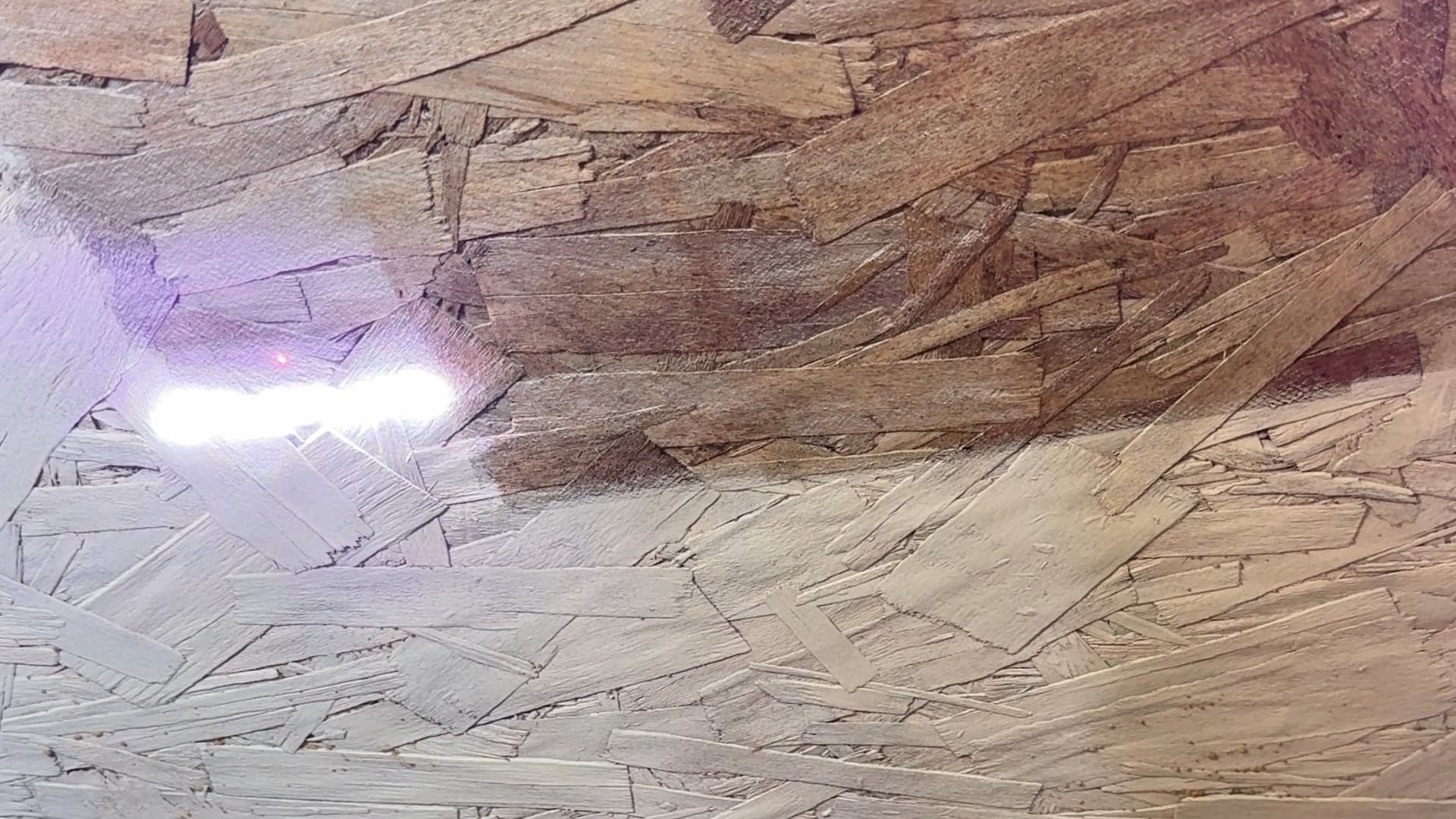
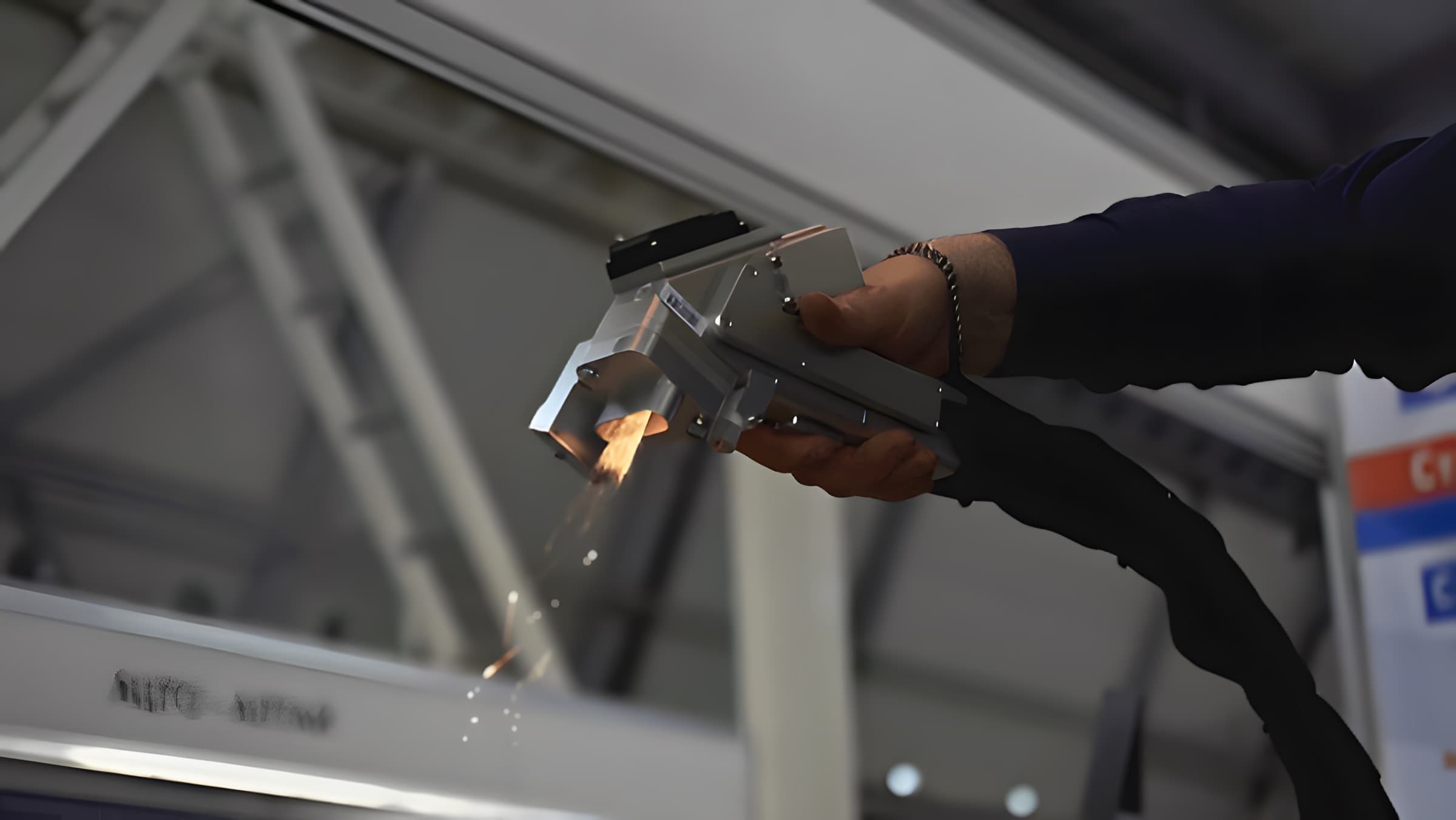
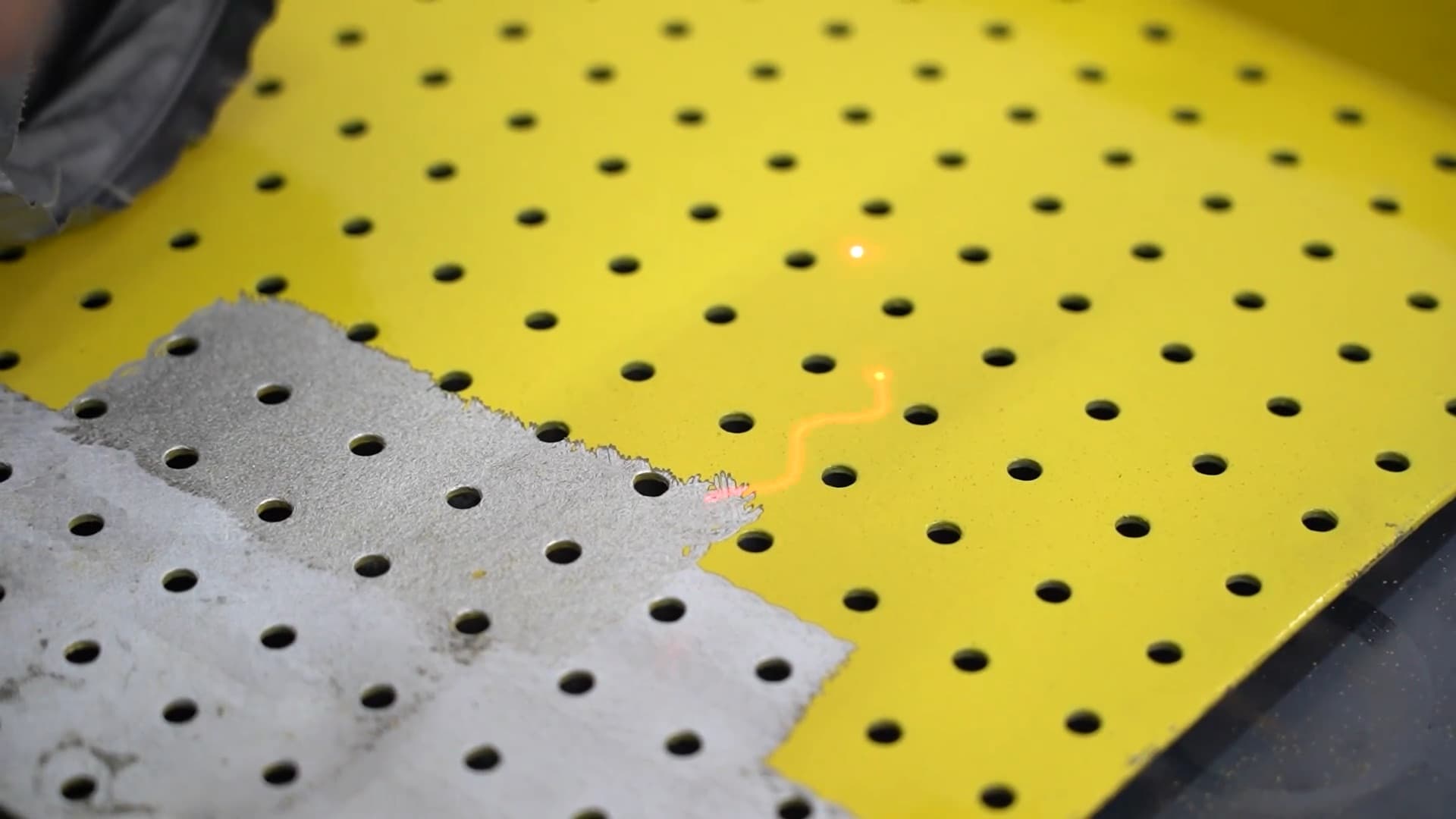
Laser cleaning is the tool for the steel members themselves. It removes soot, charred coating, residual paint and flash rust down to bare metal, and it’s selective: you can expose a connection, a flange edge or a hardness-test spot without stripping the whole member. The removed material is captured as fume at the head by extraction, so the waste stream is filter media, not a skip bin full of contaminated grit.
A note on lead, since it comes up on older buildings in Burnaby, New Westminster and East Vancouver. Laser does not make lead paint safe. It makes it containable. The fume still contains lead, which is why the extraction runs with HEPA filtration and the crew works under a lead exposure control plan. What changes is the volume of hazardous waste leaving the site.
On most commercial fire jobs, the practical split is dry ice for the building and contents, laser for the structural steel. Sandblasting still makes sense on a stripped-out industrial shell with no contents, no occupied neighbours and a lot of heavy, well-bonded coating. That describes fewer fire sites than people assume.
The clean-versus-replace math
Take a typical scenario. A tilt-up distribution warehouse in Delta, fire contained to one bay. Six columns and roughly 40 metres of roof beam are blackened, paint blistered, one beam visibly scorched near a connection.
If the steel gets replaced without being properly assessed, the scope includes engineering, temporary shoring, crane time, demolition of the existing members, fabrication, erection, fire protection, and making good the roof. Steel fabrication lead times in the Lower Mainland run several weeks even in a quiet market. The steel line item alone can reach $40,000 to well over $100,000 depending on member sizes and access, before business interruption.
If the steel gets stripped and assessed first, the cleaning scope for that bay typically lands between $4,000 and $12,000 for laser work on the members, plus $1,500 to $8,000 for dry ice on the surrounding soot. A two-person crew with equipment runs $2,400 to $4,500 per shift, and a bay like this is usually two to four shifts. Add the engineer’s assessment and a recoat. If the engineer clears five of the six columns and the beam needs a local repair at one connection, the owner has saved most of the replacement cost.
Then the number that actually drives these decisions. Say the bay supports $15,000 a day in shipping throughput. Six weeks waiting on fabricated steel is $630,000 of business interruption exposure. Two weeks of cleaning and assessment is $210,000. The insurer does that arithmetic too, which is why an adjuster will usually fund a test patch and an engineering review before approving a replacement scope.
Sometimes cleaning reveals steel that has to go. A buckled flange is a buckled flange. That result is still worth having, because now the replacement is justified on the record and the members around it are cleared.
Timing: the chloride clock
The order that works on fire-damaged steel:
- Document everything first, before anyone touches a surface
- Stabilize the building: power, water, weather protection, dehumidification
- Dry ice the soot off the building and contents, starting with electrical equipment and machinery
- Laser strip the steel members the engineer needs to see, beginning with test patches
- Engineer’s assessment on cleaned surfaces
- Repair, replace or recoat, with the coating inspector signing off on surface prep
One thing to sort out before the recoat, not after. Laser cleaning leaves bare, clean metal with very little surface profile. Many coating systems accept that. Some high-build epoxies and intumescent products call for a blast profile in the spec. If yours does, get the coating inspector to confirm what’s acceptable on the laser-cleaned surface, or plan a light profiling step for the members being recoated. Better to know at the method statement stage than at the final inspection.
Speed matters here for a physical reason, not a sales one. Chloride-laden soot on damp steel keeps corroding every day it sits there. On a fire at an Annacis Island or Richmond industrial site, where coastal humidity is already working against you, a two-week delay before anyone starts cleaning can turn a coating problem into a section-loss problem.
Working with the restoration contractor and the adjuster
Most of our fire damaged steel cleaning comes through restoration general contractors, and we work as their specialty sub: we take the steel and the sensitive equipment, they run the site. We produce the photo log, method statement and test patch in the format the adjuster’s file needs, and we’ll walk the engineer through the cleaned members if they want a second set of eyes on what the cleaning revealed.
Laser Sharks is fully insured, WorkSafeBC compliant with exposure control plans prepared for each site, and was named Best Cleaning Services in BC for 2025 by CBRB. We work across Greater Vancouver and the Fraser Valley, from Burnaby and Port Coquitlam to Delta, Richmond and North Vancouver.
If you’re managing a fire loss with steel that needs a decision, request a quote or call 236-660-4248. We’ll look at the members with you, recommend a test patch location, and give you a written scope the adjuster can work with.