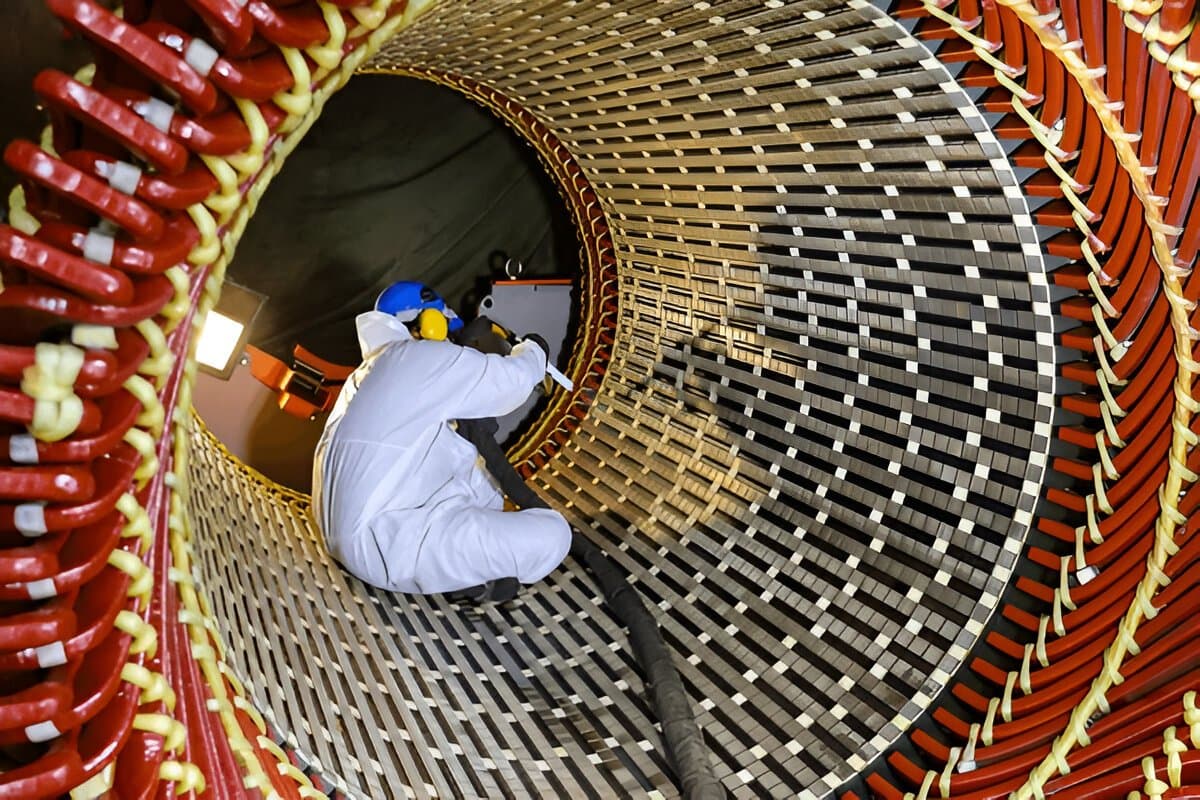
A property manager in Mount Pleasant called us last spring after a fire damage assessment came back ugly. Standard commercial HVAC cleaning in Vancouver had already been done by the restoration team. The visible surfaces looked fine. The HVAC system passed a basic inspection. Six weeks after reopening, tenants were complaining about a faint smoke smell every time the rooftop unit cycled on. The rotary brush and vacuum the duct cleaners had used couldn’t touch the soot bonded to the inside of the supply trunks.
That gap, between what standard duct service delivers and what an industrial decontamination job actually requires, is where most facility managers run into trouble. The two services look similar in a quote. The price difference is real. So is the cleaning quality on contaminated systems.
This guide is for facility managers, property managers, and operations leads in Greater Vancouver who need to decide whether their HVAC system needs standard duct service or industrial-grade work.
What standard duct cleaning actually does
A NADCA-certified duct cleaning crew arrives with rotary brushes, agitation tools, and HEPA-filtered negative-air machines. They open inspection ports. They brush the duct interiors loose, capture the debris, and clean the coil and blower as practical. For a typical office tower or strata building in a clean operating environment, that’s the right tool for the job.
Pricing in BC runs roughly $0.30 to $0.70 per square foot of building floor area for a standard commercial scope, or $25 to $40 per supply register on a piecework quote. A 50,000 sq ft Burnaby industrial park unit lands in the $15,000 to $35,000 range for a full system. Most jobs finish in two to four days.
This works fine when the contamination is dust, fiber, and ordinary office-grade debris. It stops working when the surface contamination is soot, biofilm, kitchen grease, or production residue bonded to the duct wall.
Where standard methods fall short
Three failure modes show up over and over in Greater Vancouver.
Post-fire and post-smoke systems. Smoke particulate doesn’t sit on duct walls. It bonds. Heat from the fire, even a small unit fire in a Delta warehouse, drives oily soot into the galvanized surface and into the insulation lining. Rotary brushes lift loose material and smear the rest. The system reads as clean on a swab test in the wrong spot. Six weeks later the smell comes back the first warm day.
Food production and beverage facilities. Brewery exhaust ducts in East Vancouver and food production lines on Annacis Island accumulate a kind of bonded residue that brushes can’t move. The contamination layer becomes part of the duct wall. CFIA and BCCDC audits flag this. A standard duct cleaner has no remediation path for that surface, only escalation.
Healthcare and lab HVAC. Hospital and clinical environments in Burnaby and North Vancouver have biofilm risks that brushing alone can spread before the vacuum captures it. The compliance bar on these systems is built around verification, not appearance. Standard scopes don’t include the verification work the facility actually needs.
In each case the failure isn’t the duct cleaner being lazy. The failure is the wrong tool reaching for the wrong job.
Where industrial methods take over
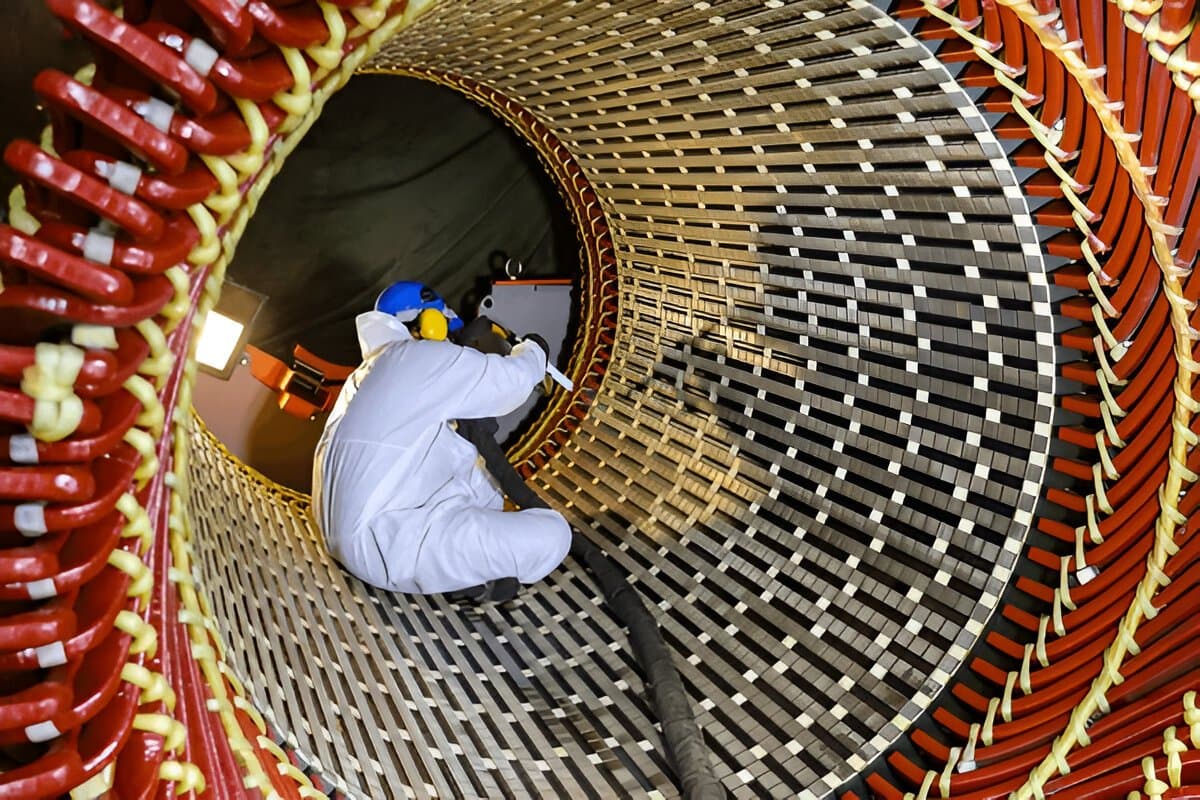
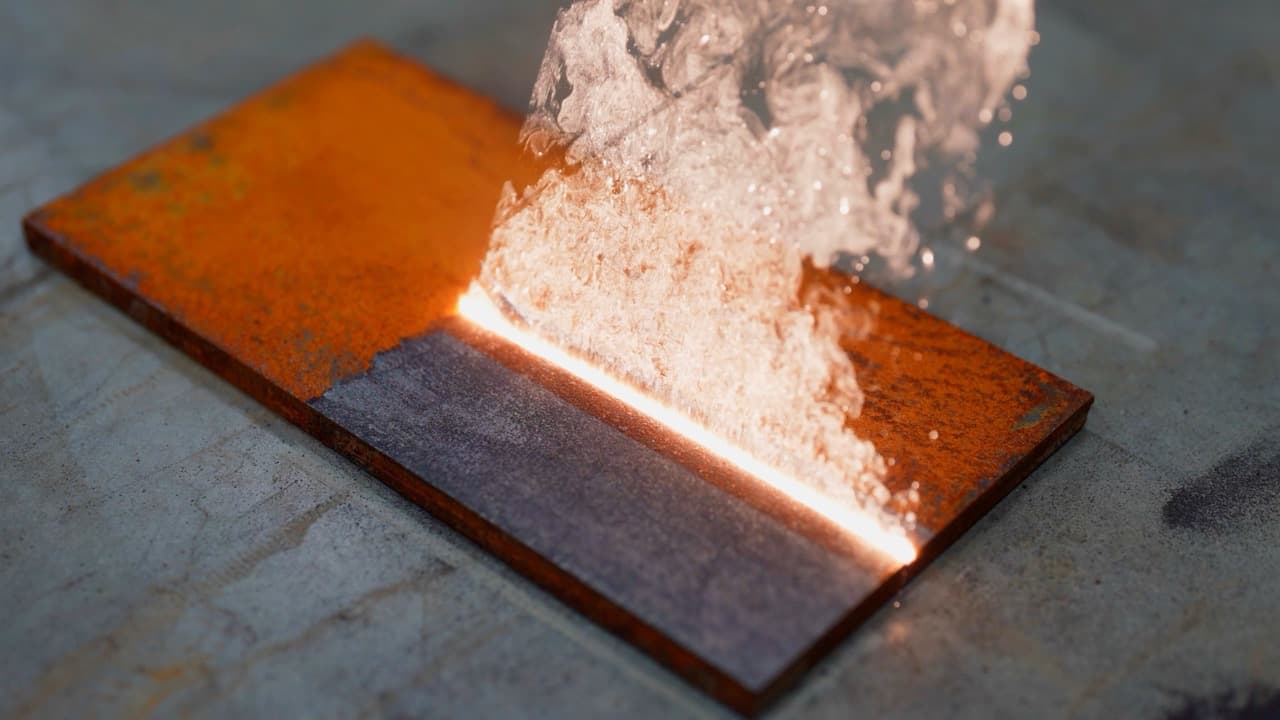
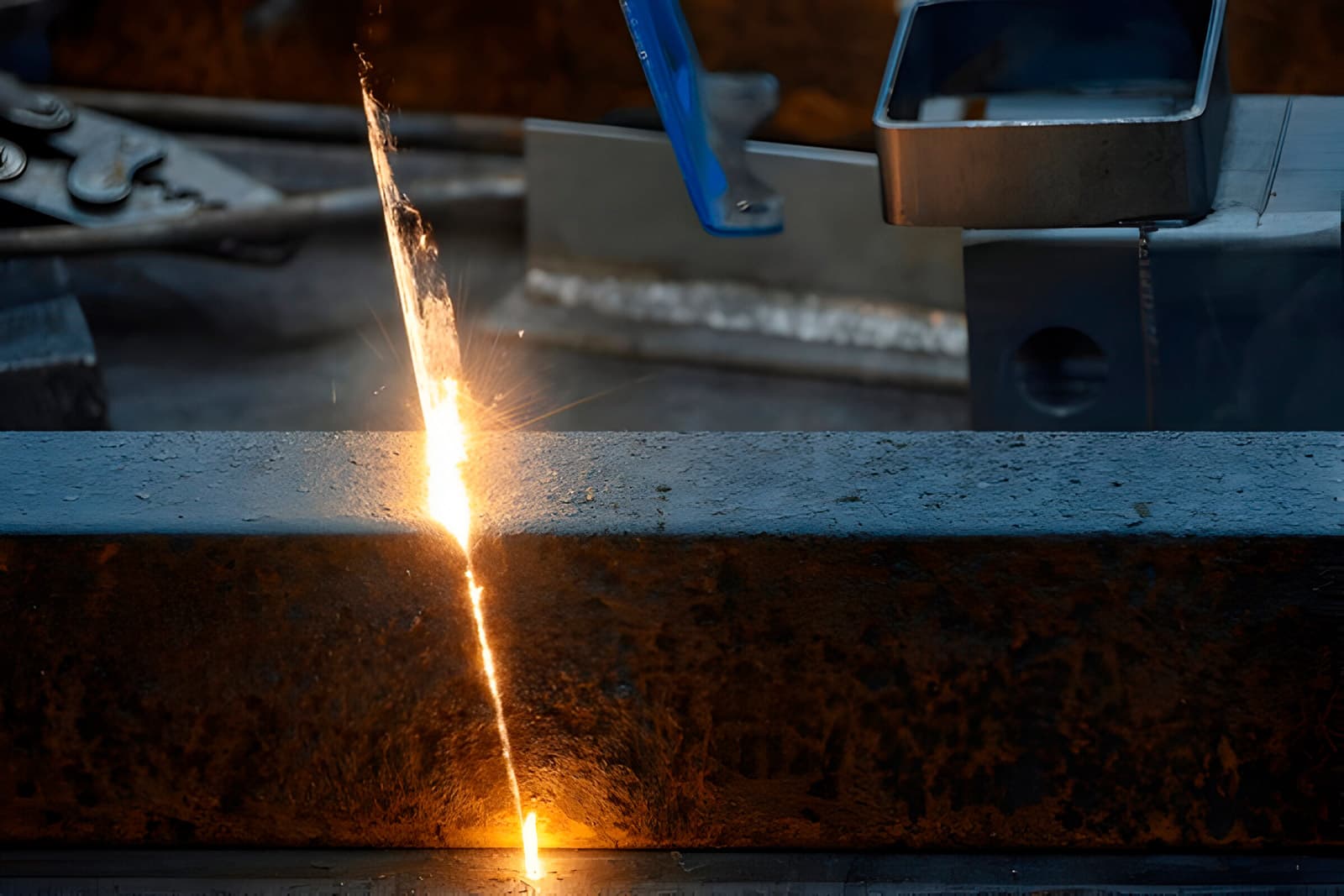
Dry ice blasting changes the math on contaminated HVAC systems. CO2 pellets accelerated through a blast nozzle hit the surface, sublimate to gas, and lift the bonded residue without abrasion, without moisture, and without leaving secondary waste. The duct wall stays intact. The contamination becomes a dry solid that gets vacuumed out the same way any other debris does.
For BC facility managers, the practical differences look like this.
No water in the system. A traditional chemical clean introduces moisture into ducts and insulation. In Greater Vancouver’s humidity that’s a mold risk window of 48 to 72 hours. Dry ice leaves the surface bone dry.
No chemical residue. Food production, pharma, and medical facilities can’t carry residues forward into the next shift. Dry ice leaves nothing behind. CO2 is already part of the air the system circulates.
Better surface result on bonded contamination. Smoke residue, kitchen grease, production scale, biofilm. These come off the duct wall, not just the dust layer above them.
Pricing for industrial HVAC decontamination in BC sits in the $4,500 to $25,000 range per zone or system depending on accessibility, contamination type, and access port availability. A full mid-size commercial system in Richmond runs $18,000 to $45,000 done properly with dry ice blasting on the high-load sections and conventional brush-and-vacuum on the clean runs.
That’s two to four times standard duct cleaning pricing on the same square footage. The reason it’s worth paying for is usually written into either an insurance claim, a regulator’s report, or a tenant complaint that won’t go away.
The certification stack that matters
Three credentials carry weight in BC commercial HVAC work.
NADCA (National Air Duct Cleaners Association). This is the floor for any commercial duct cleaning quote. ASCS certification means the technician was trained in the standard cleaning method. Skip any quote that doesn’t reference NADCA on commercial work.
BCCDC (BC Centre for Disease Control) guidelines. Not a certification in the same sense, but a documented framework that food, healthcare, and assisted-living facilities need to satisfy. A cleaner who can map their scope back to BCCDC categories is doing the documentation work that an audit will actually ask for.
WorkSafeBC compliance on the job site. Confined-space work, hot-work permits, and respiratory protection on contaminated systems all live under WorkSafeBC rules. A vendor who can’t produce safe-work procedures on request shouldn’t be in your building.
For industrial decontamination scopes, ask for project documentation that includes pre- and post-cleaning surface samples on the contaminated sections, not just visual confirmation. A serious vendor expects this question.
Where the scope boundary sits with HVAC contractors
A common friction point in BC commercial buildings. The building’s HVAC contractor handles annual coil and filter service, sometimes light duct work. The duct cleaning vendor handles the system interior. The industrial cleaning vendor handles contaminated jobs that fall outside both scopes.
In practice the boundary should be drawn around the contamination, not around the equipment. A clean office system with a routine filter swap stays with the HVAC contractor. A duct interior cleaning on a clean building stays with the NADCA-certified duct vendor. A post-fire system, a food production system that failed an audit, a biofilm event in a healthcare facility. Those need industrial methods regardless of which contractor owns the equipment on paper.
Three quick rules that prevent overlap arguments:
- The HVAC contractor signs off on system reassembly and operational testing after any deep cleaning scope. They own the mechanical health of the equipment.
- The duct cleaning vendor handles ordinary contamination across the whole system as a single scope.
- The industrial cleaning vendor handles contaminated zones, brings the documentation, and stays in scope on the rest of the system.
A vendor who can’t articulate this boundary on the first walkthrough is going to create scope arguments later.
What a real industrial HVAC cleaning looks like in BC
A recent project in a Richmond food production facility ran like this. The plant had a routine BCCDC audit flag on a section of overhead ducting above a heated processing line. The standard duct cleaning vendor had done two passes with brush and vacuum across 18 months. The contamination layer kept coming back on swab tests.
Scope of work:
- Isolated and tarped the contaminated zone, about 12,000 sq ft of supply ducting above the line
- Cut access ports at six points sized for the dry ice nozzle reach
- Pre-cleaning swab samples at four documented test points
- Dry ice blasting on the contaminated zone over a single 48-hour shutdown window
- Post-cleaning swabs at the same four test points plus two random verification points
- Standard brush-and-vacuum on the connected office and admin ducts as a separate line item
Total: $32,000 CAD across the contaminated zone, with a separate $8,500 line for the standard scope on the rest of the system. Downtime: one shutdown window the plant had already scheduled for maintenance. Re-audit cleared.
The same contamination would have cost the plant another year of audit flags and remediation cycles using standard methods, plus the operational disruption of repeated cleanings that didn’t hold.
The downtime math facility managers actually run
The lever that moves industrial HVAC cleaning quotes from “expensive” to “obvious” is downtime cost.
A 50-person food production line at average BC wages and overhead loses roughly $4,000 to $7,000 per hour of unplanned shutdown. A hospital wing under decontamination loses revenue per closed bed plus the regulatory exposure. A commercial tenant suing over indoor air quality is a number with no ceiling.
Spending an extra $20,000 to do the cleaning once with the right method, versus three times with the wrong one, pays back the first cycle. That’s the math facility managers should be running, not the line-item comparison.
When the standard quote is the right call
Most commercial HVAC systems in Vancouver don’t need industrial methods. A clean office tower in Mount Pleasant on a standard service rotation should stay with a NADCA-certified duct vendor on the regular cycle. A new strata building’s annual scope is duct cleaning, not decontamination. Don’t pay industrial rates for ordinary work.
The trigger for escalation is contamination type, not building type. Soot, biofilm, kitchen grease, production residue, audit failure, persistent odor, post-incident systems. Those are the flags that move the quote into industrial scope.
When the contamination matches the standard cleaning method, standard pricing applies. When it doesn’t, the right method is the one that clears the system the first time.
What to ask any HVAC cleaning vendor in BC
A short list of questions that filters serious vendors from generalists:
- What’s your NADCA certification status and who on the crew holds it?
- What’s your protocol if we find contamination your standard method can’t clear?
- Can you produce pre- and post-cleaning verification samples, and at what additional cost?
- What’s your WorkSafeBC documentation on confined-space and respiratory protection?
- For food production or healthcare scopes, how do you document compliance against BCCDC categories?
- Do you have referenceable BC projects in our industry?
Vendors who answer all six on the first call tend to be the ones who can deliver on complicated jobs. Vendors who deflect on any of them tend to escalate scope mid-project.
Laser Sharks on commercial HVAC scopes
We handle industrial HVAC decontamination across Greater Vancouver and the Lower Mainland: food production lines, post-fire systems, healthcare ducts, and large commercial buildings where standard duct cleaning hit its limit. Eco-friendly methods, full WorkSafeBC compliance, BCCDC-aligned documentation when the scope calls for it. Fully insured, twenty-plus years of industrial cleaning experience between the senior crew.
If you’re working through a duct cleaning bid right now and the contamination type doesn’t match the standard scope, request a quote and we’ll walk through whether industrial methods are the right call before you commit to the wrong service tier. For background on the underlying method, the dry ice blasting page covers the technical detail.
Common questions
When is standard duct cleaning not enough?
When the system has grease, biofilm, or contamination that NADCA-style vacuuming does not remove. That is where industrial methods take over.
Can HVAC equipment be cleaned without a long shutdown?
Often, yes. Dry ice methods leave no moisture or residue, so equipment returns to service quickly, which is the downtime math facility managers run.
What should I ask an HVAC cleaning vendor in BC?
Ask what method they use beyond vacuuming, how they document results, and where their scope ends versus the HVAC contractor’s.
Related reading
- CO2 Blasting Services Vancouver: What BC Buyers Need to Know
- Dry Ice Cleaning Food-Grade Equipment: BC Practical Guide
Compare options for your site with our dry ice blasting service, or request a quote.