
A typical fall call goes like this. Eleven forklifts are coming off a three-year lease at a distribution centre in Delta, and the leasing company wants them inspected, photographed and consigned within a month. The masts are coated in chain lube and warehouse dust, a couple show hydraulic weep around the tilt cylinders, and one has a capacity plate nobody can read. That is where most industrial equipment decontamination in BC starts before resale or auction. The work is to take the grease, residue and rust off so a buyer can judge the machine, and to leave intact the things that prove its history: serial plates, hour meters, certification labels and sound factory paint.
Experienced bidders walk past a used loader with fresh paint on the boom. They have seen enough spray-can jobs over cracked welds and leaking seals to assume the worst, and they bid that way. Below is how we prepare industrial equipment for resale with dry ice blasting and laser cleaning, what it costs in CAD, and the jobs we send to other trades.
What a resale-ready clean looks like
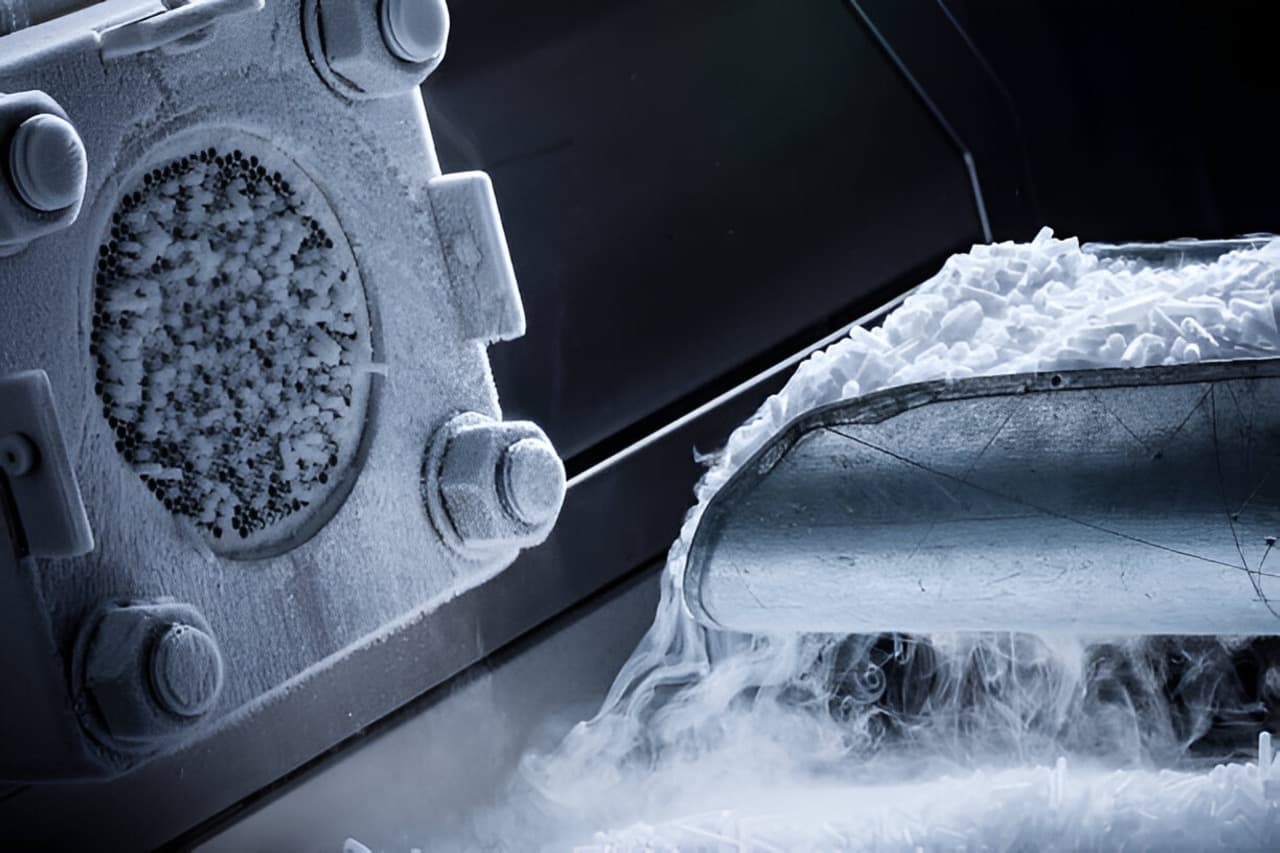
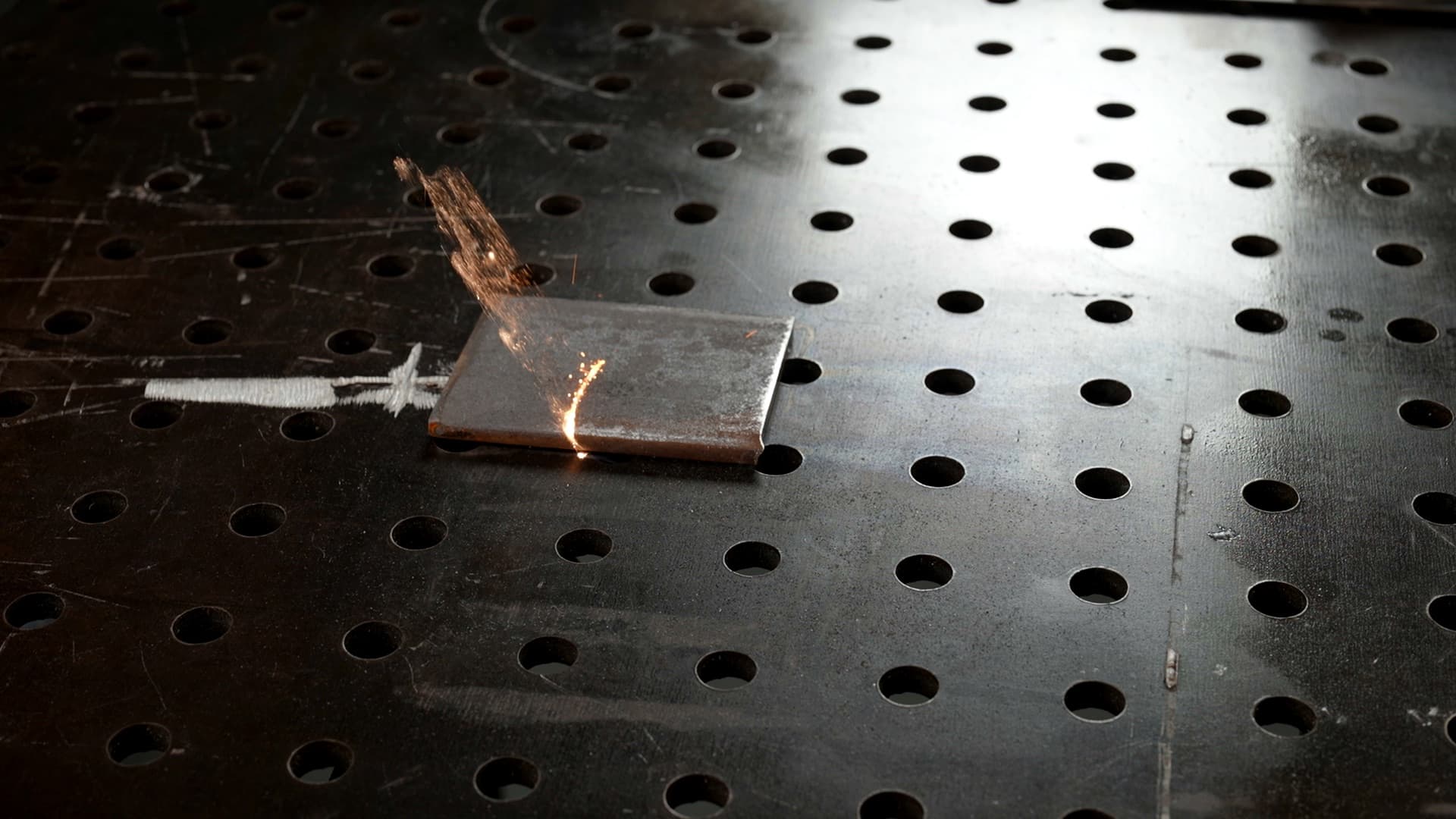
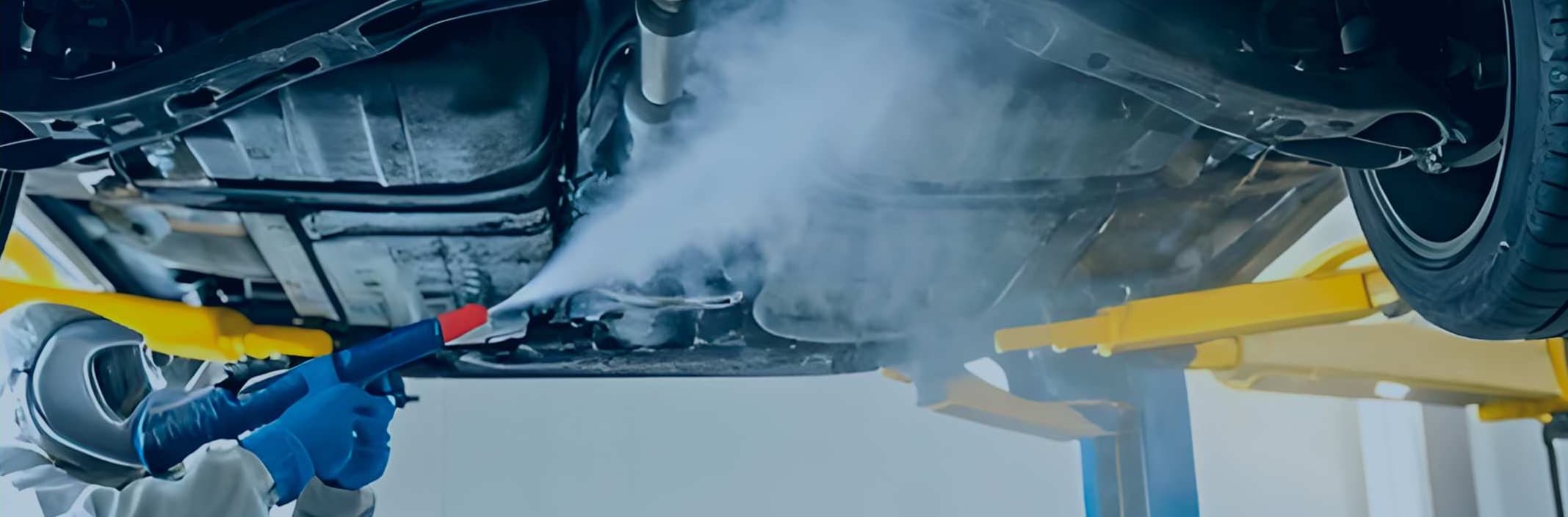
On most used equipment headed to an auction yard, a dealer lot or a buyer’s inspector, dry ice blasting does the bulk of the work. It lifts grease, hydraulic oil, road film, product residue and soot without water, so nothing gets driven into bearings, electrical connectors or cylinder seals, and there is no oily runoff to contain. Laser cleaning handles rust, mill scale and failing paint on frames, booms and forks, where the buyer needs to see bare steel and weld beads. Serial plates and decals get masked or cleaned at low settings so they stay readable.
A single forklift or skid steer usually costs $1,000 to $2,500 to prepare once mobilization is counted. A batch of ten on one site drops the per-unit price to roughly $500 to $900.
Why buyers distrust fresh paint
Paint is the quickest way to make a used machine look younger, and buyers know it. A coat over a boom or frame hides hairline cracks at weld toes, old weld repairs, wear marks around pins and bushings, and the oil trails that show which seal has been weeping. A contractor’s inspector who drives down from Prince George to look at a machine has seen enough painted-over repairs to knock them off the price before the engine is started.
Paint also goes on badly over contamination. Enamel sprayed over a film of hydraulic oil starts lifting within a season, and the next owner finds the grease underneath when it peels. That conversation usually comes back to the dealer.
A cleaned machine tells the buyer what they are getting. Sound factory paint stays on. Oil trails come off, so a leak that appears after a ten-minute run is a current leak, and the buyer can see which fitting it comes from. Welds are visible, and so is wear. A buyer prices wear they can measure as wear, and prices wear they can’t see as risk, which costs the seller more.
The math for a dealer is short. Say a used wheel loader is expected to bring $140,000. If clear photos and an easy inspection move the final bid by 2%, that is $2,800, against a cleaning bill of roughly $2,000 to $3,500 for a machine that size. On forklifts the margin per unit is thinner, which is why lease companies tend to batch them.
What decontamination means on used equipment
The word covers different work depending on where the machine spent its life.
Food and beverage equipment comes out of service with baked-on product, sugar, fats and allergen residue on the stainless and in the gaps around guards. The next owner will sanitize it before it touches food, but they want to know the steel underneath is not pitted, and a dealer listing a filler or a conveyor section needs photos that show stainless instead of last month’s batch. Dry ice is already standard in food plants for this reason. No water reaches the motors and no chemical residue stays in the joints.
Machines pulled out of a fire-damaged building carry soot, and soot is acidic. It keeps etching bare metal and electrical contacts for as long as it sits there, which matters when an insurer’s salvage process takes weeks. Getting soot off motors, control cabinets and gear housings early, without water, decides how much of that equipment is worth selling at all.
Then there is soil. Used machinery crossing a border is expected to arrive free of soil, seeds and plant material. The CFIA requires it for used equipment entering Canada, and Australia and New Zealand inspect closely enough that a machine with clay packed in the track frames gets cleaned at the destination port at the owner’s expense, or turned away. An excavator sold to an export buyer needs its undercarriage, radiator fins and cab floor done before it reaches the Port of Vancouver.
What we hand to other trades
Regulated hazardous materials are a separate job. If a machine has asbestos gaskets or brake linings, PCB-filled capacitors, or residue from pesticide or chemical manufacturing, it needs a hazardous materials survey and a licensed abatement contractor before anyone cleans it. Coatings on equipment built before the 1990s can contain lead. A paint chip test costs about $50 to $150 per sample in the Lower Mainland and settles the question before anything gets stripped. If we see signs of any of this at the site visit, we say so and price around it.
Serial plates, hour meters and labels have to survive
This part of the job gets the least attention and causes the most trouble later. Buyers and lenders check serial numbers before money changes hands, against dealer records, theft registries and a lien search at the BC Personal Property Registry. A plate that has been pressure-washed blank, painted over or etched by stripper stalls the sale until someone proves what the machine is.
On a typical resale job we protect:
- the stamped serial or PIN on the frame, and any riveted serial plate
- the manufacturer’s data plate with model, year and rated capacity
- the capacity plate on forklifts and telehandlers, which the next owner’s safety program will need legible
- ROPS and FOPS certification labels on the cab or canopy
- hour meter glass, gauges and warning decals
Dry ice at low pressure takes grease off a riveted plate without lifting the paint fill in the stamped characters. Adhesive decals get masked. The laser never crosses a painted data plate at stripping power. Where a stamped steel plate has rusted over, a low-power laser pass can bring the characters back without grinding them, and on a machine that sat outside in Maple Ridge for ten years that is often the only way to read the plate. Each plate gets photographed before and after, and those photos go into the handover with the machine’s ID.
Why the wash bay and the blast booth cause problems
Most equipment gets degreaser and a hot pressure wash before sale. It is cheap and quick, and on an excavator undercarriage caked in clay it is still a fair first pass. The trouble starts on everything above the tracks. At 3,000 psi, water gets past seals into slew bearings, pins and electrical connectors, and then the machine sits on a lot through a Lower Mainland November. The buyer finds the water later, usually as corrosion in a connector.
The wash water itself is a compliance issue. Municipalities across Metro Vancouver prohibit oily wash water and degreaser from going down storm drains, so washing a fleet on an open yard in Port Kells or Richmond without containment and an oil-water separator puts the owner in breach of the local bylaw. Chemical strippers add their own list of problems. They soften the paint fill on plates, attack hoses and rubber seals, and leave a residue that has to be neutralized and disposed of.
Sandblasting a machine for resale is the worst option. Grit lands in every bearing, cylinder rod seal and radiator core, and the buyer keeps finding it for months. Silica sand brings WorkSafeBC’s respirable crystalline silica requirements with it (an exposure control plan, respiratory protection, containment), and a few cubic metres of spent media mixed with old paint costs $1,200 to $1,800 to dispose of in Metro Vancouver.
Dry ice leaves none of that behind. The pellets turn to CO2 gas on contact, no chemicals go on the machine, and what is left on the ground is the grease and dirt that came off it, ready to sweep up. Our dry ice blasting service page shows how the process works. The laser turns rust and old coating into fume that the extractor captures, with no media at all, and the laser cleaning page covers the steel work.
Which part of the machine gets which method
Most resale jobs use both, and the split follows the contamination. Dry ice takes the engine bay, hydraulic lines and valve blocks, the inside of de-energized control cabinets, the cab, and anything coated in grease, oil, product or soot. The laser takes rust on frames, booms, sticks, buckets, forks and trailer rails, plus the failing paint around welds a buyer may want to dye-penetrant test.
Dry ice won’t remove rust. The laser is slow on thick grease and rubberized undercoating, and it costs more per hour. Putting each method where it is fast keeps the bill down, and it is the main reason one crew carrying both finishes a batch of machines sooner than two separate contractors would.
What industrial equipment decontamination costs in BC
Mobilization within Metro Vancouver runs $250 to $600, and Abbotsford, Chilliwack and points further up the valley cost more. A single forklift, skid steer or small compressor lands at $1,000 to $2,500 including mobilization. A mid-size excavator, wheel loader or telehandler runs $2,000 to $4,500. A section of a food processing or packaging line is $1,500 to $6,000, depending on product buildup and how much guarding comes off. Fire-affected machines cost more, often $3,000 to $8,000 for a large unit, because the soot is inside every cabinet and housing.
Quotes on similar machines can still swing 50% either way. What moves them is how many years of packed grease are on the machine, whether it sits inside a building or on an open yard, whether your staff pulls guards and belly pans before we arrive, and whether there is power and compressed air on site. Weather plays a part as well. Steel straight off dry ice is cold and picks up condensation in Vancouver’s damp air, so in wet months we prefer a covered bay and want the machine dry before anyone takes photos.
The carrying cost side
Equipment that sits unsold costs money every week. For a plant liquidation with $2 million in machinery financed at 7%, a missed sale date costs about $2,700 a week in carrying cost alone, before yard rent and insurance. A crew that gets 40 machines ready for the next auction instead of the one after has paid for itself on that line before anyone looks at the final bids.
Timing: clean before the photos
Online listings sell from photos, and auction yards set consignment deadlines and shoot their listing pictures early. If the cleaning happens after the photographer, the listing shows the dirty machine and bidders price that machine.
Book the decontamination two to three weeks before the consignment cut-off. Plan on one day for three to five forklifts, or one to two days for a large excavator or loader. Run each machine briefly afterwards so any fresh leak shows itself, then photograph it and, if you are using one, send in the third-party inspector. For lease returns the same order protects the lessee. Return-condition clauses usually bill for cleaning and for damage beyond normal wear, and a clean, photographed machine gives you a record to argue from.
Where we do this work in the Lower Mainland
Most of our resale preparation happens at dealer yards in Langley and Surrey, distribution centres in Delta’s Tilbury area and on Annacis Island, food processors in Richmond and Burnaby, and industrial sites on the North Shore. Plant closures in the Interior go on the schedule as multi-day jobs, with the crew and both machines travelling to site. Laser Sharks carries WorkSafeBC coverage and liability insurance, certificates come with the quote, and the company was named CBRB Best Cleaning Services in BC for 2025.
Our recommendation
For one or two machines, ask for dry ice on the engine bay, hydraulics and undercarriage, and laser work only where rust hides welds a buyer will want to see. Leave the paint gun in the shop. For a lease return batch or a liquidation, have us clean and time one unit first, then price the rest per unit from that number.
Call 236-660-4248, or send the machine list, where the units sit and your consignment or lease return dates, with a few photos of the worst ones, through the quote form. We’ll come back with a per-unit price and a schedule built around the sale date.