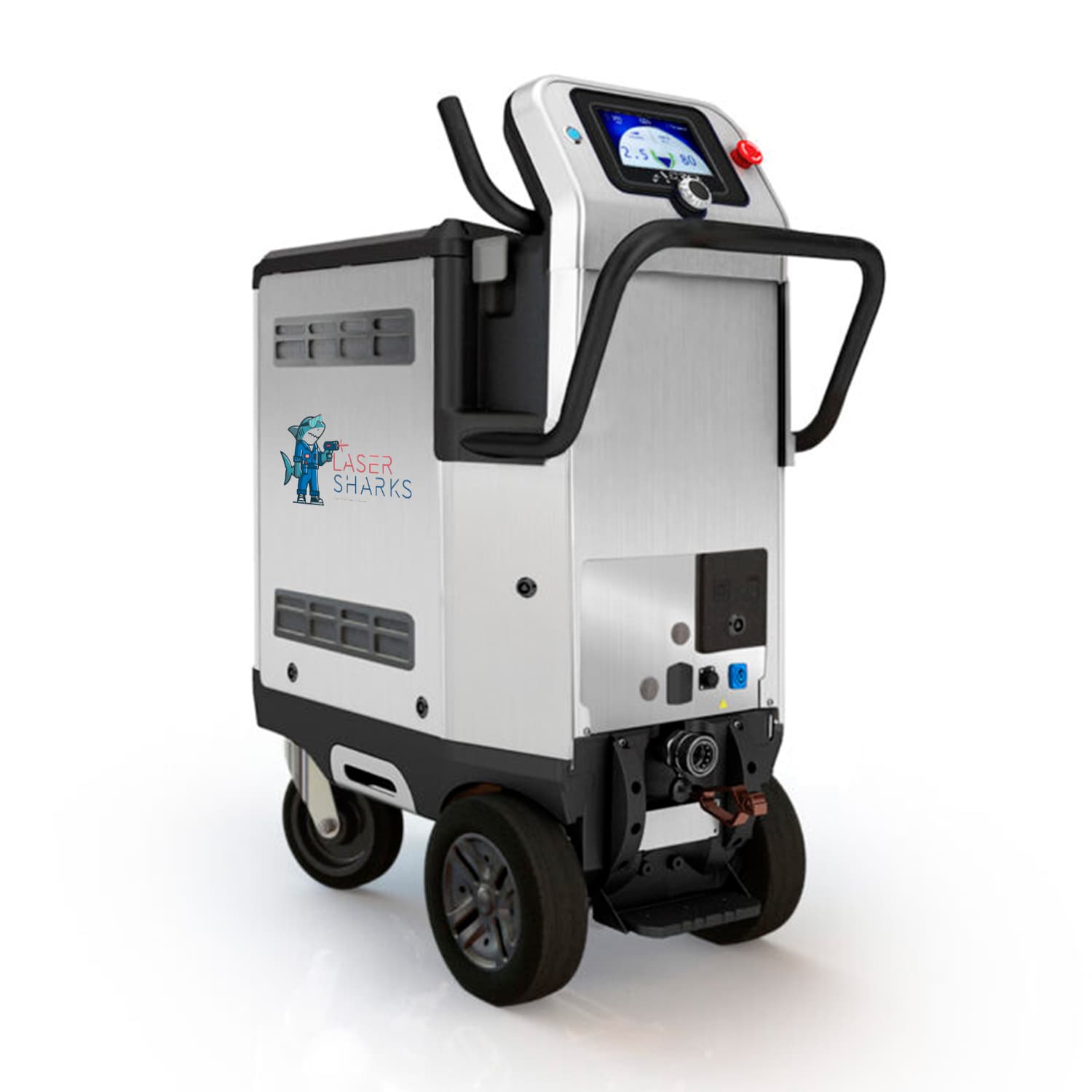
Most calls we get about dry ice blasting start with one question: what do you charge per hour? We can answer that. It just isn’t the number that decides what you pay.
Search "dry ice blasting cost BC" and you’ll mostly find hourly rates and wide ranges with no explanation behind them. On a typical one-day job in Burnaby or Richmond, the crew rate covers roughly half the invoice. The rest is pellets made fresh for your job, a compressor big enough to push them, the drive to your site, masking, and whatever it takes to reach the dirty surface.
Below is every line we put on a dry ice quote, what each one costs in the Lower Mainland, and which ones you control. If you want the method explained first, our dry ice blasting service page covers how it works.
The short answer
Most dry ice blasting jobs we quote in Greater Vancouver land between $1,500 and $8,000. Rough brackets:
- Small job (one machine, a few electrical panels or a small mould area; half a day, one operator): $1,500 to $2,800
- Medium job (a production line or 1,500 to 3,000 sq ft of equipment; one long day, two-person crew): $4,200 to $5,800
- Large job (several stations, two or more days on site): $6,500 to $8,000
- Planned shutdowns and multi-week restoration: $12,000 and up
Crew rates usually run $95 to $250 an hour, depending on crew size and equipment. That range explains about half of the gap between two quotes for the same job. The other half lives in the line items.
Every line on a dry ice blasting quote
1. Mobilization and travel
This covers loading the blaster, hoses, pellet bins, PPE and air monitors, then driving them to you. Within Metro Vancouver (Burnaby, Richmond, Delta, Surrey, New Westminster and the North Shore), expect $250 to $600. Abbotsford and Chilliwack add travel hours. Squamish, Whistler and Vancouver Island add more, and the Island usually means a ferry and an overnight.
This is the line that makes tiny jobs look expensive. Mobilizing for two hours of work costs the same as mobilizing for ten.
2. Crew time
One operator can handle small, open work. Anything bigger or enclosed gets a second person to tend hose, watch the work area and swap pellet bins, so blasting doesn’t stop every 40 minutes. Setup and teardown take about an hour at each end. They’re billed, because the crew is on your site doing them.
Most contractors, including us, carry a half-day minimum.
3. Dry ice pellets
The CO2 itself. This is the line that surprises people.
Our machines burn roughly 40 to 70 kilograms of pellets per hour of actual blasting, depending on nozzle and pressure. Job-sized orders in the Lower Mainland run about $3 to $5 per kilogram delivered. So a six-hour blasting day can go through $700 to $2,100 worth of ice.
Pellets can’t be stockpiled, either. They sublimate in the bin, losing a few percent a day even in an insulated container, and older pellets go soft and clean poorly. We order for each job, usually the day before. That’s why a cancellation on the morning of the job still costs the pellets: by then they’re made, delivered and already disappearing.
4. Compressed air
Dry ice machines need a lot of air, typically 150 to 250 cubic feet per minute at 80 to 100 psi. Most plant air systems are already loaded by production equipment and can’t spare that volume. When yours can’t, we bring a diesel tow-behind compressor. That adds $400 to $800 a day including delivery, and since it has to sit outside, we also need a route for the hose run.
Send us your compressor’s rating before we quote. If it can carry the load, this line disappears.
5. Masking, ventilation and CO2 monitoring
Dry ice doesn’t require taking equipment apart, but some things still get covered: open motor housings, sensors, cable entries, anything with tired seals. On most jobs, masking is an hour of crew time plus $50 to $150 in materials.
The bigger variable is air quality. CO2 gas is heavier than air and pools in pits, tanks and closed rooms. WorkSafeBC sets the 8-hour exposure limit for carbon dioxide at 5,000 ppm, so we run personal CO2 monitors on every job and add ventilation fans in enclosed spaces. A true confined space, like a tank or vessel, needs an entry permit, an attendant and continuous atmospheric monitoring. That adds $1,200 to $2,800 to the quote.
6. Access
Floor-level equipment costs nothing extra to reach. An exhaust duct or conveyor six metres up does. A scissor lift runs about $250 to $400 a day, a boom lift $800 to $1,200. Scaffolding is priced separately, and in a busy plant it often costs more in coordination than in rental.
7. Timing
Weekend, overnight and holiday work usually adds 40% to 60% to labour. Urgent jobs, like soot on equipment after a fire, carry a premium too, because crews and pellet orders get moved around to make them happen.
Contamination sets the hours, not the rate
Two jobs with the same footprint can differ by a factor of five in blasting time. Rough production rates we see on site:
- Production dust, flour, light oil, release agents: 15 to 25 square metres an hour
- Baked-on carbon, heavy grease, fire soot: 3 to 8 square metres an hour
- Well-bonded paint and coatings: 1 to 2 square metres an hour
At the bottom of that list, dry ice often stops being the right tool. More on that below. Mould on framing and sheathing usually falls in the middle band, where access matters more than the growth itself.
A typical quote, line by line
Here’s how one common job breaks down. A bakery in Richmond needs carbon and release oil cleared from a spiral oven conveyor and a depanner. The work has to fit a Saturday window, it needs a two-person crew, and the plant’s air system can’t spare 185 CFM.
| Line item | Basis | Cost |
|---|---|---|
| Mobilization | Burnaby to Richmond | $350 |
| Crew | 2 people, 9 hours on site at $190/hr | $1,710 |
| Weekend premium | 50% on labour | $855 |
| Dry ice pellets | about 360 kg at $4/kg | $1,440 |
| Diesel compressor | one day, delivered | $550 |
| Masking materials | motors, sensors, control cabinet | $80 |
| Total | $4,985 |
That sits in the middle of the medium bracket. Two changes would cut it by about $1,400: doing the work during a weekday maintenance stop instead of a Saturday ($855), and having a plant compressor big enough to run the machine ($550).
What the bakery doesn’t pay for matters just as much. No teardown of the conveyor. No caustic cleaner to rinse out of the oven chamber and capture. No water on electrical components, and no drying time before the first bake. The equipment is cleaned assembled and can heat up again the same evening.
How to bring your quote down
Most of the money you can save sits on your side of the job.
- Clear the area. Get product, pallets and stored parts out of the way so the crew spends its hours blasting, not moving things.
- Send photos and measurements. For small jobs, good photos can replace a site visit and tighten the price range.
- Check your air. Give us your compressor’s CFM and psi rating.
- Bundle the work. Three machines on one visit share a single mobilization and one pellet order.
- Use a window you already have. A planned maintenance day costs less than a weekend premium.
- Clean before it gets heavy. Quarterly visits on light build-up often cost 30% to 40% less each than an annual clean on baked-on deposits. Total spend can come out similar or a little higher, but every window is shorter and the equipment never runs badly fouled.
What isn’t on the invoice
This is where dry ice and the traditional methods split. Pellets go straight from solid to gas. Nothing is left behind except the contaminant you paid to remove, so there’s no blast media to sweep, bag and haul away, and no rinse water to capture.
Compare that with abrasive blasting, where a few cubic metres of spent grit costs $1,200 to $1,800 to dispose of in Metro Vancouver, before containment. Abrasive work also brings WorkSafeBC silica exposure controls: air monitoring, respirators and enclosures, all priced into the job. Chemical stripping and caustic washing have their own tail of captured wash water, drum disposal and Metro Vancouver sewer bylaw limits on what can go down the drain. Near the Fraser River or Burrard Inlet, runoff into a storm drain becomes a Fisheries Act problem.
The CO2 we blast with is recovered from other industrial processes rather than made for the purpose. A dry ice job uses no chemicals and creates no secondary waste. For a plant with ESG reporting or a food safety audit coming up, that is often worth more than the price difference on the quote.
When dry ice is not the cheapest choice
We’d rather tell you this before you pay for it.
- Heavy rust and mill scale. Dry ice won’t strip thick rust off structural steel at any sensible cost. Laser cleaning or abrasive blasting is the right tool there.
- Large open steel outdoors with nothing to protect. Girders or containers in a yard, with containment already in place, are usually cheaper per square metre with sandblasting.
- Very small one-off jobs. Under two hours of blasting, mobilization and the half-day minimum dominate the price. Bundle it with other work or wait for the next scheduled visit.
Because we run laser and dry ice from the same crew, we choose by surface and contamination, not by whichever machine happens to be on the truck. Some jobs get both on the same day.
FAQ
How much does dry ice blasting cost per hour in BC?
Crew rates typically run $95 to $250 an hour, depending on crew size and equipment. Pellets, compressor rental and mobilization are usually billed on top, so the all-in hourly cost of a job is higher than the posted rate.
Is there a minimum charge?
Most BC contractors, Laser Sharks included, use a half-day minimum. Mobilization and setup cost the same whether you need two hours of blasting or eight.
Do I need to supply compressed air?
No. If your system can deliver 150 to 250 CFM at 80 to 100 psi without starving production, we can use it. If not, we bring a diesel compressor for $400 to $800 a day.
Is dry ice blasting cheaper than sandblasting?
Per hour, no. Per job, often yes, once you count masking, containment, grit disposal and downtime. On heavy rust over large open steel, sandblasting usually wins.
Can I get a price without a site visit?
For small, accessible jobs, photos and measurements are usually enough. Larger work, confined spaces and anything above floor level get a site visit, so the quote doesn’t move later.
Getting an itemized dry ice blasting quote
Every quote we send lists the lines above separately, so you can see what drives the total and which parts you can change. Laser Sharks is fully insured, WorkSafeBC compliant, and was named Best Cleaning Services in BC for 2025 by CBRB. We work across Greater Vancouver and the Fraser Valley, from Burnaby, North Vancouver and New Westminster to Delta, Richmond and Surrey.
Request a quote or call 236-660-4248. Tell us the equipment, the contamination, your compressor rating and your work window, and we’ll come back with a line-by-line price.