Mid-November in a Delta packaging plant. The maintenance manager has a line left in this year’s budget, a holiday shutdown starting December 20, and a list of cleaning jobs that got pushed every month since May because nobody could stop the line. Sound familiar? This is the week the industrial cleaning maintenance budget in BC either gets spent on work that lasts or quietly evaporates on January 1.
We get the same calls every year in the second half of November. Most of them start with "what can you still fit in before Christmas?" The honest answer is: more than you think, if you book this month, and less than you hope if you call on December 15.
Below is what we tell those callers. Which cleaning work is worth doing before December 31, which is better left for the first quarter, what the numbers look like, and how to lock a December window without a fight over the calendar.
The December window fills from the middle of November
A plant that runs 24 hours a day gets a real stop maybe twice a year. For most Lower Mainland manufacturers, one of those stops is the stretch between December 20 and January 4. Production goes quiet, half the floor staff is on holiday, and for ten days the equipment is cold and accessible.
Every maintenance contractor in the region knows this. Electricians, millwrights, coating crews and cleaning crews all want the same ten days.
Our own calendar for that window is usually full by the first week of December. Dry ice supply tightens too. The pellet producers in the Lower Mainland run reduced schedules over the holidays, and we pre-order for booked jobs only. A job confirmed on November 18 has pellets reserved. A job that shows up on December 16 competes for whatever is left.
So the first rule of year-end cleaning work: the budget conversation and the booking conversation have to happen in the same week. Waiting for the purchase order to clear before you call is how the slot disappears.
Work worth booking before December 31
Not every cleaning job belongs in the year-end budget. These do.
Cleaning tied to the holiday shutdown
If the line stops anyway, cleaning it during the stop costs you nothing in lost production. That changes the math on jobs that looked expensive in July.
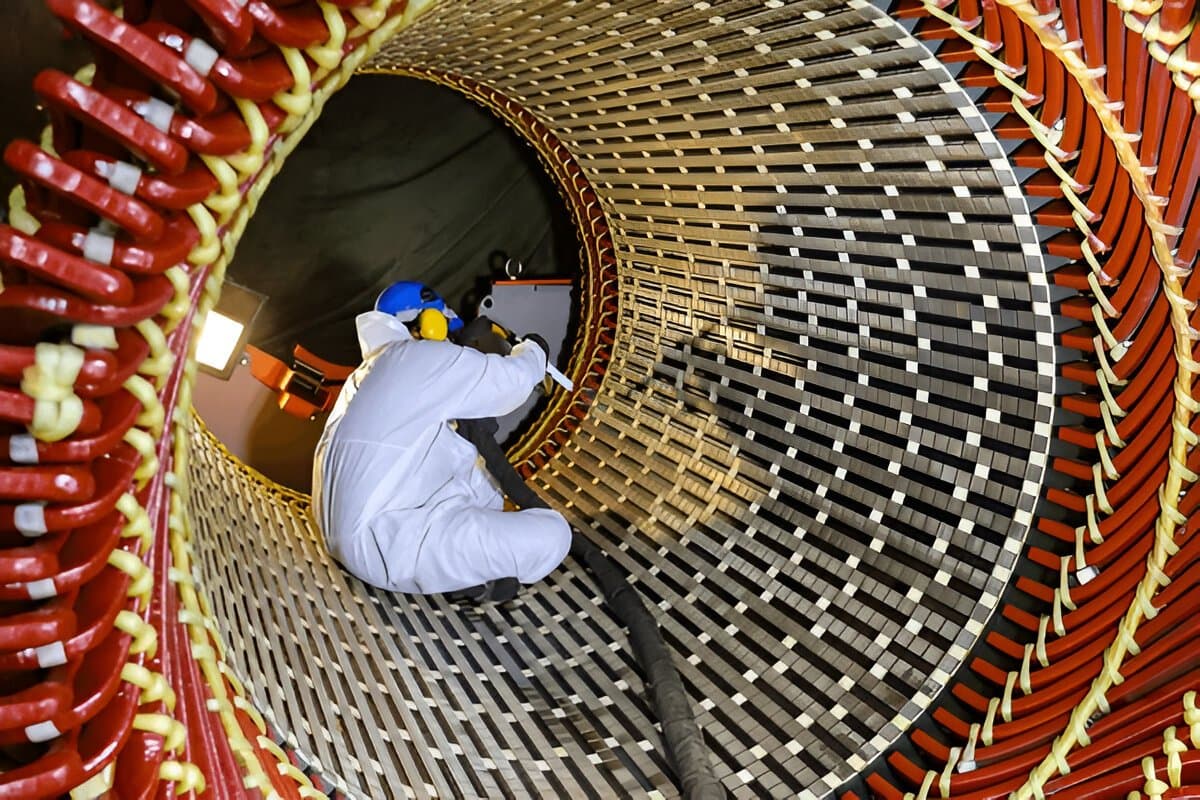
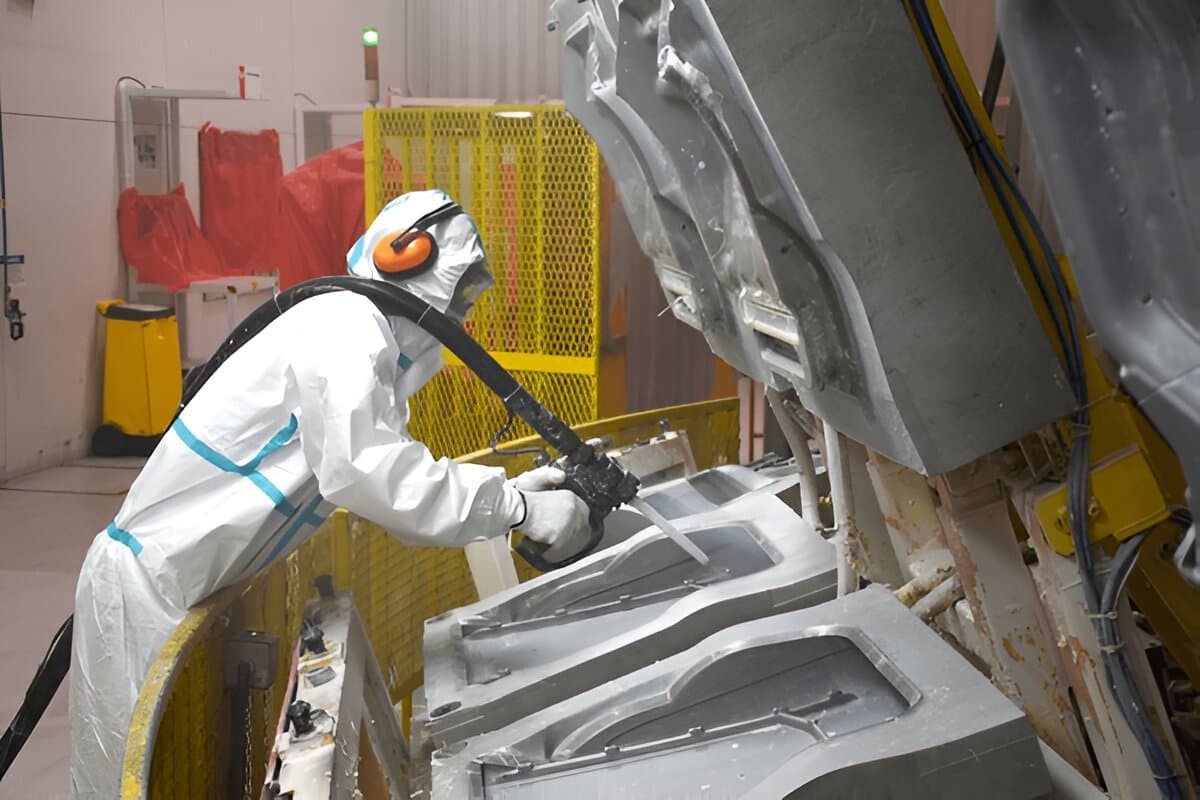
The usual candidates: conveyor frames and rollers caked with product residue, ovens and dryers with baked-on carbon, electrical panels and motor housings full of dust, packaging machinery with adhesive build-up. Dry ice blasting handles all of these with the equipment in place. No disassembly, no water, no chemical rinse, and nothing to sweep up afterward except the contaminant that came off. A brewery in Port Coquitlam or a bakery line in Richmond can be cleaned on December 22 and ready for sanitation sign-off by December 23.
The outcome you are buying is a clean start to the production year without an extra stop in February to do the same job.
Surface prep for a spring recoat
This one surprises people. If you plan to repaint structural steel, tanks, railings or equipment frames in April, the rust removal should happen now.
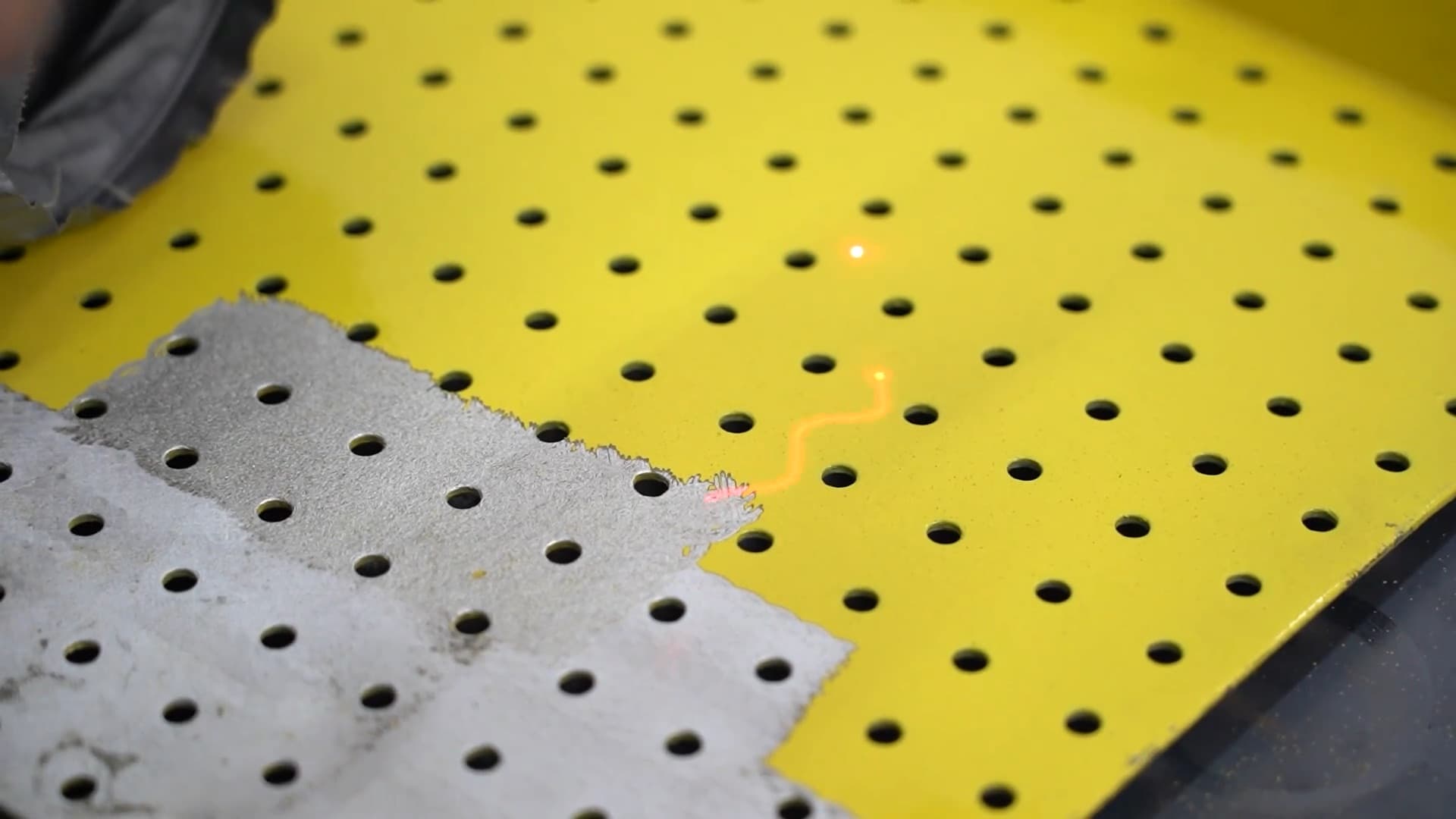
Rust on a steel frame in the Fraser Valley does not pause for winter. It grows through four months of rain. A frame that needs light laser rust removal in November needs heavy laser rust removal in March, and the quote moves with it. Cleaning now, under cover, and holding the bare steel with a primer or a temporary rust inhibitor is cheaper than paying for a worse condition in spring.
There is also the WorkSafeBC angle. Sandblasting steel for recoat prep means a silica exposure control plan, containment, respirators and an abrasive cleanup bill. Laser cleaning produces no abrasive media and no silica dust. Fume extraction is still required, but you skip the exposure paperwork and the media disposal. For a facility manager trying to close a job before year-end with minimal admin, that difference is worth real hours.
The job you postponed because you could not stop the line
Most of our November callers have one. A mezzanine with 15 years of paint and grime. A row of heat exchangers that have never been cleaned properly. A warehouse floor in Annacis Island with forklift tire marks and oil that pressure washing never lifts.
These are the jobs that sit on a list and move from one quarter to the next. Year-end is when they finally get done, for two reasons. The budget is there, and the production window is there. Those two things rarely line up at any other point in the year.
Indoor laser work on parts that can come to us
Winter rain makes outdoor laser work slower, and we talk about that below. Parts that can be unbolted and brought under a roof have no such problem. Mould plates, dies, welded assemblies, cast components, hydraulic cylinders, gate hardware. Laser rust and scale removal on a bench in December takes the same time it takes in July.
If your shutdown crew is already pulling components for inspection, send them for cleaning in the same trip.
Work that should wait for the first quarter
Spending budget just because it is there is how plants end up paying for work that gets redone.
Exterior steel that needs a coating applied immediately after cleaning is the main one. Laser cleaning strips rust in the rain under a tarp, but your painter cannot get a cure on wet, cold steel. If there is no way to hold the bare surface, wait for a dry stretch. In the Lower Mainland that usually means March at the earliest.
Also hold off on anything that needs a scaffold outdoors in December. The cleaning is fine. The scaffold rental, the weather delays and the safety planning on a wet site in the dark push the cost up without improving the result.
And if the remaining budget covers half a job, do not book half a job. A cleaned conveyor next to a dirty one is a cleaning that gets repeated. Ask for a scope that fits the number instead. More on that below.
What the numbers look like
Dry ice blasting in BC runs about $1,500 to $8,000 per job. The low end is a single machine, a mobile crew, half a day on a contained area like a packaging line or a set of electrical cabinets. The high end is a two-day plant shutdown job with multiple pieces of equipment and night work.
Laser rust and paint removal runs $1,200 to $6,000 for most single-asset jobs. A set of steel railings or a frame for recoat sits in the lower half. A full structural member set or a large tank exterior climbs toward the top, and multi-asset shutdown packages with both methods on site land between $5,000 and $20,000.
What moves the number inside those brackets:
- Access. Equipment at floor level on a clear slab costs less than the same equipment at 6 metres on a lift.
- Hours. A December shutdown job is often night or weekend work. Expect a premium over a daytime weekday rate.
- Contaminant. Light dust on panels and heavy carbon in an oven are different jobs even at the same square footage.
- Scope creep on the day. "While you are here, can you do the other line?" is fine if the crew has the hours and the pellets. It is not fine as a surprise.
The way to make a year-end quote fit a year-end budget is to tell us the number. We would rather scope a job to $6,000 that cleans the three assets that matter most than quote $9,000 for everything and have you cut it in half.
How to lock a December slot
The process is short. Facility managers who get the December date they want do these things in November.
Walk the site this month. A 30-minute site walk in the third or fourth week of November produces a quote with a date on it. Photos by email get you a range, which is useful for budgeting but not for booking. For sites in Burnaby, Delta, Richmond, Surrey and North Vancouver, we do walks the same week.
Confirm in writing, not by phone. A purchase order or a signed quote holds the slot. A verbal "we are probably going ahead" does not, and we have had two plants in the same industrial park ask for the same two days.
Book a range, not a single day. "December 22 or 23, night shift" is bookable. "Sometime during the shutdown" is a wish. Name the shift window, since the premium changes with it.
Name who signs off on completion. On December 23 the person who approved the job is often on holiday. Tell us who walks the finished area and signs the completion report so the invoice does not sit until January.
Flag permits and paperwork early. Confined space entry, hot work in the same area, lockout procedures and site-specific safety orientation all take time to arrange. Two weeks of lead time is comfortable. Two days is not.
Why dry ice and laser fit a year-end plan
Both methods leave nothing behind. No wastewater to collect from a plant that was just winterized. No abrasive media to bag and haul out on December 24. No chemical drums waiting for a disposal pickup that does not come until the second week of January.
This matters more at year-end than at any other time because the cleanup window is as short as the cleaning window. A sandblasting job that finishes at midnight still needs the grit swept, vacuumed and hauled before production restarts. A dry ice job that finishes at midnight is done at midnight. The pellets sublimate into CO2 gas and the contaminant drops to the floor, where a shop vac handles it.
For food and beverage plants, this is also the method that gets you to sanitation sign-off fastest. No chemical residue means no rinse cycle and no swab test waiting on a detergent to clear.
Laser cleaning brings the same clean exit on steel. Rust, scale and old coating come off as a fine particulate that fume extraction captures at the source. The steel underneath is untouched, so a Richmond fabricator who wants a 50-micron profile for an epoxy system still gets it, and nobody spends December 27 vacuuming garnet out of a trench drain.
Every crew we send is WorkSafeBC compliant and covered by liability insurance, and we hand over a completion report with before-and-after photos for your maintenance file. The company holds the CBRB Best Cleaning Services in BC award for 2025.
A short checklist for the next two weeks
Pull the deferred list and mark anything that can be done with the line stopped. Look at any steel scheduled for a spring recoat and get it cleaned now rather than in March. Separate the jobs that need a dry exterior surface and park those for the first quarter. Then call with the number you have left and the dates your shutdown runs.
You can read more about what we do on steel on our laser cleaning page and more about equipment and food-grade work on the dry ice blasting page. When you are ready to put a December date on it, request a quote and tell us which week your plant goes quiet. The slots go in the order the confirmations come in, and by the first week of December most of them are gone.