Most of the coating failures we get asked to look at in the Lower Mainland were decided before anyone opened a can of primer. Someone chose the prep method first, usually whoever was cheapest or free that week, and read the coating spec second. A year later the epoxy is lifting off a pump skid in Delta, and the coating supplier points at the prep.
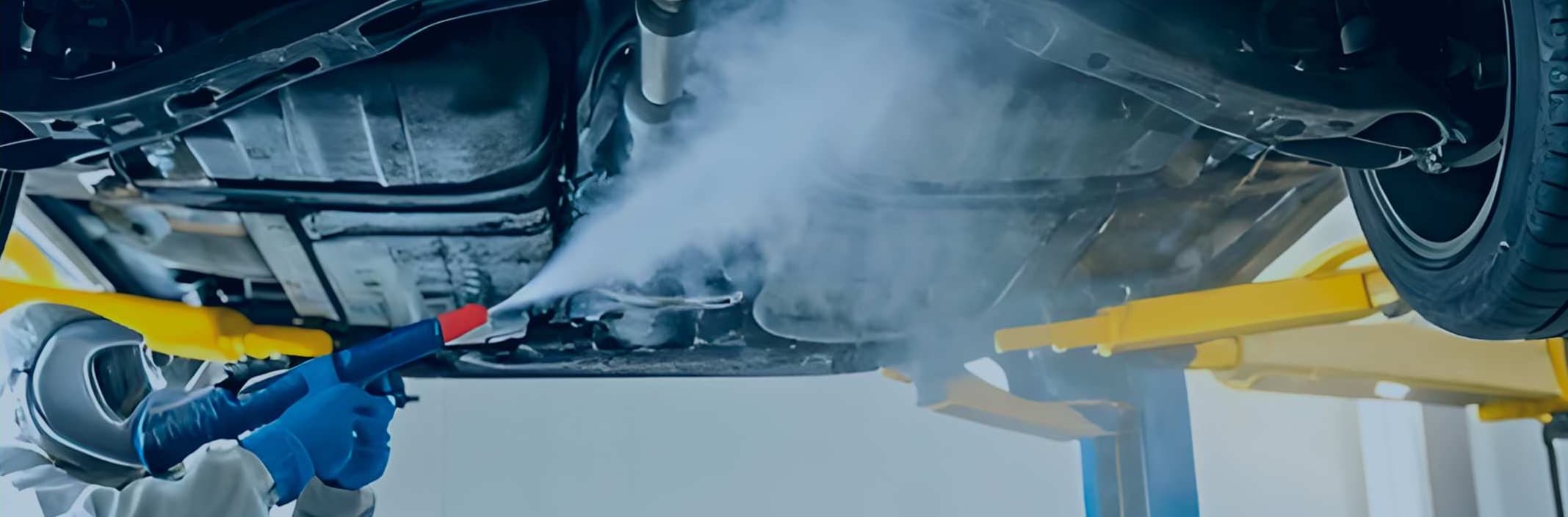
Buying surface preparation services in BC goes better in the opposite order. The product data sheet for the coating already states the cleanliness grade, the surface profile and the contamination limits the steel has to meet before primer goes on. Read those lines first and the method mostly chooses itself. Sometimes the answer is laser cleaning or dry ice blasting, which we run, and which leave no spent grit and use no chemical strippers. Sometimes it is abrasive blasting, which we don’t run. We’ll say where that line falls.
Three lines on the data sheet decide the method
Pull the product data sheet (PDS) for the primer. On commercial and industrial work, also pull the coating section of the project spec, usually Division 09 96 00, High-Performance Coatings. Three lines in those documents matter more than the rest.
The first is the cleanliness grade, written as an SSPC number, an ISO 8501-1 grade, or both. SSPC-SP 10 (ISO Sa 2½) is near-white blast. SP 5 (Sa 3) is white metal. SP 11 is power-tool cleaning to bare metal, while SP 2 and SP 3 are hand-tool and power-tool cleaning, the grades that surface-tolerant coatings accept over tightly adhered rust. A higher grade means more hours on every square metre.
The second is the surface profile: the depth of the anchor pattern, given in microns or mils and measured under ASTM D4417 with replica tape or a depth gauge. Zinc-rich primers commonly call for roughly 40 to 75 µm. Thermal spray metallizing wants a deeper, sharp, angular profile, often 65 to 100 µm.
The third is contamination. Soluble chloride is measured in µg/cm² with a Bresle patch, dust with a tape test, and oil sometimes with a simple water-break check. Immersion specs commonly cap chloride somewhere between 3 and 5 µg/cm². On steel that has spent years near the Fraser River or the Burrard Inlet waterfront, that one number is where a lot of the hidden work sits.
A fourth line gets skipped more than any other: application conditions. Most specs want the steel at least 3 °C above the dew point, and plenty cap relative humidity at 85 percent. From October to March in Metro Vancouver, that line drives your coating schedule harder than the prep method does.
Profile is where the methods split
Both of our methods have a limit on profile, and a coating spec writer should know it before they choose either.
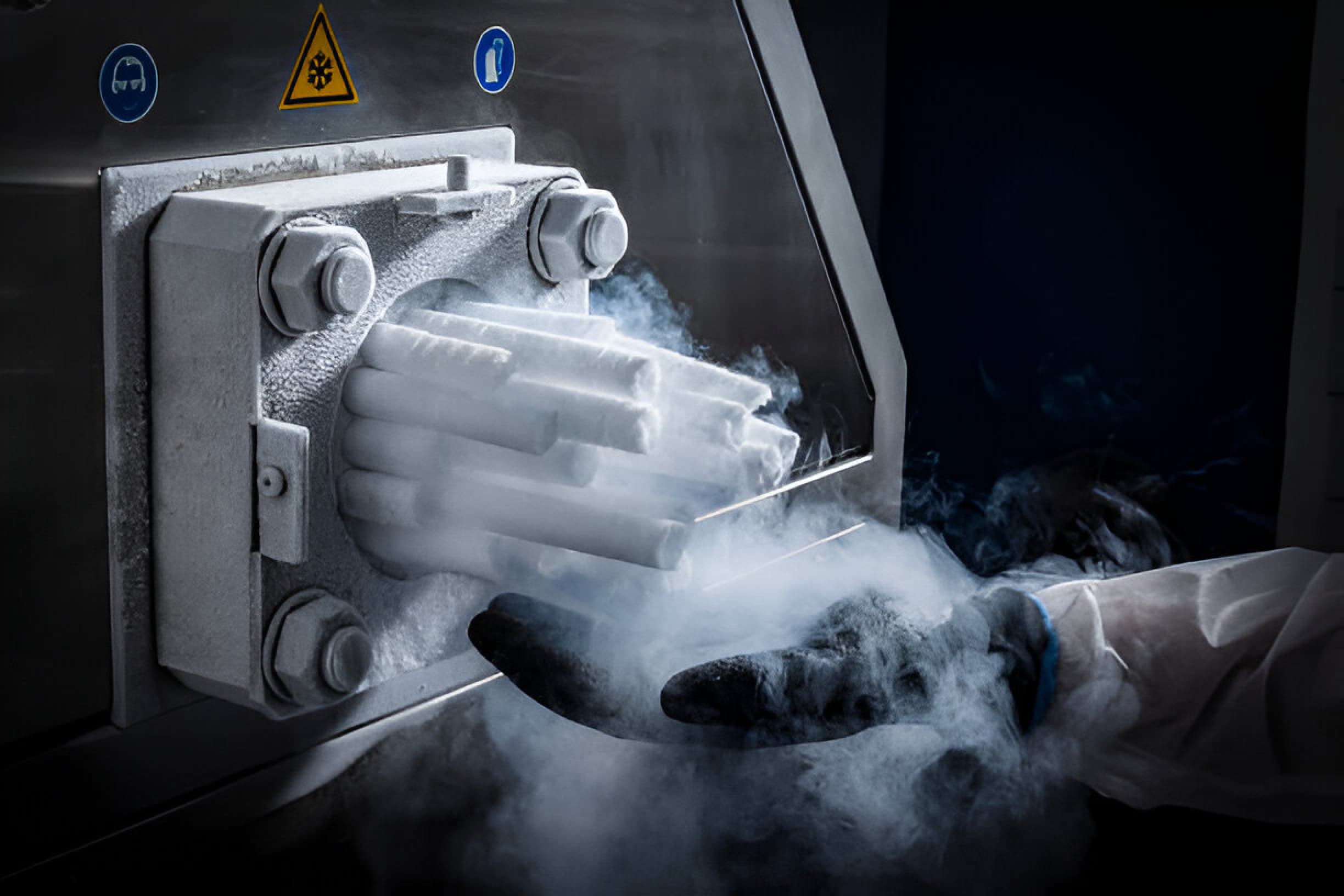
Dry ice blasting creates no profile at all. The pellets hit, turn straight to gas and lift oil, grease, soot and loose material off the surface. The steel underneath keeps the texture it already had. That makes dry ice a strong pre-cleaning tool and the wrong tool for cutting an anchor pattern.
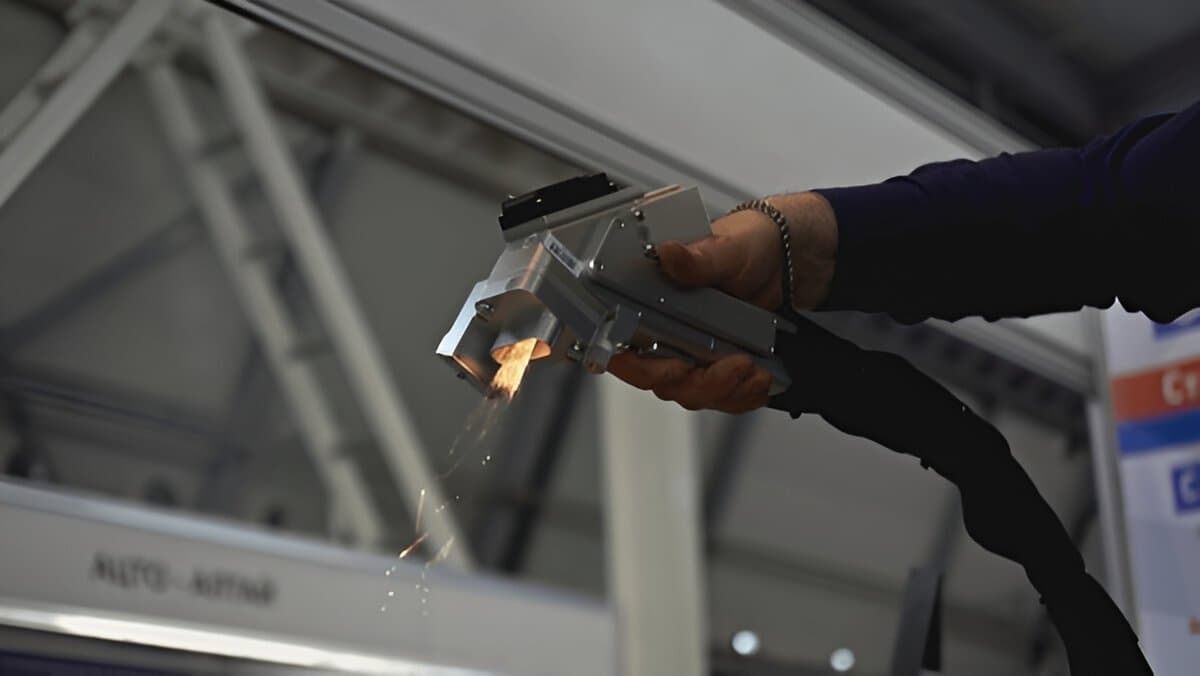
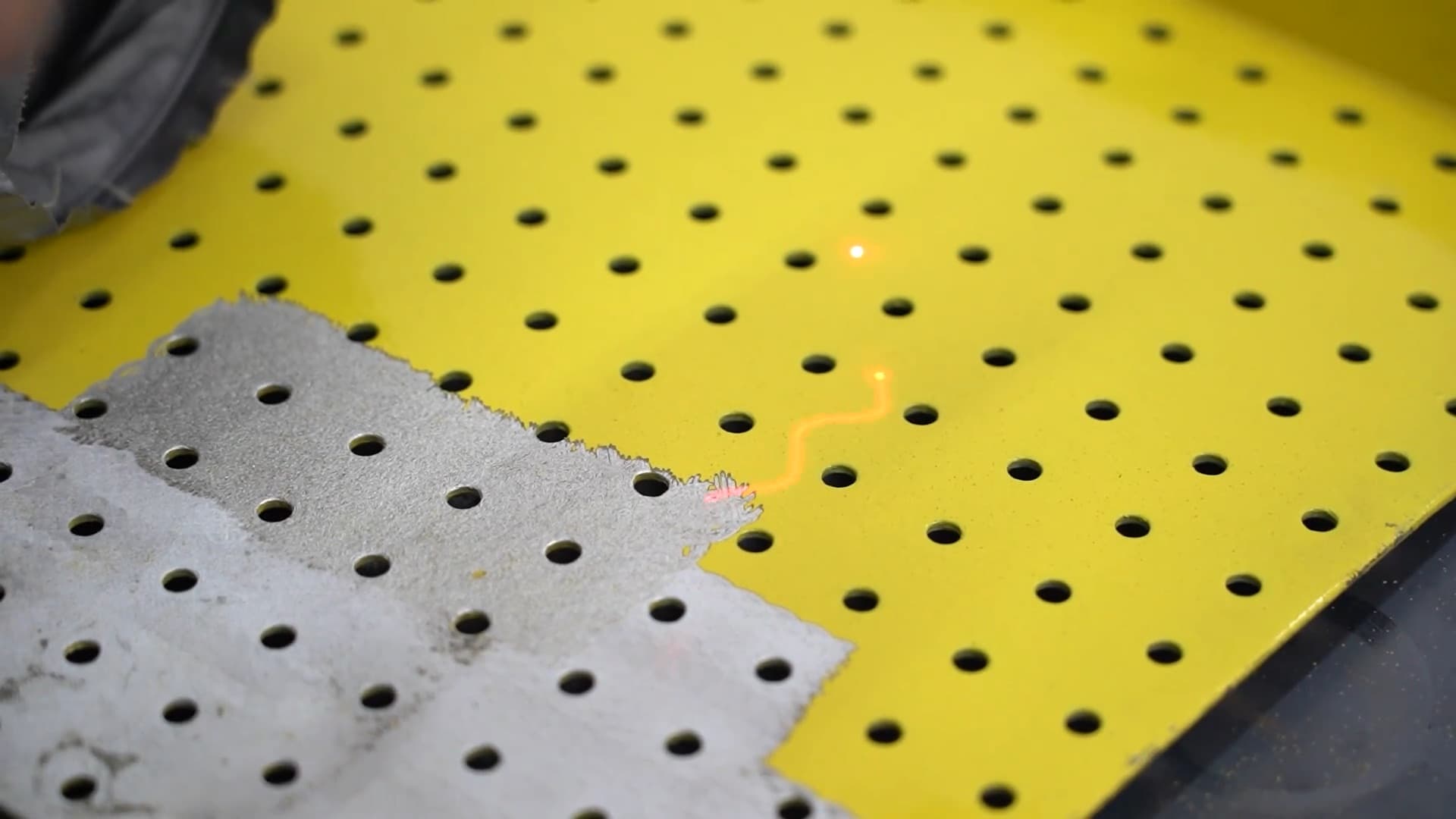
Laser cleaning removes rust, mill scale and old coating down to metal, and it exposes whatever texture the steel already carries. On steel that was grit-blasted to 50 µm when it was fabricated and has since rusted or been painted over, laser gives back roughly that original profile, without adding a new one. On new hot-rolled plate with intact mill scale, or on smooth cold-rolled sheet, the laser leaves a clean surface that is comparatively smooth. If the spec calls for 75 µm angular on that steel, laser will not meet it.
So the first thing we ask on a surface preparation call is whether the steel has been blasted before.
Matching common coating systems to a prep method
This is a working guide from the jobs we quote across Greater Vancouver. The coating manufacturer’s rep has the final say on any substitution, and a careful spec writer will want that approval in writing.
| Coating system | Typical spec ask | Method that fits |
|---|---|---|
| Inorganic zinc-rich primer on new steel | SP 10 or SP 5, 40-75 µm angular | Abrasive blast, ideally at the fabricator’s shop |
| Thermal spray zinc or aluminum (metallizing) | SP 5 or SP 10, 65-100 µm sharp angular | Abrasive blast with angular grit |
| Epoxy recoat on steel that was blasted originally | Bare metal, original profile kept | Laser cleaning |
| Surface-tolerant epoxy mastic over aged coating | SP 2, SP 3 or SP 15, clean and dry | Dry ice on sound coating, laser on rusted spots |
| Coatings on stainless steel or aluminum | No iron contamination, light profile | Laser, or a non-metallic sweep blast if profile is required |
| Paint over hot-dip galvanizing | SP 16 sweep blast or approved etch | Dry ice to degrease, then a light sweep blast |
| Epoxy or polyurea on concrete | ICRI concrete surface profile, oil-free | Dry ice for oil, then grinding or shot blasting |
Three of those rows end in abrasive blasting, four if you count shot blasting on concrete, and we tell people that on the phone. For new structural steel, the cheapest surface prep in BC is usually the blast booth at the fabricator, before the steel ever ships to site. Field prep on installed, in-service or hard-to-reach steel is where laser and dry ice pay for themselves.
Where laser and dry ice pay off on a coating job
Four situations account for most of the surface preparation we quote.
Operating plants. A food plant in Richmond can’t have grit anywhere near open product lines, and a sawmill can’t have it in bearings and gearboxes. Containing a field blast inside a working building runs $1,800 to $3,200 a day in tarps, negative air and silica monitoring before anyone blasts. A laser head captures what it removes through a vacuum at the nozzle. Dry ice leaves only the contaminant itself to sweep up. That lets a maintenance crew prep frame steel or a mezzanine for recoat over a weekend shutdown while the next bay keeps running.
Welds, edges and connections. Weld seams, bolted splices, back-to-back angles and the underside of flanges are where coatings fail first, and where hand and power tools do their worst work. A wire wheel burnishes steel to a polish that primer struggles to grip. A laser reaches into those details and cleans to bare metal without polishing it.
Pre-cleaning before any grade. SSPC-SP 1, solvent cleaning, comes before every other grade on the list, because blasting over oil drives it into the profile. Most crews still do SP 1 with solvent and rags. Where the spec writer accepts it as the SP 1 step, dry ice removes oil, grease and cutting fluid with no solvent vapour for the crew to breathe and no water left behind to flash-rust the steel. On jobs that go on to abrasive blasting anyway, that step can save the blaster a second pass.
Lead and chromate primers. Steel painted before the 1990s often carries lead or chromate in the primer. WorkSafeBC requires an exposure control plan for that work whatever the method. With abrasive blasting, every tonne of spent grit mixed with lead paint becomes hazardous waste. With laser cleaning, the removed coating ends up in the extraction unit’s filters, so the hazardous waste stream is a few filter cartridges.
One note on salt. On lightly rusted steel, laser removes chloride along with the rust. On marine steel with deep pitting, salt can still sit at the bottom of the pits after cleaning. We run a Bresle test after cleaning, and if the reading is over the spec limit, the plan gets a fresh-water wash, drying time and a retest before primer.
How a mixed job runs
A job profile we see several times a year: a waterfront platform in North Vancouver with painted structural steel from the 1980s, galvanized handrail, pitted bare steel along the splash line and an operating pump room a few metres away.
Day one, dry ice degreases the whole platform and the rail. The structural steel, its welds and bolted connections go under the laser, with lead-safe extraction running, because paint from that era often tests positive for lead. The splash zone gets a Bresle check, and any section over the limit gets washed and retested. The coating contractor sweep-blasts the galvanized rail inside a small enclosure, since the PDS for their primer calls for SP 16 profile on galvanizing. Primer goes on section by section, inside the dew point window, on the same shift each section is signed off.
No containment tent goes up over the pump room. There is no spent grit to haul away, and the coating inspector gets bare metal at the readings the PDS asks for.
What surface preparation services cost in BC
Most laser jobs we quote in Greater Vancouver land between $1,200 and $6,000, with hourly rates of $180 to $260 and $350 to $600 to mobilize inside Metro Vancouver. Dry ice jobs typically run $1,500 to $8,000, with the ice itself at about $3 to $5 a kilogram delivered.
Open-air abrasive blasting on a clean, remote yard can come in at $45 to $70 per square metre, which beats both of our methods on large open areas of new steel. Move that blast indoors or near the public and the numbers change. WorkSafeBC’s exposure limit for respirable crystalline silica is 0.025 mg/m³, low enough that most enclosed abrasive work needs containment, air monitoring and respirators. Spent media costs $180 to $320 a tonne to dispose of at Lower Mainland facilities, and more when it carries lead.
What moves a prep quote by half or more:
- The cleanliness grade. SP 5 takes several times longer per square metre than SP 3.
- Access. A scissor lift runs $250 to $400 a day, a boom lift $800 to $1,200.
- Lead or chromate in the existing coating.
- The shutdown window, especially night and weekend shifts.
- Testing and paperwork: profile readings, Bresle patches and sign-off sheets on every section.
The bigger number usually sits outside the quote. Take a production line in an Annacis Island plant that contributes $3,000 an hour. A field blast that needs the area cleared, tented and cleaned up afterwards might take that line down for two ten-hour shifts, which is $60,000 in lost production. If laser and dry ice fit the same scope into a planned weekend shutdown, the downtime cost drops to zero, and one saved shift is worth more than the whole prep invoice.
What to send when you ask for a quote
With these in hand we can choose a method and give you a firm price instead of a range:
- The coating PDS or spec section, with the cleanliness grade and profile marked
- Square metres or a drawing, plus working height and access
- The age of the existing coating and any lead test results
- Service environment: atmospheric, splash zone, immersion or food contact
- When the steel can come out of service, and for how long
- Photos, including close-ups of the worst areas
Laser Sharks crews are fully insured, carry WorkSafeBC coverage and are trained in Class 4 laser safety, and the company was named Best Cleaning Services in BC 2025 by the CBRB. We run laser and dry ice only, so when part of a scope needs a blast contractor, the quote says so. Send the spec through our quote request form or call 236-660-4248, and we’ll come back with a method, a price and a date that fits your coating schedule.