The call usually starts with a drive that keeps tripping on overtemperature. Someone opens the cabinet, finds the heat sink fins packed with grey felt, blows it out with shop air, and the fault is back three weeks later. Dry ice blasting electronics in place breaks that cycle, because it lifts the oily film that glues the dust to the fins, and compressed air leaves that film behind. The cabinet stays bolted to the wall. Nothing gets wet. Drives, control panels and MCC buckets get cleaned without disassembly, usually inside a single lockout window.
Prices below are Lower Mainland numbers in CAD.
The short answer
Dry ice blasting is safe for most industrial electronics when the equipment is de-energized, locked out and grounded, and the crew controls pressure and condensation. It cleans variable frequency drives (VFDs), PLC and control panels, MCC buckets, switchgear interiors, motor windings, terminal strips and heat sinks without disassembly. CO2 doesn’t conduct electricity, and it turns to gas on contact. All that’s left to collect is the dust.
It’s the wrong tool for loose circuit boards on a bench, open optics, paper labels, and boards where corrosion has already eaten through the traces. More on those further down.
What ends up inside a BC control cabinet
Every industry in the Lower Mainland has its own dust, and you can usually tell the plant from the inside of its drive cabinets.
- Sawmills and planer mills along the Fraser: fine wood dust, which is combustible and builds up fast on anything warm.
- Food plants in Richmond and Burnaby: flour, sugar and spice dust, mixed with oil mist from fryers and ovens.
- Printing and packaging plants in Delta and on Annacis Island: paper dust and ink mist.
- Machine shops: coolant mist and fine metal particles, which conduct.
- Waterfront sites in North Vancouver and along the river: salt in the air, which holds moisture wherever it settles.
On its own, most of that would blow out. Add oil mist and it sets into a felt that sticks to fins, fan blades and the tops of components.
The felt does damage in two ways. It insulates. Heat sinks lose airflow, cooling fans clog, and the drive runs hotter at the same load. The usual rule of thumb for electrolytic capacitors is that their service life halves for every 10°C of extra heat, and the DC bus capacitors are often the first part of a VFD to go. It also holds water. Our wet season keeps relative humidity high from October to April, and a damp layer of dust across a terminal strip gives current a path it shouldn’t have. Electricians call it tracking. It ends in a scorched terminal block or a ground fault that takes a day to find.
Why shop air and spray cleaner stop working
Compressed air moves loose dust. Some of it leaves the cabinet, and a lot of it lands in the next drive over or gets driven deeper between the fins. The oily layer underneath stays put. And unless the plant air runs through a dryer, the hose delivers water and compressor oil straight onto the boards.
Contact cleaner and solvent wipes do work, one component at a time. They need disassembly: the drive pulled and opened, an electrician on it for an hour or two per unit, and ventilation for the solvent in what is usually a small electrical room. On a lineup of twenty drives that adds up to days of electrician time, which is why the air hose keeps winning the budget meeting.
Washing boards in water-based cleaner is a factory process. It has no place in a cabinet that’s wired into a production line.
How a dry ice clean runs with the power off
- Lockout. The plant’s electrician isolates the equipment under your lockout procedure (WorkSafeBC OHS Regulation Part 10) and tests for zero energy. Drives keep a charge in their DC bus capacitors after the supply is off, so we wait out the manufacturer’s discharge time, usually 5 to 15 minutes, and the electrician confirms it with a meter.
- Grounding. Ice pellets hitting plastic, and ice moving through the hose, build static charge. The blaster and hose are bonded to ground, and the panel’s own grounding stays connected for the whole job.
- Masking. HMI screens, paper labels, the wiring diagrams in the door pocket and any open connectors get covered. Filter mats come out and get replaced.
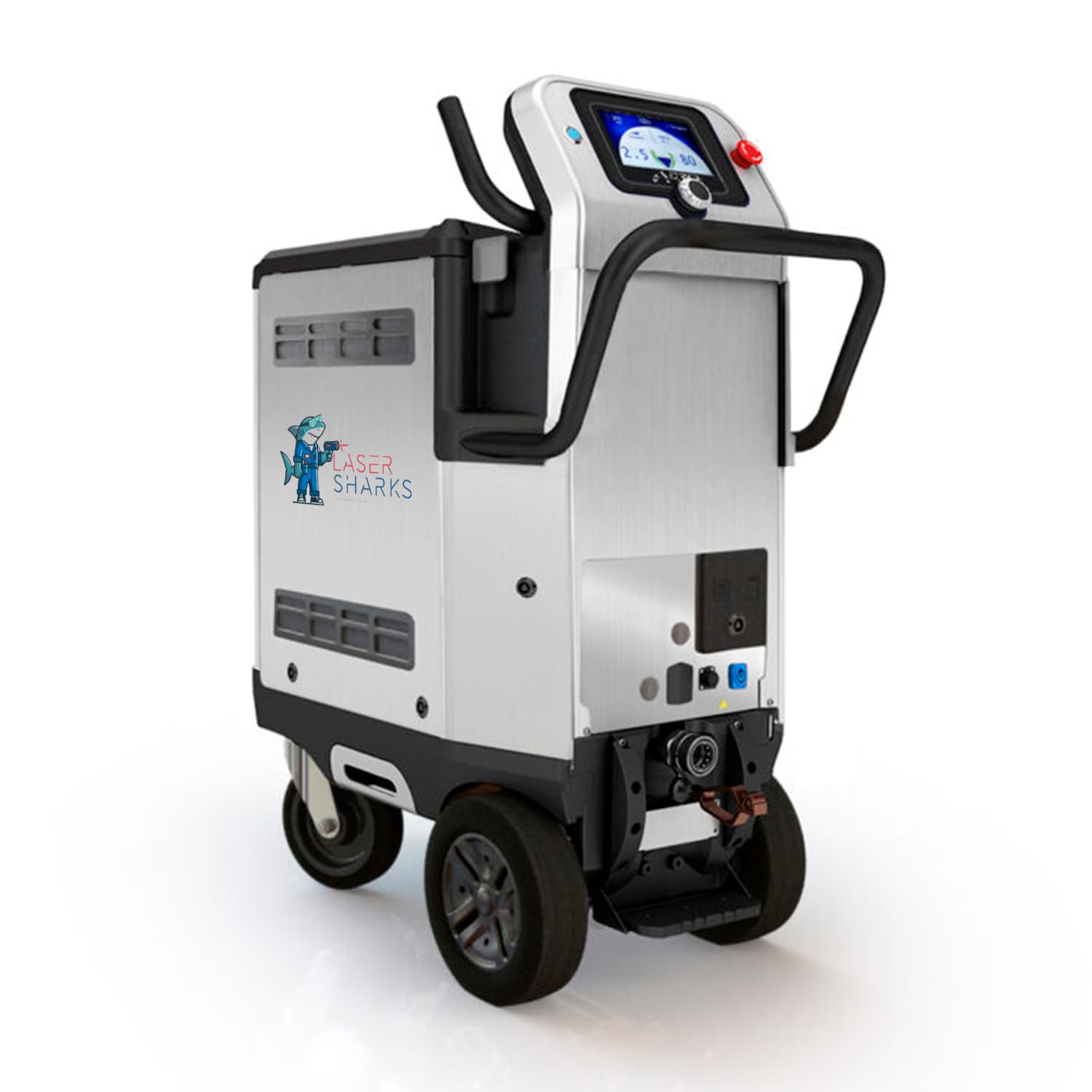
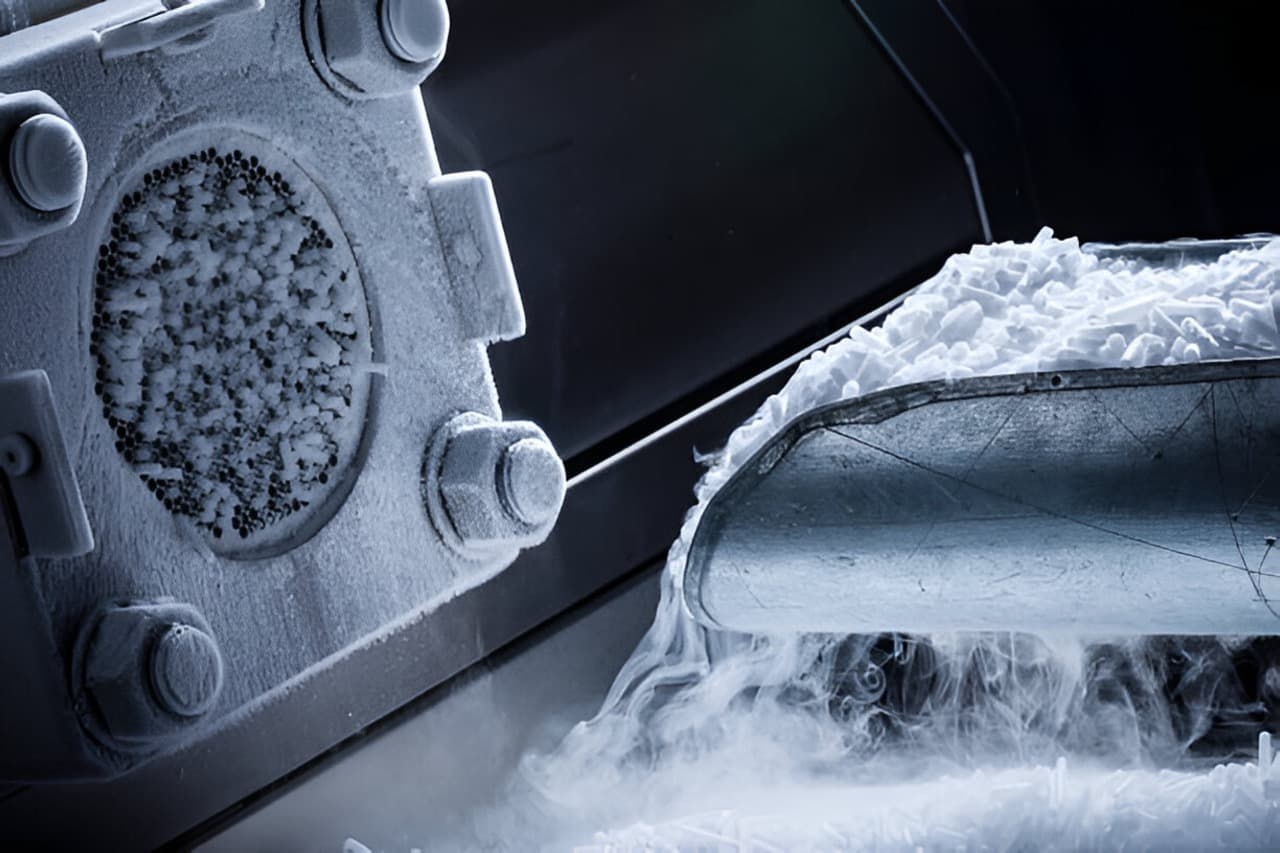
- Lower pressure, finer ice. Rust and paint work runs at high pressure with 3 mm pellets. For electronics we shave the ice finer and turn the pressure down, often to 40 psi or less around boards, a bit higher on heat sinks and motor windings. The nozzle never parks in one spot.
- Dust collection. The CO2 is gone within seconds. The dust it knocks loose falls to the bottom of the cabinet or into a HEPA vacuum held at the opening, and that dust is the only waste on the job. There’s no spent media, no solvent rags and no wash water to deal with.
- Warm-up. Surfaces come back above the dew point before anyone closes a door (details in the next section).
- Handback. Your electrician inspects, checks terminations, re-energizes and runs the equipment. Plenty of plants book an infrared scan a week or two later and compare it with the last one.
A typical drive cabinet takes 20 to 45 minutes including masking. An MCC lineup of 10 to 15 buckets is about half a day.
Is dry ice blasting safe for electronics?
For de-energized industrial equipment, yes. Two risks come with it, and a crew that doesn’t talk about them before the job hasn’t thought about them.
Static. Grounding the machine and the panel handles it for drives, PLCs, relays and power electronics, which are built for an industrial environment. Loose boards are different. A board sitting on a bench has no path to ground, so we only blast one if it’s on a grounded mat and the owner accepts the risk. Lab instruments and test gear with exposed sensitive components belong with an electronics repair shop.
Condensation. Dry ice sits at -78.5°C, and blasting chills whatever it hits. If a surface drops below the dew point of the room, water from the air condenses on it. In a Vancouver November that takes very little: at 20°C and 80 percent relative humidity the dew point is around 16°C, so a board only has to cool by four degrees. We keep the ice feed low and the nozzle moving, check surface temperatures with an infrared thermometer, and run a fan or heater on the cabinet until it’s back above the dew point. A cold cabinet never gets closed up and energized.
The air matters too. The blaster needs a lot of it, usually more than plant air can spare, and it has to be dry. When the plant compressor can’t do both, we bring our own with an aftercooler and water separator.
One more item for small electrical rooms: every kilogram of ice becomes CO2 gas in the room. We ventilate and monitor CO2 against WorkSafeBC’s 5,000 ppm eight-hour limit.
Can you clean energized equipment?
Dry ice doesn’t conduct, and some dry ice marketing leans on that to sell cleaning of live gear. The nozzle, the hose and the person holding them are a separate question. Opening an energized enclosure is energized electrical work under WorkSafeBC Part 19 and CSA Z462, which means an arc flash assessment and a written reason for not shutting down.
Our practice: anything with the door open is locked out. Motor exteriors, cable trays and the tops of enclosures can sometimes be cleaned with the line running, when your electrical safety program allows it and your electrician agrees.
What we won’t blast
- Open optics, camera lenses, sensor windows and LCD screens. These get masked, or wiped by hand.
- Paper labels, cardboard, foam gaskets and felt seals. The ice tears them.
- Anything already failing: brittle old wire insulation, a component half off its pads, a cracked board. Blasting finishes what age started.
- Boards where corrosion has eaten traces. Cleaning makes that damage easy to see, and it can’t repair it.
Fire is its own case. Soot from burning PVC carries chlorides that start corroding copper within days, so cleaning should happen early. Dry ice takes soot off panels, cabinets and motor housings without water, which matters when the building is already wet from firefighting. Whether a smoke-damaged drive goes back into service is a decision for the insurer’s adjuster and an electronics specialist. Our part is getting it clean enough to inspect.
Worked example: a snack plant in Richmond
Take a snack food plant in Richmond with a fryer line. Its electrical room holds 14 VFDs in two rows of cabinets and an MCC lineup with 12 buckets. Flour dust and fryer oil mist come in through the door every time someone walks through. Twice a year an electrician blows the drives out with plant air during a Sunday stop, and two drives still tripped on overtemperature last summer.
Cleaning it properly by hand (covers off, vacuum, brush, solvent on the heat sinks, reassemble) runs roughly 1.5 hours per drive and 45 minutes per bucket for a two-person crew. That’s about 30 hours with the electrical room shut down, or three ten-hour shifts. At contract electrician rates of $100 to $130 an hour per person, labour alone comes to $6,000 to $7,800.
The dry ice version is one ten-hour shift. Our crew blasts and masks; the plant electrician handles lockout at the start and handback at the end. For a job this size, expect $3,500 to $5,500 including ice, compressor and travel. The room is down for one shift instead of three, and nothing gets disassembled, so nothing gets reassembled wrong.
Now the cost of skipping it. A replacement drive in the 50 to 100 hp range runs roughly $8,000 to $20,000 installed, depending on size and how fast you need it. Say the fryer line is worth $4,000 an hour in finished product and a drive dies on a Friday night with no spare on the shelf. A 12-hour wait for a replacement costs $48,000 in lost output before the new drive is even paid for. That one night costs about as much as ten years of annual cleans at the top of the range above.
How often to clean
Base it on dust load and your shutdown calendar.
Sawmills, planer mills and anything handling flour or sugar: every six months, or at every planned shutdown. Food plants and printers with oil or ink mist: once a year, ideally before the summer heat. Clean, air-conditioned control rooms: only when the data says so.
That data is usually already there. Most VFDs log heat sink temperature. If it climbs year over year at the same load, the fins are filling up, and that’s the trigger to book the next clean.
What dry ice blasting costs for electrical work in BC
Most dry ice blasting jobs we quote in Greater Vancouver land between $1,500 and $8,000. For dry ice blasting electronics and electrical gear, the price follows the cabinet count more than the square metres. What moves the number:
- how many cabinets and buckets, and how much masking each one needs;
- night or weekend work to fit a shutdown;
- a rented compressor at $400 to $800 a day when plant air can’t supply enough dry air;
- access, such as a mezzanine electrical room with one narrow stair.
A single control room with 5 to 10 cabinets usually sits near the bottom of that range. A full MCC room plus drive lineups on a mill or food line lands in the middle to upper part. We price dry ice blasting per job, after a walk-through and a cabinet count.
Our recommendation
If your drives and control panels sit in dust and oil mist, stop relying on shop air. Book a dry ice clean at the next planned shutdown, start with the lineup that runs hottest, and compare heat sink temperatures a month later with the month before. If the numbers drop, put the cleaning on the shutdown calendar for good. If they don’t, the problem is airflow or load, and you’ve lost one shift finding out.
Booking a cabinet clean
Laser Sharks crews work across Greater Vancouver and the Lower Mainland, from Burnaby and Richmond to Delta, Surrey, North Vancouver and the Fraser Valley. We carry WorkSafeBC coverage and liability insurance, and certificates come with the quote. We were named CBRB Best Cleaning Services in BC for 2025, and photos of finished jobs are in our gallery.
Call 236-660-4248, or send a cabinet count and a few photos through the quote form. We’ll come back with a per-job price and a lockout plan to run past your electrician.