Search "dry ice blasting near me" from a plant office in Burnaby and you get a map full of pins. Some are dry ice blasting crews. Some sell or rent the machines. A few are pressure washing outfits that list dry ice as a side service. The map can’t tell you which of them will finish your job inside the shutdown window. Three things can: what the provider brings to your site, the paperwork they send before day one, and how their quote is built.
This is the checklist we would use if we were the ones hiring. It covers what a dry ice crew should show up with, the questions that separate a provider who has planned your job from one who hasn’t, and where quotes tend to hide their surprises. For the price ranges themselves, our breakdown of dry ice blasting cost in BC goes through each line.
What "near me" should mean for a dry ice job
Distance matters for two reasons: what it adds to the bill, and how fresh the ice is when it reaches you.
Start with the bill. Within Metro Vancouver (Burnaby, Richmond, Delta, Surrey, New Westminster and the North Shore), mobilization on our quotes runs $250 to $600, depending on how much equipment the job needs. Go out to Abbotsford, Chilliwack or Squamish and travel hours get added. Vancouver Island and the Interior bring ferries or overnight stays into it. A provider two hours away can still be the right choice for a three-day job. On a half-day job, travel can turn into a large share of what you pay.
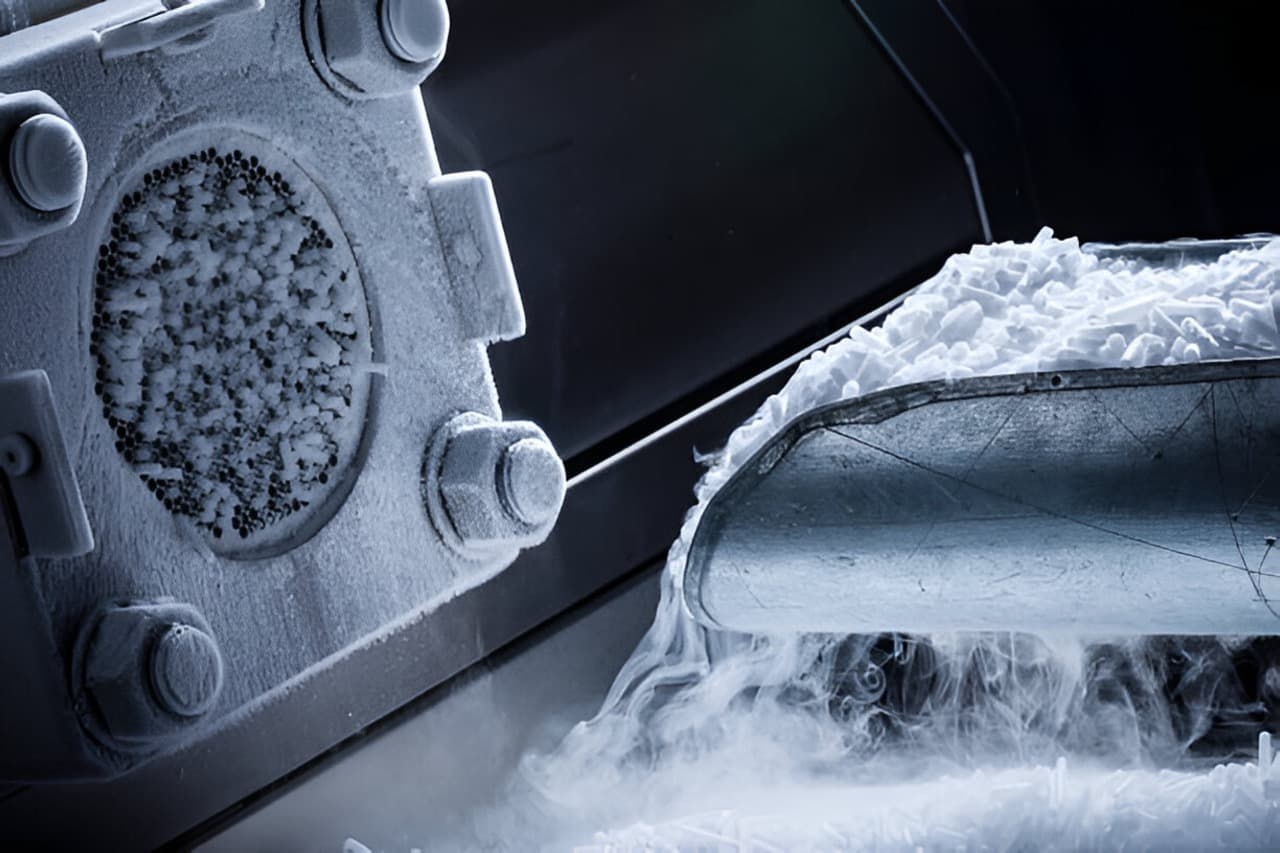
Ice is the part most buyers don’t think about. Dry ice pellets sit at about minus 78°C and start turning into gas the moment they’re made. Even in an insulated bin they lose a few percent of their weight a day, so a provider orders ice for your date and picks it up close to the start. A six-hour blasting day goes through a few hundred kilograms. Ask where the ice comes from and when it gets collected. A crew carrying pellets bought for a job earlier in the week can run short before the day is done.
A search for dry ice cleaning near me will also turn up equipment rental shops. Renting a machine and running it with your own maintenance staff is an option on small, simple jobs. It moves the training, the noise and CO2 controls, and the risk of a damaged part onto you.
What a dry ice crew should bring to your site
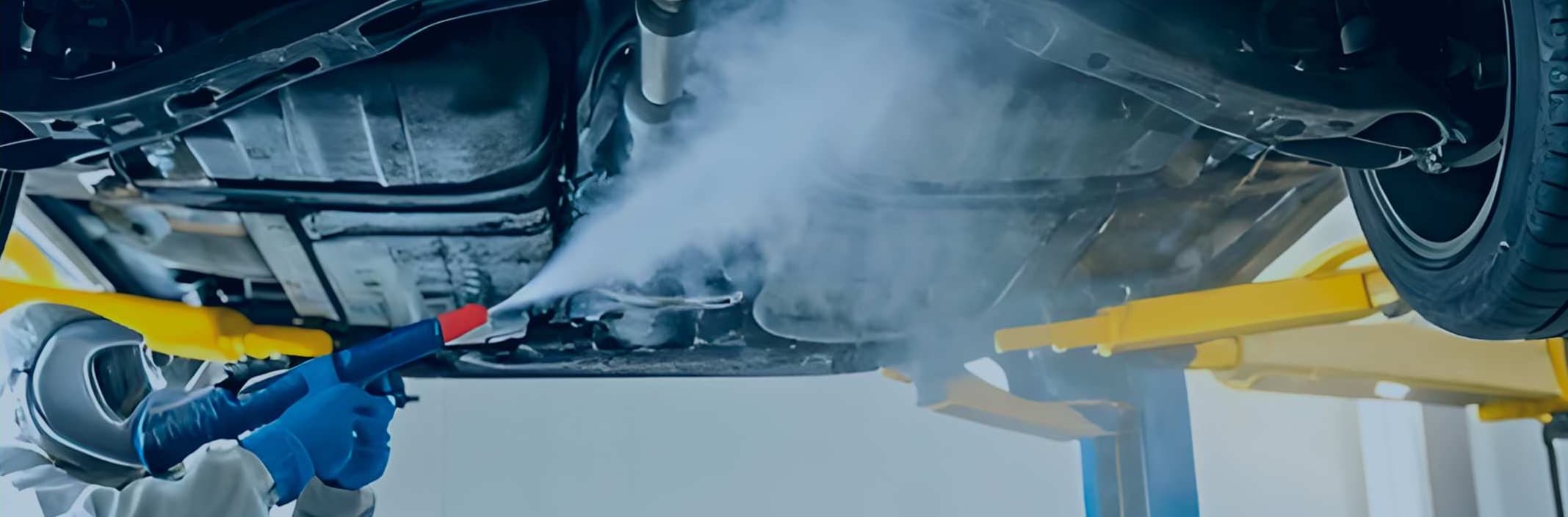
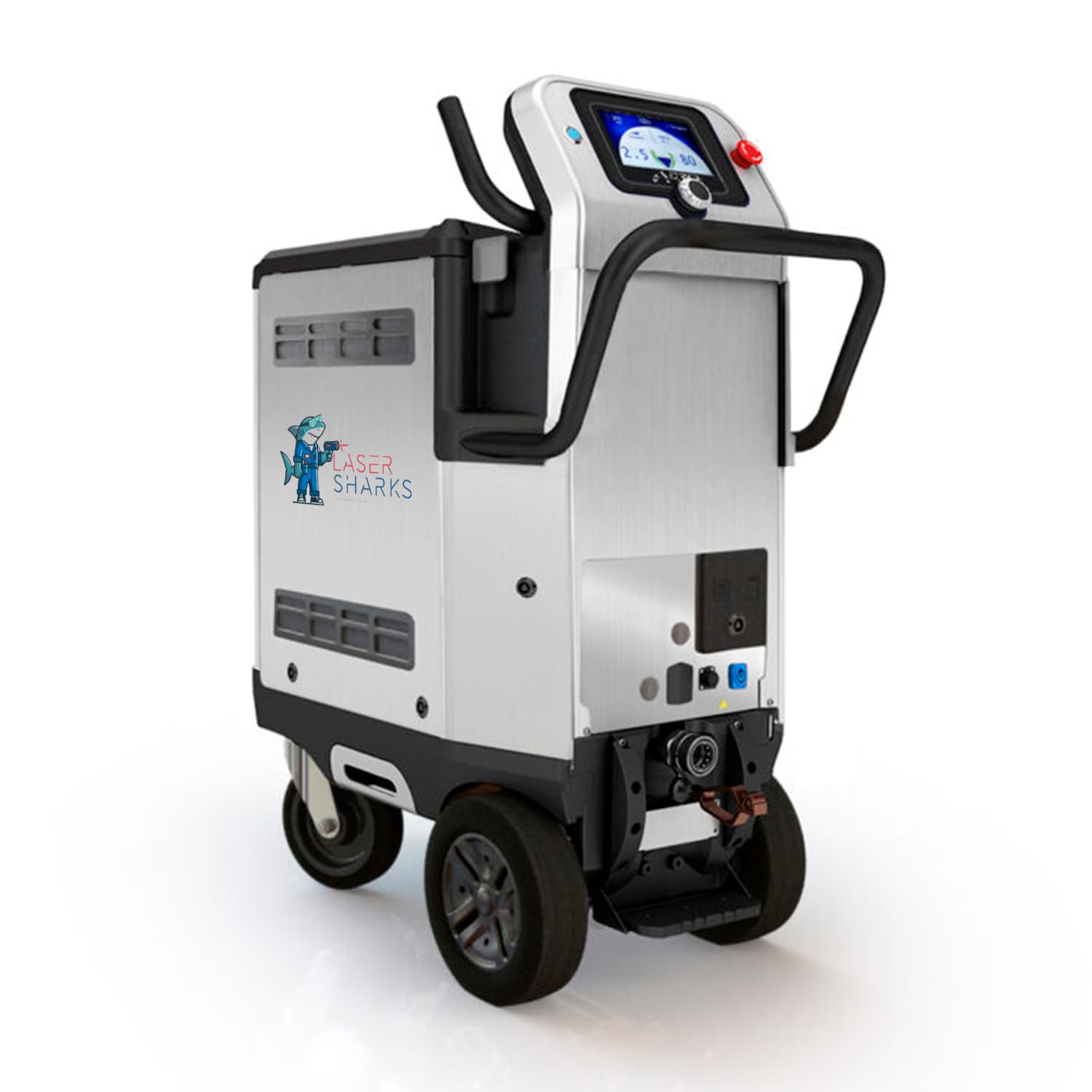
On a typical plant visit, our dry ice blasting crew unloads:
- The blasting machine, with a nozzle for heavy buildup and a finer one for delicate surfaces
- Enough blast hose to reach the work from where the machine sits, with the hose and nozzle grounded
- Dry ice in insulated bins, sized to the job with some margin
- A tow-behind diesel compressor with an aftercooler and moisture separator, unless your plant air has been checked in advance
- Poly sheeting and masking for motors, bearings, sensors and anything that shouldn’t take a direct hit
- A HEPA vacuum and ground sheets to catch whatever comes off the surface
- Hearing protection, face shields, insulated gloves and a personal CO2 monitor for each person in the work area
- Fans or ducting when the space is enclosed
Look at what’s missing: blast media, chemical drums and a water tank. The pellets turn into CO2 gas on impact, so the waste left on the floor after the shift is the grease, soot or paint that came off your equipment. Abrasive blasting on the same job leaves spent grit as well, and a few cubic metres of it costs $1,200 to $1,800 to dispose of in Metro Vancouver. In BC that grit also has to meet the WorkSafeBC rule that bans abrasive blasting material with more than 1 percent free silica. For a food plant with floor drains, or a shop with running machines on the other side of a curtain, that short waste list is usually why dry ice gets the call.
Before the day, a good provider has asked which of the items above your job needs. Expect questions about your air supply, your floor drains, what’s on the surface and how long the equipment can stay down. If the only thing they ask for is the address, they will be working the rest out on site, on your shutdown hours.
Air supply decides how the first morning goes
When a first visit runs late, the air connection is the usual cause. A production dry ice machine needs a large volume of dry compressed air, and with larger nozzles it can draw 150 cubic feet per minute or more. Plant air that feeds impact guns and blow-off nozzles all day often can’t keep up, especially if the same system runs the line’s pneumatics during the shutdown. Wet air causes its own trouble. Moisture in the line freezes around the pellets and the feed starts to clog.
A provider should ask for your compressor’s rated output, what else will draw on it while they work, and how far the nearest air drop is from the job. If nobody on site can answer with confidence, bring the diesel compressor. It adds $400 to $800 a day, and on our jobs it removes the most common reason a crew loses its first two hours.
Paperwork to ask for before anyone arrives
Ask for these by email before you book. A provider who has them in order sends them the same day.
- A certificate of insurance for commercial general liability. Commercial clients in BC commonly ask for $2 million to $5 million in coverage, with their company named as additional insured. Check the expiry date.
- A WorkSafeBC clearance letter. If the contractor’s account isn’t in good standing, WorkSafeBC can hold you responsible for the premiums owed on your job.
- A written safe work procedure for dry ice blasting covering noise, CO2, eye and skin protection, cold burns and how the crew controls the zone around the nozzle.
The safe work procedure deserves a careful read from your own safety lead. Dry ice blasting is loud, often well above 100 dBA at the nozzle, while the WorkSafeBC noise exposure limit is 85 dBA over an eight-hour day. Your staff need to stay out of the zone or wear protection.
CO2 needs a plan too. In an open warehouse bay it disperses. In a pit, a tank or a small room with the doors shut, it is heavier than air and pools low. The WorkSafeBC exposure limit for carbon dioxide is 5,000 ppm averaged over an eight-hour shift, and anyone blasting inside an enclosed space should wear a monitor set to alarm at that level. A confined space also needs a hazard assessment and an entry procedure before anyone goes in. In most facilities that program belongs to the owner, so settle who runs it while the job is being quoted.
Reading the quote line by line
A dry ice quote you can compare against another one shows separate lines for:
- Crew size and hours (rates in BC usually run $95 to $250 an hour)
- Dry ice, priced per kilogram or as an estimated total
- Compressor rental, or a note that plant air has been confirmed
- Mobilization and travel
- Masking and containment
- Disposal of what comes off the surface
- Night, weekend or holiday premiums, if your window falls there
Most dry ice jobs we quote in Greater Vancouver land between $1,500 and $8,000. A quote well below that range for a full shift usually leaves something out, and the gap we see most often is ice written as "plus consumables" with no estimate. At $3 to $5 per kilogram delivered, ice can add $700 to $2,100 to a six-hour day. That is often more than the difference between the two quotes on your desk.
Check how the quote defines finished. "Clean equipment" leaves room for an argument. "Mixer housings and conveyor frames free of visible grease and carbon, bearings and motors masked" doesn’t. If you’re unsure dry ice will lift your contamination, pay for a test patch on the worst area before you book the full day. Twenty minutes of blasting on the dirtiest oven rack or mould face tells both sides what the job will take.
What dry ice won’t do
Dry ice handles grease, oil, soot, release agents, mould growth, adhesives and many thin paints well. It struggles with hard rust, mill scale and thick, well-bonded coatings such as two-part epoxy. A crew that owns nothing but a dry ice machine has every reason to keep trying on those surfaces and bill the hours.
We run both dry ice and laser cleaning. When part of a job turns out to be rust on structural steel or a coating that won’t let go, we switch that part to laser and price it separately. Whoever you hire, ask them directly what dry ice will leave behind on your surface. A provider who answers with specifics has done that kind of work before.
The downtime math on a cheaper quote
Take a food plant in Richmond with an eight-hour Sunday shutdown to degrease a packaging line and two mixers. Two quotes come in about $600 apart. The higher one includes a diesel compressor, because that provider asked about air on the first call and learned the plant compressor also feeds the line’s pneumatics. The lower one assumes plant air.
At 7 a.m. on Sunday, the crew on the lower quote finds the system can’t hold pressure with the machine running. Getting a rental compressor delivered on a Sunday takes about three hours. They finish the mixers and half the line, and the rest waits for the next shutdown, which takes the line down for another four hours. If that line earns the plant $2,000 an hour, the $600 saving has turned into $8,000 of lost production and a second mobilization fee.
Our recommendation
Shortlist two or three providers within reasonable reach, then let the first phone call decide. Hire the one who asks about your air, your drains, your downtime window and the contamination before talking price, sends the insurance certificate and WorkSafeBC clearance the same day, and puts ice and compressor on separate lines. Pay for a test patch on anything you’re unsure of. Put distance last on the list. An extra $200 in travel costs less than one lost hour on most production lines, and that is the trade a "near me" search tends to hide.
Laser Sharks crews are fully insured, carry WorkSafeBC coverage and work across BC from Greater Vancouver, and the company was named Best Cleaning Services in BC 2025 by the CBRB. Send photos of the surface, a rough size of the area and your shutdown window through our quote request form, or call 236-660-4248. We’ll tell you what our crew would bring to your site and what the job costs.