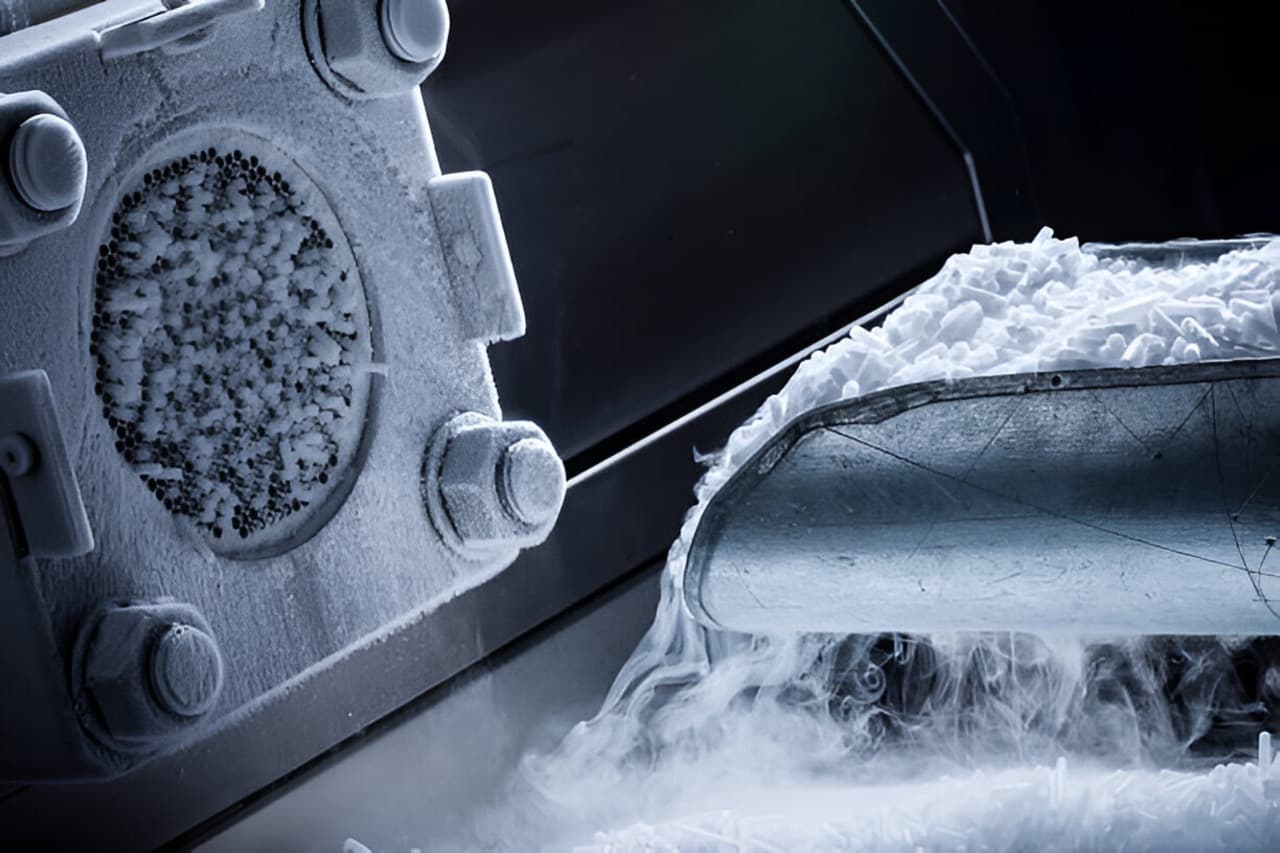
Most people who call us about dry ice paint removal have already been told it can strip anything. It can’t. Dry ice will take failing paint off a conveyor frame in an afternoon, lift tar undercoating off a 1968 pickup chassis in sheets, and clear overspray from a production line without a single bolt coming out. Put the same nozzle on a two-part epoxy that went on over a proper blast profile, and you can spend an hour making a bare patch the size of a dinner plate.
Knowing which job is which before the compressor shows up is most of the skill. So this is a practical look at where dry ice paint removal earns its money on vehicles, equipment and structural steel in BC, where it doesn’t, and what the work costs around the Lower Mainland.
What dry ice does to a paint film
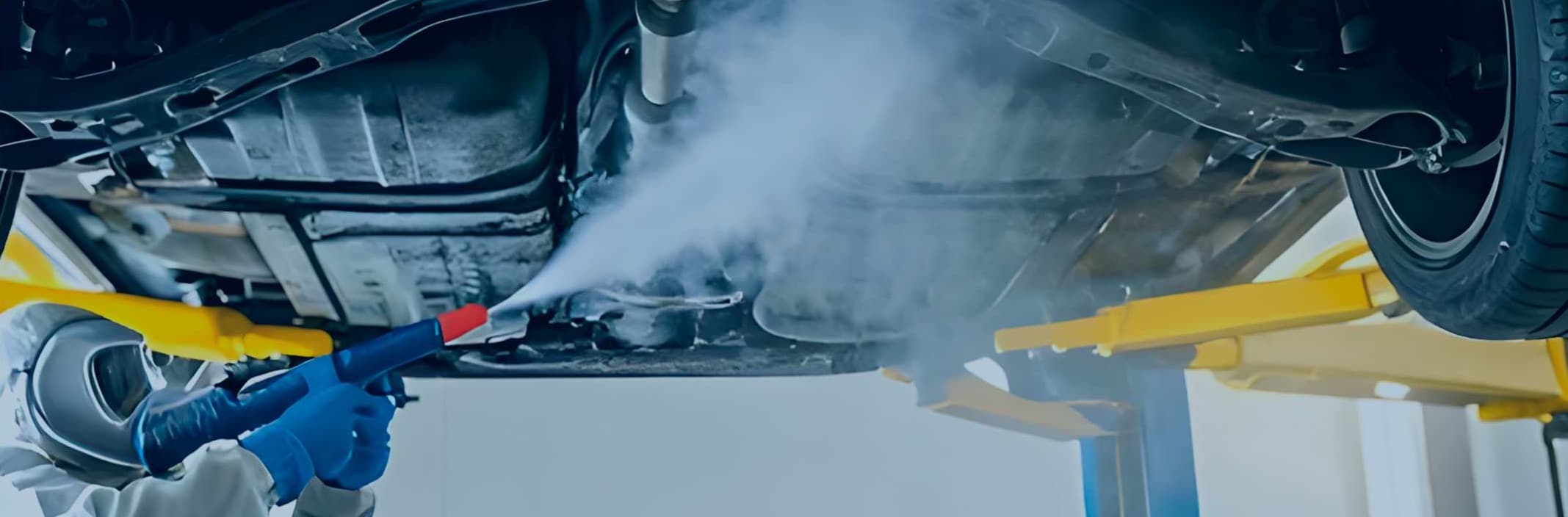
Dry ice pellets are solid CO2 at minus 78.5°C. We fire them at the surface with compressed air, and three things happen in a fraction of a second. The impact cracks the paint. The cold shrinks the coating faster than the metal underneath, which breaks the bond between them. Then the pellet turns straight to gas, expands, and lifts the loosened paint off from behind.
What it doesn’t do is grind. There’s no abrasive, so the steel, aluminum or chrome under the paint comes out with the same surface it had before it was painted. No new scratches. No anchor profile either, and that matters later.
Nothing is left behind except the paint chips. The ice is gone in seconds. No sand in the bearings, no grit in the electrical cabinets, no rinse water heading for a floor drain, no solvent smell in the building on Monday morning. For most of our clients, that is the whole reason they called.
The paint it removes well
Dry ice works best where the paint already wants to come off, or where the bond is weaker than the film itself.
- Flaking, chalking or blistered paint on machinery, frames, columns and tanks. This is the easy work. Rates of 6 to 15 square metres an hour are normal.
- Single coats of industrial enamel on equipment painted at the factory over a light primer. Slower, usually 1 to 4 square metres an hour, but it comes off.
- Overspray on conveyors, walls, fixtures and booths in a paint shop. Thin film, weak bond, fast work.
- Paint over grease or oil, which is more common on old machinery than anyone admits. The contamination underneath is a weak layer, and the paint lets go with it.
- Rubberized and tar-based undercoating on vehicles. The cold makes it brittle and it cracks off in pieces.
- Paint on aluminum, where the metal and the coating contract at different rates and the bond breaks more easily than on steel.
Epoxy, powder coat and the profile problem
A blasting day that doesn’t finish wastes your money and ours, so here’s where we slow down or say no.
Well-bonded two-part epoxies and polyurethanes are the hardest case, especially when they were applied over an abrasive-blasted surface. The coating is locked into the peaks and valleys of the steel. Dry ice will dull it and maybe take the top coat, but getting to bare metal is slow enough that the bill stops making sense.
Powder coat is similar. Some batches pop off. Most don’t.
Zinc-rich primers and galvanizing stay put, which is usually what you want anyway.
Then there’s the coating spec. If your painter’s spec calls for a blast profile before the new system goes on, dry ice can’t create one. It cleans. It doesn’t roughen. On those jobs, dry ice still earns its place for degreasing and loose-paint removal around sensitive equipment, but something else has to cut the profile.
When the paint is tight and the substrate has to come back bare, we usually reach for the laser instead. Our crews run both, so we have no reason to push the wrong machine. The article on laser paint stripping covers that side, including the jobs where a can of chemical stripper still beats both.
Vehicles: chassis, frames and panels
Restoration shops and collectors in Langley, Surrey and out through the Fraser Valley bring us the same job over and over: a frame or underbody carrying 50 years of undercoating, road tar, grease and three colours of paint.
Dry ice is very good at this. The undercoating and grease come off together, the paint on top of them goes too, and the factory markings, stampings and spot welds stay readable because nothing has been sanded or blasted into them. No grit packs into the box sections, where sand from abrasive blasting tends to sit for years before it falls out on the shop floor.
On body panels it’s more selective. Dry ice often takes a respray off down to the original paint or primer, and that is sometimes exactly what a restorer wants to see. It rarely gets thin factory paint off tight sheet metal to bare steel in one pass. It also won’t warp a panel, because no heat builds up in the metal the way it can with aggressive abrasive work on a large flat surface.
For fleets the job is more practical. Stripping loose paint and decal adhesive off truck boxes and trailers before a repaint. Cleaning a work truck’s chassis so a mechanic can actually see the cracks. A single vehicle chassis in Metro Vancouver usually lands between $1,500 and $3,000, mostly depending on how much undercoating is on it and whether we work at your shop or ours.
Equipment: the reason most clients call
The biggest payoff of dry ice paint removal shows up on machinery that can’t be taken apart, or would cost a fortune to take apart.
Abrasive blasting a piece of production equipment means pulling motors, drives, sensors and wiring, masking whatever is left, building containment, and then vacuuming grit out of every channel and bearing housing for a day afterward. Chemical stripping means dwell time, scraping, and solvent residue next to food contact surfaces or electrical gear.
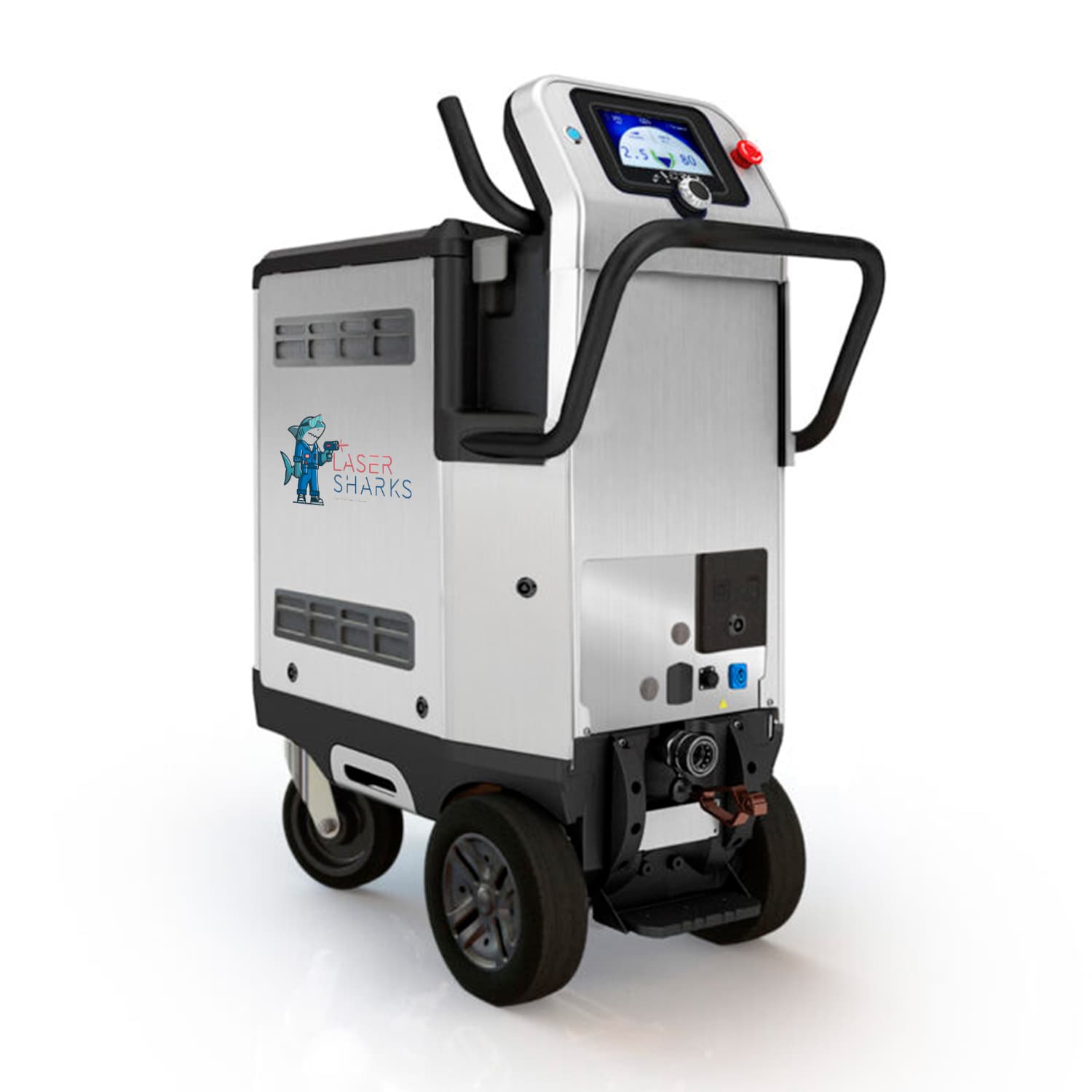
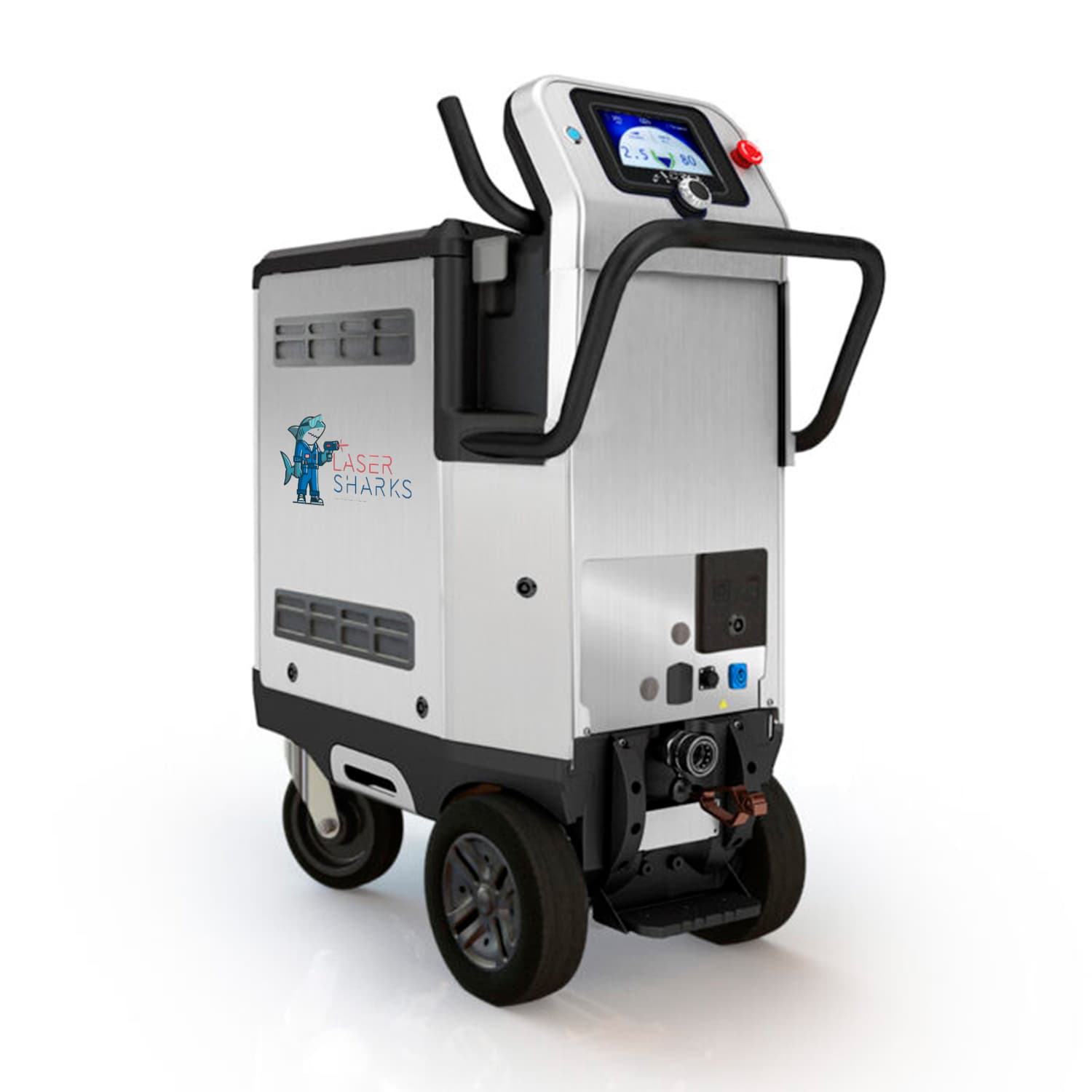
Dry ice skips most of that. We mask the obvious things: open electrical enclosures, seals we’re worried about, a few sensor faces. Then we blast in place. Motors stay mounted. Wiring stays connected. Dry ice is non-conductive and leaves no moisture, so control panels and cabinets can be cleaned the same day as the frames around them, once they’re de-energized and locked out.
The downtime math
A packaging plant in Delta’s Tilbury industrial area is a good example. The frames on one conveyor line needed a repaint. Paint was flaking, and the plant’s food safety auditor had flagged it twice.
The sandblasting quote called for four days: two to strip the drives and sensors and set up containment, one to blast, one to clean up grit and reinstall. The line runs two shifts and contributes about $1,200 an hour when it’s running. Those four days carried roughly $77,000 in lost contribution before the blasting contractor sent an invoice.
We did the same scope in about 12 hours across a Saturday shutdown, with the drives masked in place. The painters started Sunday afternoon and the line ran Monday morning. Our invoice was in the $5,500 to $7,000 range.
The paint removal was never the expensive part of that job. The downtime was.
Structural steel in occupied buildings
Warehouses, cold storage buildings and food plants in Richmond, Burnaby and on Annacis Island carry a lot of painted steel. Columns, mezzanine framing, roof trusses, racking end-frames. When that paint starts flaking, it ends up in product, on pallets and in audit findings.
Abrasive blasting inside an occupied building is a hard sell. The grit goes everywhere, containment eats floor space for days, and mineral abrasives can release respirable crystalline silica. That brings WorkSafeBC exposure control plans, air monitoring and a lot of plastic sheeting. Most facility managers stop reading the quote at the containment line.
On structural steel, dry ice paint removal works best as the loose-paint and cleaning step before a spot repaint or an overcoat. We take off everything that’s failing, feather the edges of what’s still sound, and leave the steel clean and dry for the painter the same shift. No silica. No spent media to sweep up. The waste is the paint chips, and a vacuum crew can pick those up behind us.
That last point matters more in older buildings. If the existing paint contains lead, every kilo of sand or grit used to remove it becomes contaminated waste. With dry ice, only the paint itself is handled as lead waste, which cuts the disposal volume by a wide margin. A Richmond distribution centre with around 120 square metres of flaking paint on columns and mezzanine steel typically runs 10 to 15 hours of blasting and lands between $4,500 and $7,500.
If the coating engineer wants a full strip to bare steel with a profile, dry ice is the wrong main tool. We’ll tell you that at the site visit, not after the first day.
What dry ice paint removal costs in BC
Most dry ice blasting jobs we quote in Greater Vancouver fall between $1,500 and $8,000. Paint removal sits toward the upper half of that range, because it runs longer and burns more ice than degreasing or mould work.
The main lines on the quote:
- Crew time: $95 to $250 an hour, depending on crew size and equipment.
- Dry ice: $3 to $5 per kilogram delivered in the Lower Mainland. Paint removal goes through 40 to 70 kg an hour at the pressures it needs.
- Compressed air: if your plant air can’t supply the volume, we bring a diesel compressor at $400 to $800 a day.
- Mobilization: $250 to $600 within Metro Vancouver.
- Masking and lift access, where the job needs them.
Two things swing a paint removal quote by 50 percent in either direction. The first is the coating. Flaking enamel and tight epoxy can differ in removal rate by a factor of ten on the same steel. The second is access. Steel at shoulder height in an empty bay goes far faster than trusses six metres up over live product.
That’s why we run a test patch on anything bigger than a few hours. Ten minutes on your actual coating gives us a measured rate instead of a guess, and lets us quote a fixed price. Our dry ice blasting service page has more on the equipment and what else it cleans.
Safety on a dry ice job
It isn’t quiet. A dry ice nozzle runs well over 100 decibels, so everyone near the work wears hearing protection, and we plan the loudest work around your shift schedule when we can.
CO2 is the other one. Sublimating ice releases carbon dioxide, which is heavier than air and pools in pits, tanks, basements and small rooms. On enclosed jobs we ventilate the space and the operator wears a CO2 monitor. WorkSafeBC’s eight-hour limit is 5,000 ppm, and we stop well short of it.
If the paint is old enough to contain lead, we test chips first. Lab analysis in the Lower Mainland runs about $50 to $150 per sample. A positive result means the work runs under an exposure control plan and the collected chips leave as hazardous waste. With dry ice, that’s a pail or two. Not a bin full of grit.
Before you call
Send us photos of the painted surface with something in the frame for scale, the substrate (steel, aluminum, cast iron), a rough idea of the coating type and age, and the access situation. Tell us what happens after the paint is off: repaint, inspection, sale, or just clean metal. That last detail decides the method more than anything else.
Laser Sharks crews are fully insured and work under WorkSafeBC requirements on every site, and the company was named Best Cleaning Services in BC 2025 by the CBRB. If you have equipment, vehicles or steel that need paint removed without grit, chemicals or a teardown, request a free quote or call 236-660-4248. If dry ice is the wrong tool for your coating, we’ll say so on the first call.