The CFIA inspector who shows up at your Delta processing plant on a Tuesday morning will check three things in the first ten minutes: documentation, allergen control, and visible residue. Dry ice cleaning food grade equipment lets you pass the third check without leaving a fourth problem behind. No moisture in the conveyor housing. No chemical residue waiting to bloom on the next swab. No abrasive media stuck in a slat.
That’s the practical reason BC plants started switching three years ago. The marketing reason came later.
What changes when you stop using chemicals
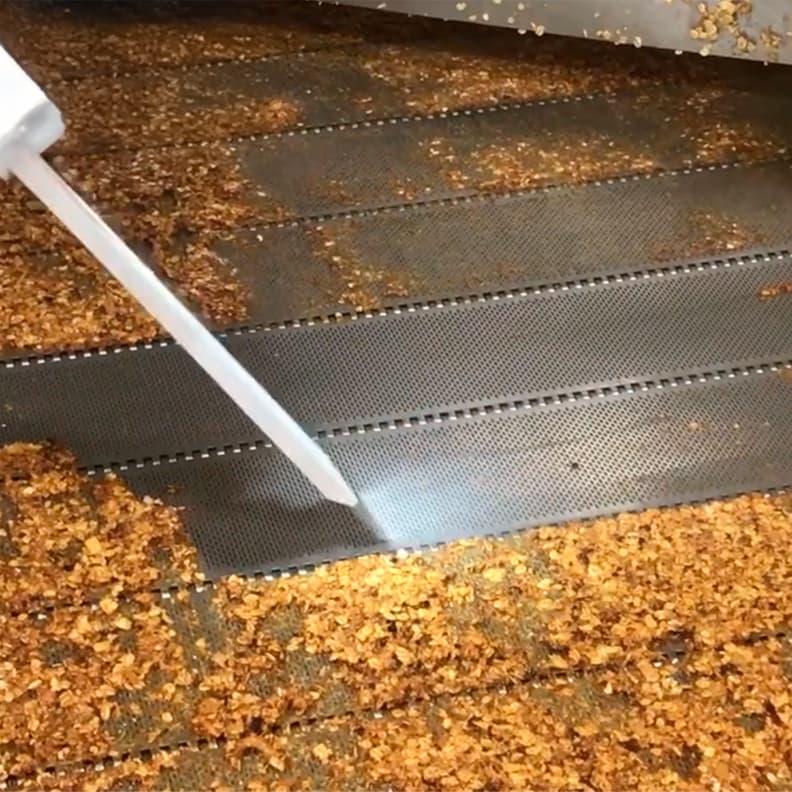
Most BC food processors still clean equipment two ways. A wet chemical cycle for fixed surfaces, and a sanitizer wipe-down for everything in reach. The cycle works for stainless steel tables. It doesn’t work for slicer blades with built-up protein, the underside of a packaging line, the inside of a smokehouse, or the conveyor return path under a coater.
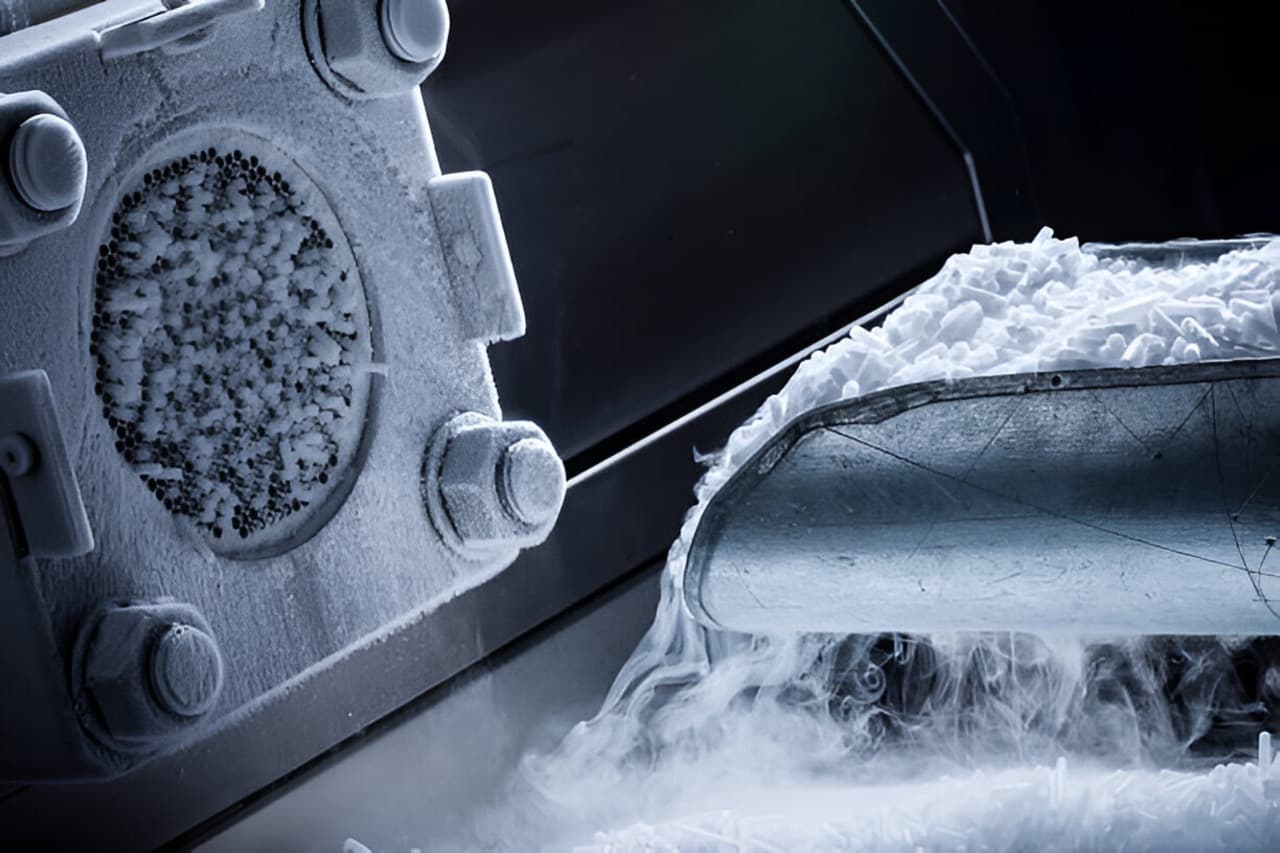
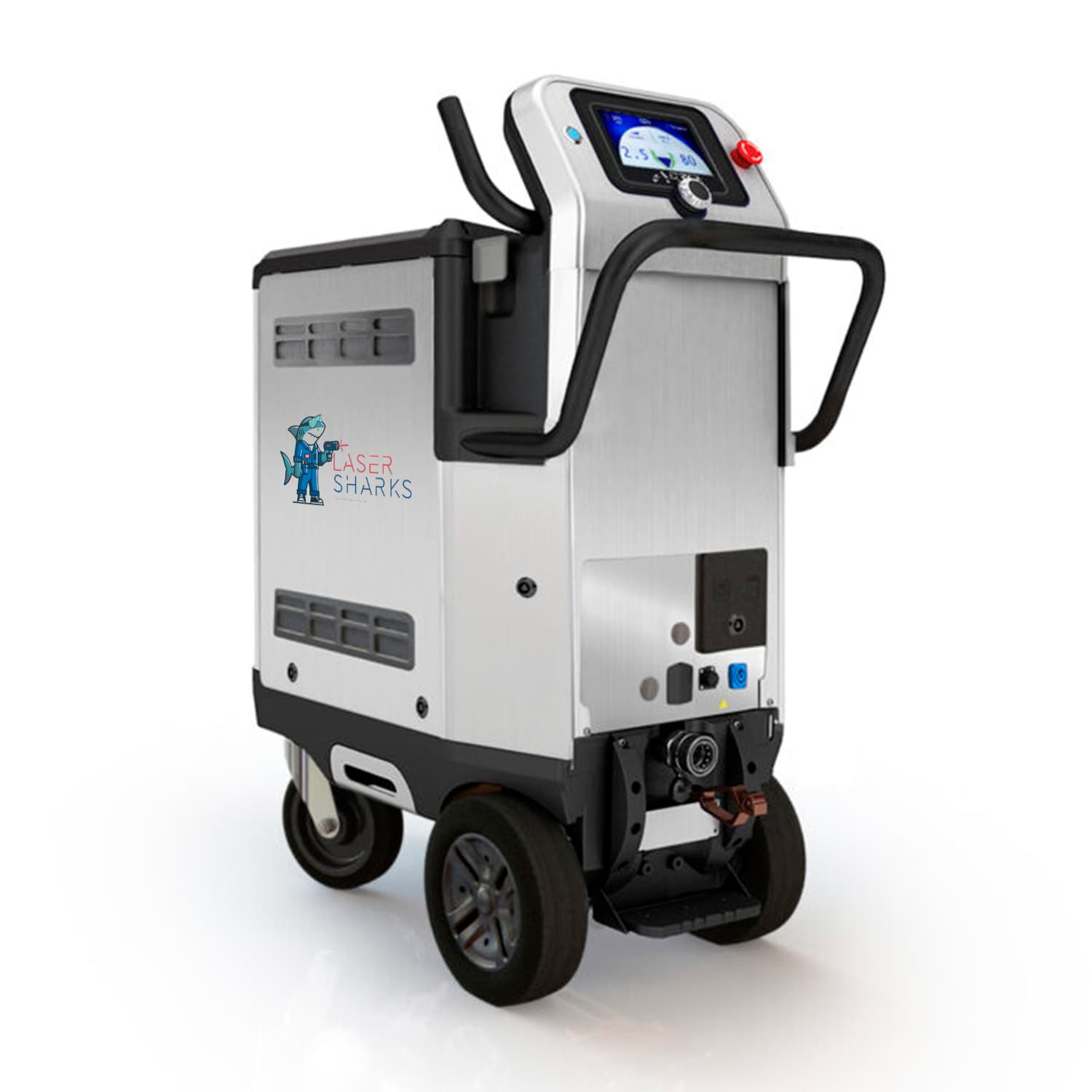
Dry ice cleaning replaces that second category. Solid CO₂ pellets blast at about –78°C, fracture the contaminant from the substrate through thermal shock, and sublimate into gas. The contaminant falls. The pellet is gone. You vacuum the debris.
What you don’t get:
- water inside electrical cabinets
- residue on a swab three hours later
- a 6-hour wait while a chemical rinse cycle completes
- disassembly of the line
A Burnaby seafood processor we worked with last fall used to lose 8 hours every Friday to a full CIP on their breading line. After switching to dry ice for the dry side and keeping CIP only for product-contact wet surfaces, that dropped to under 3 hours. They run a third shift on Friday now.
BCCDC, CFIA, and what “food-grade” actually requires
The food-grade label gets used loosely. For dry ice work in BC, here’s what matters.
CFIA registration. Applies to most federally inspected meat, dairy, and fish processors. Their sanitation control programs (SCPs) need a written cleaning procedure with frequency, method, and verification. Dry ice fits into an SCP the same way chemical cleaning does, but the verification step is simpler because there’s no residue to test for.
BCCDC and Fraser Health. Handle provincial inspections at smaller facilities, breweries, kombucha producers, and bakeries. They focus on visual inspection plus ATP swabbing. Dry ice passes ATP cleanly because no organic residue is added.
Allergen programs. This is where dry ice cleaning food grade work actually wins. Cleaning gluten off a line that runs gluten-free batches afterward is a high-stakes job. Chemical cleaning needs validation that the chemical itself is gone. Dry ice has nothing to validate. You inspect, you swab, you run.
Two things to flag with your auditor before switching:
- Document the CO₂ exhaust ventilation plan. CO₂ displaces oxygen in enclosed spaces. WorkSafeBC requires monitoring on confined-space work.
- Pellet supply chain. Dry ice has a 24-hour shelf life. The cleaning crew brings it. If the auditor asks about quality control on cleaning consumables, point to the supplier’s spec sheet.
What it costs in BC
Per-job pricing for food-grade dry ice cleaning in the Lower Mainland sits in the $1,500 to $8,000 range. The variance comes down to three things.
Surface area and complexity. A single smoker takes 4-6 hours and one operator. A full packaging line with conveyor, coater, and freezer entrance can take a 2-person crew two shifts.
Access constraints. Equipment in a tight room with no ventilation needs more setup. CO₂ monitoring, exhaust fans, and sometimes a second operator watching for confined-space exposure.
Downtime window. The same job done on a Saturday overnight costs more than the same job during a scheduled production gap. Premium for weekend mobilization runs 15-25%.
For ongoing maintenance contracts (quarterly or monthly), per-visit cost drops 20-30%. Most BC food clients land on a quarterly deep clean plus on-call response for line issues.
Downtime math the facility manager actually cares about
A 24-hour line at a mid-sized BC processor runs about $4,000-$8,000 per hour in revenue when full. If chemical cleaning takes 8 hours and dry ice takes 3, the 5 hours saved is worth $20,000-$40,000 per cleaning cycle. Even at the top of the dry ice price range, the payback is one cleaning.
The bigger number is unplanned downtime. A microbiological hold from a failed swab usually costs 12-24 hours of production plus retest. We’ve seen Richmond and Delta plants run dry ice as their “save the audit” tool when chemical cleaning left an issue.
That math isn’t theoretical. It’s the reason ongoing food-grade contracts exist.
Real Greater Vancouver job profiles
A few examples, anonymized.
Delta seafood processor. Weekly dry ice on the smoker hood and conveyor return. 6 hours, 2 operators. $3,200 per visit. They went from 11 chemical-related rework events the year before to 2 the year after.
Surrey commercial bakery. Allergen-driven scheduling, with the gluten line cleared before gluten-free production. 4 hours, 1 operator. $1,800 per cleaning. ATP results stayed under 10 RLU consistently.
Richmond dairy. Smokehouse and packaging line, monthly. 12 hours, 2 operators across an overnight shift. $7,500. The plant manager calculates payback at four cleanings against the previous downtime.
Burnaby brewery. Tank exteriors, conveyors, glycol jacket fittings. Quarterly, 6 hours, 1 operator. $2,400. The win here was avoiding aluminum corrosion that chemicals were causing on tank shells.
What dry ice doesn’t fix
Honesty matters here, because the wrong sales pitch will lose you the audit.
Dry ice doesn’t sanitize. It removes the soil that prevents sanitization. You still need a sanitizer step on product-contact surfaces. The workflow becomes: dry ice for soil removal, sanitizer for kill step, ATP for verification. Three steps instead of five.
Dry ice doesn’t do CIP work. Closed wet systems like pipes, valves, and tanks with built-in spray balls should stay on chemical CIP because there’s no line-of-sight access for blasting.
Dry ice doesn’t strip heavy paint or thick mineral scale at production speeds you’d want. For those, laser cleaning or a different method wins.
Tuning the process: pellet size, pressure, distance
The same dry ice machine does very different work depending on how it’s set up. For food-grade jobs, three variables matter.
Pellet size. Standard pellets are 3mm. Larger 16mm pellets carry more mass and remove heavy soil faster, but they can mar soft substrates like aluminum and food-grade plastics. For protein buildup on stainless slicer blades, we run 3mm at moderate pressure. For carbonized soot inside a smokehouse, 16mm at higher pressure.
Pressure. Most food-grade work runs in the 80-140 PSI range. Higher pressure cleans faster but raises CO₂ exhaust volume, which matters in tight rooms. Lower pressure is gentler on rubber gaskets, slat conveyors, and food-grade polymers.
Distance and angle. Closer is more aggressive. The operator’s standoff distance — typically 50-150mm — controls how much energy hits the surface. A skilled operator changes distance several times on a single piece of equipment depending on what’s stuck where.
The reason this matters for your audit: a contractor who runs one setting for every job will damage something. Ask the crew what pellet size and pressure they’re planning before they start, and watch the first square foot before letting them loose on the rest.
Bringing it into a BC facility: the practical path
Most food plants we work with in the Lower Mainland follow a three-step adoption.
First, a single trial run on the hardest cleaning task in the facility, usually the one that takes longest or fails swabs most often. We do it once during a scheduled downtime, document before-and-after with photos and ATP results, and hand it to the QA team.
Second, a 90-day pilot on that single task. Monthly or weekly, depending on the line. This builds the SCP documentation and gets your auditor comfortable with the method before it shows up in their inspection.
Third, expansion to adjacent equipment. Once one line is on dry ice, the cost per visit drops because the crew is already mobilized.
The total decision time at most plants runs 3-6 months from first conversation to first production-integrated cleaning. The technical case is straightforward. The procurement and QA buy-in is where the timeline lives.
Trust signals worth asking for
If you’re evaluating dry ice cleaning food grade work in BC, ask the contractor for:
- WorkSafeBC clearance letter (current, not expired)
- $5M liability insurance certificate naming your facility
- Written SCP-compatible cleaning procedure on company letterhead
- Reference from a similar BC facility (seafood to seafood, bakery to bakery)
- Proof of dry ice pellet supplier and pellet size spec (3mm pellets for fine work, 16mm for heavy soil)
Laser Sharks has been running industrial and food-processing cleaning jobs across Greater Vancouver for over 20 years. Fully insured, WorkSafeBC compliant, CBRB Best Cleaning Services in BC 2025. We work with CFIA-registered and BCCDC-inspected facilities from Delta to North Vancouver and into the Fraser Valley.
If you’re scheduling a 2026 cleaning audit cycle and want to see dry ice run on the worst piece of equipment in your plant before you decide anything else, request a free site quote. We do the trial run. Your QA team decides what happens next.
For the technical service overview, see dry ice blasting.
Common questions
Is dry ice cleaning safe for food-grade equipment?
Yes. No moisture, no chemical residue, and no abrasive media left behind, so a CFIA swab comes back clean. The CO2 sublimates on contact, so there is nothing to rinse off or dispose of.
Can dry ice blasting clean equipment without disassembly?
In most cases, yes. The process reaches into conveyor housings and slats without teardown, which is where most of the downtime savings come from.
What does dry ice cleaning of food equipment cost in BC?
It is quoted per job, driven by equipment size, soil type, and access. The payback usually shows up in avoided downtime and no chemical purchase or disposal, not the line-item rate.
Related reading
- CO2 Blasting Services Vancouver: What BC Buyers Need to Know
- Dry Ice Blasting in Vancouver: When BC Manufacturers Choose It Over Sandblasting
- Commercial HVAC Cleaning Vancouver: When NADCA Isn’t Enough
Compare options for your site with our dry ice blasting service, or request a quote.