The outage schedule shows up four weeks out as a spreadsheet with hours down the left side. Saturday 0600, lockout complete. Saturday 0900, chain out. Sunday 2200, oil up and turn. Every trade on that sheet has been doing the same job for years and knows roughly how long their piece takes.
Cleaning is usually the line nobody costed properly.
Mill equipment cleaning in BC gets treated as housekeeping right up until the moment a millwright cannot see a crack, a bearing housing goes back together over compacted pitch, or the electrician refuses to close a panel that is still packed with wood dust. Then it becomes the thing holding up startup. On a Lower Mainland operation running two shifts, that hour costs somewhere between $4,000 and $12,000 depending on product and grade. Interior sawmills quote me higher numbers than that.
So the question is not whether the equipment gets cleaned. It is whether cleaning sits inside the window or extends it.
What actually accumulates in a wood products plant
Pitch is the one that defines the work. Softwood resin comes off the saw line warm, lands on guards, chain rails, sprocket pockets and conveyor frames, then cures into something closer to varnish than to dirt. Six months of it on a chipper housing will not come off with a pressure washer at any temperature a crew can safely hold on a ladder. Solvent softens it and leaves you with a rag disposal problem and a surface that stays tacky.
Under the pitch you get bark fines, sawdust packed into every horizontal ledge, and hydraulic seepage that turns the whole mix into a paste. Around the debarker and the green end, add grit tracked in off the log deck. In a pulp mill the profile changes: liquor carryover, scale on evaporator bodies, fibre buildup in the dryer section, and a lot of electrical gear living in a dusty, damp room that nobody wants to wash down.
Three of those four categories respond well to CO2 pellets. The fourth, hard scale and heavy rust on steel, is a laser job.
That split matters more than it sounds. Bringing the wrong method to a mill means either doing damage or doing nothing.
Why water and abrasive both cause problems here
Washing is the default because it is cheap and everyone has a pressure washer. It also creates three headaches inside an outage.
Water gets into places you did not intend. Motor windings, junction boxes, limit switches, proximity sensors. The failures show up two days after startup and nobody connects them back to the washdown. Second, everything you spray has to dry before the electricians will sign off, which eats hours you did not schedule. Third, in a mill the runoff carries resin, oil and fibre, and it goes somewhere. Provincial discharge rules and most mills' own environmental permits do not treat that as clean water.
Abrasive blasting has its own set. Media gets everywhere and mills are full of open gearboxes, chain, and hydraulic tanks. Containment is possible, and on a structural steel job it is often the right call, but building containment inside a live plant during an outage costs days you do not have. Then there is the WorkSafeBC exposure control angle: blasting silica-bearing media triggers a written control plan, respiratory protection, exposure monitoring and area restriction. In practice that means clearing other trades out of the zone, which is exactly what you cannot do when twelve people are working a 48-hour window shoulder to shoulder.
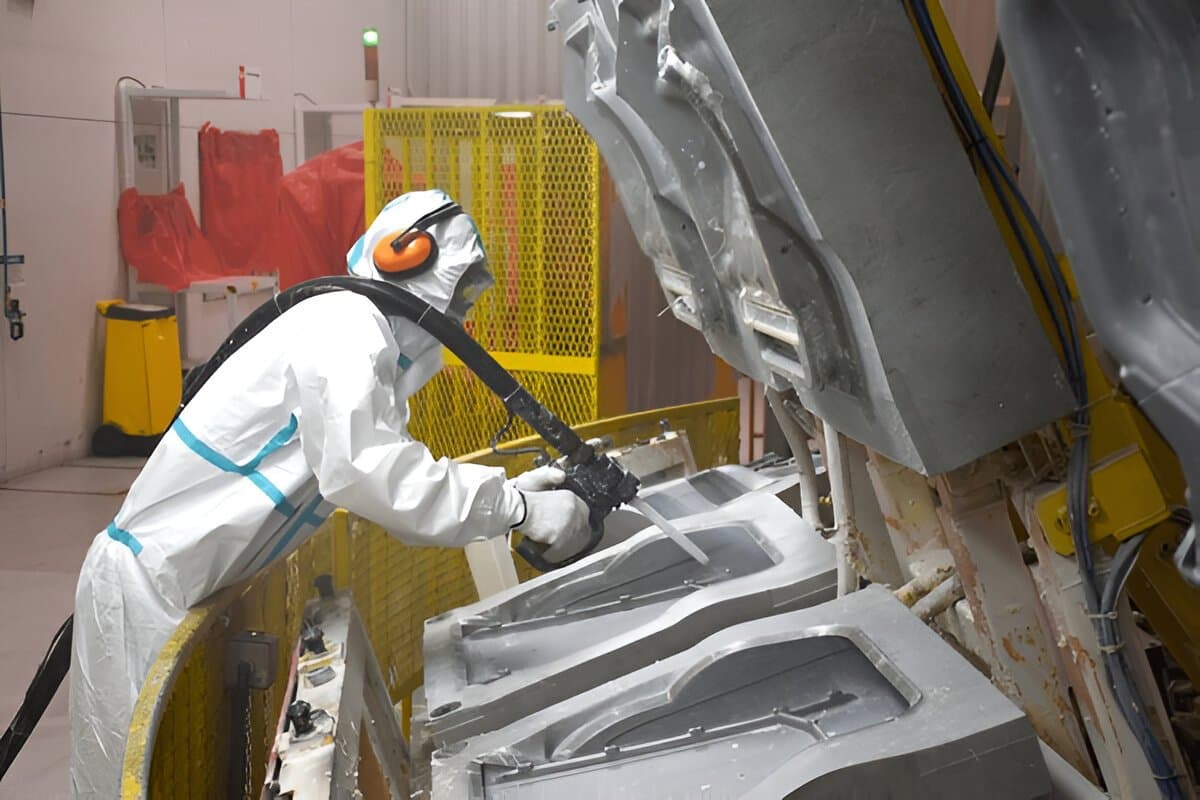
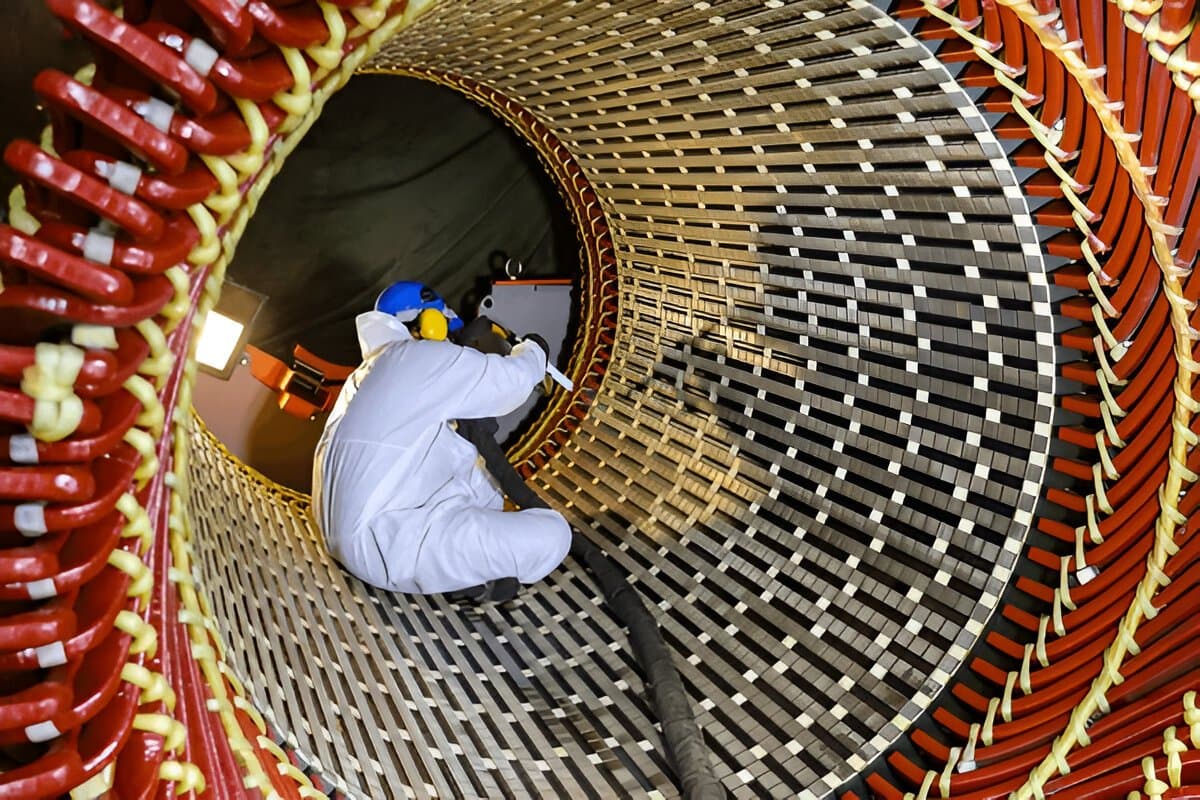
Dry ice sidesteps both. The pellets sublimate on contact, so nothing is left behind except the material you removed. No water, no drying time, no media to vacuum out of a chain trough. Crews keep working in adjacent areas with hearing protection and ventilation, not a full exclusion zone. Most of our dry ice blasting work in BC plants happens with other trades within twenty feet.
Where laser takes over
Dry ice lifts contamination off a surface. It does not take rust or mill scale off steel.
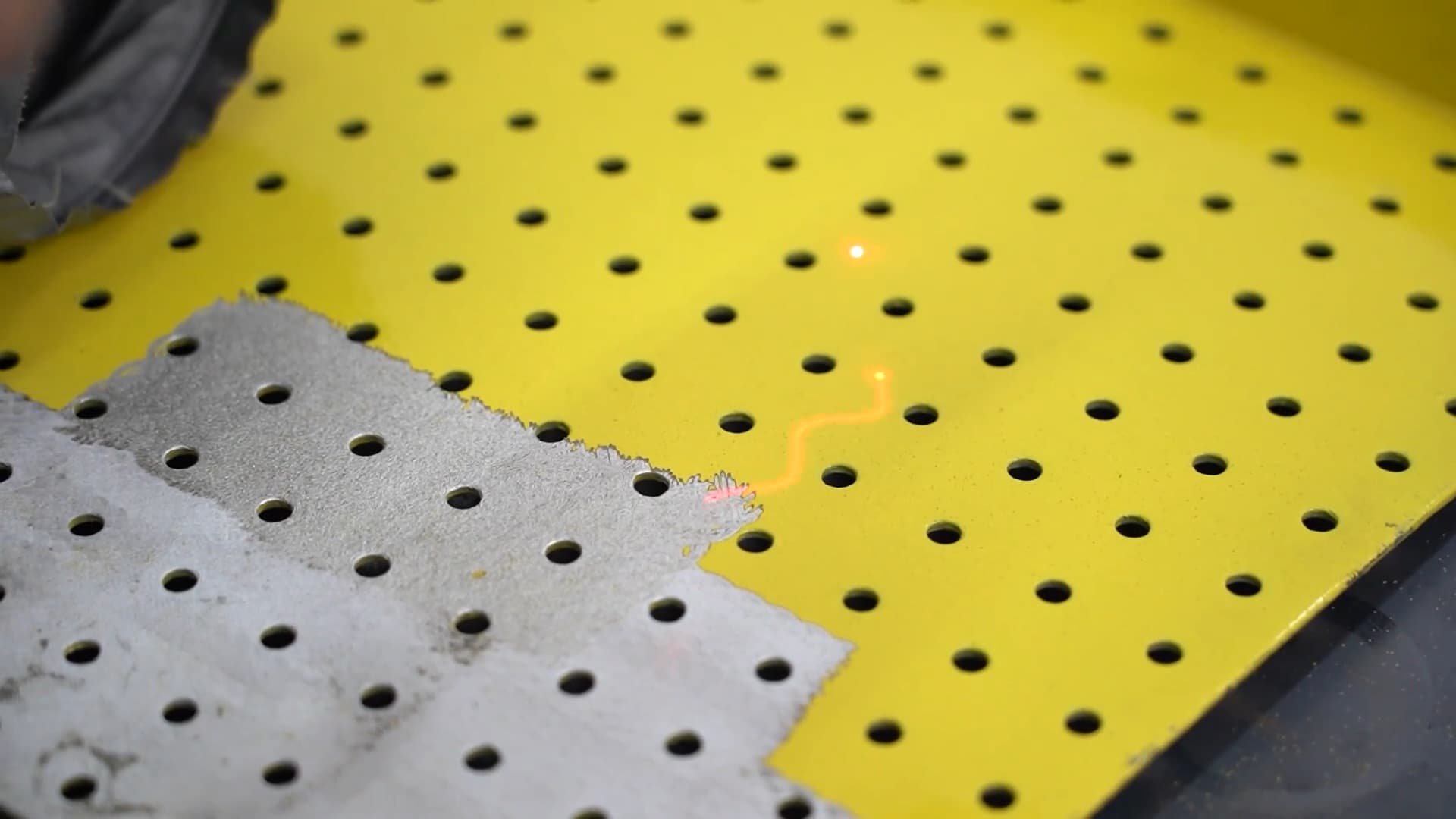
For that, laser cleaning is the tool: corroded shaft journals, wear plate that needs to be re-welded, tank exteriors going back under coating, anchor points on structural members. The beam pulls oxide off carbon steel and leaves the parent metal, which means a coating inspector gets a clean profile without anybody setting up a blast pot.
On a typical sawmill outage we run both. Dry ice on the conveyors, drives, hydraulic power units, electrical rooms and motor exteriors. Laser on whatever steel is getting welded, inspected or painted before the plant turns over. Two carts, two operators, one scope.
A practical note that costs mills money every year: laser is slower per square metre than blasting on large flat areas. If you have 200 square metres of tank shell to strip and a week to do it, blast it. Laser earns its rate on complex geometry, on anything near bearings or electrics, and on work that has to happen while the plant is occupied.
Sequencing inside the window
The most common scoping mistake is putting cleaning first, as one block, on the front of the outage.
It reads well on a schedule and it fails in practice, because half the equipment you want clean is not accessible until the mechanical crew has pulled guards, dropped chain and opened housings. Send a cleaning crew in at hour one and they clean the outside of things.
What works better, and what we plan for on BC mill work, is two passes. First pass goes in behind lockout and ahead of the millwrights, covering electrical rooms, MCCs, drive cabinets, motor exteriors and anything that needs to be dry and inspectable before a technician touches it. Second pass follows disassembly, hitting bearing housings, sprocket pockets, gearbox faces, sheaves, and the inside of guarding that was not reachable four hours earlier.
The second pass is the one that pays. It is also the one that gets cut when the outage runs late, which is an argument for booking a crew for the full window rather than a fixed block of hours.
One more piece of sequencing: the inspection handoff. If NDT is happening on welds during the outage, cleaning has to finish before the inspector arrives, not around them. Blast media and wet residue both produce false indications on magnetic particle and dye penetrant work. That coordination is a phone call during planning and a lost shift if it gets missed.
What it costs in British Columbia
Numbers for planning, per job, in CAD.
A single-shift dry ice scope at a Lower Mainland plant, one operator plus machine, runs $1,500 to $4,500 depending on access, height work and how much of the shift goes to setup. Two operators across a 48-hour window on a mid-size sawmill typically lands between $6,000 and $18,000. Laser rust and scale work prices separately, usually $1,200 to $6,000 per job, and it moves with square metre count and coating thickness rather than with hours on site.
Travel is the variable that surprises people. From our base in the Lower Mainland, work in Delta, Richmond, Surrey, Maple Ridge and Mission carries no meaningful mobilization cost. Squamish and the Fraser Valley are day trips. Once you are into Kamloops, Prince George, Quesnel, Castlegar or the Island mills at Crofton and Port Alberni, add crew travel, accommodation and equipment transport, which on a two-person, three-day scope is commonly $2,500 to $5,000 on top of the cleaning rate. Mills in those regions generally bundle several assets into one visit for that reason, and it is the right instinct.
Dry ice consumable cost tracks with pellet consumption, and pellet consumption tracks with how thick the buildup is. A conveyor frame that has not been cleaned in three years costs more than double the same frame on an annual cycle. Plants that put mill equipment cleaning on a fixed schedule spend less per year than plants that call when it gets bad.
Scoping it properly before the outage
Quoting a mill off photographs does not work. Pitch depth, access height, what is energized, where the fresh air comes from, whether the electrical room can be entered with product running, how far the machine has to sit from the work face. Those change the number by a factor of two.
A site visit before the shutdown takes two hours and produces a scope that fits the schedule instead of fighting it. We walk the line with the maintenance planner, run a test patch on the worst pitch we can find, and come back with hours per asset rather than a lump sum. That test patch is the useful part: it tells you in ten minutes whether a surface cleans in one pass or four, and it settles arguments about what is achievable before anyone has committed a window to it.
Laser Sharks is fully insured and WorkSafeBC compliant, our crews carry current confined space and fall protection tickets, and we work to site-specific safe work procedures that get submitted with the outage paperwork rather than handed over at the gate. Twenty years of industrial cleaning across Greater Vancouver and the BC Interior sits behind the estimates above, including sawmills, pulp operations, and the equipment that comes out of them for shop work.
If you have an outage on the calendar this fall or spring, the time to scope cleaning is while the schedule is still a draft. Send us the asset list and the dates through the quote form, or call and we will book a walkthrough before the plan locks.