The rain stops on a Sunday. By Tuesday a restoration crew has pulled the wet carpet tile out of a ground-floor office in Richmond, cut the drywall 600 mm above the water line and lined the corridor with dehumidifiers. A week later the meters read dry and the property manager wants the walls closed by Friday. The days between the drying crew packing up and the drywall crew coming back are where commercial flood damage cleanup in BC most often goes wrong, and that window is the part of the job we do.
Drying belongs to the restoration contractor: extraction, dehumidifiers, air movers, moisture mapping, the flood cut. Laser Sharks comes in after drying, when the structure is open, and cleans what the water left on the concrete, the framing and the steel. We do it without putting water back into a building that just spent ten days getting rid of it.
How heavy rain floods commercial buildings in BC
From October to January the coast gets atmospheric rivers, long plumes of subtropical moisture that can put well over 100 mm of rain on the North Shore mountains in two days. Everyone remembers November 2021, when Sumas Prairie went under. The floods that fill our calendar are smaller and closer to town. Storm drains back up in a flat industrial park in Delta. A roof drain clogged with leaves sends water down the inside of a block wall in Burnaby. A parkade ramp in North Vancouver funnels runoff into the elevator pit and the P1 electrical room. A heritage basement in Gastown takes on groundwater through a foundation that has leaked, on and off, for a century.
Most of that water is Category 3 under IICRC S500, the standard restoration contractors work to. Rising floodwater, sewer backup and runoff that crossed a parking lot carry bacteria, fine silt, oil and whatever was stored on the floor. Porous materials it soaked are not saved. Hard materials can be, if they are cleaned before mould gets established, and on wet wood and paper-faced drywall mould can start inside 24 to 48 hours.
The order of a commercial flood job, and where we fit
On a typical commercial water damage job in the Lower Mainland the sequence runs like this:
- Stop the water and call the insurer. The adjuster usually approves an emergency restoration contractor the same day.
- Extract the standing water with pumps.
- Remove everything porous below the flood cut: carpet, ceiling tile, insulation, drywall.
- Dry the space until the moisture readings on slab, studs and sheathing reach dry standard. That takes three to ten days, depending on the building, the materials and how cold it is outside.
- Clean the exposed framing, concrete and metal.
- Verify, often through an independent consultant who samples the space before the walls close.
- Rebuild.
We do step 5. On a small job the restoration crew often handles it with HEPA vacuums, wire brushes and a damp wipe of antimicrobial solution, and in a 150 square foot storage room that is fine. On 4,000 square feet of open stud wall with a concrete block perimeter, hand cleaning takes a crew most of a week, and the damp wipe creates a second problem.
Why putting water back costs more than the cleaning
Any cleaning method that uses liquid adds moisture to a structure that was just dried. Damp wiping studs, scrubbing block, pressure washing the slab to get silt out of the trowel marks. Wood framing that read dry on Friday reads wet on Monday. Block is worse, because it soaks the water up and gives it back slowly over several days, so the dehumidifiers go back on for another one to three days.
Run the numbers on one ground-floor unit. A commercial dehumidifier with its air movers bills at roughly $150 to $250 a day, and a 3,000 square foot space usually needs six to ten of them. Three extra days of re-drying is $2,700 to $7,500 in equipment alone. The tenant who cannot open loses more: a clinic or a shop doing $8,000 a day is out $24,000 over those three days, and the rebuild trades who were booked for Monday move on to their next job and come back when they can.
Adjusters notice when the drying logs restart after the cleanup, and they ask why.
Dry ice blasting: cleaning the structure with no water
Dry ice blasting uses compressed air to fire pellets of solid CO2, at about minus 78 °C, at the surface. The pellets knock off silt, biofilm and surface mould growth, then turn straight into gas. No liquid reaches the structure and no chemical goes on it. The only waste is the material that came off, which the restoration crew’s HEPA vacuums and negative air machines collect inside containment.
On a flood-damaged commercial building we use it on:
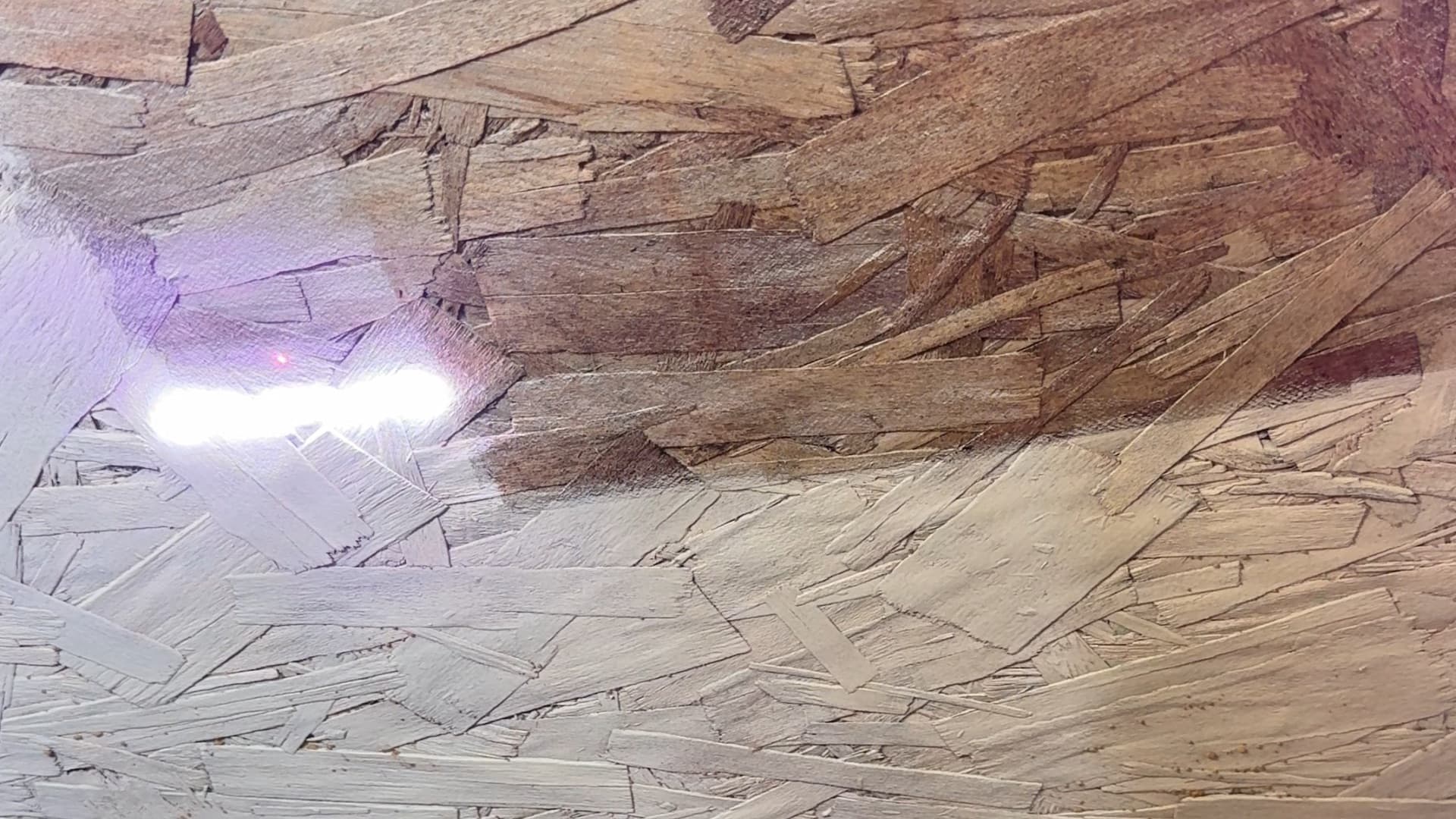
- Wood studs, joists, plywood and OSB exposed by the flood cut, where silt film and early mould growth sit on the surface.
- Concrete slab and block walls up to the high-water line, including the grey ring of silt and oil that floodwater leaves behind.
- Steel studs and track, conduit, pipe hangers, rack legs and the underside of mezzanines.
- Housings and frames of mechanical equipment that took splash and silt: pump skids, boiler cabinets, sprinkler risers, air handler bases.
Anything electrical that sat under water is the electrician’s call, and most of it gets replaced. We clean the steel around it.
A two-person crew usually clears the framing and slab of a 3,000 square foot ground-floor unit in one long day. Hand scrubbing the same unit is three or four days of work, and then the re-drying starts.
Dry ice has limits on a flood damage job, and you should hear them before you book it. It removes growth from the surface of lumber, but grey staining can stay in old softwood after the mould is gone, and the consultant decides whether that board passes or gets sealed. It is weak on hard mineral deposits, so heavy efflorescence on old block needs a different method. It is also loud, around jackhammer level, which matters in a mixed-use building where the upper floors are still occupied.
Why not soda, sand or a biocide spray
Soda blasting is common in mould work and it does clean framing. It also leaves fine sodium bicarbonate dust on every surface in the space, and soda residue on a slab has to be rinsed off before new flooring adhesive goes down. Rinsing is water again.
Sandblasting inside a commercial building means spent media to haul out by the pallet and dust through the whole floor. Abrasive blasting on concrete also releases crystalline silica from the concrete itself, which brings a silica exposure control plan under WorkSafeBC rules and keeps other trades out of the area.
Biocide sprays add moisture and a chemical odour that the tenants next door will smell. Dry ice leaves the structure dry, adds no chemical to a space people will work in next month, and produces no secondary waste beyond the dirt it removed.
Flash rust on the steel after the water goes down
Bare steel that sat in water for a few days comes out with a band of orange flash rust at the high-water line. Column base plates, anchor bolts, stair stringers, steel door frames, machine bases, the bottom 300 mm of pallet racking. In a parkade where the runoff carried road salt, that rust moves faster.
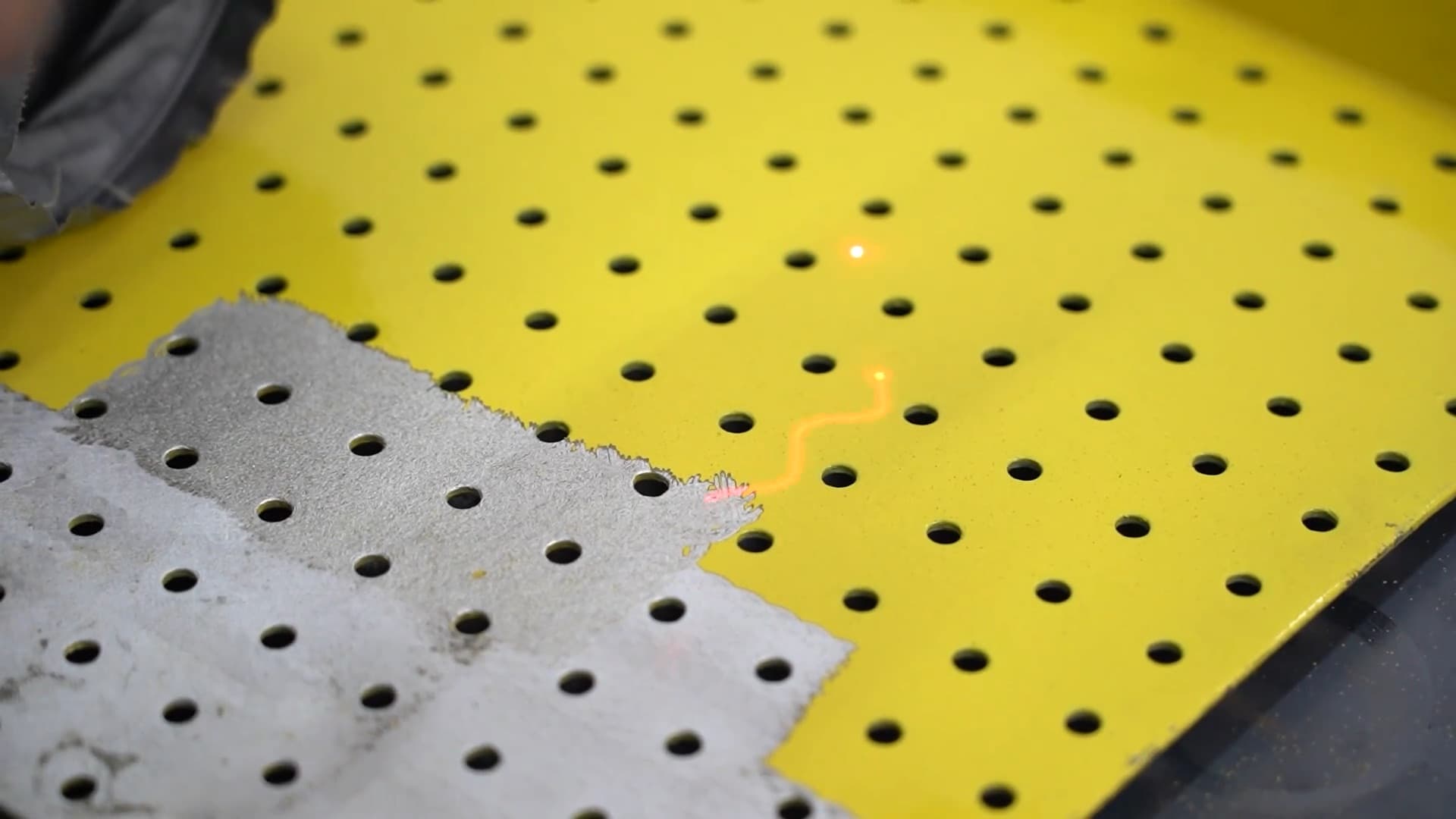
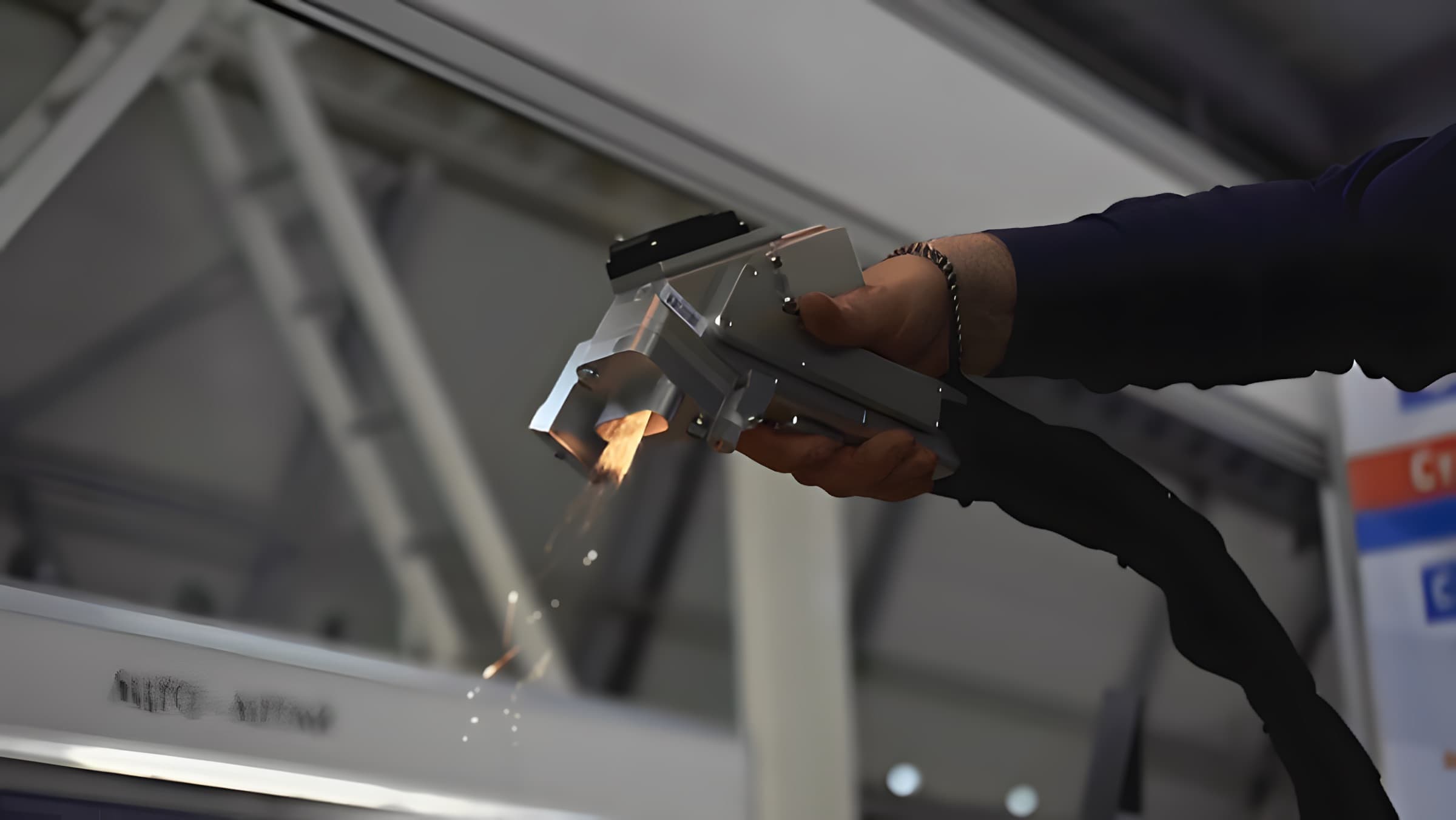
Laser cleaning takes it off down to clean steel with no abrasive and no water, so the coating contractor can prime the same week, before the next storm puts moisture back in the air. Because one crew runs both dry ice and laser, the property manager books a single visit instead of a second contractor with its own mobilization and site orientation.
WorkSafeBC, CO2 and the people still in the building
We hold three site rules on every flood job.
Older buildings come first. For anything built before 1990, WorkSafeBC expects a hazardous materials survey before demolition or renovation, because drywall joint compound, flooring and pipe insulation from that era can contain asbestos. The restoration contractor normally has the survey done before the flood cut. We ask to see it before we start, since blasting disturbs whatever is on the surface.
CO2 is the second. Dry ice turns into carbon dioxide gas, and in a basement electrical room or a lower parkade level that gas collects low. We run CO2 monitors and ventilation, and confined spaces get a proper entry plan, the same as for any other trade.
Third, containment. We work inside the restoration contractor’s containment and under their negative air, so the dust we knock loose stays in the work area and out of the lobby.
What post-flood structural cleanup costs in BC
These ranges cover dry ice cleaning of the exposed structure after drying, in Greater Vancouver, on a weekday schedule.
A basement mechanical or electrical room of 200 to 400 square feet usually lands between $1,500 and $3,500. A ground-floor office or retail unit of 2,000 to 4,000 square feet, opened at the flood cut, runs $3,000 to $8,000. A warehouse where the water reached the perimeter walls, the slab and the rack legs, the kind of flood damage we see on Annacis Island and in the Richmond industrial parks, comes in around $6,000 to $15,000. Laser rust removal on column bases and stairs adds $1,200 to $4,000, depending on how much steel there is.
Four things move the quote. The first is how much of the structure the demolition exposed, since we clean what is open and nothing else. Then there is how long the materials stayed wet before drying started: a building dried within 48 hours has silt and very little growth, while one that sat for a week has mould on most of the studs. Access and containment come third, and on a parkade level with live traffic overhead they can double the setup time. Last is the water category, because Category 3 work means full PPE and slower handling.
On an insured loss the structural cleanup is usually part of the restoration scope on the claim. We work as a subcontractor to the restoration company, or directly for the property manager with the adjuster’s approval. Either way, the photos we take before and after each wall section go into the file that the adjuster and the consultant review.
Booking it around the drying schedule
Laser Sharks crews are WorkSafeBC compliant and fully insured, and the company was named CBRB Best Cleaning Services in BC for 2025. We work in commercial buildings across Richmond, Delta, Burnaby, North Vancouver, Surrey and the rest of the Lower Mainland, and travel into the Fraser Valley when a storm hits there.
The best time to call is while the dehumidifiers are still running. Once the restoration crew gives you the date the readings should reach dry standard, send photos of the open walls, the square footage and the address through our quote form, or call 236-660-4248. We plan the visit around that date, so the consultant can sample and the walls can close when you told the tenant they would.