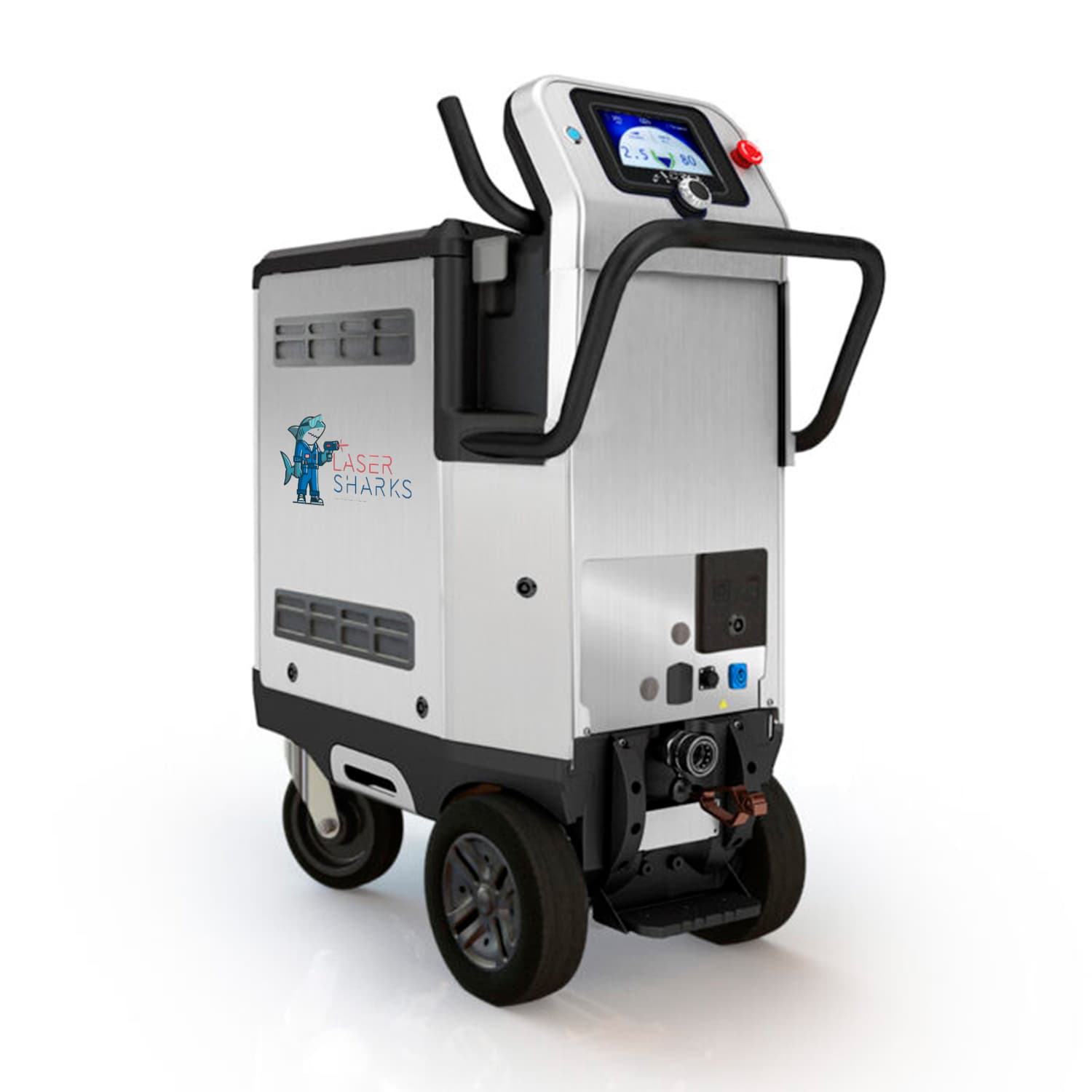
A plant manager on Annacis Island once showed us two quotes that both left out the biggest number on the job: the industrial cleaning downtime cost. The work was rust and failed paint on the frames and guarding of a packaging line. The sandblasting quote was $7,400. Ours was $10,800. On price alone, the decision looked finished.
Then we asked a different question. How many hours would the line be down under each plan? The blasting crew needed the line stopped for about 40 hours, most of it spent masking motors and vacuuming grit out of bearings and cabinets. We needed 22. Once lost production and waste disposal were counted, the cheaper quote was about $42,000 more expensive.
That gap almost never appears on a quote. This article shows how to calculate it for your own site, which hours each cleaning method quietly adds, and when the lowest bid really is the right call.
The short answer
Compare cleaning methods by total cost: the contractor’s price, plus every hour your equipment can’t run because of the job, multiplied by what an hour of downtime costs you. On most production equipment, the industrial cleaning downtime cost is bigger than the invoice, so the hours matter more than the rate. A method that costs 40 percent more per job but gives the line back a day sooner usually wins by a wide margin.
What an hour of downtime actually costs your plant
Most maintenance managers know their number roughly. Few have it written down in a form procurement will accept. Here is how the plants we work with usually build it:
- Lost contribution margin. What the line would have earned per hour, minus the raw material you didn’t use. Margin, not revenue.
- Idle or reassigned labour. Operators on the clock with nothing to run. A crew of ten at a loaded $45 an hour is $450 an hour on its own.
- Recovery overtime. If the lost output has to be made up, it gets made up at time-and-a-half.
- Restart losses. Purge, first-off inspection, scrap from the warm-up run, QA sign-off. Often a fixed hit of $1,000 to $5,000 per restart, however long the stop was.
- Penalties and missed shipments. Late-delivery charges, a missed container at the port, a customer who quietly moves volume elsewhere.
Across the Lower Mainland, the result ranges from around $800 an hour at a small fabrication shop in Surrey to well over $20,000 an hour on a continuous process line. Food and packaging plants in Delta or Richmond often sit between $2,000 and $6,000.
One exception matters. If your equipment is inside a planned shutdown that’s happening anyway, the downtime cost of cleaning is zero, right up until the job overruns the window. Then it becomes the most expensive hour of the year. More on that below.
Where each method hides hours
The quote shows cleaning time. The hours that hurt usually come before and after it.
Sandblasting: masking, containment and grit
Abrasive blasting is fast on open steel. The trouble is everything around the steel. Before the first pass, motors, bearings, gearboxes, sensors, cable trays and electrical enclosures have to be masked or pulled, because grit finds every gap. On a crowded production line that prep alone can eat a full shift.
Then comes containment. The Occupational Health and Safety Regulation prohibits silica sand as a blasting abrasive, and substitute media still throw off dust that WorkSafeBC expects you to control: enclosure, respiratory protection, often air monitoring. Neighbouring equipment usually has to stop as well. Nobody wants blast dust settling on a running line.
After blasting, spent media gets vacuumed out of frames, channels and cabinets, bagged and hauled away. Then someone checks bearings and electrical before power goes back on. On the Annacis Island job, masking, cleanup and restart checks added 26 hours to 14 hours of actual blasting.
Chemical stripping and pressure washing: dwell, rinse, dry
Chemical strippers look gentle on paper. In practice they need dwell time, often several hours and sometimes overnight, followed by scraping, a neutralising rinse and capture of the wash water. That water can’t go down a storm drain in BC. It has to be contained and trucked out, which adds cost and another contractor to coordinate.
The hidden hours here are moisture. Drives, sensors and anything with an open enclosure must dry before the line is energised. In a cool, damp Vancouver building in November, that can take most of a day. Caustic washing and pressure washing on food lines add the same drying tail, plus re-sanitising.
Dry ice blasting: almost no tail
Dry ice pellets turn to gas on impact. There’s no media to sweep up and no water to dry out. What’s left on the floor is the grease, product residue or soot you removed, usually cleared with a vacuum in under an hour. Equipment rarely needs disassembly, and a lot of electrical gear can be cleaned in place once it’s isolated.
The limit, stated plainly: dry ice is excellent on grease, oil, carbon, soot, release agents and food residue. It’s weak on rust and tightly bonded paint. Dry ice blasting jobs in BC commonly run $1,500 to $8,000.
Laser cleaning: slower per metre, faster per job
Laser is not the fastest method per square metre on heavy coatings. On thick paint over pack rust, a sandblaster will out-produce a laser unit hour for hour. We put that on every quote because it’s true.
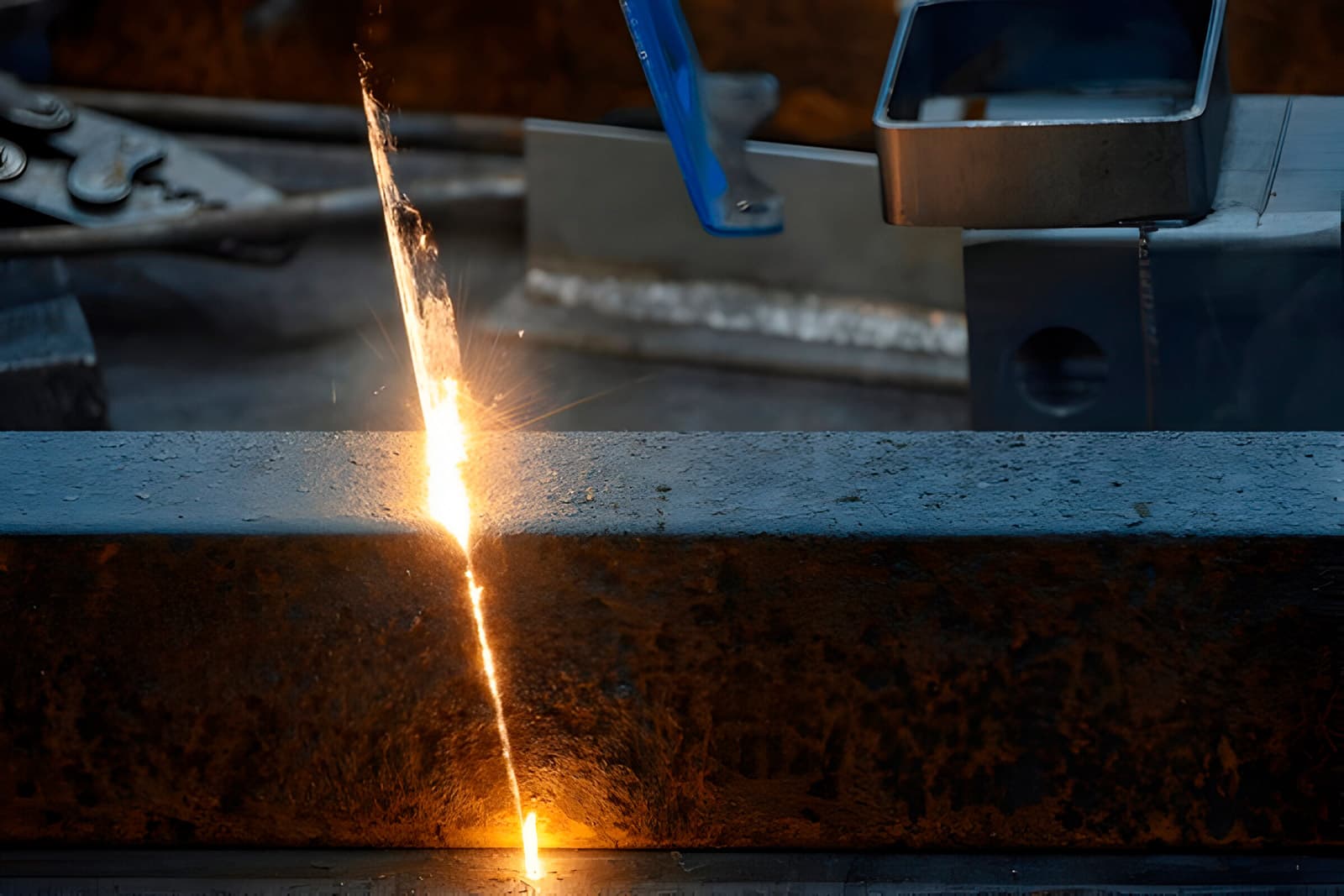
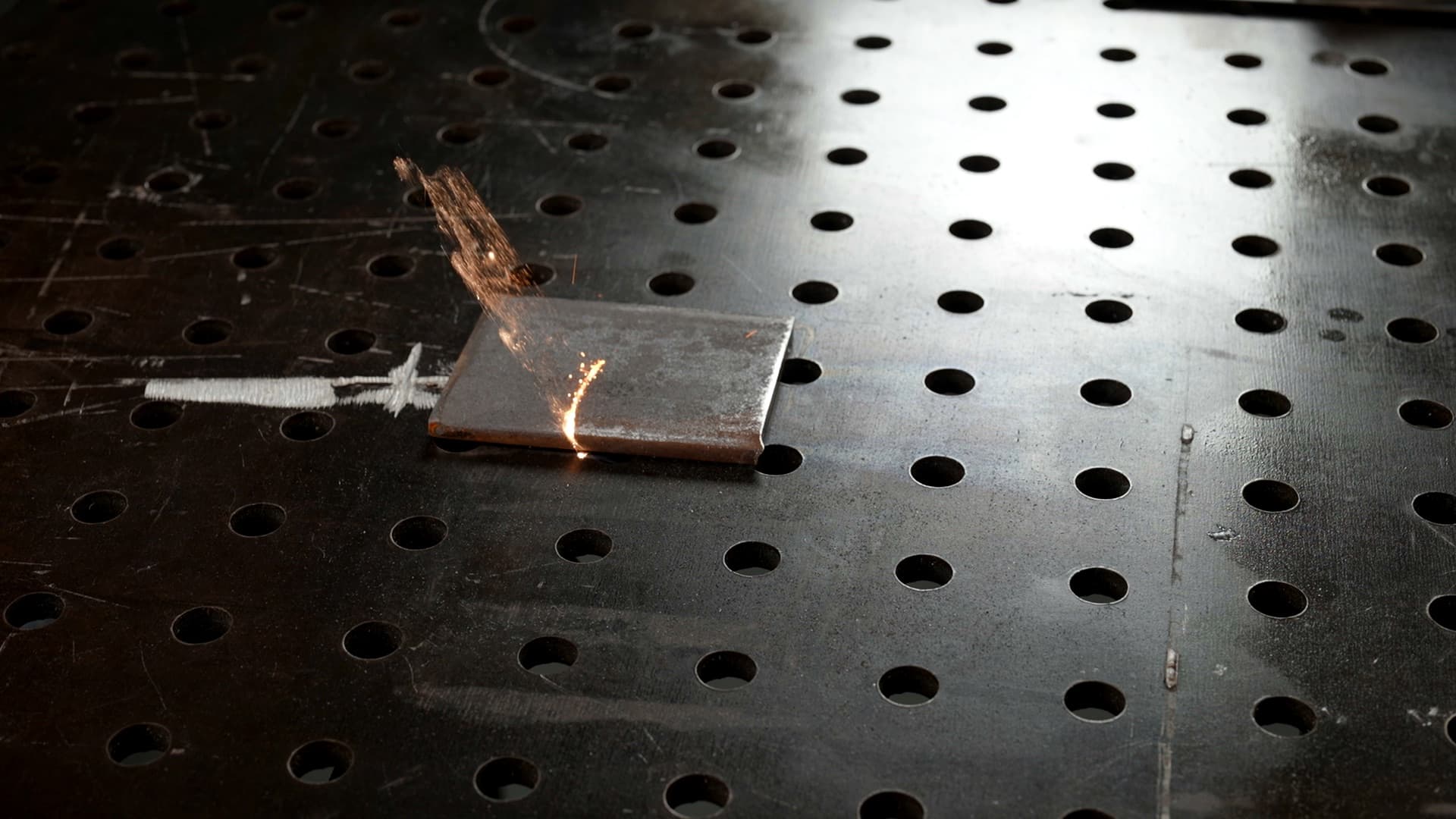
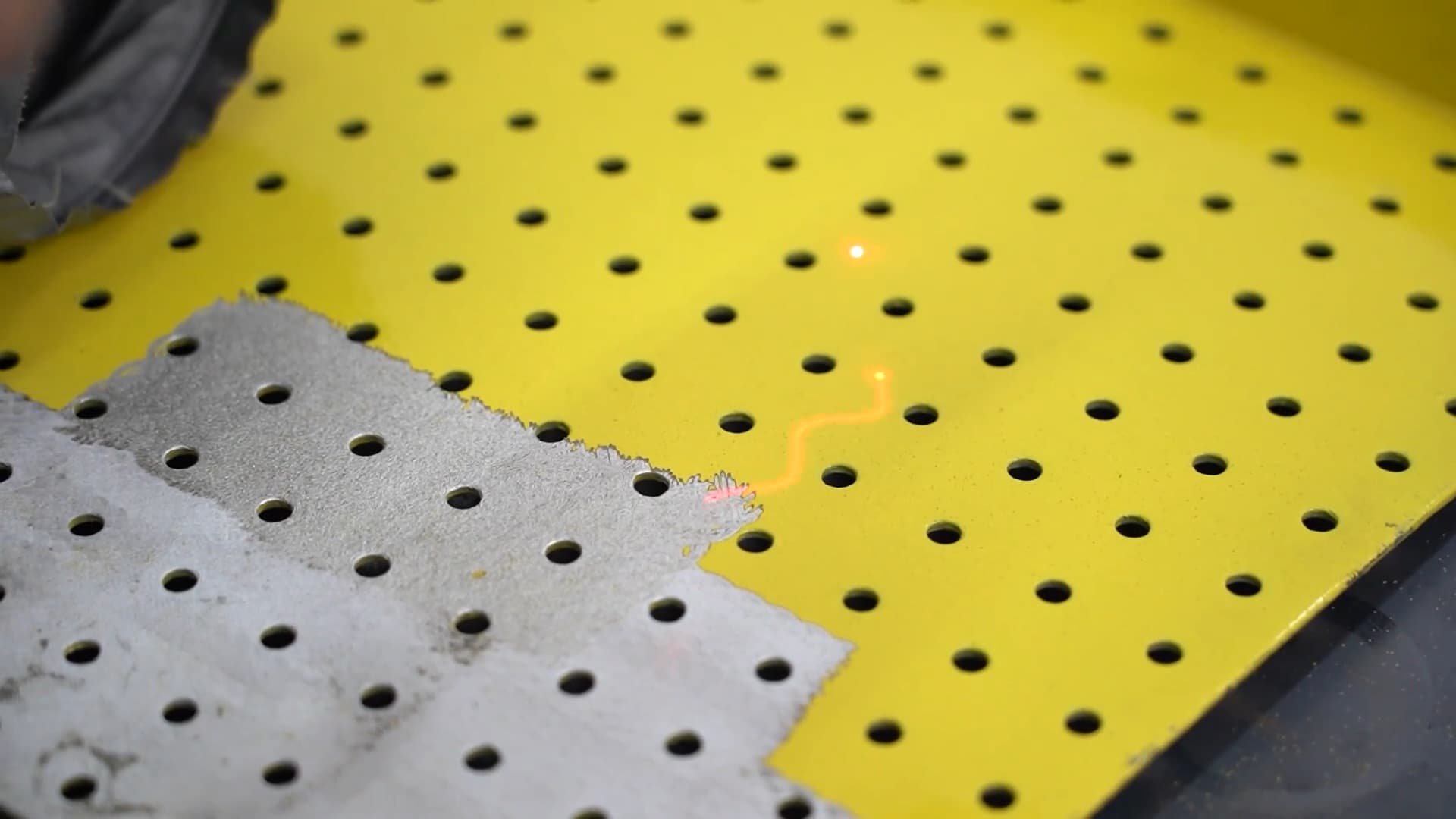
What laser saves is everything else. Masking is light, usually covers over open enclosures. The work zone needs a controlled perimeter because the beam is a Class 4 hazard, but that means barrier tape, signage and eye protection, not a tent. There’s no media, no wash water and no drying. Fume and particulate go into an extraction unit as the work happens.
And because there’s no dust cloud, the cell next door can often keep running while we work on a locked-out section. On some lines that alone is worth more than the whole cleaning contract. Typical laser cleaning rust removal jobs in Greater Vancouver land between $1,200 and $6,000, with full-line work running higher.
A worked example: one line, three methods
Here is the Annacis Island job laid out in full. Roughly 60 square metres of steel frame, guarding and conveyor supports, with failed paint, light-to-moderate rust and a layer of grease on the lower rails. The plant put its downtime cost at $2,500 an hour. We ran dry ice on the greasy rails and laser on the painted frames at the same time.
| Sandblasting in place | Chemical strip and wash | Dry ice + laser | |
|---|---|---|---|
| Contractor price | $7,400 | $6,200 | $10,800 |
| Masking and prep | 12 h | 4 h | 2 h |
| Cleaning | 14 h | 18 h (incl. dwell) | 18 h |
| Cleanup, rinse or dry-out | 10 h | 12 h | 1 h |
| Restart checks | 4 h | 3 h | 1 h |
| Line down | 40 h | 37 h | 22 h |
| Downtime at $2,500/h | $100,000 | $92,500 | $55,000 |
| Waste disposal | $1,200 | $2,400 | $150 |
| Total cost | $108,600 | $101,100 | $65,950 |
A few things stand out.
The cleaning row is close across all three. Laser and dry ice didn’t win on cleaning speed; they won on the hours wrapped around it.
The cheapest quote on paper, the chemical strip, finished in the middle once the hours were counted.
And the gap shrinks at lower downtime rates, but it rarely flips. At $800 an hour, the small-shop figure, sandblasting totals $40,600, the chemical strip $38,200, and dry ice plus laser $28,550. On this job, the methods only trade places when an hour of downtime is worth less than about $160. That’s a spare trailer, not a production line.
Your numbers will be different. Run them anyway.
When the cheapest quote really is the right call
Downtime math doesn’t always point to laser or dry ice. It points to whatever gets the equipment back soonest at an acceptable risk. Sometimes that’s the lowest bid.
- Nothing stops while it’s cleaned. A stored structure, a yard fixture, spare equipment. Downtime cost is zero, so price per square metre decides.
- The part can come off and go to a shop. If a housing can be swapped for a spare, blast the old one at shop rates and the line never waits.
- Big open steel with nothing around it. A tank exterior in an open yard, hundreds of square metres of heavy mill scale on new fabrication. Abrasive blasting with a non-silica medium is often the fastest route there.
- A coating spec that calls for an abrasive profile. Some protective coating systems require an angular anchor profile at a set depth. Laser leaves a clean surface but may not meet that spec on its own. Check with your coating rep before you choose.
When a job fits one of those, we’ll say so on the site visit.
Planned shutdowns: the overrun is the real risk
Inside a planned outage, the question shifts from "how many hours" to "what’s the chance we miss the restart." A sawmill in the Fraser Valley or a pulp line up the coast plans its shutdown to the hour. Cleaning that overruns by one shift delays the millwrights, the electricians and the restart, and that overrun can cost more than the whole cleaning budget.
Methods with long tails carry more overrun risk. A grit cleanup that drags, or equipment that stays too wet to energise, pushes straight into the restart. Dry methods have fewer steps that can slip. They also let other trades work alongside the cleaning crew, since there’s no grit or water getting into their work. On a 48-hour window, that parallel time is often what makes the schedule fit.
We plan shutdown work backward from the restart time. Not forward from the start.
Waste is downtime on a slower clock
Spent abrasive has to be bagged, tested if the old coating contained lead, and hauled. Chemical wash water has to be captured and disposed of with a paper trail your environmental coordinator will need to file. Both cost someone’s hours after the crew leaves.
Laser cleaning and dry ice blasting use no chemicals and create no secondary waste stream. What goes in the bin is the coating, rust or residue you removed, and nothing else. On the Annacis Island job, that was the difference between $1,200 of grit disposal and about $150 of bagged debris. It’s also one less item on the next environmental audit, and no runoff anywhere near the Fraser River.
How to run the numbers before you pick a method
Before you compare quotes, get four figures on paper:
- Your downtime cost per hour, built from margin, labour, overtime and restart losses.
- Line-down hours under each method, from shutdown to restart, including masking, cleanup, drying and checks. Ask every contractor for this in writing.
- Waste and disposal costs, including anything a quote excludes.
- Knock-on downtime, meaning whatever else has to stop because of dust, water or containment.
Multiply, add, compare. That total is your real industrial cleaning downtime cost for each method. If a contractor can’t tell you how many hours your line will be down, that tells you something too.
Getting a downtime-based quote from Laser Sharks
Our quotes list line-down hours next to the price, because that’s the number your operations director will ask about first. We run laser and dry ice from the same crew, so the method is chosen for the job, not for whatever machine happens to be on the truck.
Laser Sharks is fully insured, WorkSafeBC compliant, and was named Best Cleaning Services in BC for 2025 by CBRB. Our crews work across Greater Vancouver and the Fraser Valley, from Burnaby and North Vancouver to Delta, Richmond and Surrey.
If you have a cleaning job coming up and a downtime number to protect, request a quote or call 236-660-4248. Tell us the equipment, the contamination and your work window. We’ll come back with a price and an hour count you can put in front of procurement.