A plant manager at a Delta food processor once told me his shutdown was going to fall apart because the industrial equipment cleaning crew had been booked as a two-hour add-on. Three lines. Twenty-six pieces of equipment. Some running on 480V that could not be dropped until 03:00. He needed everything back on by Monday first shift, and the CIP team had already taken the caustic loop through overnight, which meant our access windows collapsed.
That was 2019. We got it done. Barely. And it taught me that industrial equipment cleaning inside a planned outage is not a service you tack on. It is a scheduling problem first, a technical problem second.
Most BC plants get one, maybe two shutdowns a year long enough to do real cleaning. The rest is spot maintenance between production shifts. When the shutdown lands, everything competes for the same 48 hours: bearing changes, VFD inspections, jacket steam repairs, refractory work, gearbox oil swaps, valve rebuilds, filter changes. Cleaning almost always gets squeezed to the back of the queue and then blamed when the schedule slips.
Where equipment cleaning sits in the critical path
If you have run shutdowns before, you know the millwright work drives the schedule. Bearings, seals, alignment. Everything else fits around it. Dry ice blasting and laser cleaning are unusual because they can run in both directions. Sometimes before the millwrights get on the machine, sometimes after.
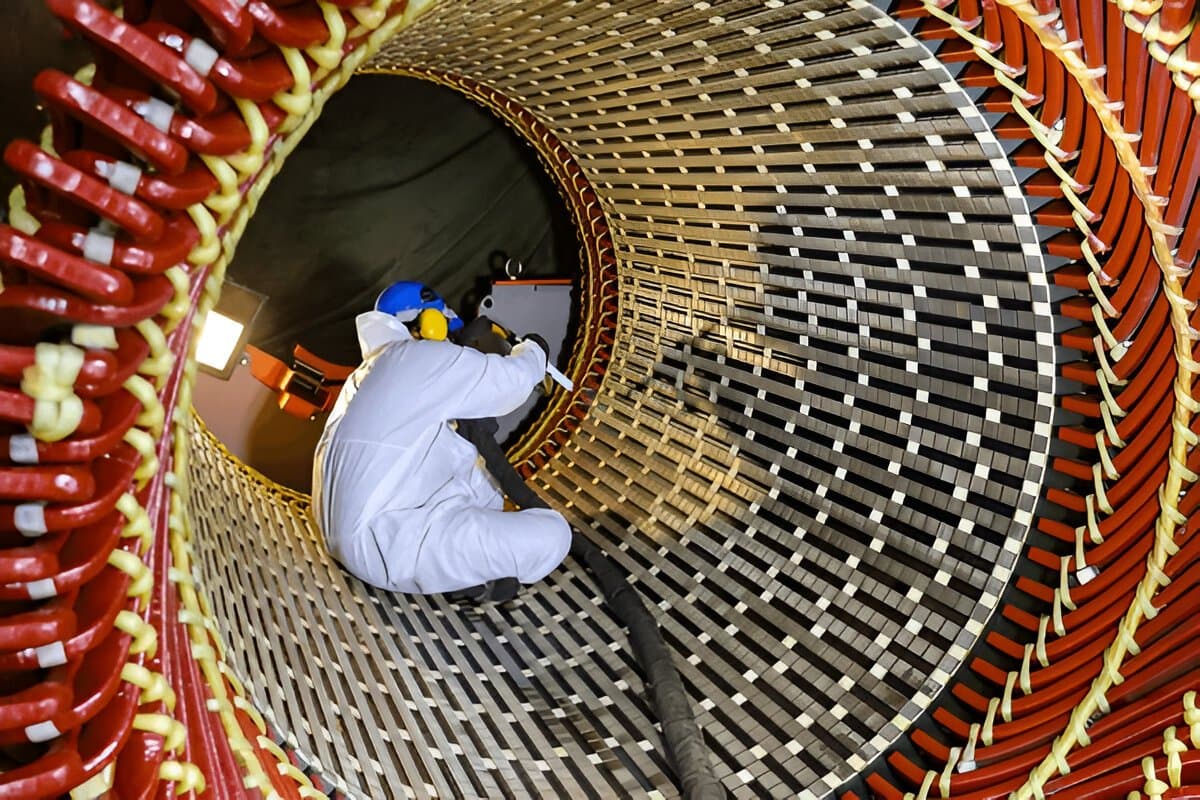
Before is common when the mechanic team needs a clean fastener pattern to torque against, or when a gearbox is leaking and the oil track has to come off so the leak source is visible. After is common on the electrical side: motor windings, MCC cabinets, VFD heat sinks, control panels. You do not want oil aerosolized onto a freshly serviced motor.
The mistake I see is scoping cleaning as a single block on Saturday afternoon. Nine times out of ten, it should be two or three shorter blocks distributed across the outage, with clean handoffs between trades.
Live cleaning versus de-energised: know the difference
Dry ice blasting is compatible with live electrical equipment inside its rated voltage class. That is the reason food plants, breweries, and pulp mills keep going back to it. You can clean a 4160V motor bell housing while the motor is warm, and you can clean control panels without pulling the door screws. Non-conductive media, no moisture, no residue.
Laser cleaning is different. It is a beam, and beam safety in a live enclosure is a WorkSafeBC and CSA conversation before it is anything else. On a shutdown, we prefer to schedule laser work de-energised, with lockout tags visible and Class 4 protective curtains around the work zone.
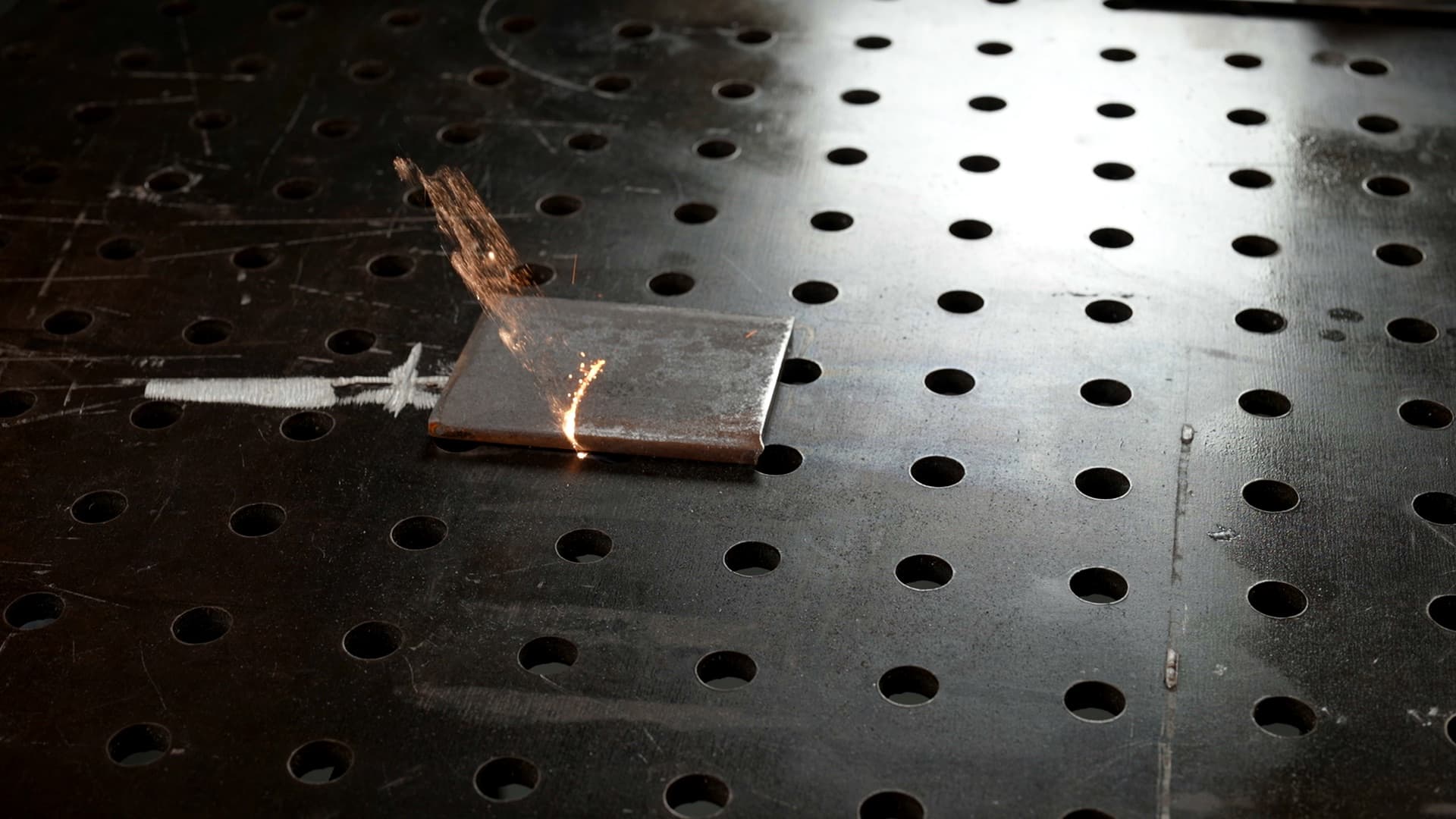
That means dry ice for anything you cannot lock out, or for electrical where you want to avoid disassembly. Laser for structural rust, coating removal, or oxide layers on parts that are down for maintenance anyway.
Getting this split right shaves hours off a 48-hour outage. Getting it wrong means the cleaning crew is waiting on lockout, or the electrical crew is waiting on us.
Sequencing across the shutdown trades
A real shutdown has millwrights, electricians, insulators, a coating crew if you are re-painting, a CIP or caustic team if you are food or beverage, and inspectors. Add specialty cleaning and you are the seventh trade in the door.
The sequence I ask for on a first-time shutdown at a BC plant:
Hour 0 to 8: line cool-down and lockout. Nothing happens on cleaning yet. The plant is walking through LOTO and confirming energy states. This is when we do our own site walk, confirm access, mark hazard zones, stage equipment near power drops.
Hour 8 to 24: first cleaning pass, live-compatible only. Dry ice on MCCs, VFDs, motor exteriors, cable trays, HMIs. These do not need to be locked out and they clean better warm. This also frees the electrical team to hit their inspections on already-clean gear.
Hour 24 to 40: de-energised heavy work. Laser on structural rust, tank exteriors, valve bodies. Dry ice on gearbox exteriors and oil-track cleanup for the millwrights. Coordination-heavy stretch; this is where the schedule breaks if it is going to break.
Hour 40 to 48: final walk and touch-ups. Cleanup of any drips, laser passes on freshly changed component surfaces before recoating, control cabinet interiors before doors close.
That cadence beats the "book the specialty crew for Saturday from noon to six" approach every time.
The downtime cost argument
Facility managers who have not costed downtime often underestimate what an hour of missed production is worth. A midsize BC sawmill running two lines is losing between $4,000 and $12,000 an hour when it is not producing lumber. A brewery on packaging is closer to $2,500 to $6,000. A food processor running a single cook line might be at $3,000 to $8,000.
Now compare that to specialty cleaning cost. A full-plant shutdown cleaning scope, sized to a small-to-midsize BC facility, typically runs $8,000 to $35,000 CAD depending on scale and technical complexity. Individual equipment cleaning inside a shutdown falls into narrower brackets:
- Dry ice blasting per shift: $2,500 to $7,500 CAD
- Laser cleaning per shift: $2,000 to $6,000 CAD
- Combined crew on site: $4,500 to $12,000 CAD per shift
If well-sequenced specialty cleaning saves you six hours of production restart delay at a midsize sawmill, the math is not close. The specialty crew paid for itself twice before the coffee got cold.
That math is the argument to give plant leadership when they push back on cleaning line items. Do not talk about the technology. Talk about avoided restart delay.
Site logistics BC plant managers underestimate
Power. Dry ice blasting units want 30 to 60 amps at 208V or 480V single phase. Laser units are smaller, usually 20 amps at 208V, though some higher-wattage systems want more. Confirm this with your electrical foreman a week before the outage. Nothing worse than a specialty crew standing at a locked panel with no drop.
Compressed air. Dry ice blasting is an air-hungry process. Plan on 200 to 400 CFM at 100 to 120 PSI depending on the machine. If plant air is going to be occupied by other trades or by the shutdown itself, we bring towable diesel compressors. That is a line item worth having on the quote up front.
CO2 pellet supply. Dry ice pellets are consumed at 100 to 300 kg per shift. Delivery in Metro Vancouver is next-day from suppliers in Surrey and Richmond, but on a weekend shutdown you want the pellets staged on Friday.
WorkSafeBC silica exposure. If your alternate plan for a shutdown included any dry sanding, needle scaling on painted steel, or open sandblasting inside the building, factor in the silica rule. Containment, air monitoring, respirator programs. That is why laser wins on structural rust inside occupied buildings: no silica exposure, no containment tent, no respirator swap-outs.
Access. Every mezzanine and every catwalk becomes a bottleneck during a shutdown. Confirm scaffold plans before the outage. If you are cleaning gearboxes twelve feet up, we need the scaffold up before we get there.
A real 48-hour profile: Fraser Valley food plant
Last year we ran a 46-hour scope at a Fraser Valley cook-and-package line. Three cook kettles, two conveyors, one bottling head, twelve motors, five control cabinets, one MCC room. Roughly 4,500 square feet of equipment surface area.
The customer had planned 32 hours of cleaning as a single Saturday-Sunday block. We reworked it to three blocks:
- Friday 22:00 to Saturday 06:00: dry ice on all live electrical, MCC room, motor exteriors, cable trays
- Saturday 12:00 to Sunday 06:00: dry ice on the cook kettles and packaging heads after CIP finished, laser on external tank rust
- Sunday 12:00 to 18:00: final touch-ups, control cabinet interiors, sign-off walk
Total cleaning labour: 44 hours split across two crews. Production restart happened on time Sunday night. The customer’s line supervisor said afterward that the schedule change was the reason it worked. Same total labour, same cost, different sequencing.
What drives cost variance on a shutdown quote
Quotes for shutdown work vary widely because the drivers are not obvious to buyers. Roughly, expect this variance across a shutdown scope:
- Live versus de-energised split. Every hour that requires LOTO drops productivity by about a quarter. Waiting time is billable.
- Access and staging. If the plant needs the crew to move gear up a stair every shift, add 10% to 15%.
- Ambient conditions. A hot, humid pulp mill in July eats through crew rotation faster than a cool November food plant.
- Debris capture. If the shutdown includes coating removal, the paint chips have to be captured, bagged, and disposed. Add a shift.
- Coordination overhead. Weekly pre-shutdown meetings with the customer’s shutdown planner add zero cost the first time but save 8 to 20 hours of on-site friction. We do them regardless.
If a quote you are looking at ranges from $8,000 to $18,000 on similar-sounding scopes, those are the drivers doing the work.
Trust, insurance, and safety
Every job we run carries $5M in general liability, and we hold WorkSafeBC in good standing. Our crews have Class 4 laser safety training and dry ice PPE. We work under plant LOTO procedures, we sign into the plant’s contractor management system, and we hold pre-shutdown safety meetings the week before the outage.
Twenty-plus years of industrial cleaning across BC covers sawmills, food plants, marine facilities, breweries, pulp lines, chemical handling, and transit maintenance shops. Most of the shutdown work has been in the Lower Mainland and the Fraser Valley, with regular runs up to Squamish, out to Vancouver Island pulp operations, and to rail-served plants in the interior.
Bring the specialty crew into planning early
The shutdown cleaning scopes that run best are the ones where the specialty crew is in the planning conversation four to eight weeks before the outage. That is when we can spot the sequencing wins, flag the power and air needs, and design a scope that runs inside your critical path instead of around it.
If you have a shutdown coming in the next quarter and want a second pair of eyes on the cleaning scope, request a quote and mention the outage window. We will walk the plan with your shutdown planner before we quote the work, and we will tell you if part of the scope is better handled by the millwright team than by us.
For a deeper look at the two technologies we bring on site, see the laser cleaning service and dry ice blasting pages.