A fleet manager in Delta calls in October with the same problem most years. The CVIP inspection is booked, three of the older service trucks have scale on the frame rails, and nobody can judge section loss through rust and old undercoat. The usual fix is to send the trucks to a blaster in Surrey, mask every brake line and connector, and lose each one for two or three days. Laser cleaning automotive frames, panels and hardware in Vancouver shops runs on a different clock. The rust comes off down to bare steel in your own yard, nothing gets sprayed into wheel bearings or wiring, and the truck is usually primed and back in service the next morning.
The same method works for collision and body shops, on the panels a sander handles badly. Below is where it pays, where it doesn’t, and what it costs in CAD.
The short answer
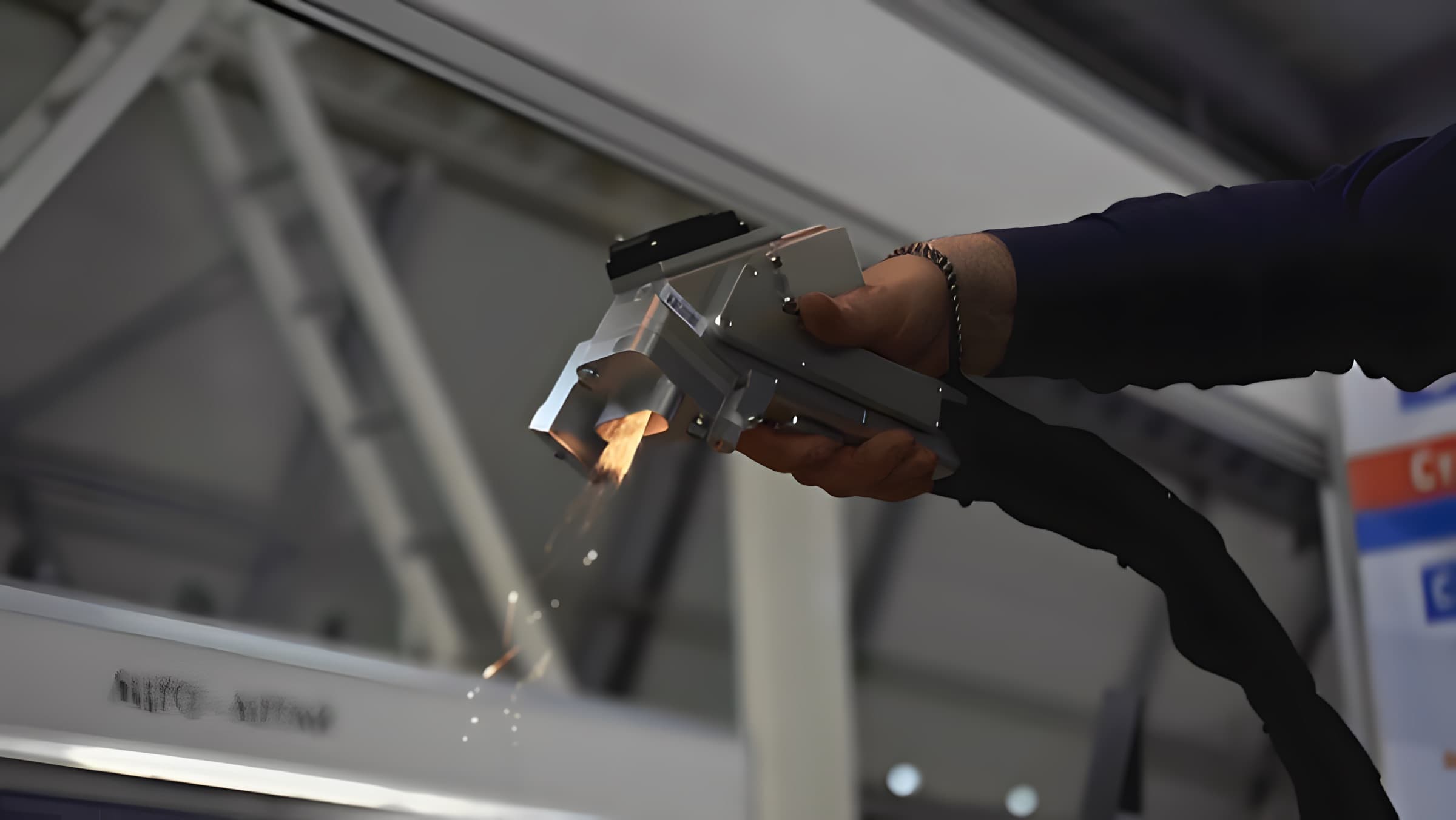
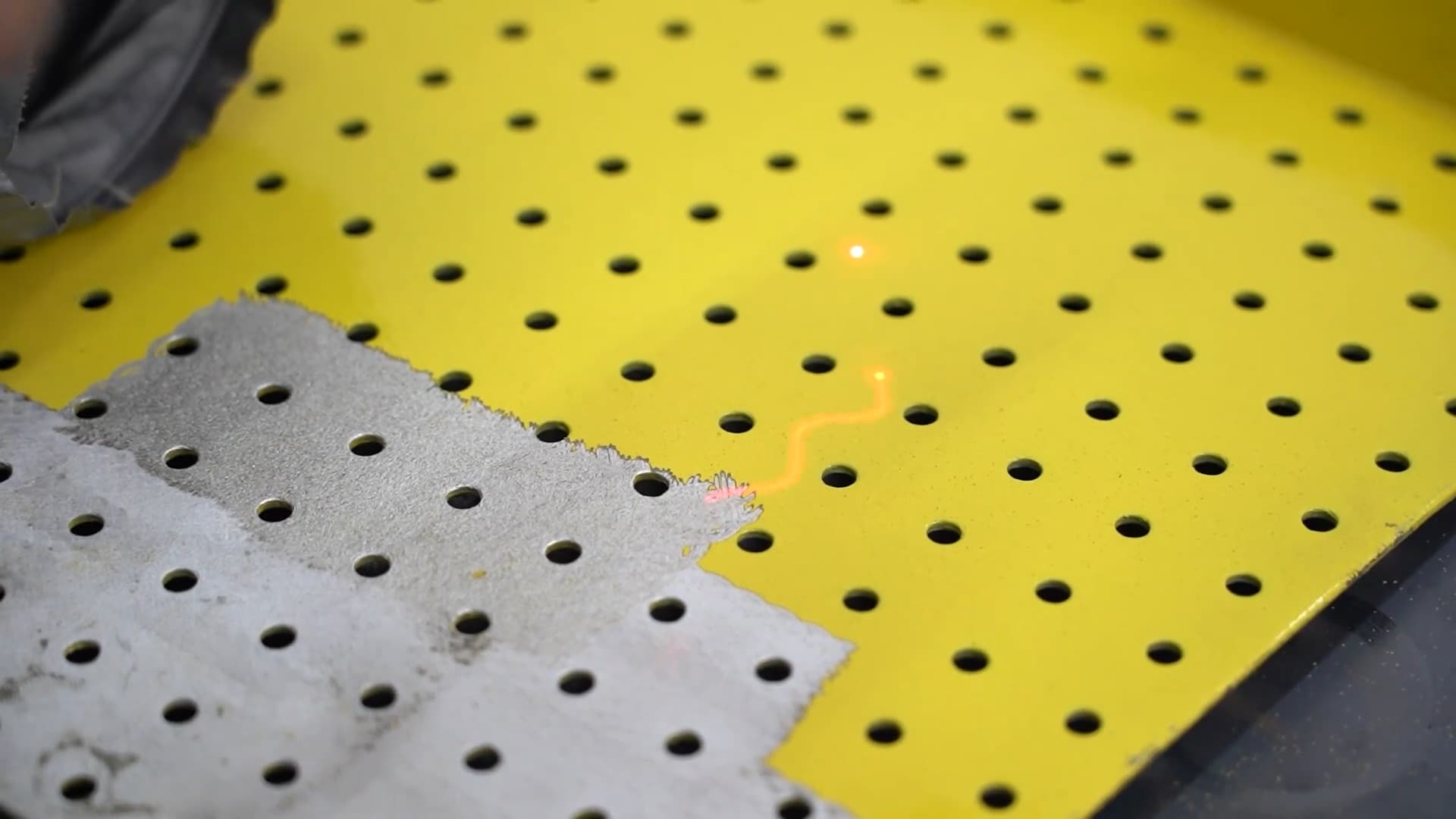
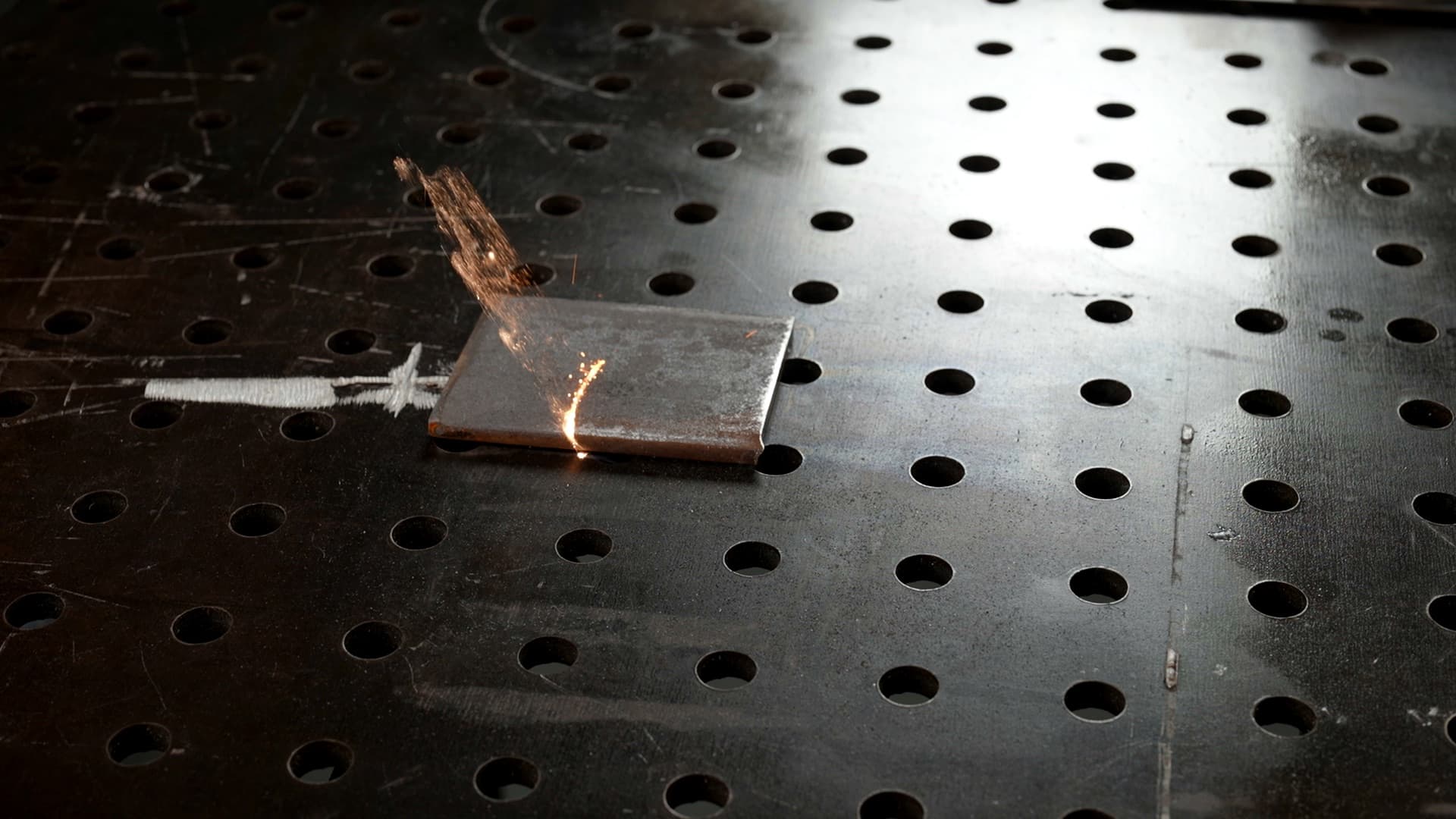
A handheld fibre laser removes rust, paint, e-coat, undercoat residue and grease from steel and aluminum. The beam heats the contamination until it lifts off as fume, and an extractor at the nozzle pulls that fume away. Nothing is thrown at the vehicle. There is no sand, glass bead or soda to work into bearings, sensors, HVAC intakes or the cab, and no chemical stripper to rinse into the shop drain.
For fleets, the main uses are frame and chassis rust before an inspection or a recoat, plus service bodies, liftgates and trailer hardware. For body shops, it’s stripping layered paint and pitted rust from panels without warping them. Most automotive jobs we quote in Greater Vancouver run $1,200 to $4,500, and a fleet program covering a dozen trucks typically lands between $12,000 and $20,000.
Where laser cleaning pays off in a fleet yard
Road salt does most of the damage. Metro Vancouver salts lightly compared with the Interior, but trucks that run the Coquihalla, the Fraser Canyon or the Sea-to-Sky in winter come back coated in brine. Corrosion settles where water sits: frame rail flanges, spring hangers, crossmember joints, and the back side of a service body bolted tight to the frame.
The work fleet operators book with us most often:
- Frame rails and crossmembers taken to bare steel so a mechanic or CVIP inspector can measure section loss, crack-check welds and decide what gets repaired.
- Service bodies, compartment doors and ladder racks where rust has started under the paint along seams and hinges.
- Liftgates, hitches, pintle mounts and trailer couplers due for inspection or a fresh coating.
- Brake and hub mounting faces, where a clean flat surface matters and blast media is the last thing you want near a bearing.
- Ground points and electrical mounting pads on older trucks, cleaned to bright metal so the connection holds.
Each of those is local work on a vehicle that has to stay in service. Blasting one frame rail means masking the whole truck, because media goes everywhere. With the laser the masking list is short. Rubber bushings and plastic lines within reach of the beam get covered, and that’s about it.
Why blast media is a problem on a working vehicle
Anyone who has pulled a wheel bearing after a sandblast job knows the issue. Abrasive finds every gap. It packs into ABS tone rings and sensor housings, works into transmission and axle breathers, hides behind loom clips and blows out of the cab vents for weeks. Masking a work truck against it can take a technician most of a shift, and the cleanup afterwards takes another. Soda is gentler on the metal, but its residue still has to be washed out of every pocket before primer goes on.
Then there is the dust. WorkSafeBC treats respirable crystalline silica as a cancer-causing hazard and expects an exposure control plan, air monitoring and respirators wherever abrasive blasting can put it in the air. Non-silica media lower that risk. They do nothing about the paint itself, and older fleet trucks and trailers often carry lead or chromate primers that blasting turns into dust across your yard.
A laser job still makes fume, which is why the extractor runs the whole time. The difference shows in the waste. On a truck frame, a blaster sweeps up and bags hundreds of kilograms of spent media for disposal. We empty a filter. No chemicals go on the vehicle and nothing goes down the floor drain, which keeps the job simple for any shop that has to answer for what leaves its property.
Body shop work: panels, seams and multi-layer paint
Body shops ask a fair question: why bring in a laser when a tech with a DA sander can strip a fender in an hour? On a flat panel with one factory paint layer, they shouldn’t. The sander is faster and cheaper there, and we’ll say so on the quote.
Pitted rust is where the laser starts to win. In a wheel arch lip, along a rocker seam or around spot welds, a sander takes the high spots and leaves rust sitting in the pits, and it comes back through the new paint within a year or two. The beam reaches the bottom of each pit and leaves clean metal.
Multi-layer repaints are the second case. Commercial vans and fleet trucks that have been repainted, wrapped and re-lettered over ten years can carry four or five layers plus decal adhesive. Stripping that by hand clogs discs and heats the panel unevenly. Thin-gauge sheet oil-cans when one spot gets hot. A pulsed laser set up correctly puts very little heat into the metal, so the panel stays flat even after several passes over the same area. We run a test patch first and check panel temperature with an IR thermometer before doing the full panel.
Galvanized and aluminum panels round out the list. Tuned down, the laser can take paint off a galvanized panel and leave most of the zinc coating in place, which neither a sander nor a blaster will do. Aluminum body panels and service bodies strip cleanly as well, without grit pressed into the soft surface, and embedded grit is a common cause of paint failing on aluminum.
Will the laser damage paint, rubber or wiring next to the repair?
It can, if someone points it there. The beam is line-of-sight. It affects only what it hits, with no rebound and no overspray, so protecting the parts next to the repair is straightforward. We cover rubber bushings, brake hoses, plastic fuel and air lines and wiring near the work area with a metal shield or a heat-resistant blanket, and work up to an edge instead of across it. On a body panel, the operator can stop the strip at a clean line a few millimetres from the paint you’re keeping.
Two rules on the shop floor don’t bend. We don’t fire near a fuel tank, fuel line or filler neck that hasn’t been isolated. On hybrids and EVs, your technician de-energizes the high-voltage system before we start anywhere near the battery or the orange cabling.
The work area is set up as a laser-controlled zone, with signage and wavelength-rated eyewear for anyone inside the barrier. The rest of your bays keep working.
Laser and dry ice together on chassis work
On most fleet chassis jobs, the laser isn’t the first tool on the truck. Road film, oily undercoat and caked mud slow the beam down, because it spends its energy on soft material before it reaches the rust. Dry ice blasting takes that layer off quickly and dry. The pellets turn to gas on impact, so no water gets forced into connectors and no media stays behind. Then the laser takes the rust down to bare steel on the areas that need inspection or coating.
That is why we bring both to a fleet job. Burning road film off with the laser wastes half a shift, and dry ice on its own leaves the rust in place. Our dry ice blasting and laser cleaning service pages explain how each method works and what each one removes.
Timing: inspections, primer and Vancouver humidity
Bare steel in the Lower Mainland doesn’t stay bare for long. On a damp November day in Richmond or Delta, a freshly cleaned frame shows flash rust within hours. We plan the work so primer goes on the same shift, applied by your shop or by the coating contractor you already use.
If the truck is heading to CVIP, the order is clean, inspect, repair, then prime. That means the inspector or your mechanic has to be available on the day we’re there, so book them together. For body shops the constraint is the paint booth, and we usually take a bay in the morning so the panel can go into epoxy primer that afternoon.
What automotive laser cleaning costs in BC
These ranges are for work done at your yard or shop in Metro Vancouver, in CAD, before tax. Our hourly rate runs $180 to $260 depending on the power of the unit, and mobilization within Metro Vancouver adds $350 to $600 per visit, so batching vehicles into one visit saves money.
- Frame rails on a pickup or light service truck, rust to bare steel for inspection: $1,200 to $2,000
- Medium-duty chassis (cube van, dump truck, utility body), dry ice plus laser: $1,800 to $3,200
- Class 8 tractor or trailer frame sections: $2,500 to $4,500
- Body panel strip (door, fender, hood) in a batch of several: $300 to $600 per panel
- Spot work on a service body, liftgate or trailer hardware: $600 to $1,500
Scale thickness moves the price more than anything else, because light surface rust goes several times faster under the beam than the flaking scale you find on a frame that has run fifteen winters on the Coquihalla. Undercoating adds time. So does access. A frame with the fuel tanks and battery boxes already pulled by your shop costs less to clean than one we have to work around.
The downtime side
The number that changes most fleet managers' minds is days out of service. Say a service truck bills $1,200 a day. Sending it to an off-site blaster usually means a day to get it there and masked, a day of blasting and cleanup, and a day to get it back and primed. That’s three days and $3,600 in lost billing before the blasting invoice arrives. Cleaned in your yard, the same frame takes four to six hours, and the truck goes back on the road the next morning.
Across a twelve-truck program, that gap comes to roughly 24 truck-days. At $1,200 a day it’s worth more than the entire cleaning budget.
A typical fleet program
Picture a utility contractor in Surrey with twelve medium-duty trucks due for CVIP over two weeks. The day before we arrive, their shop pulls fuel tanks and battery boxes on the first two trucks. We show up at 7 a.m., set up the controlled zone and the extractor in one bay, and dry ice the frame and underside of truck one.
The laser goes on by mid-morning, rails and hangers to bare steel. Their mechanic checks section loss and welds before lunch, flags two cracked hanger brackets for repair, and the rest of the frame goes into primer that afternoon while we start on truck two. At two trucks a day the fleet takes six working days, and because the crew stays on site, mobilization is charged per visit. For a fleet like that, the total usually comes in around $16,000 to $19,000, depending on how many frames turn up heavy scale.
What we don’t take on
Frames with section loss already through the metal are a repair or replacement job for your shop. Cleaning one only confirms what the mechanic suspected. Full rubberized undercoating across a whole underbody is slow under the laser, and we’ll take it off with dry ice or have your shop scrape it first. We also don’t replace your paint department. You get back a clean, bare panel, and priming, filling and painting stay with your techs.
Our recommendation
If you run a fleet, pick the two trucks with the worst frames and book them in the weeks before their CVIP dates. You’ll see the cleaned steel, the inspector’s notes and the hours each truck was down, and that is enough to decide whether the rest of the fleet gets the same treatment. If you run a body shop, pick one panel that has been giving your techs trouble, whether pitted, multi-layer or galvanized, and have us test-patch it before you commit to anything bigger.
Booking automotive laser cleaning in the Lower Mainland
Laser Sharks crews work across Greater Vancouver, from Burnaby, Richmond and Delta to Surrey, Langley, North Vancouver and the Fraser Valley. We carry WorkSafeBC coverage and liability insurance, and certificates come with the quote. Laser Sharks was named CBRB Best Cleaning Services in BC for 2025.
Call 236-660-4248, or send the vehicle count, the truck or panel types and a few photos of the worst areas through the quote form. We’ll come back with a per-job price and a schedule built around your inspection dates.