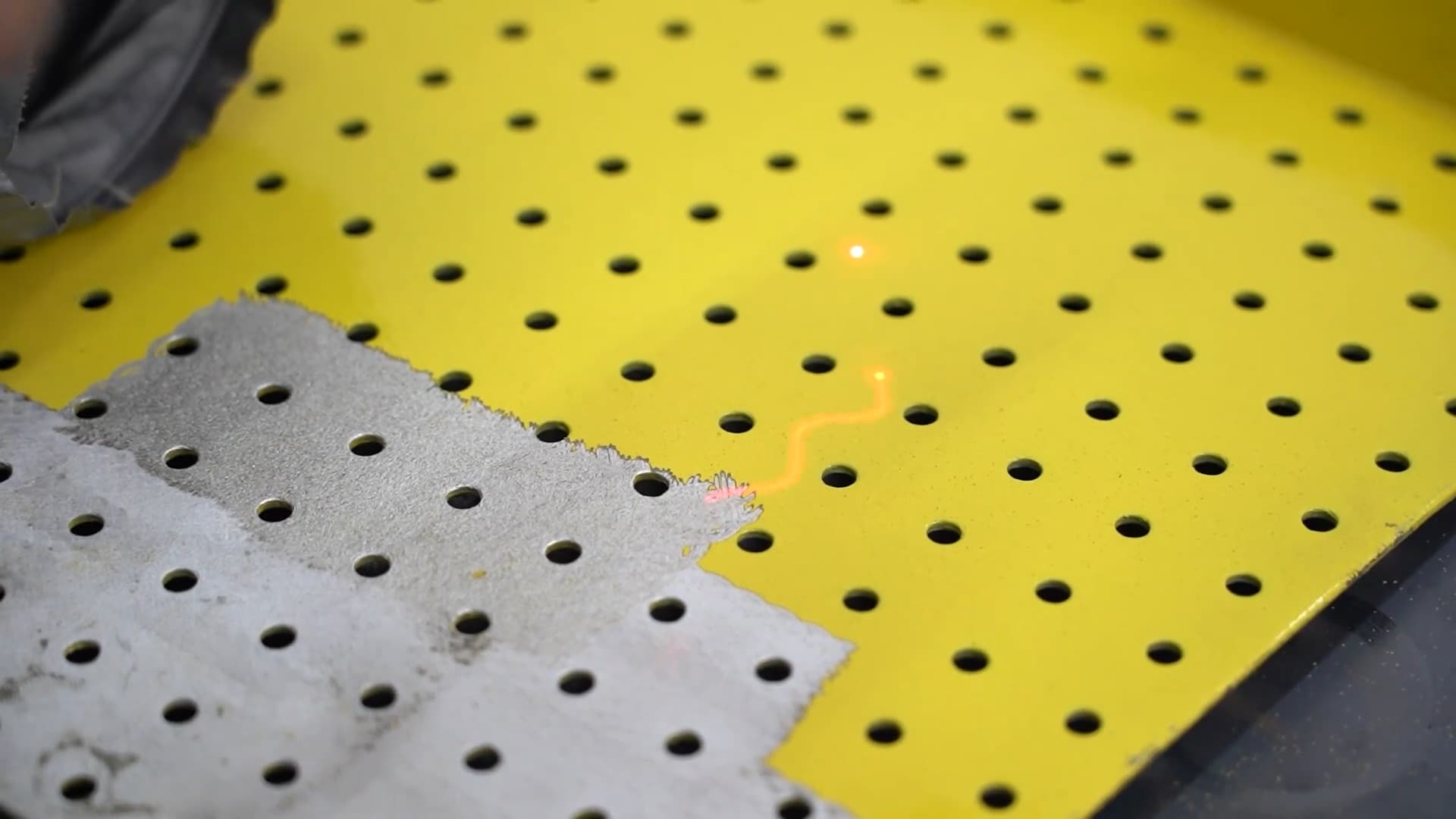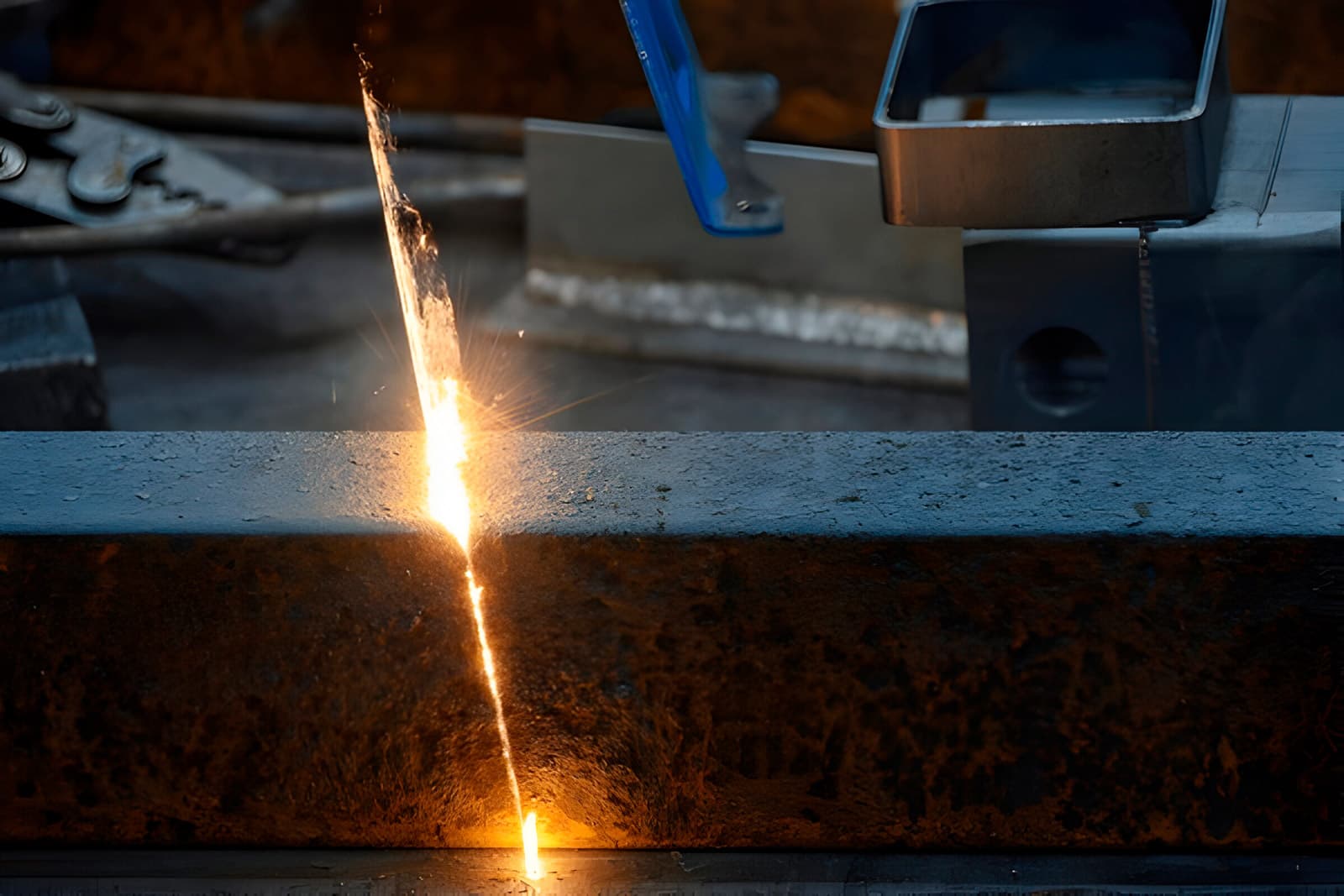
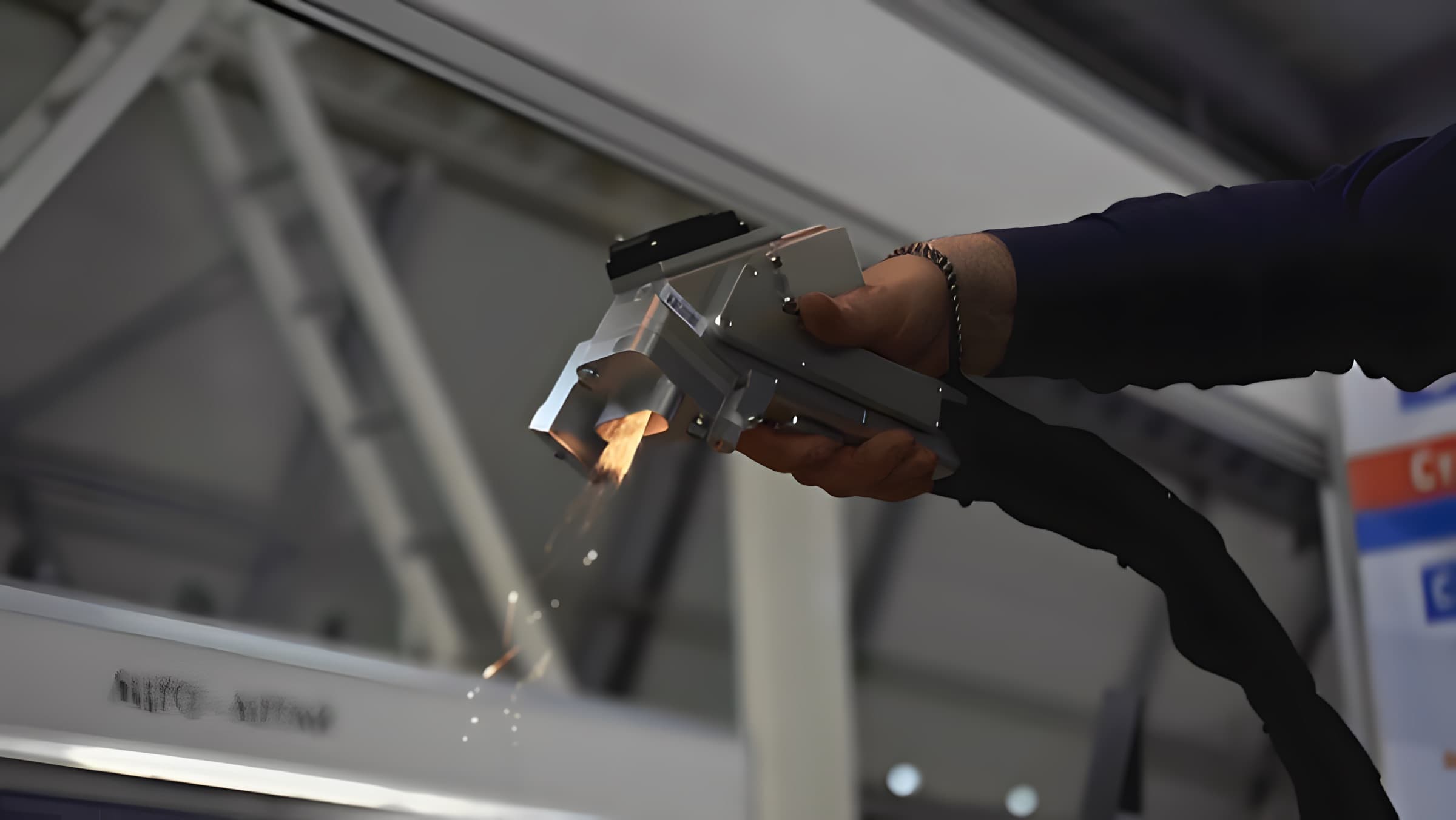
Most of the time lost on a mobile laser cleaning service job goes before the beam ever switches on. The crew pulls up at a plant in Delta and the nearest 240-volt outlet is on the far side of the building. The paint on the steel turns out to be from the 1970s and nobody tested it for lead. Or the work area sits beside a production line that can’t stop, and the safety department has never had a Class 4 laser on site. Each of those costs anywhere from an hour to a rescheduled visit, and the client pays for it.
This guide covers both halves of a mobile job: what we load into the van, and what your site needs to have ready before we arrive. It applies to laser work only. If you’re still deciding whether the work should happen on-site at all or go to a shop, our piece on mobile industrial cleaning in Vancouver covers that decision, with dry ice included.
What arrives in the van
Our laser cleaning crews go out as two people. One runs the cleaning head. The other watches the zone, manages the cable and takes over when the operator needs a break, because holding a laser head steady over a beam flange for an hour is tiring and fatigue shows up in the finish.
The equipment for a typical mobile visit:
- The laser source, either a handheld unit for detail work and smaller areas or a higher-power unit on a wheeled cart for large runs of flat steel
- The cleaning head on a fibre cable, usually around 10 metres long, so the unit moves along as the job moves
- A chiller for the water-cooled units
- A fume extractor with HEPA filtration that captures particulate at the nozzle
- Barricades, laser curtains, warning signs and rated eyewear for anyone who has to stand inside the zone
- Ground sheets, a HEPA vacuum and a fire extinguisher
- A generator, when the site has no usable power near the work
Setup takes about 30 minutes when the van can park close to the work. Every flight of stairs and every long walk through a building adds to that.
The van carries no blast pot, no abrasive, no chemical drums and no water tank. The waste from a day of laser work fits in the extractor’s filter and a vacuum bag. A sandblasting crew on the same steel leaves spent abrasive that has to be swept up, bagged and trucked away, and in BC that abrasive can’t be silica sand: WorkSafeBC prohibits abrasive blasting material containing more than 1 percent free silica. That small waste stream is the main reason facilities with floor drains, food zones or water nearby call a laser crew instead of a blaster.
Power is the first question we ask
Most handheld units run from a single 240-volt circuit, the kind a welder would use. Higher-power cart units need a bigger feed, and we give you the exact amperage once we know which unit the job calls for.
What helps us most is a connection within reach of where the unit will sit and someone on-site who can confirm the circuit isn’t shared with equipment that will be running that day. A breaker that trips halfway through a shift costs us time. On a production floor it can also take down something you care about more than our laser.
If there’s no usable power, we bring a generator. That adds $300 to $600 per shift depending on fuel and run time, plus some setup at both ends of the day. Plenty of jobs need one: steel on an outdoor structure, a yard in Richmond where the nearest connection is up a ramp, a vacant building with the power shut off. If your site does have a 240-volt outlet near the work, say so when you ask for the quote, because it takes that line off the price.
Space and access
The van needs to park close. A loading bay, or a spot within about 30 metres of the work, keeps setup to half an hour. Low-clearance parkades, freight elevators and long corridors all add time, so tell us about them during the quote.
The work zone needs room around the operator for the unit, the extractor and the chiller, plus a clear perimeter of a few metres. On a long job such as a run of structural steel or a row of tanks in an Annacis Island plant, we move the zone along as we go and the barricades move with it.
Height and confined spaces need their own plan. Anything above about 3 metres needs a lift or scaffold, and we need to know who supplies it. A confined space under WorkSafeBC rules needs a hazard assessment and an entry procedure before anyone goes in, and in most facilities that program belongs to the owner. We plan around both once we know they’re part of the job.
The safety zone and what it changes for a day
Handheld cleaning lasers are Class 4 devices. Direct or reflected beam light can damage eyes at a distance and burn skin, so the area around the head gets controlled with hard barricades, curtains wherever a reflection could escape, signs at every entrance and eyewear rated for the wavelength for anyone inside.
Other trades stay out of the zone while the laser is firing. If millwrights or electricians need the same space, we agree on the sequence before the day so nobody works on top of anyone else. Windows and glazed doors facing the zone get covered.
Your own safety lead should read our procedure a few days before we arrive. Many safety departments in Lower Mainland plants have never had a laser contractor on site, and a 15-minute call ahead of time is far cheaper than a stop-work order at 7 a.m.
Some sites put laser cleaning under their hot work permit. The process heats the contaminant layer, and oily residue, dust or cardboard near the zone can ignite. If your permit system covers it, we work under it, with a fire watch if your rules call for one. If it doesn’t, we still clear combustibles from around the work and keep an extinguisher within reach.
Test old coatings before the quote
On older steel, this is where mobile jobs stall most often. Paint applied in BC before the 1990s can contain lead, and some older primers contain chromium. Laser cleaning turns the coating into fine particulate. Our extractor captures it at the nozzle, but a lead coating still changes the job: an exposure control plan under WorkSafeBC rules, respirators and filters handled as contaminated, and the collected waste disposed of as hazardous.
On lead paint, laser is still the better method in most cases we see. With abrasive blasting the lead ends up mixed through a large volume of spent media, and all of it becomes hazardous waste. A laser job leaves a few filters and bags of dust.
The expensive part is finding out on the day. If you have a hazardous materials survey for the building or a lab result for the coating, send it with your quote request. If you don’t, we can take a sample during the site visit and price the job once the result is back.
Getting the equipment ready
Laser cleaning needs a dry surface. Water on the steel absorbs energy and spatters, so outdoor work in a Vancouver November needs a covered area or a dry window, and we watch the forecast with you and move the date if we have to.
For machinery, your lockout procedure applies. Equipment should be shut down and locked out with your tags on before we start. Guards, cable trays or sensors that would block the head should be removed by your people beforehand, or flagged so we know what to protect. Point out the seals, gaskets, electronics and painted surfaces you want left alone during the walk-through, and we’ll mask or shield them. The laser removes what it’s aimed at, and we keep it aimed away from those.
Winter brings one more item. Water-cooled units don’t tolerate freezing, so on an unheated site in January we either keep the chiller somewhere warm overnight or load the unit out at the end of each shift.
Where we go and what travel costs
Our crews are based in the Lower Mainland, and most mobile laser work happens within an hour of it: Burnaby, Richmond, Delta, Surrey, New Westminster, Port Coquitlam, North Vancouver, and out through the Fraser Valley toward Abbotsford.
Within Metro Vancouver, mobilization runs $350 to $600 per job. Hourly rates sit at $180 to $260 for a high-power handheld unit with the operator and power supply included, and we carry a half-day minimum, since setting up a safety zone costs the same for two hours of work as for eight. Small single jobs land around $1,200 to $1,800 once mobilization is included, and most laser rust and paint removal jobs we quote in the Lower Mainland fall between $1,200 and $6,000.
Further out, the numbers change. Squamish, the Sunshine Coast and the upper Fraser Valley carry a travel surcharge. Vancouver Island and the Interior, from Nanaimo and Port Alberni to Kamloops and Prince George, add ferry or highway time, accommodation and equipment transport, which on a two-person, three-day scope commonly comes to $2,500 to $5,000 on top of the cleaning. On one small job that travel can outweigh the work itself. On a planned shutdown with several days of cleaning, it spreads thin.
If your site is outside the Lower Mainland, group the work where you can. Three assets cleaned in one trip cost far less each than three separate visits.
The downtime math behind mobile work
You bring a laser to your site to avoid the cost of moving the equipment to a shop. Take a conveyor frame on a food line in Delta that needs rust removed before recoating. Pulling it out means two millwrights for most of a shift to disconnect and remove it, trucking both ways, a place in a shop’s queue, and another shift to reinstall and realign. At $95 an hour per millwright, removal and reinstallation alone come to about $3,000 before anyone has cleaned anything, and the idle line usually costs more than all of that.
Cleaned in place, the same frame is a half-day or one-day laser job with the line locked out, no disassembly, and steel ready for the coating crew the next morning. Mobile laser work does cost more per hour than shop work. On equipment that’s bolted down, plumbed in or too heavy for a forklift, that difference rarely decides the job.
The rule we give clients: if the equipment would take more than a shift to remove and reinstall, or your line idles at more than about $1,500 an hour, bring the laser to the equipment. Below that, a shop can be the cheaper option, and we’ll tell you when it is.
What to send with a quote request
The fastest quotes come from requests that include:
- Close-up photos of the surface, plus wider shots of the area and where the van can park
- What the coating or contamination is, roughly how thick, and any lead or hazardous materials results
- Approximate square metres, or a count of parts
- The power available near the work, with outlet type and distance
- Access limits such as height, confined spaces, stairs, freight elevators, site orientation or port access passes
- Your downtime window, and whether night or weekend work is possible
Our recommendation
Book a site visit for anything longer than a day of work or anything with old paint on it, and send photos for the rest. Before the crew arrives, settle the four items that cause most of the delays we see: a 240-volt circuit or a decision to bring a generator, a coating test on older steel, a cleared and agreed work zone, and a safety lead who has read our procedure. Sites that have those four ready usually have a crew cleaning within half an hour of the van pulling in.
Laser Sharks crews are fully insured, carry WorkSafeBC coverage and are trained in Class 4 laser safety, and the company was named Best Cleaning Services in BC 2025 by the CBRB. Send the details above through our quote request form or call 236-660-4248, and we’ll come back with a price for your mobile laser cleaning job and a date that fits your downtime window.