A fabrication shop in Richmond sent me photos last spring of sixteen aluminum guard panels, 18-gauge, about 1.2 by 2.4 metres each, that had gone out to a blaster for paint removal and come back looking like the surface of a lake. Every panel had a slow ripple through the middle. They still bolted up. They just looked wrong, and the food plant that ordered them said so.
The shop asked whether laser cleaning aluminum was any different, or whether thin sheet simply moves no matter what you do to it.
It is different, and thin sheet does not simply move. But the reason blasting rippled those panels and the reason a badly set laser will scorch the same panels come from two separate physical problems, and the fix for one is not the fix for the other. Twenty-plus years of running crews on this material has taught me that most of the damage happens because someone treated aluminum like thin steel.
Why the panels rippled in the first place
Nobody heated those guard panels. That is the part shops find confusing.
Abrasive blasting warps thin sheet mechanically. Every particle that strikes the face is a small hammer blow, and aluminum is soft enough that each blow leaves a dimple. Thousands of dimples per square centimetre stretch the struck face slightly. The back face does not stretch. You now have a panel with more surface area on one side than the other, and the only way it can resolve that is to curve. Blast the other side to compensate and you get a stiffer, harder, still-rippled panel.
On 3 mm plate the stretch is absorbed. On 18-gauge, roughly 1.2 mm, it shows from across the shop.
There is a second problem with blasting aluminum that shows up later. Abrasive media embeds in the soft surface. Garnet, steel grit, glass bead, all of it finds a home in the metal face, and steel grit in particular leaves iron particles that start galvanic corrosion the first wet winter the panel sees. Marine hardware coming out of North Vancouver yards shows this constantly: rust-coloured pinpoint staining on a metal that cannot rust.
So the shop’s problem was never heat. It was impact and contamination.
The heat problem belongs to the laser
Laser cleaning brings the opposite risk, and it is worth being blunt about it, because vendors selling machines rarely are.
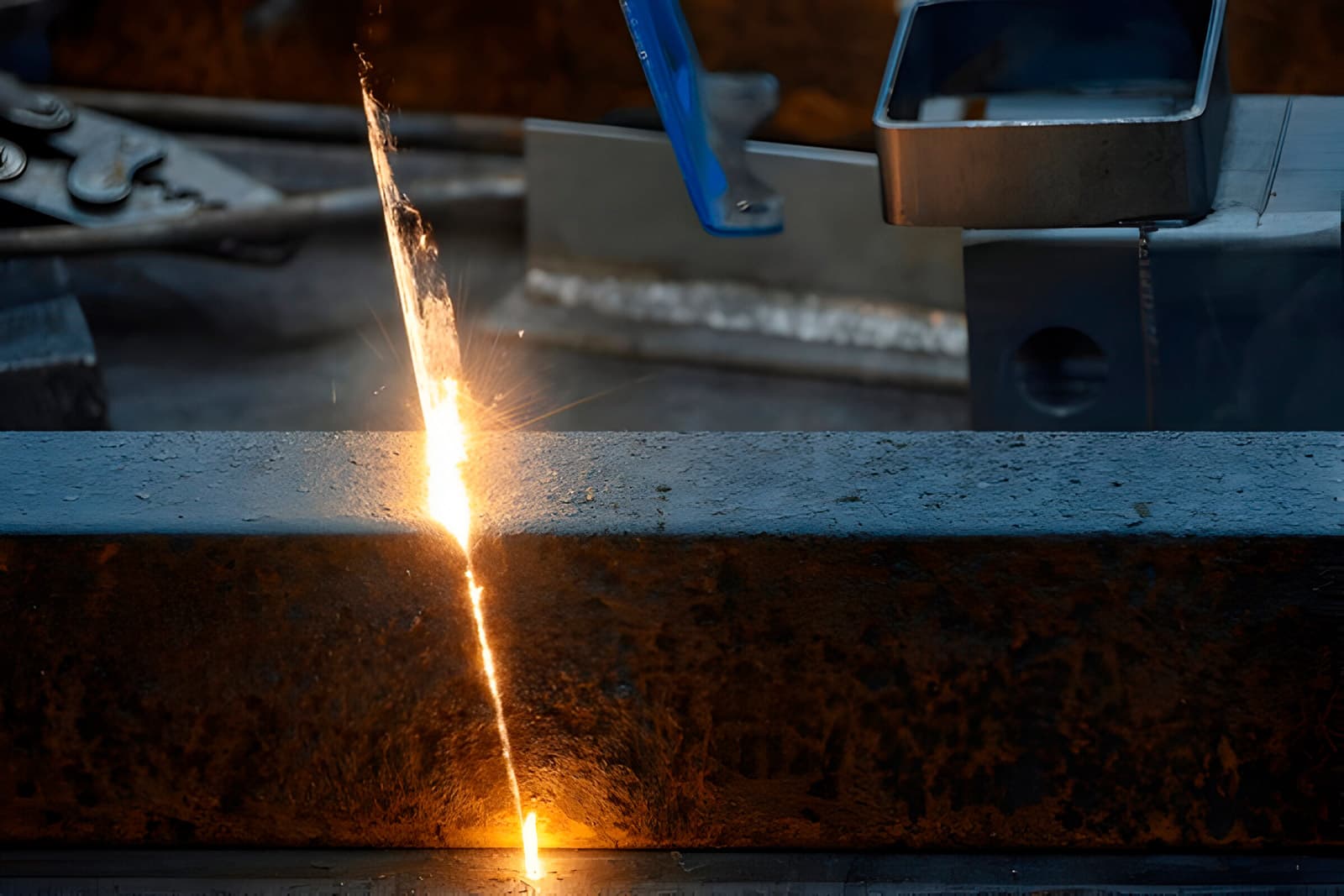
Aluminum reflects most of the energy a 1064 nm pulsed fibre laser throws at it. A clean mill-finish face can send back over 90 percent. It also conducts heat away roughly five times faster than steel, and it melts at about 660 °C against steel’s 1,500. Reflective, thermally fast, low melting point. That combination means the working window between "the coating lifts" and "the substrate is affected" is narrower on aluminum than on any other material we handle regularly.
Push the power up to speed the job along and one of three things happens. The surface takes on a dull grey-white cast where the metal has started to melt and resolidify at the microscopic level. Or the sheet picks up enough bulk heat to expand locally, and when it cools it does not return flat. Or, on painted panels, the coating chars instead of ablating and you end up with a carbonised film that has to come off some other way.
None of that is inherent to the method. All of it is a settings failure.
What the settings actually control
The dial that matters is energy per unit area per unit time. We have five ways to move it, and on aluminum all five get used.
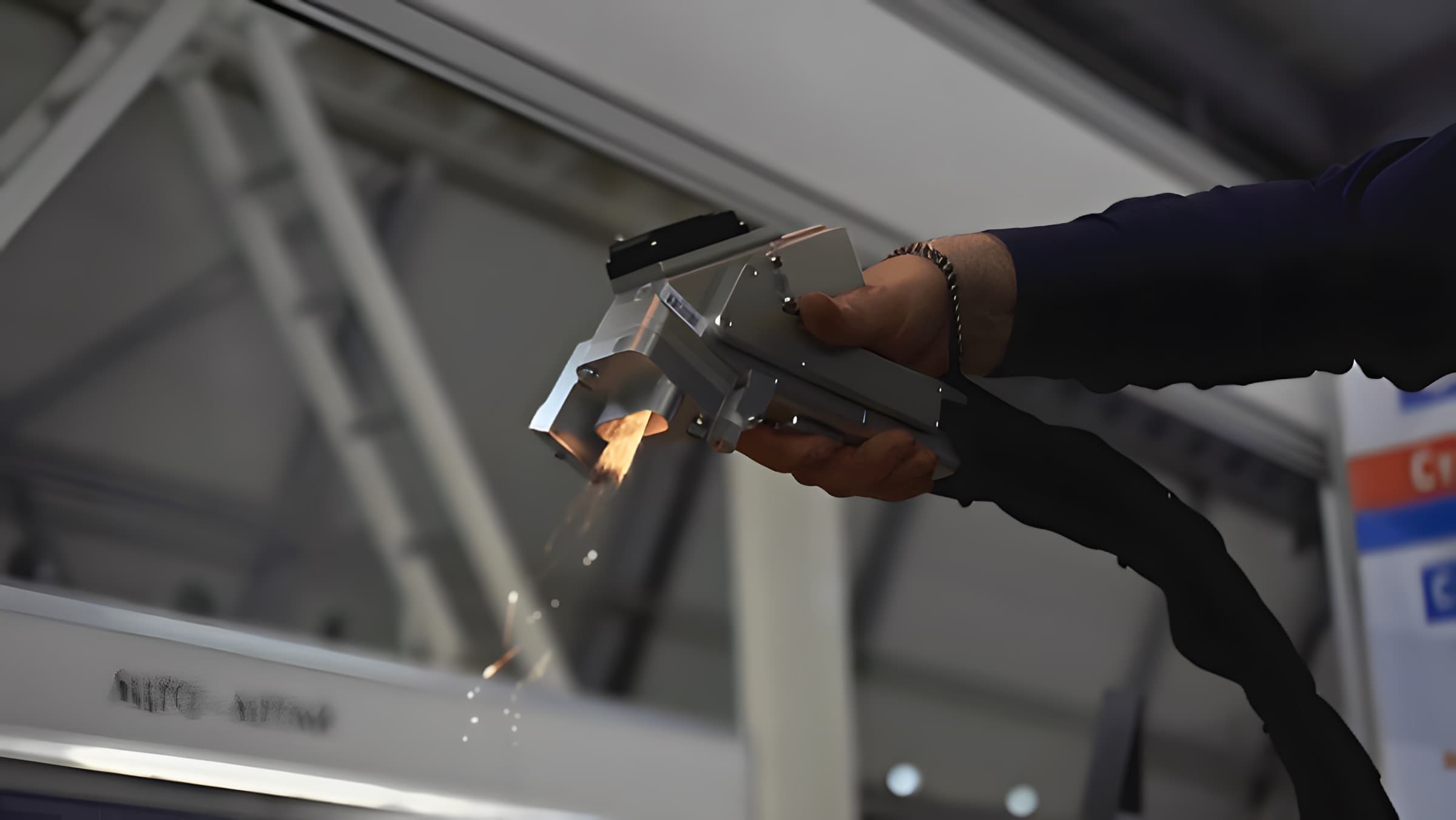
Pulse energy comes down first. On carbon steel we might run a laser hard and clear a square metre in a few minutes. On thin aluminum sheet we run well under what the machine can deliver, then make up the coverage with pulse frequency, which puts more, smaller hits on the surface instead of fewer, larger ones. Scan width goes wide so the beam never lingers. Travel speed goes up. And pass count goes up with it, because the coating comes off in layers rather than in one sweep.
The other control is nothing to do with the machine. It is dwell discipline. The operator does not stop moving, does not go back over a stubborn patch three times in a row, and works in a pattern that lets each strip cool while the next one runs. On a 1.2 by 2.4 panel that means alternating bands across the sheet rather than working corner to corner.
We check bulk temperature with an infrared thermometer as we go. The working rule on sheet under 2 mm is to keep the panel below about 80 °C, which is cool enough to rest a hand on. Above that, we slow the feed of work, not the scan.
For anything under 16-gauge we also back the panel. A steel table or an aluminum plate underneath acts as a heat sink and as mechanical support, and it costs nothing but setup time. Panels clamped in free air, standing vertical, are where most of the distortion complaints come from.
Gauge by gauge, what is realistic
Ten- and 12-gauge sheet, call it 2.5 to 3.4 mm, behaves close to plate. Normal settings, normal speed, no backing needed, no drama. Most structural and equipment guarding sits here.
Fourteen to 18-gauge, 1.2 to 2 mm, is the working range where technique starts to matter. Backing, reduced pulse energy, banded passes. Coating removal runs maybe 40 percent slower than on steel of the same thickness. This is where most food plant panelling, electrical enclosures and machine covers live.
Twenty to 22-gauge, under 1 mm, is thin enough that we test a patch before quoting a price. It is doable. Marine trim, ducting, decorative panels and light hardware come through fine. But the settings window is narrow enough that I will not put a number on a job of that gauge from photos alone.
Below 22-gauge, on foil-weight material, I usually say no and mean it. There are better methods, and one of them is often leaving the part alone.
The oxide layer question
Aluminum grows its own oxide film the moment clean metal meets air. Thin, tight, self-healing, and the reason the metal survives on the BC coast at all.
That film is also why a lot of aluminum work gets ordered. Welders want oxide off the joint area, because aluminum oxide melts near 2,000 °C while the metal underneath melts at 660, so the film sits in the puddle as a contaminant and causes porosity. Coating applicators want the surface at a known state. Both are asking the same question: what is the surface when the laser stops?
Laser cleaning takes the oxide film off along with whatever sits on top of it. Then the film starts coming back, and within an hour you have a fresh, uniform, thin oxide instead of the patchy, contaminated, weeks-old one you started with. That is the useful outcome. For welding, we sequence the work so cleaning happens within a shift of the joint being run. For coating, the fresh oxide is a better bonding surface than mill finish ever was, and I have written up the profile and adhesion side of that in the laser surface treatment guide.
Anodised aluminum is a separate conversation. The anodic layer is thick, hard, and integral to the metal, so removing dirt or paint from an anodised panel without taking the anodising with it needs low power and a test patch every time. Powder-coated aluminum strips cleanly. Mill finish is the easiest of the three.
Where dry ice fits instead
Not every aluminum job wants a laser.
If the problem is grease, food residue, adhesive, or general soil on thin sheet, dry ice blasting does it with no abrasion, no heat load and no embedded media. CO2 pellets sublimate on contact, so nothing is left behind to sweep up or wash down, which matters in food plants where the panel goes back on the line in the same shift. The pellets are soft enough that they do not peen the face the way garnet does.
Where dry ice stops is oxide and paint. It does not remove the oxide film, and it will not strip a cured coating. So the split in practice is: contamination on top of the metal goes to dry ice, contamination bonded to the metal goes to laser. Plenty of jobs in Delta and Annacis Island plants use both, one after the other, on the same equipment in the same visit.
What this costs in BC
Shop-based panel work runs $95 to $165 per hour in Greater Vancouver depending on setup and how many pieces are in the batch. Sixteen panels like the Richmond guards, stripped and ready for recoating, sit around $1,900 to $3,200.
On-site laser cleaning of aluminum is quoted per job, typically $1,200 to $6,000 for a day or two of work including mobilisation, power setup and cleanup. Dry ice work on aluminum equipment runs $1,500 to $8,000 depending on access and the size of the shutdown window. What moves those numbers most is not the metal, it is the access: a panel on a bench and the same panel installed four metres up over a running conveyor are different jobs at the same square metreage.
The comparison people forget to run is against the cost of the rippled panels. Sixteen replacement guards in fabricated aluminum was quoted to that shop at just over $11,000, plus three weeks.
The compliance side, briefly
Two things come up on BC sites with aluminum work.
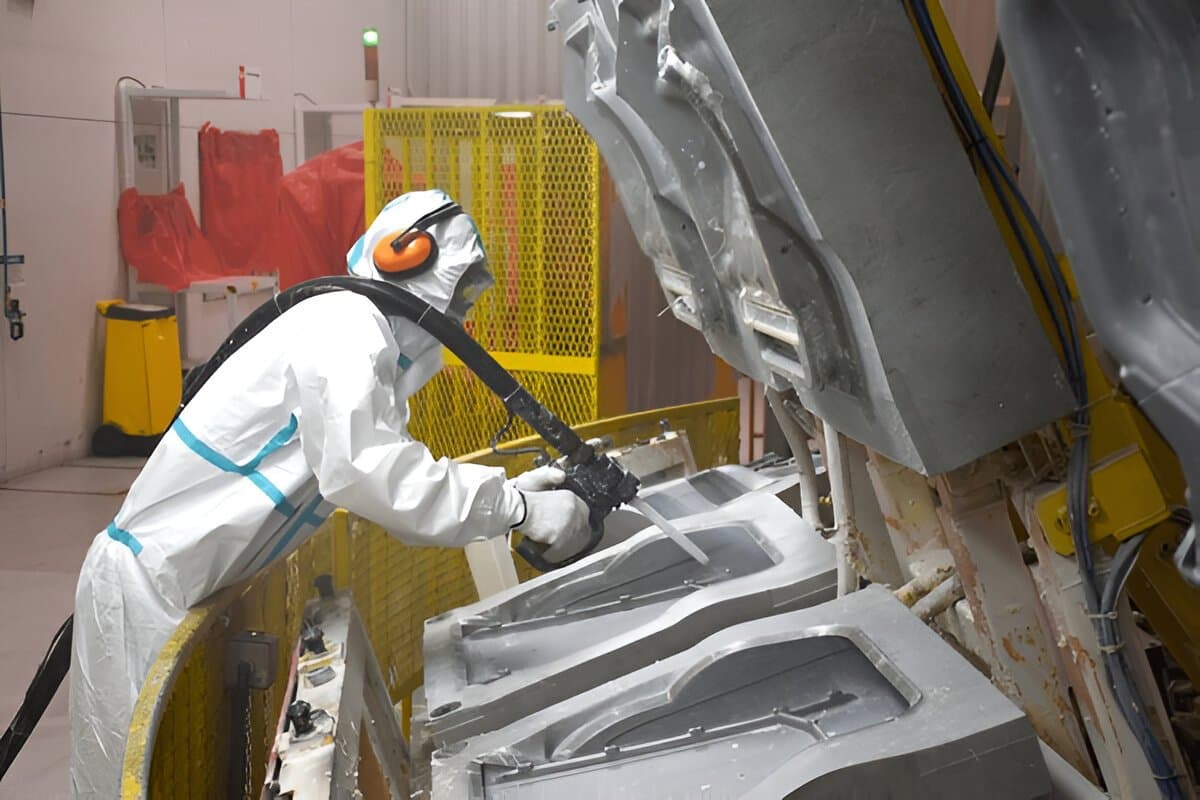
Abrasive blasting sits under the WorkSafeBC Occupational Health and Safety Regulation, which bans silica sand as a blasting abrasive and requires exposure control, containment and respiratory protection for the rest. Indoors, in an occupied plant, that means an enclosure, negative air and a media cleanup at the end. Laser and dry ice work skip the enclosure entirely, which is usually the difference between working during a shutdown and working around production.
The second is aluminum dust. Grinding and sanding aluminum produces a fine metal dust that is a recognised combustible dust hazard, and in a plant with existing dust controls that alone rules out mechanical methods in certain rooms. Laser ablation captures particulate at the head through the fume extraction unit, which keeps it out of the room air.
Our crews carry full liability coverage and WorkSafeBC clearance, and we send the certificates ahead of the first site visit because plant safety coordinators ask for them before they ask for anything else.
The short version
Blasting warps thin aluminum through impact, not heat, and embeds media that causes corrosion later. Laser cleaning aluminum avoids both, but only with the power backed off, the pulse frequency up, the panel supported and the operator keeping the head moving. Below 22-gauge, test first.
If you have panels, hardware or thin-gauge assemblies that need paint, oxide or contamination removed and cannot afford distortion, send photos and the gauge. We will tell you straight whether laser cleaning is the right call or whether something else suits the part better, and we bring a test coupon to the site visit so you see the result on your own metal before committing. Start with a free quote or call 236-660-4248.