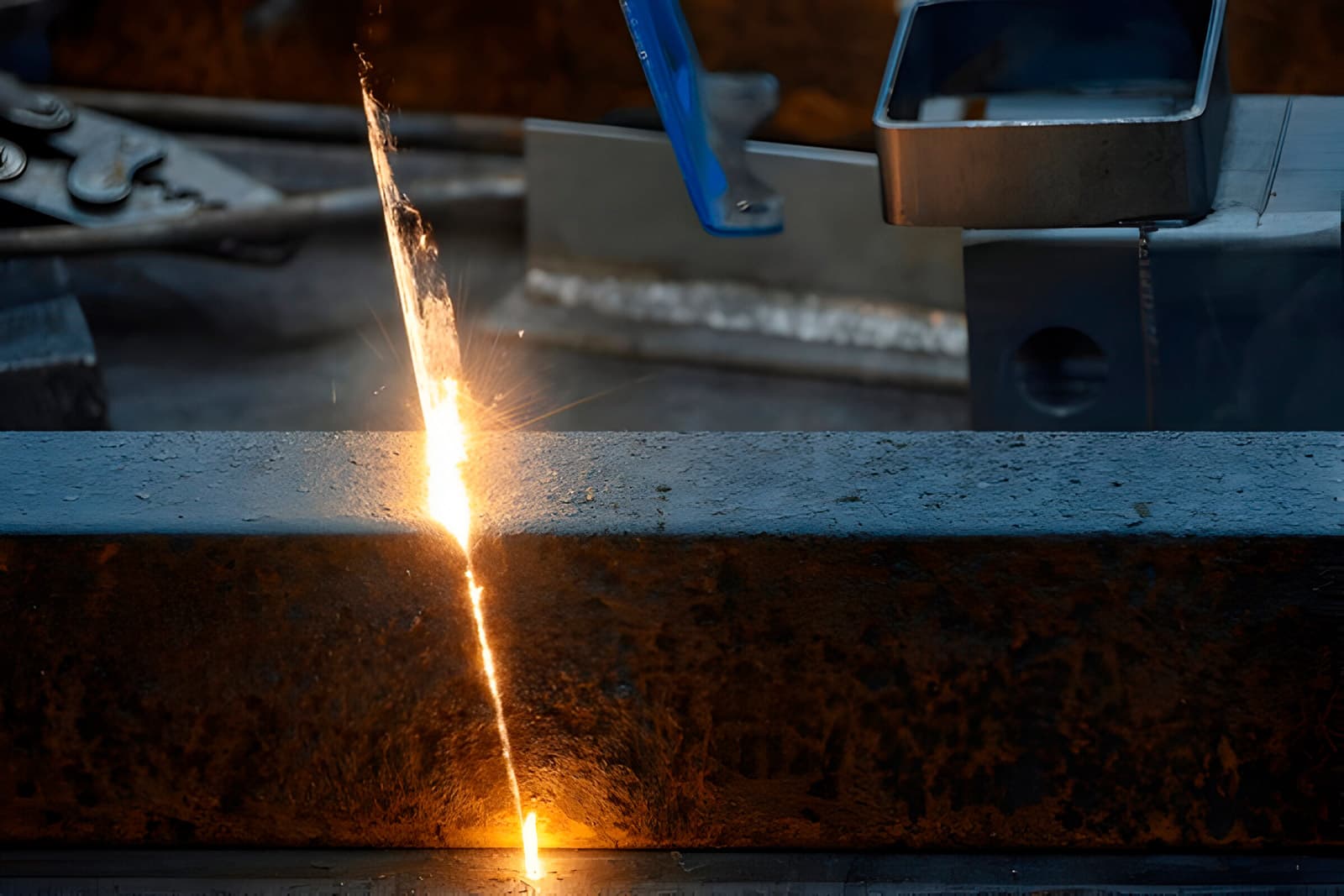
A maintenance planner in Delta once sent us three photos and asked for a firm number by end of day. The photos showed a rusty conveyor frame. What they didn’t show was the second frame behind it, the 600 mm gap we’d have to work through, or the fact that the "rust" on the lower rails was actually baked-on hydraulic oil with rust underneath. A phone quote would have been wrong by about 40 percent, in one direction or the other.
That’s why our laser cleaning quote process starts with a site visit on anything bigger than a small, simple part. Not as a sales ritual. The price of laser cleaning depends on things you can only learn standing next to the steel.
This article walks through what that visit covers, what we test, what we need from you, and how it becomes a written number. If you manage a plant, a restoration job or a building and you’ve been handed quotes that differ by 3x, this is where the gap usually comes from.
Why a price without a visit is mostly a guess
Laser cleaning is billed on time. Time depends on four things: what the contamination is, how thick it is, what it sits on, and how easy it is to reach. Photos give you maybe one and a half of those.
A thin film of flash rust on flat plate might clean at 3 to 5 square metres an hour. Mill scale, or three coats of old alkyd paint over pack rust, can drop that to under half a square metre an hour. Same steel. Same machine. Ten times the labour.
Access is the other big swing. A crew on a clear shop floor with power at the wall is productive from the first hour. A crew working off a scissor lift in a cold storage room in Richmond, stopping every 40 minutes because a forklift needs the aisle, is not. Neither situation shows up in a close-up photo of rust.
So when someone gives you a firm per-square-metre price from pictures alone, one of two things is happening. They’ve padded it to cover the unknowns, or they’ll find the unknowns on day one and send a change order. Neither helps you plan.
What we look at on-site
A typical visit takes 45 minutes to two hours, depending on the size of the job. Here is what we’re actually doing while we walk around.
The contamination, layer by layer
We scrape a small spot with a knife or look at a chipped edge to see the stack. Is it one layer or four? Paint over primer over rust? Grease over soot? Each layer can need different laser settings, and some layers are better handled by a different method entirely.
If there’s any chance of lead in old paint, we note it here. Coatings on BC structures built before the 1990s often contain lead, and that changes the exposure control plan, the PPE, the waste handling and the cost. We’ll recommend a lab test before we price the job if the age and colour of the coating suggest it.
The substrate
Laser cleaning works well on carbon steel, stainless, cast iron, aluminium, stone and a lot of concrete. But thin-gauge sheet, heat-sensitive alloys, painted wood and anything with a coating you want to keep need slower passes and lower power. We check thickness where it matters and ask what the part will do after cleaning: recoat, inspect, weld, or go back into service as-is.
Access and geometry
We measure clearances, count the hidden faces, and look for anything that forces a nozzle into awkward angles: bolt heads, gussets, the inside of channel sections, the back side of a frame against a wall. Complex geometry is where laser time climbs and where dry ice sometimes wins. We’ll say so on the spot.
Power, air and ventilation
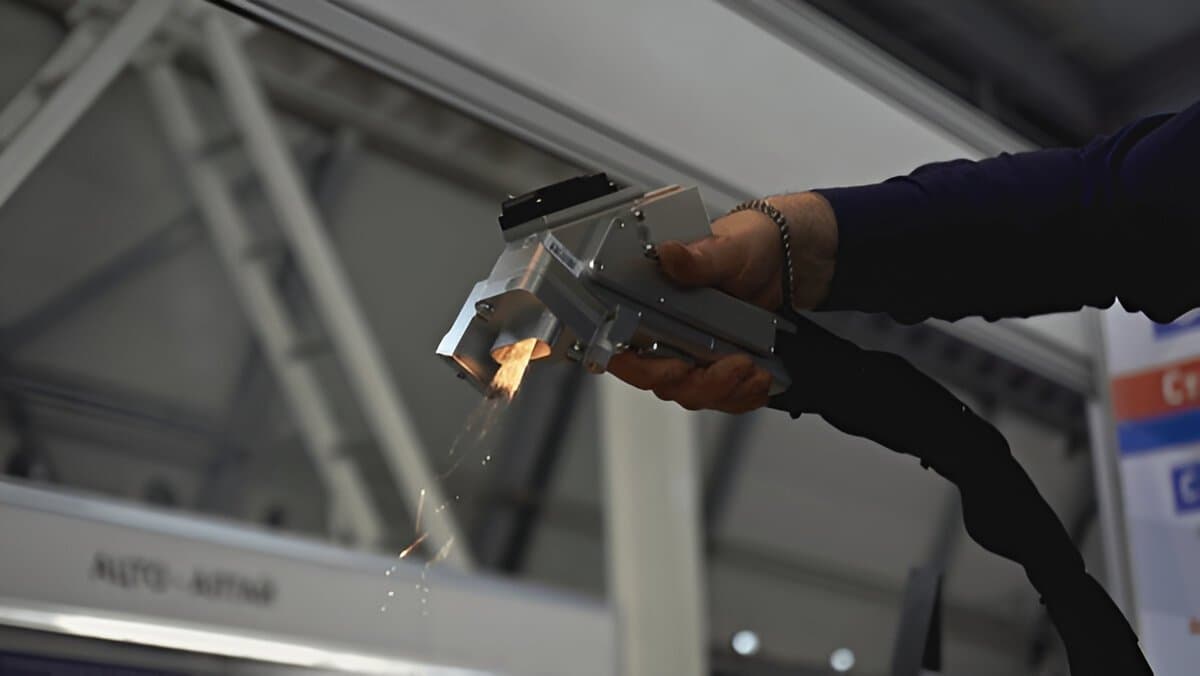
Our laser units run on standard 220V or a generator. We check where power is, how far the cable run is, and whether the space has extraction or needs a portable fume unit. Laser cleaning turns coatings into fine particulate and fume, and it has to be captured. Dry ice blasting needs compressed air at volume, usually a towable compressor if the site’s air system can’t carry it.
The work window
This is often the most important question of the visit. When can we work? Nights only? One weekend? A planned shutdown with a hard restart time? A job that fits a 48-hour shutdown gets staffed differently from one spread over two weeks of evening shifts, and the price reflects that.
Who else will be there
Other trades, production staff, tenants, the public. A laser beam is a Class 4 hazard, so the work zone needs a controlled perimeter and eye protection for anyone inside it. We plan the barrier and signage during the visit rather than negotiate it on the morning of.
The test patch: where the real number comes from
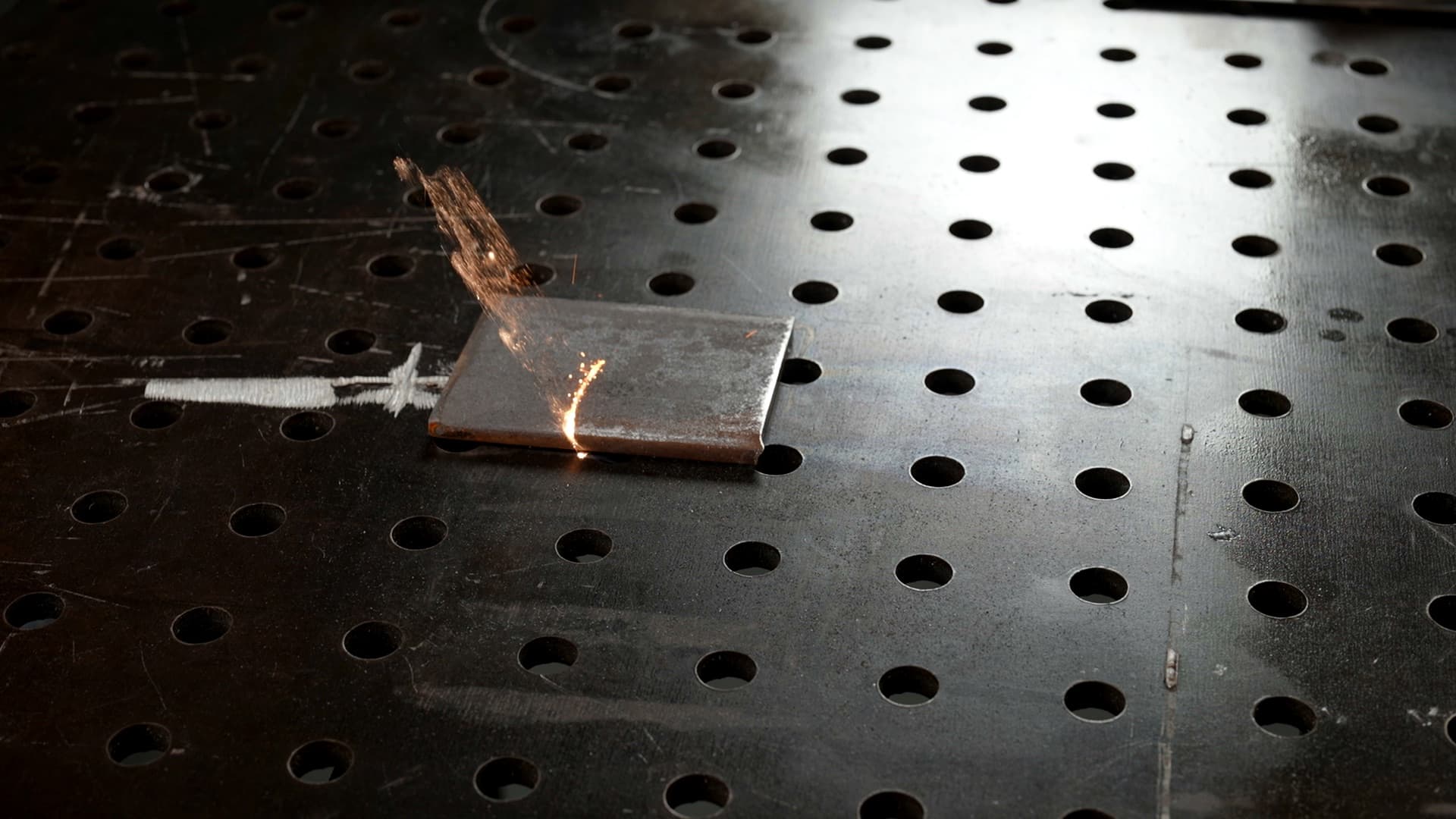
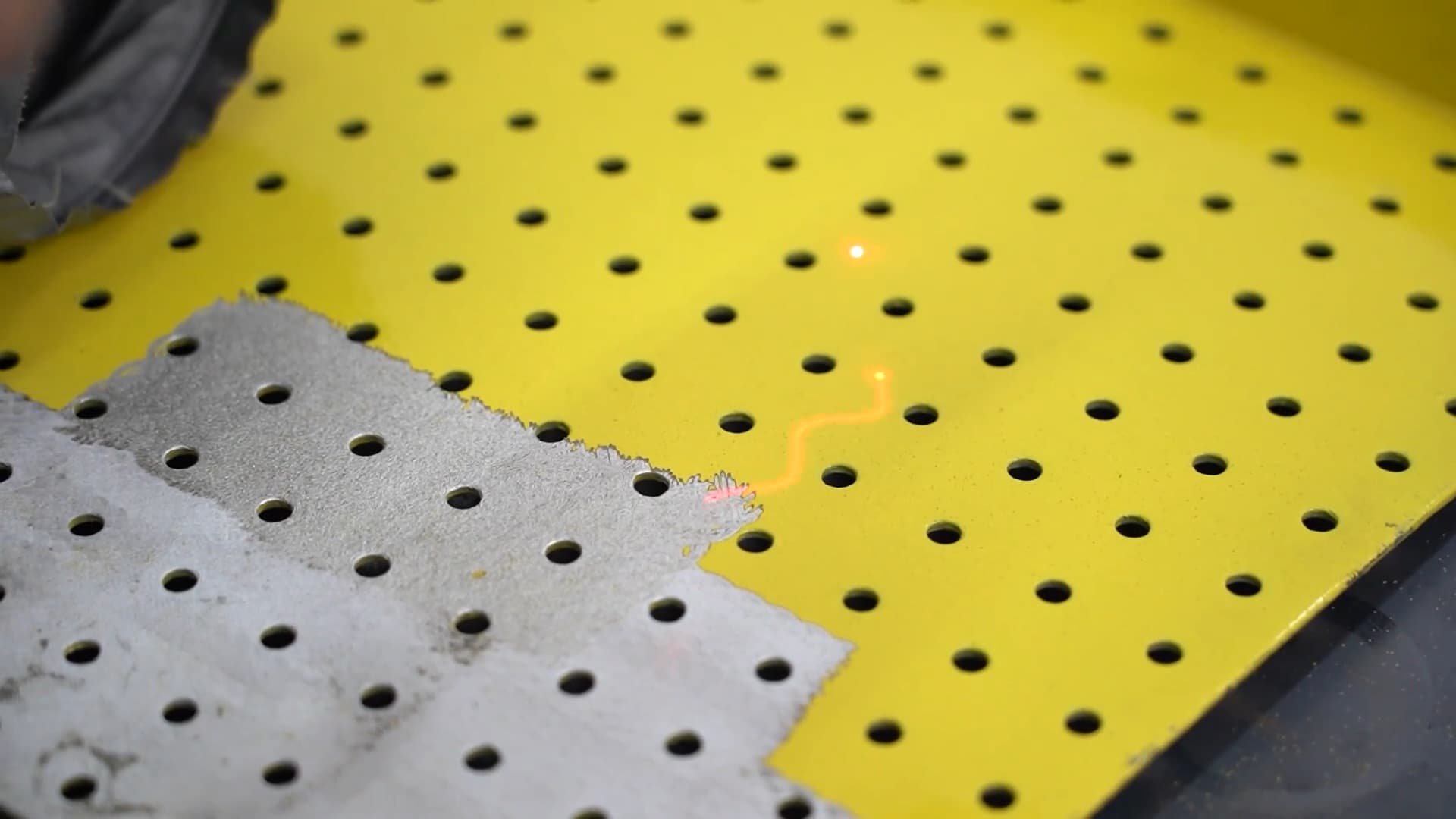
On most visits we bring a unit and clean a test patch. Usually something like 30 by 30 cm in a representative spot, plus a second patch in the worst area we can find.
The test patch answers three questions at once:
- Does the method work on this job? If the substrate discolours, the coating smears rather than lifting, or the rate is too slow to be sensible, we find out now. That saves you from booking a crew for a method that doesn’t suit the job.
- How fast is it really? We time the patch. That measured rate, adjusted for access, drives the labour estimate. It’s the single biggest input to your price.
- Is the finish what you need? You get to see the cleaned surface before you commit. If you’re recoating, your coating rep or inspector can look at it too. If you’re preserving a heritage surface or a machined face, you can check there’s no damage.
Test patches are also where we compare methods side by side when it’s not obvious. On heavy grease, food residue or soot over complex geometry, we’ll often run a dry ice blasting patch next to the laser patch. On one Burnaby job, the laser patch took eight minutes and dry ice took two. That settled it. On a heritage steel door in Mount Pleasant, it went the other way: dry ice lifted the grime fine but couldn’t touch the rust, and laser did both without marking the original surface.
Having both methods on one truck is useful here. We aren’t trying to make the job fit the machine we own.
What we need from you before or during the visit
The visit is faster and the quote is tighter if you can share a few things:
- Drawings or dimensions of the area, even rough ones. Square metres are the starting point for everything.
- Any coating information you have. Original spec, repaint history, lead test results.
- The next step after cleaning. Recoat system and required surface standard, NDT inspection, insurance documentation, or simply putting the equipment back to work.
- Site rules. Orientation requirements, hot work permits, lockout procedures, access hours.
- The real deadline. Not the ideal one. The date after which the job causes a problem.
If you can’t get all of that before we arrive, that’s fine. We’ll collect most of it on the walk.
How the site visit turns into a price
Within a few business days of the visit, you get a written quote. We break it into lines so you can see what’s driving the total and compare it against other bids properly.
A typical laser cleaning quote includes:
- Mobilization. Truck, equipment, setup and teardown. Lower Mainland sites are usually a few hundred dollars. Sites further up the Fraser Valley or on the Sunshine Coast cost more.
- Cleaning labour. Crew hours, based on the measured test-patch rate and the access conditions we saw.
- Containment and extraction. Fume capture, barriers, floor protection.
- Waste handling. Usually small. Laser cleaning leaves only the removed coating or rust, collected by vacuum, with no spent media or wash water. Lead-bearing waste is quoted separately.
- Shift premiums for night or weekend work, if needed.
- Documentation. Before-and-after photos, surface readings, cleaning parameters, if the job needs a record for an inspector or insurer.
For context on ranges: most laser rust removal jobs we quote in Greater Vancouver land between $1,200 and $6,000. Dry ice blasting jobs commonly run $1,500 to $8,000. Larger shutdown work and multi-week restoration projects sit well above that. Where your job lands depends on the factors above, which is exactly why we measure them first.
How long the laser cleaning quote process takes
From first call to written quote, the usual timeline looks like this:
- First call or form: a short conversation about what you’re cleaning and why. We ask for photos to decide whether a visit is needed at all.
- Site visit: typically booked within a few business days in the Lower Mainland. Urgent restoration work after a fire or flood gets priority.
- Written quote: a few business days after the visit. Faster for simple jobs, longer if we’re waiting on a lead test or a coating spec.
- Scheduling: once approved, start dates depend on your work window and our crew calendar. Planned shutdowns should be booked as early as possible.
Small, well-defined jobs sometimes skip the visit. A single piece of equipment brought to us, or a repeat job for an existing client, can be priced from photos and dimensions. We’ll tell you if that’s the case on the first call.
Red flags in a quote that skipped the visit
Most contractors in BC quote honestly, and there are good reasons some jobs don’t need a visit. But watch for these on larger jobs:
- A single lump sum with no breakdown. You can’t see whether the cleaning, the containment or the waste is driving the price.
- No mention of what’s excluded. Hidden faces, lead, recoating, traffic control. If it isn’t listed, ask.
- No test patch offered. On unfamiliar coatings or valuable substrates, a contractor who won’t test first is asking you to carry the risk.
- Rates that ignore the contamination. The same per-metre price for light surface rust and heavy mill scale means someone has guessed.
Why the visit protects your schedule as much as your budget
The cost of a wrong quote usually isn’t the change order. It’s the day the crew shows up, finds a different job from the one they expected, and has to stop. On a plant with a four-hour restart window, that lost day can cost more than the entire cleaning contract.
The same logic applies to the method choice. Sandblasting a frame in place can look cheaper on paper. Then you add tenting, spent media disposal, silica exposure controls under WorkSafeBC rules, and the cleanup of grit that got into bearings and electrical boxes. A good site visit puts all of that on the table so you compare the whole cost of each method, not just the hourly rate.
This is also where the environmental side becomes practical. Laser cleaning and dry ice blasting use no chemicals and create no secondary waste stream. That usually means no wash water to capture, no abrasive to haul away, and fewer conversations with your environmental coordinator. We’ll show you where that shows up in the numbers during the visit.
Booking a site visit with Laser Sharks
Laser Sharks is fully insured and WorkSafeBC compliant, and prepares a site-specific exposure control plan for every job. We were named Best Cleaning Services in BC for 2025 by CBRB. Our crews work across Greater Vancouver and the Fraser Valley, from North Vancouver and Burnaby to Surrey, Delta, Richmond and Langley.
Visits for laser cleaning and dry ice blasting are how we start almost every job worth doing properly. To book one, request a quote or call 236-660-4248. Send a few photos, the rough size of the area and your work window, and we’ll tell you whether a visit is needed and when we can be there.