A maintenance manager in Burnaby books laser cleaning for a rusted conveyor frame. Two days before the job, the plant’s safety coordinator asks a fair question: what exactly is coming onto our floor, and what does it need from us? Nobody has the answer written down. Emails go back and forth about eyewear, fume and insurance, and the job slides into the following week.
We see that delay more often than any technical problem with the laser. Laser cleaning safety in a BC workplace is well understood, and the rules come from places your safety lead already knows: the WorkSafeBC Occupational Health and Safety Regulation, your own site program, and the industry standard for laser use. The usual gap is the paperwork, plus a 15-minute call before the crew shows up. Both are easy to sort out a week ahead.
Where the WorkSafeBC rules for laser cleaning come from
BC has no separate rulebook written for laser cleaning. The requirements sit in parts of the Occupational Health and Safety Regulation that already apply to any workplace with a maintenance program:
- Part 5 sets exposure limits for chemical agents, which is where laser fume falls.
- Part 6 holds the substance-specific rules, lead among them, for jobs on old paint.
- Part 7 deals with noise and radiation, lasers included.
- Eyewear and respirators fall under Part 8, protective equipment.
- Part 9 applies if the work is inside a tank, pit or vessel that counts as a confined space.
- Lockout of the equipment being cleaned is Part 10.
The Workers Compensation Act adds one more piece. Once a contractor works on your site, it becomes a multiple-employer workplace, and somebody has to act as prime contractor and coordinate safety between the employers. Unless a written agreement names someone else, that’s the owner. Most plants we work in keep that role, so we work under their site program on the day.
For the beam itself, most laser safety programs in Canadian industry are built on ANSI Z136.1, the American standard for safe use of lasers. It defines the laser classes, the hazard zone around the beam, eyewear ratings, and the job of a laser safety officer (LSO), the person who sets and checks the controls for a given machine in a given space.
Section numbers shift when the regulation is amended. Have your safety lead read the current text on worksafebc.com instead of relying on any contractor’s summary, ours included.
Class 4 means the beam gets a controlled zone
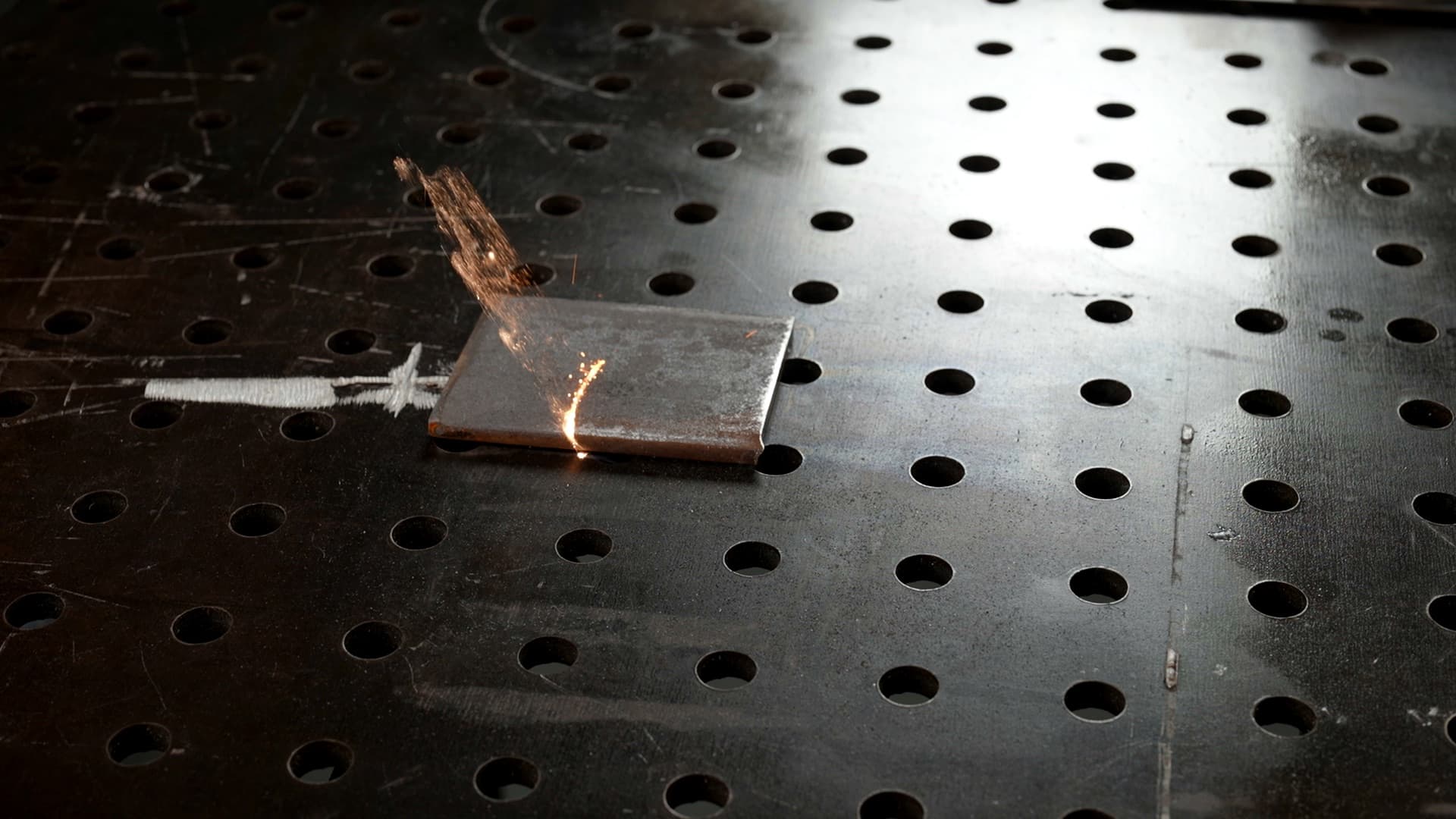
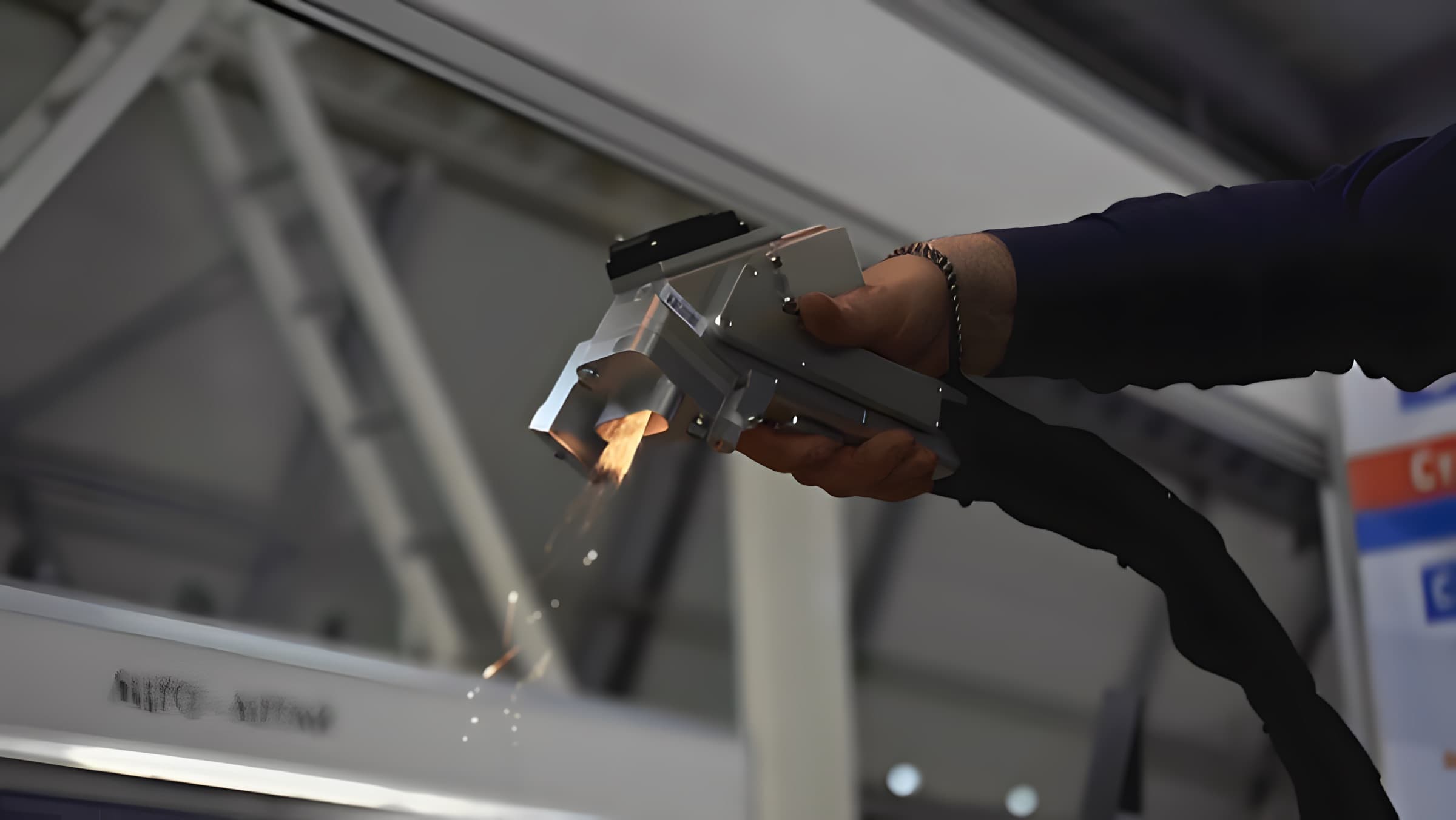
Lasers are classed by the harm they can do, from Class 1, safe in normal use, up to Class 4. The handheld units used for industrial laser cleaning are Class 4. The beam can injure an eye directly or by reflection, burn skin and ignite combustible material.
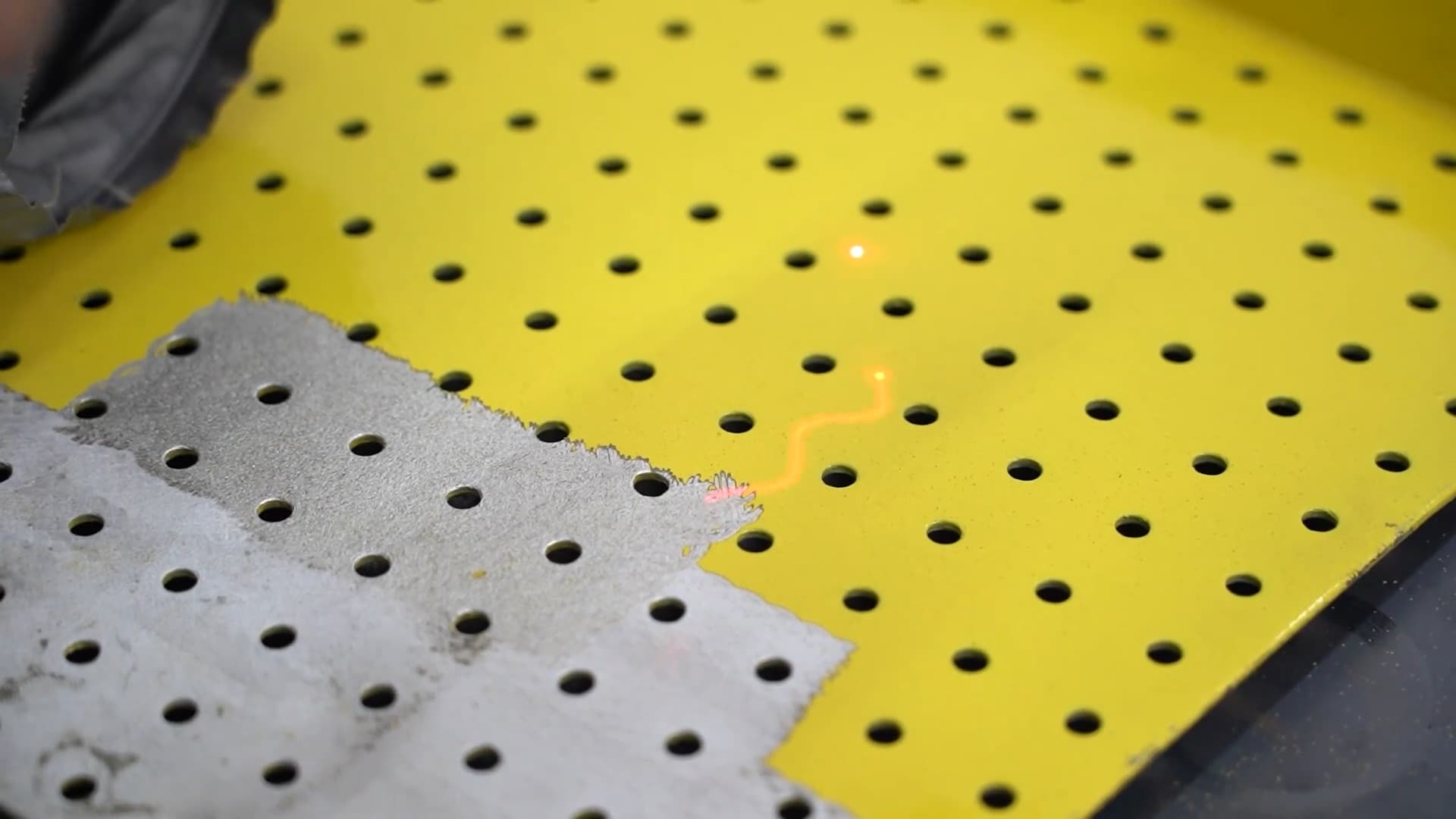
Most cleaning lasers are pulsed fibre lasers working at about 1064 nanometres, in the near infrared. You can’t see that beam. With a visible laser the blink reflex gives a little protection, but against infrared light it does nothing, and retinal damage can happen before anyone feels a thing.
Reflections are what catch people out. Freshly cleaned steel, stainless and aluminum reflect well at that wavelength, and a stray reflection can leave the work area at an angle nobody planned for. The hazard zone around a Class 4 beam also runs further than most people guess, well past the few metres around the operator.
So the work happens inside a controlled zone, sized by the person responsible for laser safety from the machine’s output and the layout of the room. On a typical plant job that means:
- hard barricades around the work, with warning signs at every way in
- laser curtains rated for the wavelength wherever a reflection could escape
- covers over windows and glazed doors facing the zone
- rated eyewear for anyone inside the barricade
- a key switch and an emergency stop on the unit
- long sleeves and gloves for the operator
Rated laser glasses are marked with the wavelength range they cover and an optical density (OD) number, and both have to match the machine. Welding shades, grinding glasses and sunglasses aren’t rated for a 1064 nm laser. If someone from your team wants to watch, they wear rated glasses from the crew or they watch from outside the barricade.
Fume is the hazard most sites underestimate
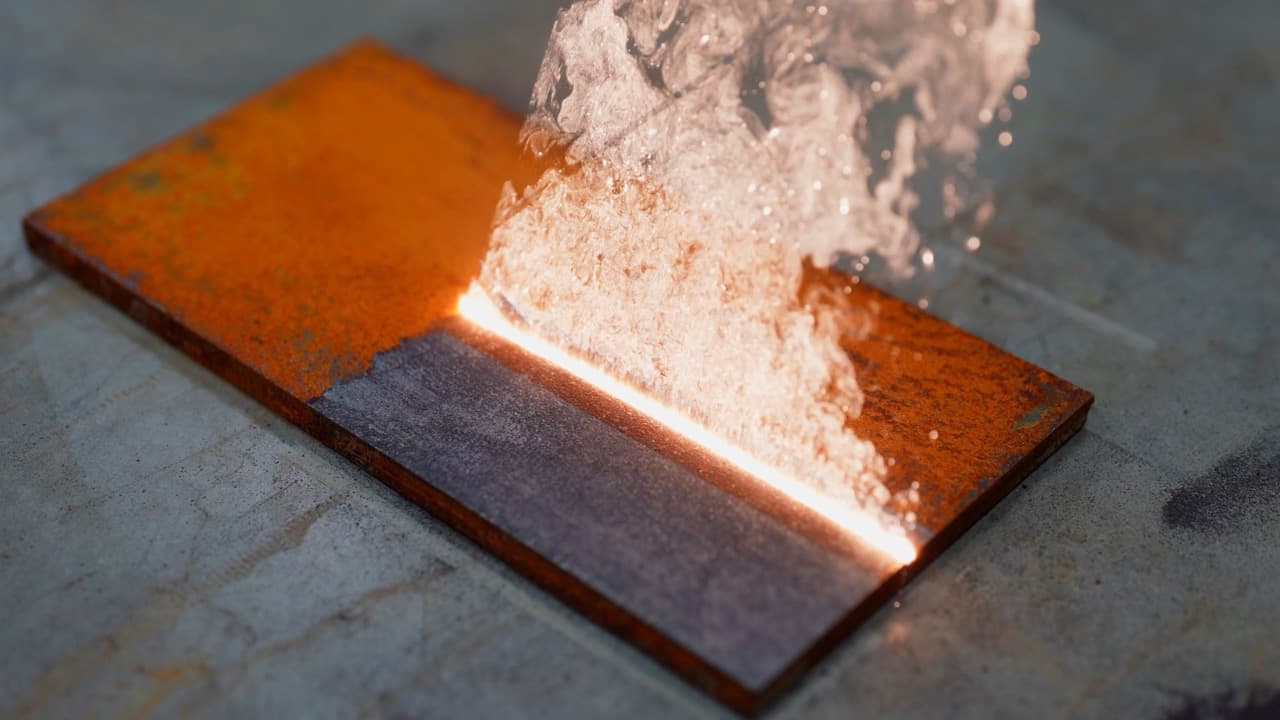
The beam doesn’t make rust or paint vanish. It breaks the surface layer into fine particles and gases, and most of the health risk on a laser cleaning job sits in that plume.
Rust comes off as iron oxide dust, and mill scale behaves about the same. Paint is the variable one, because whatever is in the coating goes into the air. Paint applied in BC before the 1990s can contain lead. Some older industrial primers contain chromium or cadmium. Galvanized steel gives off zinc oxide fume if the beam reaches the zinc, and oils and organic coatings break down into gases you can smell across the bay.
A fume extractor with HEPA filtration and its intake at the nozzle is the main control. It catches most of the plume at the source, and it should be running before the laser fires and stay on until the zone is cleaned up. For rust on plain steel, the extractor does most of the work. A lead coating changes the job. WorkSafeBC’s lead rules then call for an exposure control plan, respirators matched to the exposure, hygiene measures, air monitoring to confirm the controls work, and the collected dust handled as hazardous waste.
That’s why we test old coatings before we price them. A paint chip sent to a lab comes back in a few days, and no other single fact moves a laser quote as much.
The waste is also where laser cleaning earns its eco-friendly reputation. A day of laser work leaves the extractor’s filter cartridges and a vacuum bag. There’s no spent abrasive to sweep up and no stripper sludge or wash water to keep out of the floor drains. When the coating does contain lead, the hazardous waste is a small amount sealed in filters instead of contaminated grit spread across the floor.
Noise, fire and lockout
Noise on a laser job comes from the crackle at the surface, the extractor and, on sites without a spare 240-volt circuit, a generator. It’s far below a blast nozzle, but your site’s hearing protection rules still apply inside the zone.
Fire is the bigger concern. Laser cleaning heats the contaminant layer, and oily residue, dust, cardboard or rags near the work can ignite. Many BC sites put laser cleaning under their hot work permit, which is reasonable. Clear combustibles from around the work, keep an extinguisher within reach, and post a fire watch if your permit system calls for one.
Whatever we clean has to be de-energized and locked out first, under your lockout procedure, the same as for any maintenance contractor. Anyone from our crew working on the equipment applies a personal lock alongside your crew’s.
A checklist for your laser contractor
Ask for these documents a week before the job. A contractor who works on industrial sites should be able to send them within a day:
- A WorkSafeBC clearance letter showing the company is registered and its account is in good standing. You can request one yourself online. It protects you too: hire a contractor without coverage and you can be held responsible for their unpaid premiums.
- A certificate of liability insurance with limits that meet your requirements, and your company named as additional insured if your policy asks for it.
- The safe work procedure for the laser: how the zone is set up, the eyewear, the emergency stop, and what happens if someone walks in.
- The machine’s class, wavelength and maximum power, and the OD rating of the eyewear.
- The name of the person responsible for laser safety on your job, plus the operators' training records.
- The fume plan: extractor type and filter class, and respirator fit-test records if respirators are needed.
- For old coatings, the test results or the plan to test, and an exposure control plan if lead turns up.
Then get the contractor on the phone and ask a few things out loud:
- How big will the controlled zone be in our space, and what has to move?
- What comes off this surface, and where does it go?
- Do you work under our hot work permit, and who provides the fire watch?
- What power do you need, and what happens if a breaker trips mid-shift?
Good answers are specific to your site. If every answer comes back as "the laser is completely safe," the contractor hasn’t thought about your workplace yet.
What your site has to organize
The contractor brings the laser controls. Some things only the owner can arrange:
- Confirm in writing who is prime contractor.
- Book a site orientation for the crew covering site hazards, the muster point, emergency contacts and first aid.
- Tell production staff and other trades where the zone will be and when. If millwrights or electricians need the same area, agree on the sequence ahead of time.
- Lock out the equipment, and have someone on hand who can release it at the end.
- Send any paint test results or hazardous materials survey you already have for the building.
- If the work is in a confined space, your entry program, permits and atmospheric testing apply, and we plan around them.
Power, floor space and lift access are covered in our guide to getting a site ready for mobile laser cleaning.
A stalled start costs more than the paperwork. Our laser rate runs $180 to $260 an hour, which covers the operator, the unit and fume extraction. A crew standing at the gate for three hours while someone hunts down an eyewear spec adds $540 to $780 in standby. The bigger loss is the shutdown window. If the cleaning was booked into a weekend shutdown on a line that idles at $1,500 an hour, a lost morning that pushes the restart by three hours costs $4,500 before anyone counts overtime.
Most laser rust removal jobs we quote in the Lower Mainland land between $1,200 and $6,000. Zone setup is part of every laser day and shows up in the hours. Lead-bearing coatings add testing, air monitoring and hazardous waste disposal, and we price those once the test result is back.
How laser compares with sandblasting and chemical stripping on the safety plan
Abrasive blasting is the heavier method to get past a safety review. BC prohibits blasting abrasive with more than 1 percent free silica, but blasting concrete, masonry or some old coatings still releases respirable crystalline silica, and WorkSafeBC expects an exposure control plan for it. The blaster needs supplied-air respiratory protection, the area needs containment, the noise calls for hearing protection well beyond the work area, and the spent abrasive has to be collected and disposed of. If the coating had lead in it, so does the abrasive.
Chemical strippers bring solvent vapour, skin contact and ventilation requirements, then sludge and rinse water that can’t go down a floor drain.
With a laser, the main hazard is the beam, and distance, barriers and eyewear control it. Fume is captured at the nozzle. The waste fits in a filter.
Our recommendation: in an operating plant, a food facility, near drains or open water, or anywhere other trades keep working nearby, laser cleaning is the easier method to get through a safety review and usually the faster one to set up. Large outdoor areas of heavy scale, with no deadline and nobody working close by, are where a contained blast job can still cost less per square metre, and we’ll say so when that describes your job. For oil and grease on machinery we often use dry ice blasting instead, which comes with its own controls for CO2 and noise.
Getting your safety team to sign off
Tell us what’s being cleaned, the coating and its age if you know it, and who your safety contact is, and send a few photos of the space through our quote form, or call 236-660-4248. We send our safe work procedure with the machine and eyewear specs ahead of the job, so your safety lead can review them and ask questions before the crew arrives.
Laser Sharks crews are WorkSafeBC compliant, fully insured and trained in Class 4 laser safety, and the company was named CBRB Best Cleaning Services in BC for 2025. We work in plants, fabrication shops and commercial buildings across Burnaby, Richmond, Delta, Annacis Island, North Vancouver, Surrey and the Fraser Valley, under the client’s site safety program.