The most common question we field isn’t about price. It’s some version of "can you laser this?" Fair question. A laser cleaning service sounds like it should handle anything, and the online videos of rust peeling off steel in perfect ribbons don’t help set limits. After more than twenty years in industrial cleaning around Greater Vancouver, I can give you the honest answer: lasers are brilliant on some surfaces, workable on others, and the wrong tool entirely on a few. This guide covers which is which, and just as important, what the surface actually looks like when we pack up and leave.
The short answer
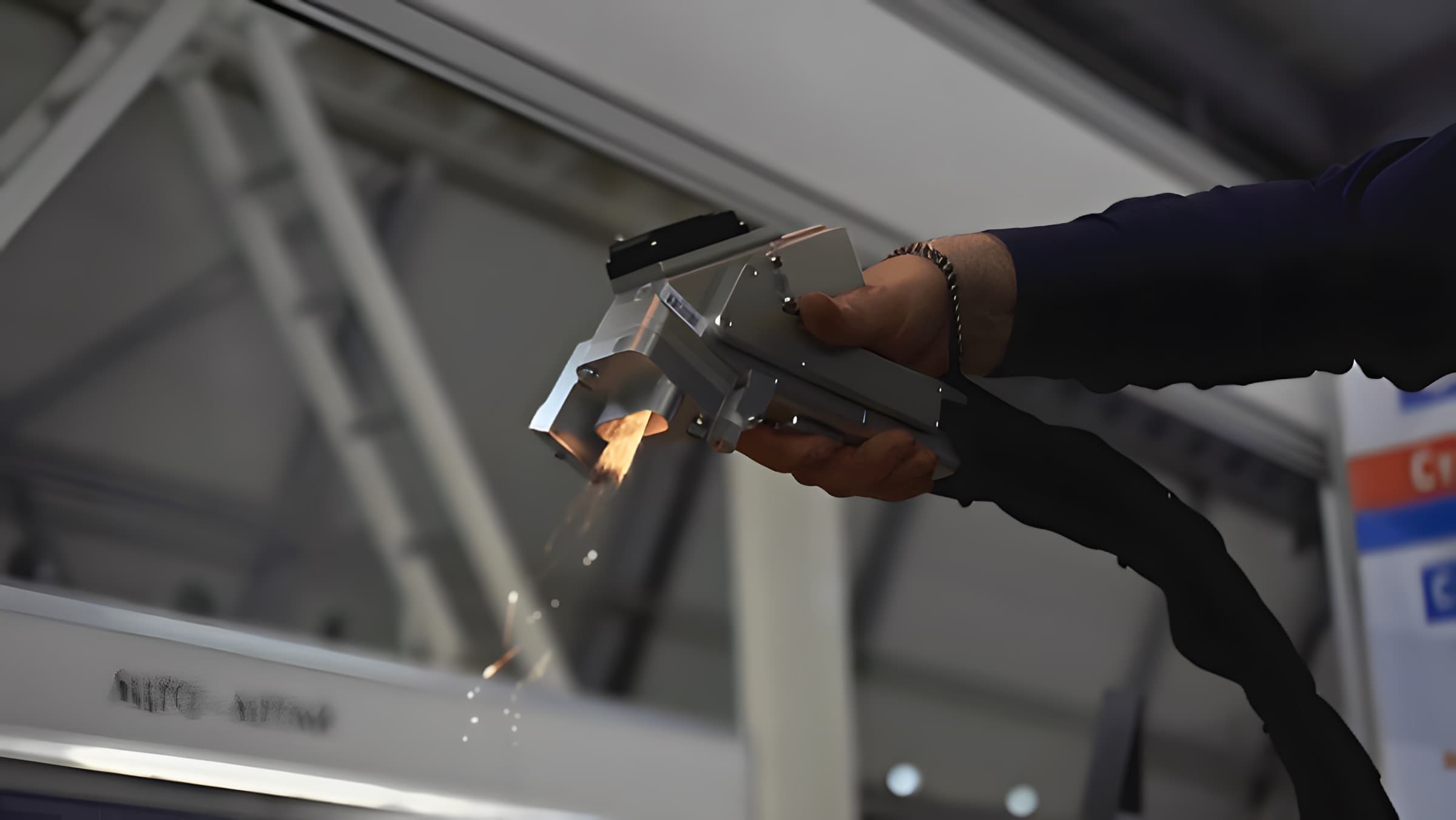
Laser cleaning suits metals and mineral surfaces where the goal is removing contamination without touching what sits underneath: carbon steel, cast iron, stainless, weathered brick and stone, and aluminum when the operator knows the material. It strips rust, mill scale, old paint, oil residue, soot and oxide discoloration. What you get back is bare, dry substrate with a light matte texture. No embedded grit, no chemical film, no rinse water.
What it will not do: fill pitting, rebuild lost metal, or save a coating you were hoping to keep in places.
Surfaces that respond well
Carbon steel and cast iron
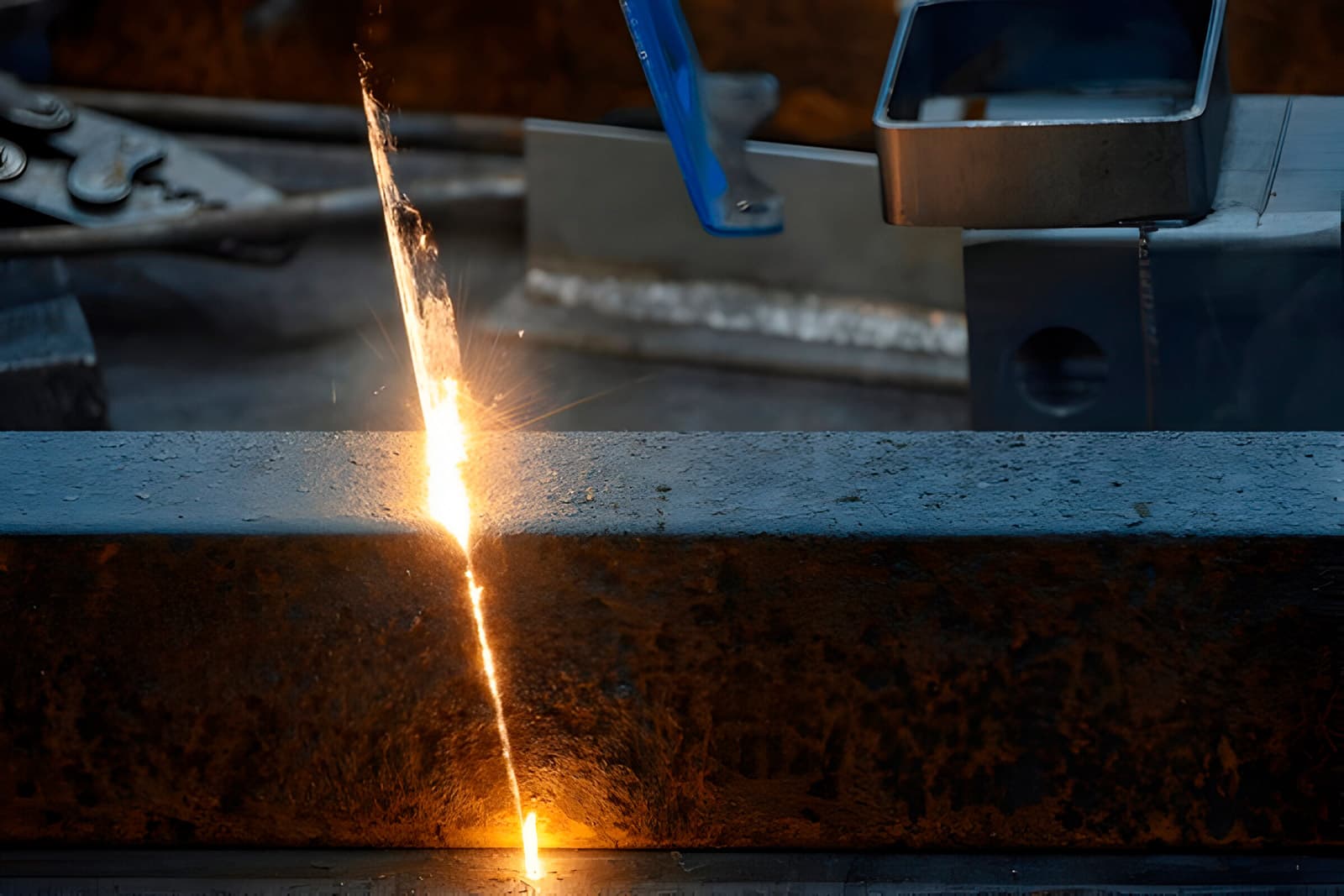
This is where the technology earns its keep. Rust and mill scale absorb laser energy far more readily than the steel beneath them, so the beam takes the oxide layer and effectively stops at clean metal. Structural beams, machinery frames, cast housings, shafts, press components. We clean all of them, week in and week out.
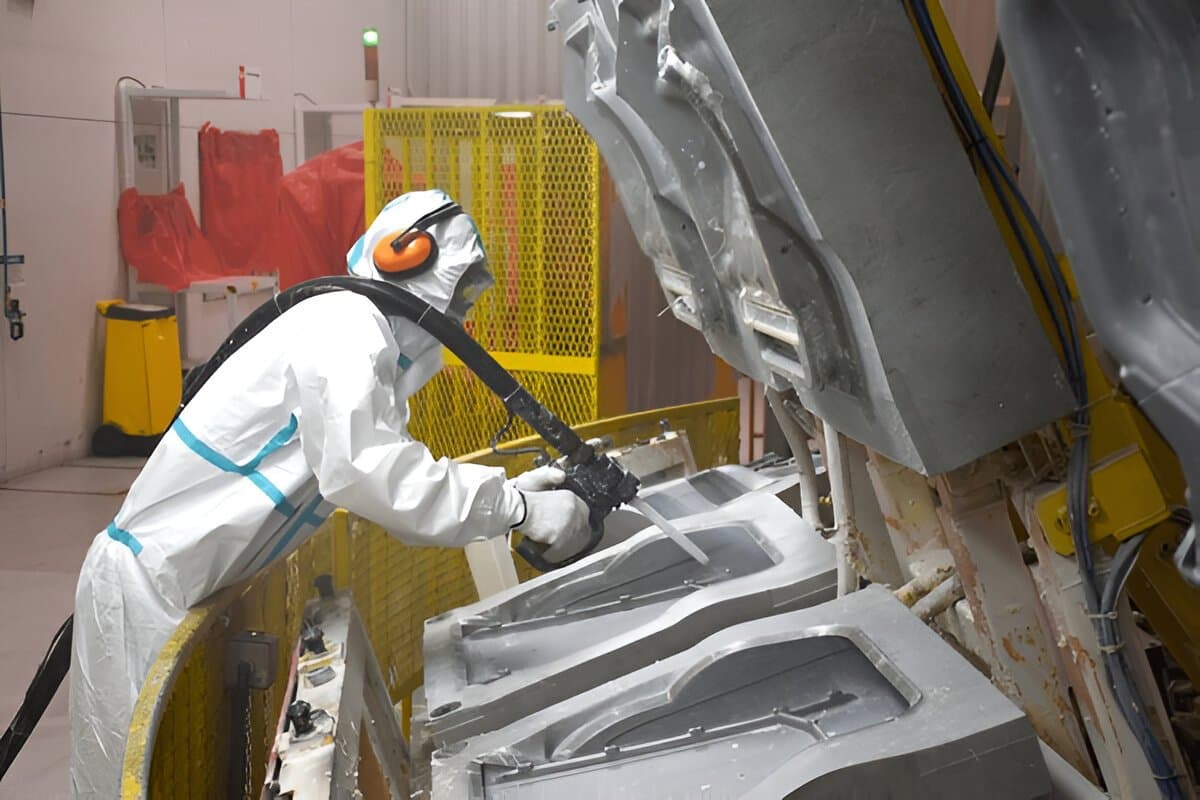
The practical advantage over sandblasting shows up in two places. First, there is no blast media to contain or haul away, which matters when the part can’t leave the building or the building can’t be tented. Second, WorkSafeBC’s silica exposure rules have turned abrasive blasting into a paperwork and containment exercise. Laser work sidesteps the silica question because there is no sand, no garnet, and no dust cloud rolling across the shop floor.
Stainless steel and weld seams
Heat tint on stainless welds is a compliance problem in food and marine settings, not a cosmetic one. That rainbow discoloration marks a chromium-depleted zone, and chromium-depleted zones are where corrosion starts. Laser removes the tint without abrasives or pickling paste, which is why fabricators in Delta and on Annacis Island send us railing, tank and conveyor work before final inspection. No acid on site, no neutralizing rinse, nothing to dispose of afterward.
Brick, stone and heritage masonry
Vancouver’s heritage stock is where laser cleaning has quietly replaced almost everything else. Soot, old paint and decades of atmospheric grime sit on top of fired brick and sandstone. The laser lifts that layer without eroding the face the way pressure washing or grit does. City of Vancouver heritage planners have rejected blast methods on designated buildings more than once; laser gets approved because it takes nothing structural with it. Gastown storefronts and Mount Pleasant brick both clean up this way.
Aluminum, with a caveat
Aluminum reflects more of the beam and carries a thin oxide layer, so the margin between cleaned and etched is narrower than on steel. It is absolutely workable: soot off marine superstructures, oxidation off castings, coatings off panels. But test patches aren’t optional here. Anyone quoting aluminum work without asking to run a small trial section first is guessing with your part.
Fire-damaged wood and concrete, case by case
Char and soot on heavy timber respond surprisingly well to laser at conservative settings, which matters for post-fire restoration where the structure stays but the smell and the black layer have to go. Concrete is more selective. Surface soot and some coatings come off cleanly; ground-in oil staining that has soaked deep into the slab does not, because the laser only works where the beam lands. On restoration projects we usually walk the site first and mark, area by area, what the laser handles and where dry ice or mechanical methods take over. Insurance adjusters appreciate that split being documented up front, because it keeps the scope from growing mid-project.
Surfaces we turn down, or approach differently
Galvanized steel is the big one. The zinc layer is sacrificial by design and sits exactly where the laser works, so stripping rust off galvanized steel usually means stripping the galvanizing with it. If the coating has already failed and the part is headed for re-coating anyway, fine, we take it all off. If you want the zinc preserved, laser is the wrong call, and we will say so on the phone before anyone books anything.
Plastics, rubber and composites absorb the beam and scorch or melt rather than clean. Those jobs go to dry ice blasting instead. Running both technologies is exactly why we don’t force the laser onto materials it doesn’t like; there is always another answer on the truck.
Deep pitting deserves a straight answer too. The laser will clean rust out of pits completely, and the pits will still be there when it’s done. Some customers expect mirror-finish metal from steel that has been losing thickness for a decade. What you actually get is clean, stable, coatable metal that shows its history. That is a good outcome. It is not a time machine.
What the surface looks like after
This is the question buyers ask least and should ask most, because it decides what happens next in your project.
On steel, expect bare metal with a uniform matte grey finish. Depending on settings, the surface profile is comparable to a light abrasive sweep: enough tooth for primers and industrial coatings to bond, without the deep anchor pattern that aggressive grit leaves behind. Coating contractors we work with in Burnaby spec laser prep on rework jobs specifically because adhesion failures from embedded media stop happening. There is no grit in the surface because no grit ever touched it.
There is no residue chemistry to manage either. Chemical stripping leaves films that need neutralizing and rinsing, and that rinse water has to go somewhere. In BC, "somewhere" is never a storm drain. Laser cleaning produces a dry surface and a small amount of airborne particulate, which we capture at the source with HEPA extraction. End-of-day cleanup on a laser job is usually sweeping and coiling cables, not media recovery and disposal manifests.
Two honest limits. Freshly lasered steel is bare and unprotected, and coastal BC air starts working on bare steel within days, faster near the water in North Vancouver or Richmond. If the part lives outdoors, book your coating crew right behind the cleaning. And on layered coatings, the laser removes what is in front of it; dialing it in to stop at a primer coat is possible on some systems but needs testing, not assumptions.
What a laser cleaning service costs in BC
Most laser jobs we quote across the Lower Mainland land between $1,200 and $6,000 CAD. The spread comes down to three factors. Total surface area is the obvious one. Contamination type is the second: light surface rust moves quickly, mill scale is slower, and multi-layer industrial coatings are slower still. Access is the third, and the one people forget. A pump shaft on a bench cleans in an hour. The same area of steel eight metres up a warehouse wall needs a lift, rigging time and a second technician.
Photos get you a range. A site visit gets you a number. Within the Lower Mainland the visit costs nothing, and it is the only way to quote honestly on material, condition and access at the same time.
Weigh the quote against downtime, not just against other cleaning quotes. If a production line bills out at $2,000 an hour when it runs, the difference between a method that needs two days of containment setup and one that starts cleaning twenty minutes after the truck parks is not a rounding error. That math is usually what settles the decision for maintenance managers, well before the finish quality even comes up.
A job from the field
A fabrication shop on Annacis Island called us about stainless handrail assemblies for a marine client, roughly forty weld joints showing heat tint, with a third-party inspection booked four days out. Pickling paste was the shop’s usual route, but the assemblies were fully welded and the acid handling plus rinse containment indoors was nobody’s idea of a good week. We lasered every joint in one afternoon on their floor. No chemicals in the building, no disposal paperwork, and the welds passed inspection as cleaned. The shop foreman’s comment stuck with me: the cleaning took less time than the paperwork for the acid would have.
That is the pattern with laser work. The wins aren’t only in the finish; they’re in everything you no longer have to manage around the job.
Where that leaves you
If your surface is steel, cast iron, stainless, brick or stone, and the job is getting rust, paint, soot or oxide off without harming what’s underneath, a laser cleaning service is the right first call. If it’s galvanized steel you want preserved, or plastic and rubber components, it isn’t, and any contractor running both laser and dry ice will tell you that before quoting rather than after.
Laser Sharks crews are WorkSafeBC compliant and fully insured, with decades of combined industrial cleaning experience across Greater Vancouver and a CBRB Best Cleaning Services in BC award behind the work. Have a look at what the laser cleaning process handles, then send us photos for a free quote. We’ll tell you plainly whether the laser suits your surface, and exactly what it will leave behind.