Last week a fabrication foreman in Delta sent me a photo of a 12-foot steel beam pulled from a yard that had been sitting through three winters of Fraser River fog. Surface rust across the entire web, deeper pitting at the bolt holes, paint spec from the engineer that wouldn’t allow heat scarring. Two quotes from sandblasters sat on his desk: $4,200 base plus an $1,800 containment and media disposal line. The other shop refused when he mentioned the beam had to be cleaned in place. That’s the conversation pushing laser rust removal in Canada from curiosity to budget line across BC manufacturing.
Coastal humidity, the WorkSafeBC silica exposure rule, and the cost of moving heavy stock are the three drivers behind the shift. None of them are going away.
What’s actually shifting in BC manufacturing
For decades the default for removing rust from structural steel, machinery, and marine fittings was sandblasting. It works. It’s been around for a century. Most shops with industrial roots already have a booth or a rented trailer setup. But three things have tilted the math against it.
The first is media disposal. Spent abrasive from sandblasting a rusted assembly carries the rust, the old paint, and whatever was on the surface. In BC that means a disposal manifest, a hauler, and a tipping fee. On a mid-sized job it adds $1,500 to $3,000 before anyone touches the steel.
The second is containment. WorkSafeBC’s silica exposure regulation, tightened in the 2024 update on employer obligations, treats abrasive blasting as a high-exposure activity unless full containment and respiratory protection are in place. For a fab shop doing one or two large pieces a month, building containment for each job is a tax that quietly killed the in-house option.
The third is access. Coastal BC manufacturers ship through the Port of Vancouver, run forestry equipment in remote yards, and maintain marine fleets at Annacis Island, North Van shipyards, and Steveston. A lot of the steel that needs cleaning can’t be loaded onto a flatbed and trucked to a blast booth. It has to be cleaned where it sits.
Why laser changes the access problem
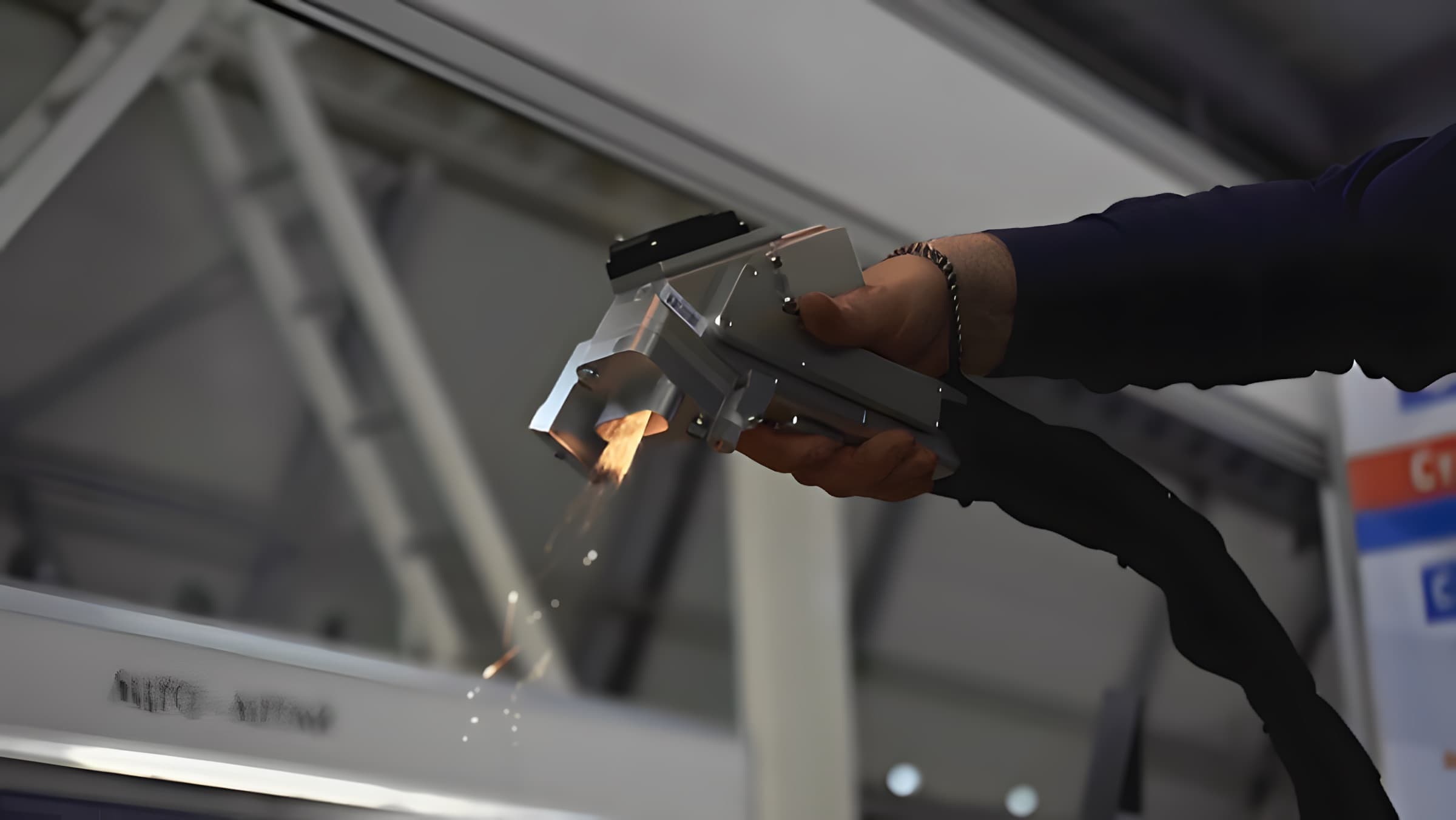
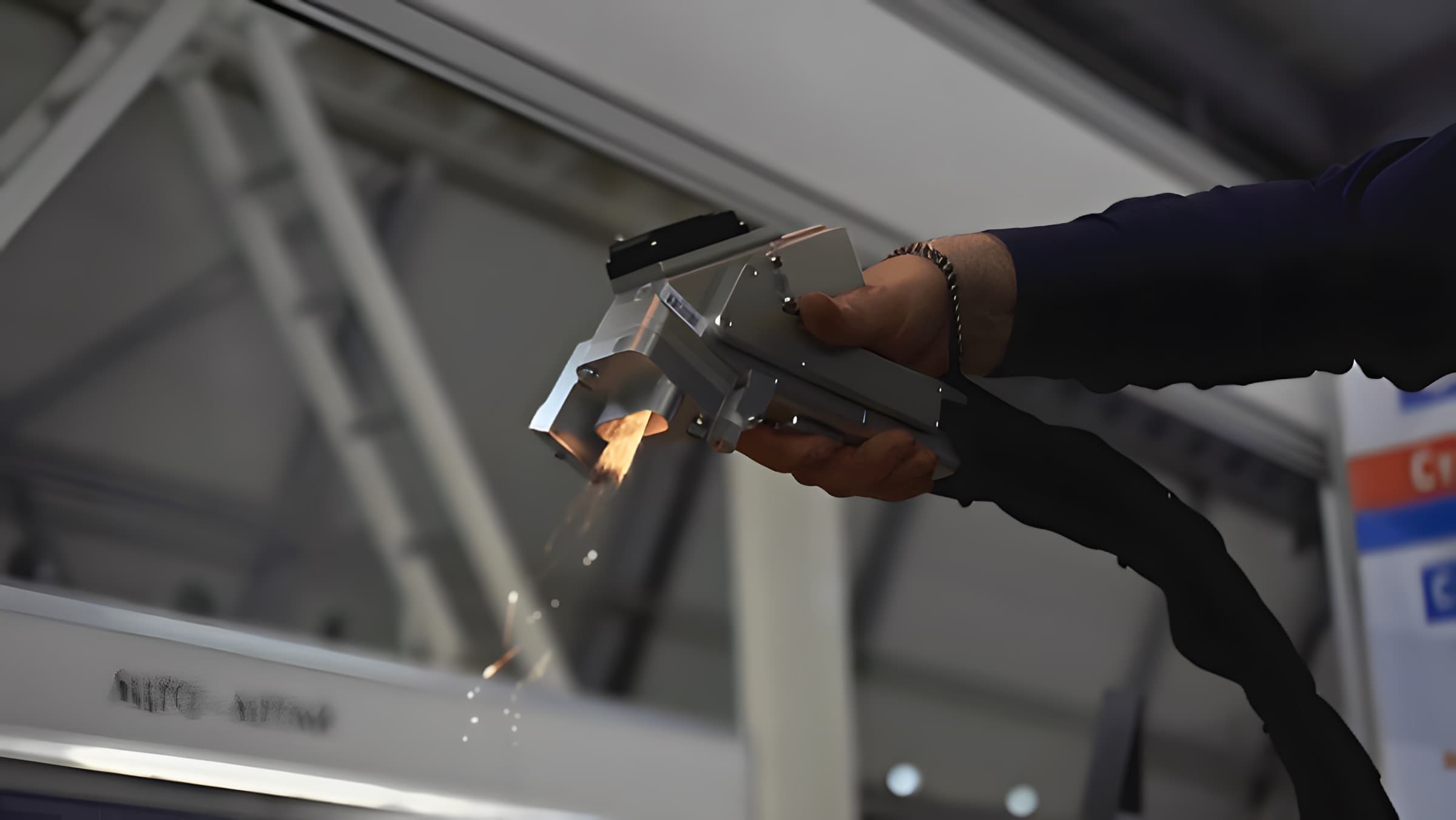
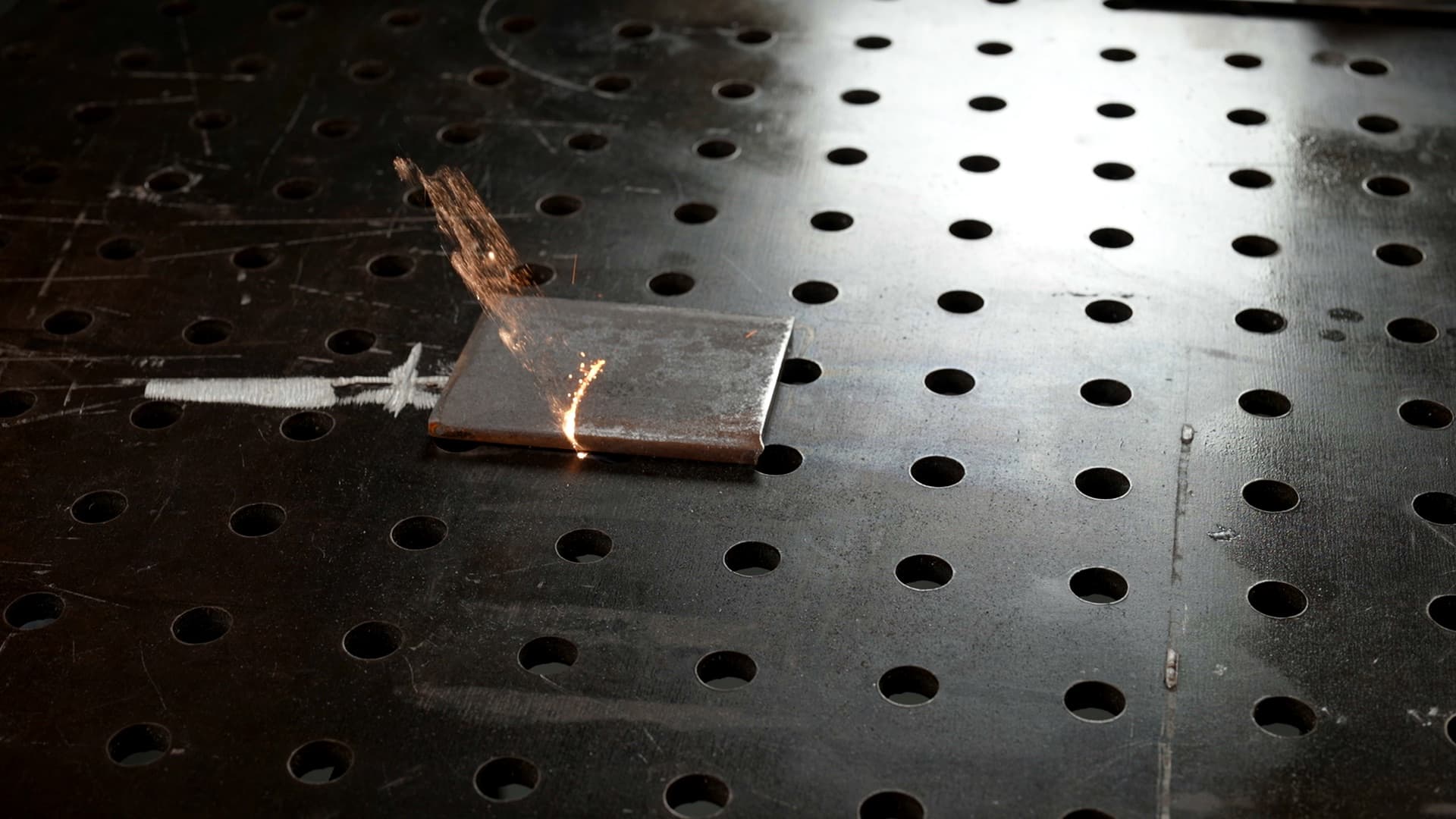
Laser rust removal uses a high-energy pulsed beam to vaporize the rust layer. The steel underneath absorbs almost no heat past a thin surface zone, so there’s no warping, no scarring, and no scale to chip away later. The waste is a fine particulate that gets pulled into a HEPA-filtered extraction unit attached to the head. No abrasive media. No containment tent. No water runoff.
That last part matters more than people realize. A laser crew can show up to a working warehouse in Burnaby, set up next to a live forklift bay, and clean a 30-foot run of structural columns without shutting down the floor around them. Same on a marine fitting cleaning job — the unit fits in a cargo van and the operator works in standard PPE.
I’ve run jobs on a paper mill conveyor frame in the Fraser Valley where the engineer wouldn’t allow any abrasive within 50 metres of the optical encoders. We cleaned 90 linear feet of rust off the frame over a Saturday shift, the mill ran Monday morning, and the encoders never came out of their housings.
What it costs in BC right now
Per-job pricing for laser rust removal in BC sits in the $1,200 to $6,000 CAD range for most industrial work. The drivers behind that spread:
- Surface area and rust depth. A few square metres of light surface rust prices very differently from heavy pitted scale on a marine bollard.
- Access. Working at height, in confined spaces, or with a 50-metre cable run from the truck adds setup time.
- Coating prep spec. If the steel needs to hit a near-white SA 2.5 equivalent for high-performance coating bonding, that’s slower than removing visible rust for a maintenance paint job.
- Crew time and travel. A mobile crew sent to Squamish or Abbotsford carries a windshield-time component. Lower Mainland jobs price more tightly.
For comparison, sandblasting the same scope often quotes lower as a base rate but adds containment, media, disposal, and substrate repair if scarring shows up. The lined-up totals come out closer than people expect, and on jobs with downtime cost the laser number wins decisively.
A facility manager I worked with in Richmond ran the math on a transmission tower maintenance program: 12 towers over a year, mid-pitted rust at bolted joints. Sandblasting quote was $48,000 with containment for each site. Laser came in at $54,000 base, but the avoided shutdown of an adjacent electrical bay (no spark risk, no media drift) saved roughly $22,000 in lost runtime. The decision wasn’t close.
Equipment cost is why almost nobody does this in-house
I get asked maybe twice a month whether a shop should just buy a unit and run rust removal themselves. The answer for almost everyone is no. Industrial-grade pulsed laser systems built for production rust removal start around $80,000 CAD for a low-power handheld and climb past $250,000 for higher-wattage units that handle thick scale at reasonable speed.
That’s before training, before the WorkSafeBC laser safety officer requirement for Class 4 systems, before the consumables on the optics, and before someone has to run the unit 25 hours a week to justify the cap-ex. For a fab shop doing rust removal four or five times a month, the math never works. For a service operator running multiple crews across the Lower Mainland every week, it’s a different equation.
This is the same pattern as cryogenic systems for food-grade work, or precision waterjet for thin-substrate cutting. Specialist tooling stays with specialists.
What laser cleans well, and where it’s not the answer
Honest scope boundaries, because nobody wins from over-promising.
Works well:
- Structural steel rust on beams, columns, plate, and welded assemblies
- Industrial machinery housings, frames, and tooling
- Marine fittings: bollards, cleats, deck machinery, antenna arrays
- Coating prep where heat-affected zone has to stay near zero
- Heritage steel where substrate damage isn’t acceptable
- Bridge and infrastructure maintenance where containment is impractical
- Forestry and mining equipment in the field
Not the right tool:
- Bulk removal of thick mill scale on raw plate (still faster with abrasive on a continuous line)
- Concrete cleaning (use dry ice or chemical-free pressure methods)
- Large flat surfaces where shot blasting on a continuous line is cheaper per square metre
- Jobs where the substrate is already scrap and aesthetics don’t matter
The skill is calling the boundary honestly. I’ve turned away jobs where sandblasting was the right answer, and I’ll keep doing it. A specialist that pretends every job fits their tool eventually burns the relationship.
The silica rule is doing more work than people realize
WorkSafeBC’s stance on silica-containing abrasive media changed how a lot of small fab shops think about cleaning. The combination of exposure monitoring, controlled-area requirements, and recordkeeping on silica-containing media (think coal slag, garnet with silica content, copper slag) has pushed the real per-job cost of in-house blasting up by 20 to 40 percent depending on the shop.
Laser sidesteps the issue entirely. There’s no silica in the process. The waste is rust particulate captured at the head. Class 4 laser safety has its own regime, but it’s a procedural lift run by the service crew, not a recurring exposure-monitoring program for the client.
For an industrial property manager who took on a tenant that does steel work, this is the kind of detail that decides whether the tenant gets renewed.
What to ask when you’re quoting
If you’re a facility manager pulling quotes for the first time, four questions sort the real operators from the sales pitches:
- What surface profile spec are you working to? Real answers reference SA standards or specific coating prep requirements. Vague answers about “clean” are a flag.
- Can you work in place with no containment tent? If the answer involves a containment plan, you’re getting an abrasive quote dressed up.
- What’s your laser safety officer arrangement on-site? Class 4 systems require trained oversight. A real operator will explain how it works.
- Show me a job that looked like mine. Photographs, scope sheets, and a phone reference from a similar client. Nobody who’s done the work hesitates here.
Where the Canada-wide picture sits
Across the country the picture isn’t uniform. Ontario and Quebec have a denser installed base of laser cleaning operators because of automotive and aerospace clusters. The Prairies trail because oil and gas work still defaults to abrasive and chemical methods at scale. BC sits in the middle, but the marine and forestry concentration plus the silica regulation push laser adoption faster than the population would suggest.
When a Lower Mainland manufacturer searches for laser rust removal in Canada, the realistic options are local. Shipping a unit and a crew from Ontario for a one-off job pushes the price out of reach. The operators who service BC industrial work are based in BC.
About Laser Sharks
We run industrial cleaning crews across the Lower Mainland, from Squamish to the Fraser Valley to the Sunshine Coast. The senior side of the team carries 20-plus years of combined industrial cleaning experience, the company is fully insured for commercial and industrial work, and every job runs aligned with WorkSafeBC requirements. Our gallery has before/after work on structural steel, marine fittings, and equipment housings from across BC.
If you’re sitting on a rust problem and the sandblasting quote keeps adding line items, get a second opinion. A site visit and a written quote from us are free. Send the details through the quote form or call the number on the site. For a walkthrough of the laser process and the equipment we run, the laser cleaning service page covers it.
Common questions
Why don’t BC manufacturers do laser rust removal in-house?
Equipment cost. A capable system is a major capital purchase plus training and safety setup, so outsourcing is predictable opex instead.
Where is laser rust removal not the answer?
On heavy mill scale at volume and on concrete, where abrasive methods are faster. Laser wins where the substrate must survive intact.
What should I ask when quoting laser rust removal?
Ask about system power, operator hours on that system, and how they handle access on fixed equipment.
Related reading
- How BC Plants Remove Industrial Rust Without Damaging Steel
- Structural Steel Rust Removal in BC: Laser vs Sandblast
- Laser Cleaning vs Sandblasting: When Each One Wins
Compare options for your site with our laser cleaning service, or request a quote.