A shop foreman in Delta called me last spring after a rebuild went sideways. He had a stack of 16-gauge steel panels on trestles, freshly stripped by a mobile sand crew for a fifth of what the laser cleaning quote would have run. The panels warped as they cooled and every one had to be re-flattened before paint. His savings on stripping ate itself twice over in press time and scrap.
That job is the whole argument for picking a cleaning method by substrate, not by the number at the bottom of the estimate. A steel beam sitting in a yard forgives almost any media. A thin decorative panel, a heritage brick, a machined casting, a fresh coating stack over aluminum — those punish the wrong choice, and the punishment shows up after the job, when the crew is gone and the invoice is paid.
Twenty years of running industrial cleaning across Greater Vancouver has taught me one thing about the sand vs soda vs laser argument: the media only matters as much as it protects what stays behind.
The substrate makes the decision
Read the base material first. Everything else follows.
Four properties do most of the work: hardness, thickness, thermal tolerance, and whether you want the original surface profile intact. Hardness sets how aggressive your media can be before it starts eating substrate. Thickness sets how much warping heat the panel can absorb before it deforms. Thermal tolerance decides whether laser energy is a tool or a torch. And the profile question is what separates a re-usable historical brick from a face that now has to be tuck-pointed.
A rough field cheat sheet from BC industrial work:
- Structural steel over 6 mm, weathered, no substrate profile needs after → sand or soda are fine. Laser is often overkill.
- Sheet metal under 3 mm, panels, thin castings, anodized aluminum → laser cleaning, or dry ice on soft coatings. Media blasting warps or embeds grit.
- Heritage masonry, sandstone, soft brick, painted heritage timber → laser cleaning, or dry ice for soft removals. Sand strips the fireskin off brick and voids City of Vancouver heritage approvals.
- Machined castings, engine blocks, precision moulds → laser or dry ice. Grit that lodges in an oil gallery destroys the rebuild.
- Food processing lines, conveyors, packaging equipment → dry ice. Nothing else is compatible with a same-shift restart and a CFIA audit.
Notice how the price line never shows up in that read. It shows up second, after the substrate says which methods are even eligible.
Where sandblasting still earns its rate
Sand is not obsolete. It has a place, and it is honest about what that place is.
On a rusted steel dock plate, a bridge chord, a shipyard bollard in North Vancouver, sand puts down a coating profile in minutes at a fraction of the cost of anything else. Coating adhesion after a good sand run beats laser for a lot of primer chemistry, and the media itself is cheap. Where you have containment room, no substrate finesse to worry about, and no downstream tolerance on grit contamination, it is often the right answer.
The problem is what the quote never says. Silica-bearing media is heavily regulated under WorkSafeBC’s Occupational Health & Safety Regulation Part 6, which sets an 8-hour exposure limit of 0.025 mg/m³ for respirable crystalline silica. That means containment, respirators, exposure monitoring, medical surveillance, and a written exposure control plan. A crew that quotes low on silica sand and skips those items is running an illegal job, and the cleanup after a WorkSafeBC visit dwarfs anything you saved.
Add media disposal. Spent abrasive contaminated with lead, zinc, or hexavalent chromium is regulated waste in BC, and the landfill charge alone runs into thousands on a mid-size job. If you get a sand quote that looks impossibly cheap, one of those line items is missing, and it will surface later.
Soda blasting: the softer middle
Sodium bicarbonate is the diplomat of the group. It is water-soluble, non-toxic, gentle enough for most soft substrates, and rinses down a drain when the job is done. On aluminum sheet, chrome trim, wood, gasketed engine components, it does work sand cannot.
But soda has three limits that a low quote will not mention.
First, it is slow. On heavy rust or coating stacks, soda takes two to four times the media volume sand would. That media cost is real. Second, the residue is alkaline and hygroscopic. If you leave soda dust on bare steel and it sees BC humidity for a weekend, you have new flash rust in patterns matching where the residue sat. Third, it is not gentle enough for the finest substrates: heritage limestone, precision machined faces, thin decorative anodize, and modern coating stacks with soft-metallic base coats will all show damage under a soda nozzle held wrong.
Soda is the right call for engine bays, mid-hardness masonry, boat topsides, and delicate restoration where the substrate is soft but not fragile. Outside that band, it is either underpowered or too aggressive.
What laser cleaning brings that neither does
The reason laser cleaning has taken share in BC is not the technology. It is what the technology does not do.
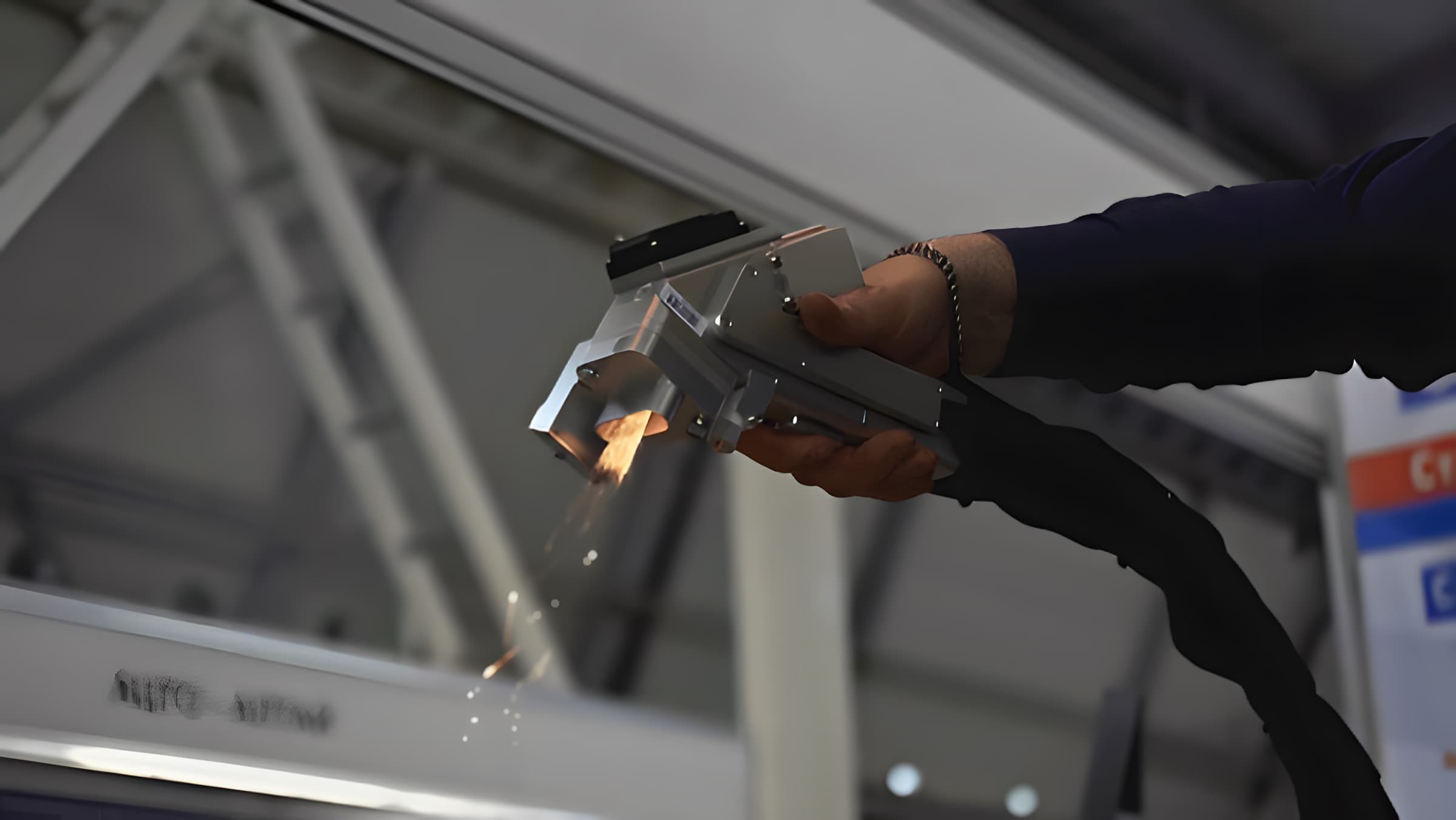
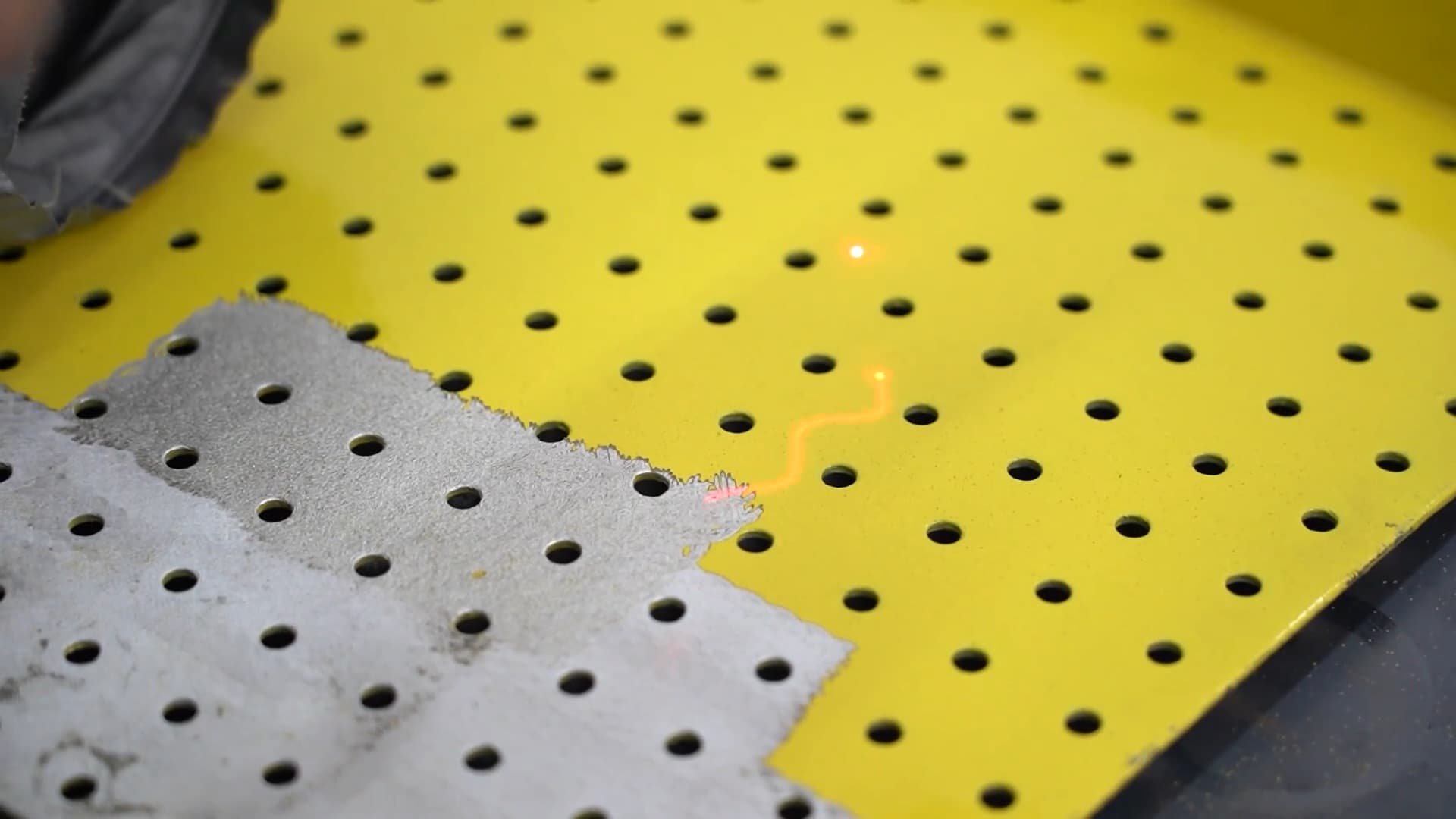
No media. No secondary waste. No airborne silica. No grit in the oil gallery. No moisture on the electrical panel. No containment tent blocking access to the rest of the shop. The beam vaporises rust, coatings, and organic contamination while leaving the metallic substrate essentially untouched, because the ablation threshold of most contaminants is well below that of the base steel or aluminum underneath.
On the sixteen-gauge panels the Delta shop should have laser-cleaned: no warping, no grit, no re-flattening. On a heritage brick façade in Mount Pleasant: paint and biological soil come off, the fireskin stays, and the heritage planner signs off. On an insurance-restoration job in a Burnaby distribution centre after a fire: sooted panelling and rack uprights get cleaned back to bare steel without disassembly, without moisture on the electrical, and without the tenant’s inventory needing to move.
The cost per square foot is higher than sand. It is not higher than sand plus warping repair plus re-flattening plus disposal fees plus WorkSafeBC compliance plus, if the substrate matters, the cost of a re-do.
For the full picture of what a laser rig actually removes and what it leaves behind, see laser cleaning services.
BC pricing anchors, honestly stated
Every quote varies with access, surface prep expected, coating stack, and travel. Rough ranges from active Greater Vancouver work:
- Sandblasting, on-site industrial: $2 to $6 per square foot on straightforward steel, plus containment and disposal. Silica-media jobs with full compliance run $8 to $15 per square foot on the same steel.
- Soda blasting, on-site: $4 to $10 per square foot on steel and aluminum. Restoration and heritage rates are higher.
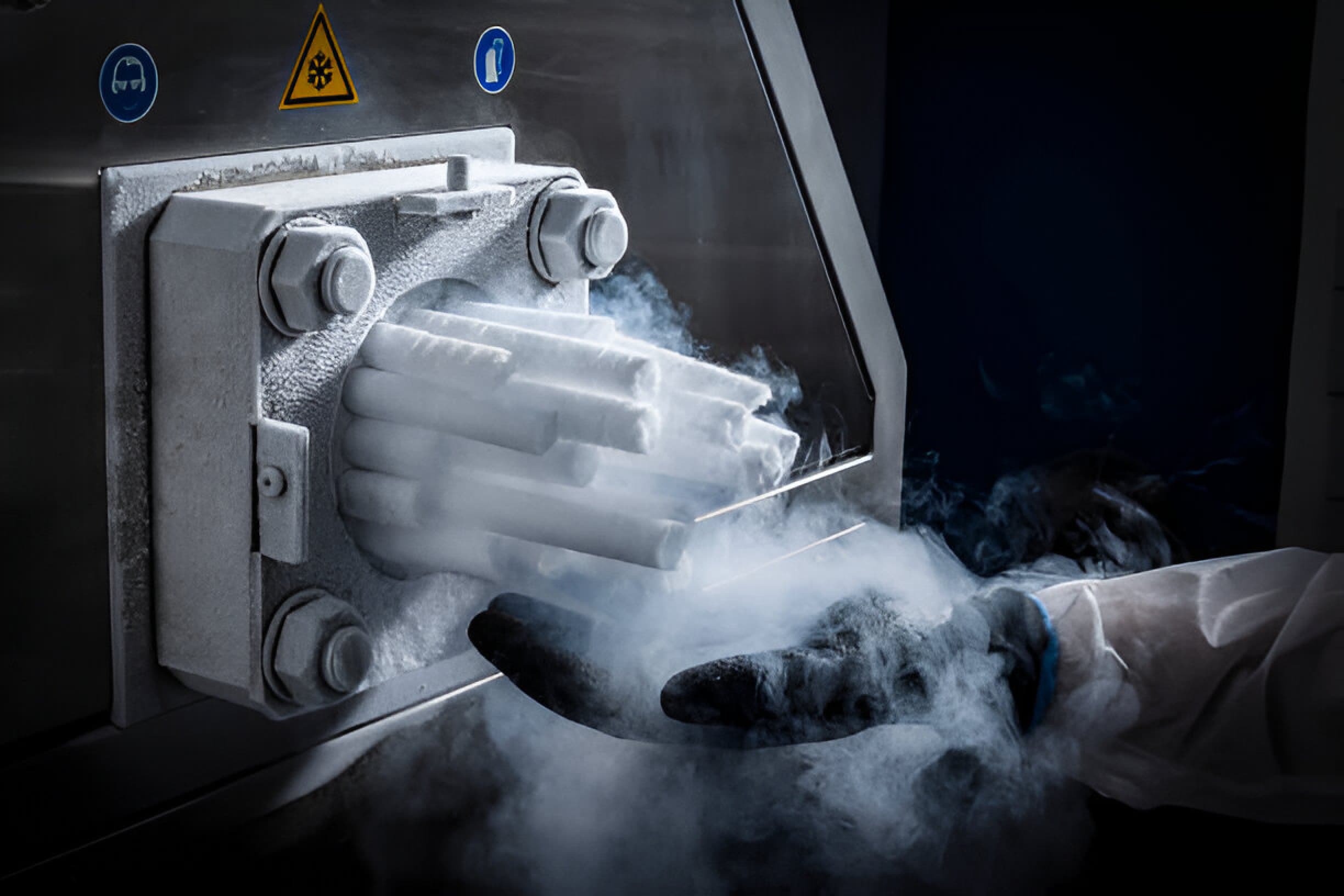
- Dry ice blasting: $1,500 to $8,000 per job typical, scoped by area and access, not per square foot.
- Laser cleaning / laser rust removal: $1,200 to $6,000 per job typical for maintenance and rust work, with heritage and precision jobs quoted higher.
If a sand quote lands below $2 per square foot and mentions silica sand, ask what the exposure control plan looks like. If a laser quote comes in at less than a dry ice quote for a food-plant restart, ask what substrate the crew has actually cleaned before. Numbers that break the physics of the job are numbers that will move when the invoice lands.
Also ask what the quote does not include. Setup fees, containment build, media disposal, mobilisation over a certain distance, and post-clean rinse are all common line items that get pulled out to make a headline price look tight. On soda work in particular, ask about neutralising rinse and drainage handling. On sand work, ask specifically about spent-media testing if there is any lead paint, galvanising, or zinc-rich primer on the surface. Those are the swings that turn a five-figure job into a six-figure invoice.
For the dry ice side of that math, see industrial dry ice blasting.
The field decision, without hedging
- Old steel, plenty of room, no substrate finesse → sandblasting.
- Mid-hardness surface, some finesse, water-safe environment → soda blasting.
- Thin metal, heritage material, food-grade, electrical present, downtime cost matters → laser cleaning, with dry ice as the second option for soft or organic contamination.
The overlap is smaller than most quotes make it look. Very few jobs sit honestly in the middle where all three would work equally well.
Buying it right in BC
We run laser and dry ice work across Greater Vancouver — Burnaby, Delta, Richmond, North Vancouver, Annacis Island, and the Fraser Valley — for insurance restoration GCs, heritage projects, food and beverage plants, marine operators, and industrial facility managers. Full WorkSafeBC compliance, fully insured, and 20+ years running industrial cleaning across every substrate this coast throws at us.
If you have a job coming up and the substrate is telling you the cheapest media is not the right one, request a walk-through quote with photos or a site visit. Ten minutes on the substrate side of the conversation up front saves the phone call after the job.