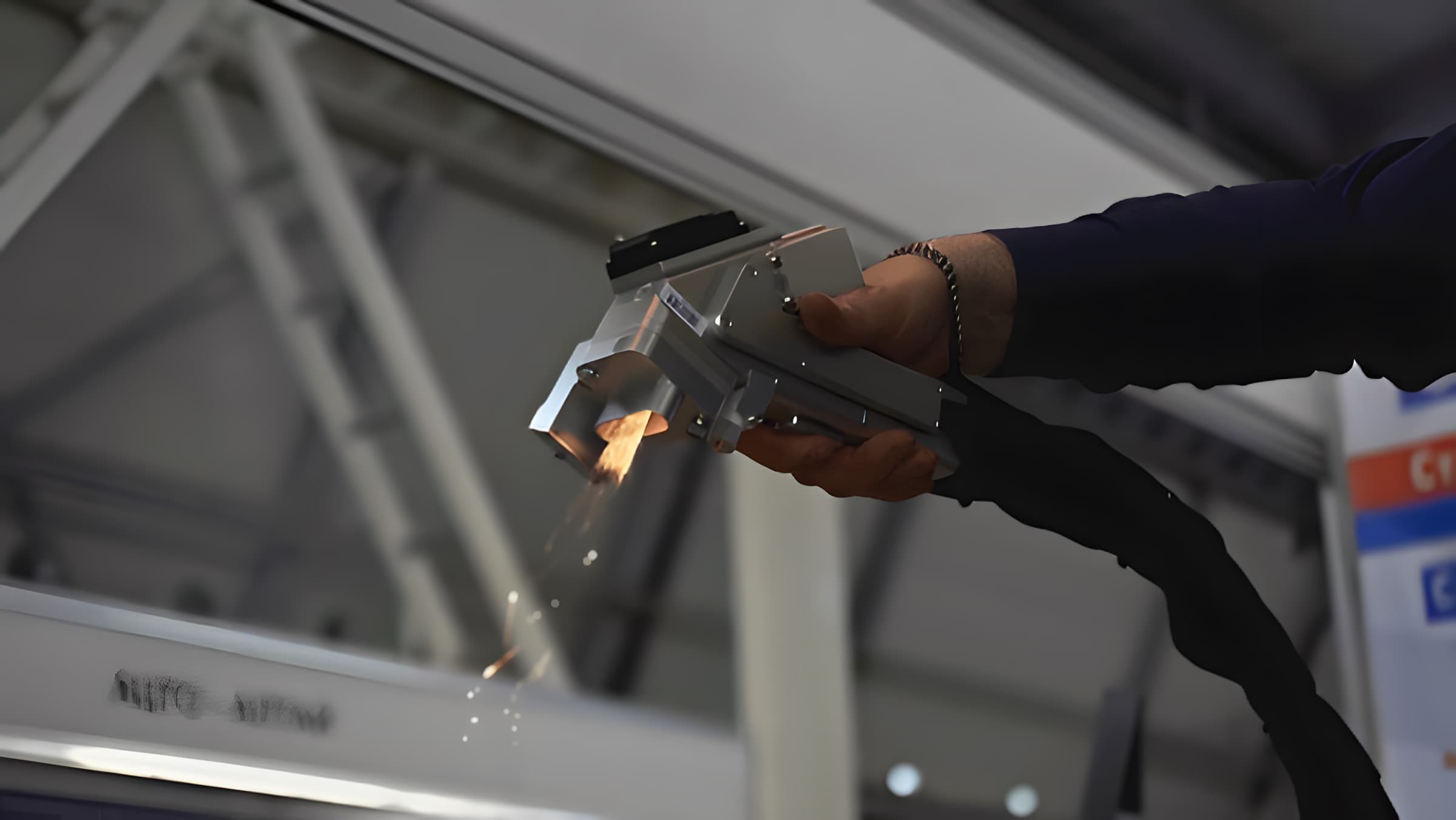
A laser cleaning quote that says $220 an hour tells you less than you’d think. Across Greater Vancouver the rate barely changes from one job to the next. The hours change a lot, and they decide your laser cleaning cost in BC far more than the rate does.
We get the same first question every week: what do you charge per hour? We answer it. Then we ask what’s on the steel, how thick it is, how high it sits, and whether there’s a plug nearby. Those answers can turn a four-hour job into a three-day one without the rate moving a dollar.
Below is how we price laser work in the Lower Mainland: the rate, the brackets, every factor that moves the hours, and the ones you control. If you’re new to the method, our laser cleaning service page explains how it works.
The short answer
Most laser cleaning jobs we quote in Greater Vancouver land between $1,200 and $6,000.
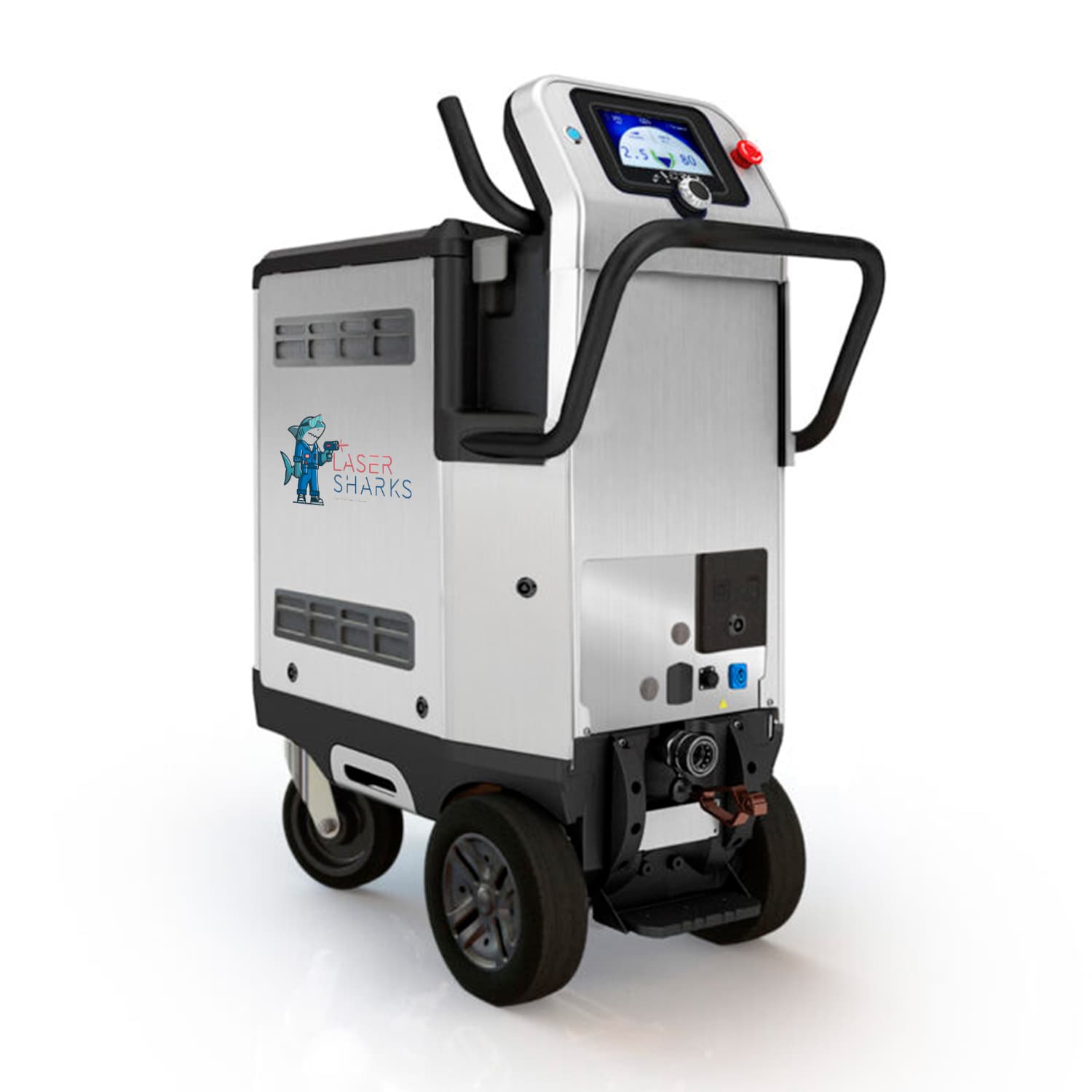
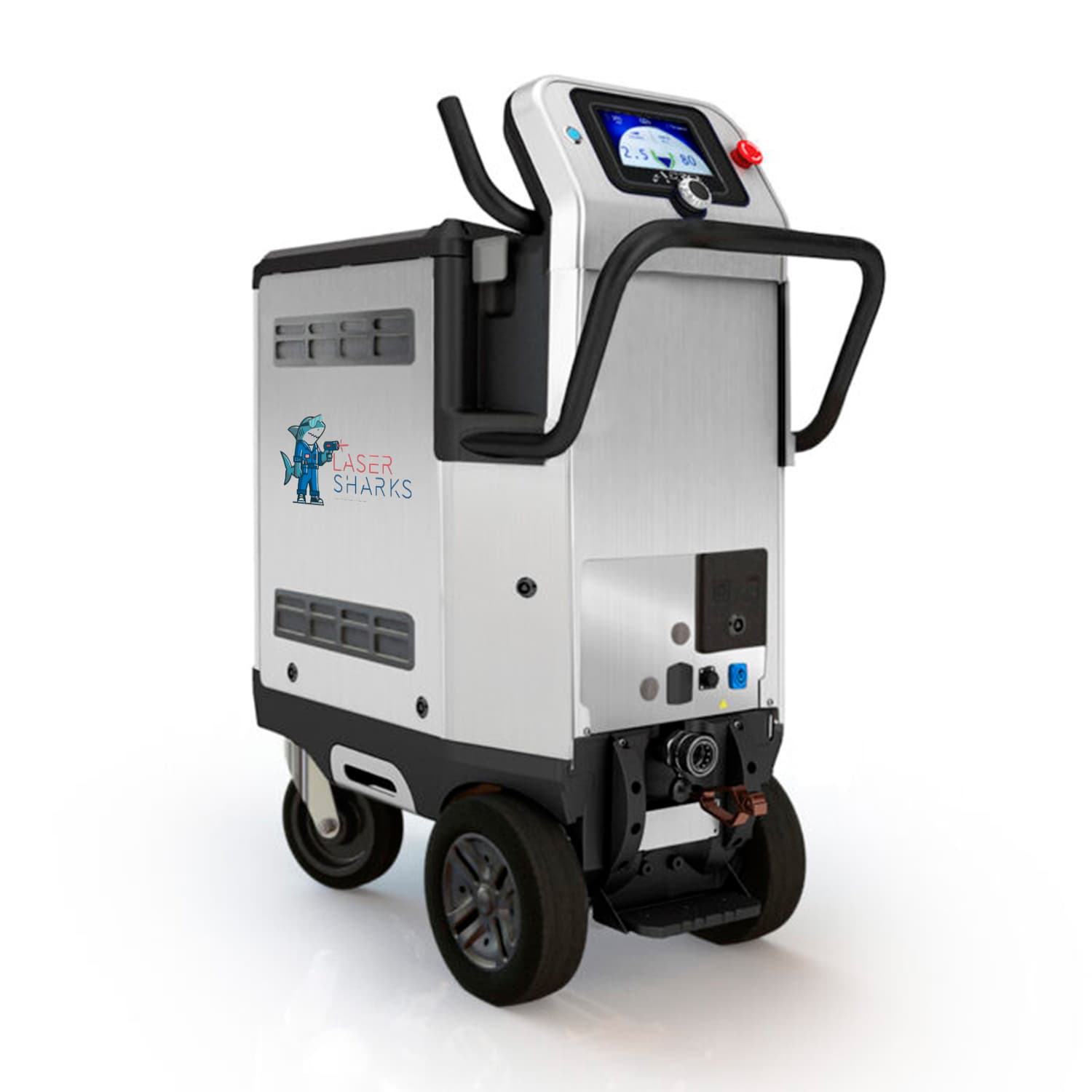
Hourly rates run $180 to $260. That covers the operator, the laser unit and HEPA fume extraction at the head. Mobilization within Metro Vancouver adds $350 to $600.
Rough brackets by job size:
- Half day (a few parts, a gate, a machine base, a test area): $1,200 to $1,800
- One full day (a set of production fixtures, a run of handrail, a mezzanine frame): $2,300 to $3,000
- Two to three days (structural members, a tank exterior, heritage ironwork): $4,000 to $6,500
- A week or more (shutdown programs, multi-phase restoration): $8,000 and up
Most contractors, including us, carry a half-day minimum. The truck, the unit and the safety setup cost the same whether you need two hours of cleaning or eight.
Hourly or per job: how laser work gets priced
Laser cleaning is sold by the hour by default, because the hours are the honest unknown. Two jobs with the same footprint can differ five times in cleaning time, and nobody knows which one you have until the beam touches your surface.
Per-job pricing comes after we know. Once we’ve run a test patch on your actual contamination and timed it, we can quote a fixed price for a defined scope: 40 metres of handrail, 12 injection moulds, the lower flange of six beams. A fixed price carries a small margin for risk, so it can come out a little higher than the same job billed hourly and finished on schedule. What you buy with that margin is a number that won’t move.
Our usual advice:
- Under a day of work: hourly with a not-to-exceed cap. Simple, fair, and the cap protects you.
- Defined multi-day scope: fixed price after a test patch. Your budget is locked, and the risk sits with us.
- Unknown or mixed contamination: start hourly on a first section, then convert the rest to a fixed price once production rates are proven.
Per square metre pricing only makes sense on large, repetitive, flat surfaces. Everywhere else, a square-metre rate hides the real question, which is how fast this particular steel cleans.
What sets the hours
Contamination type and thickness
This is the biggest single driver, by a wide margin. Production rates we see on site with a high-power handheld unit:
- Flash rust and thin oxide on plate: 6 to 10 square metres an hour
- Weathered structural rust: 3 to 5 square metres an hour
- Heavy pitted scale, pack rust or thick multi-coat paint: 1 to 1.5 square metres an hour, sometimes less
Twenty square metres of weathered rust is a one-day job. The same twenty square metres with pack rust at every bolted connection is closer to three days. Pitting slows things further, because the beam has to clean the bottom of every pit, not only the surface around it.
Oil and grease on top of rust also cost time. The laser burns them off, but it smokes, and the filter loads up faster. A quick degrease by your crew beforehand can save us an hour or two.
Laser power and substrate
Lower-power pulsed units, in the 100 to 300 watt range, suit delicate work: injection moulds, heritage stone, thin-gauge aluminum, anything where heat is the enemy. They’re precise and slow. Higher-power units strip heavy rust several times faster but put more heat into the part, which rules them out on thin sheet.
We match the power to the substrate, and that choice shows up in your hours. A $260 hour on a high-power unit can cost less in total than a $180 hour on a small one when the rust is thick. On a thin aluminum panel or a 1912 cast-iron railing, slow is the only safe speed, and we quote it that way.
Geometry and access
Flat plate is fast. Lattice, grating, bolted connections, inside corners and the back side of flanges are slow, because the beam needs a direct line of sight and the operator repositions constantly.
Height adds equipment. A scissor lift runs about $250 to $400 a day delivered, a boom lift $800 to $1,200. If your plant already has a lift we can use, that line disappears.
Power on site
Our rate assumes a usable 240-volt circuit within reach of the work. Most plants, shops and yards in Burnaby, Richmond or on Annacis Island have one. Where there isn’t, or the nearest panel is two buildings away, we bring a generator, which adds $150 to $350 a day.
Laser safety controls
A cleaning laser is a Class 4 device. That means a controlled zone with barriers or laser curtains, signage, and eye protection for anyone inside. On an empty shop floor that’s 30 minutes of setup. On an occupied floor with forklift traffic, it’s longer, and a second person may be needed to watch the zone at $65 to $95 an hour.
Old coatings add a step. Paint applied before the 1990s can contain lead or chromates. A lab test on a paint chip costs about $50 to $150 per sample in the Lower Mainland and takes a few days. If it comes back positive, WorkSafeBC exposure rules apply to the work and the collected dust gets handled as hazardous waste. We’d rather test first than find out halfway through.
Timing
Weekend, overnight and holiday work adds 40% to 60% to labour. Urgent work after a fire or a failed inspection carries a premium too, because crews get moved to make it happen.
A typical laser cleaning quote, line by line
Here’s one common job. A manufacturer in the Tilbury industrial area of Delta needs weathered rust removed from 18 square metres of mezzanine framing, including bolted connections, before a coatings contractor arrives. The plant keeps running underneath. The original primer dates from the 1980s.
| Line item | Basis | Cost |
|---|---|---|
| Mobilization | Burnaby to Delta | $400 |
| Paint chip testing | 2 samples, lead and chromate | $200 |
| Laser operator and unit | 13 hours on site over 2 days at $220/hr | $2,860 |
| Scissor lift | 2 days, delivered | $650 |
| Consumables | filter cartridges, lens protectors, laser curtains | $180 |
| Total | $4,290 |
That sits in the lower half of the two-to-three-day bracket. The paint tests came back clean, so the job ran without hazardous waste handling.
Two things would have cut the total. Using the plant’s own scissor lift saves $650. Clearing stored stock off the mezzanine before day one would have saved roughly an hour and a half of operator time, about $330.
What the plant didn’t pay for matters more. No enclosure around the mezzanine. No spent grit to bag and haul. No production stop while a crew built and stripped a tent. Abrasive blasting on the same steel, indoors, over a running line, would have needed full containment and silica controls before a single square metre got cleaned.
How to lower your laser cleaning cost
Most of the savings sit on your side of the job.
- Ask for a test patch. Ten minutes on your real contamination turns a guess into a production rate, and that’s what makes a fixed price possible.
- Send photos, measurements and paint history. For small jobs, good photos can replace a site visit. If you know when the steel was last painted, tell us.
- Clear the area. The crew’s hours should go to cleaning, not moving pallets.
- Offer power and lifts. A nearby 240-volt outlet and your own lift can take $400 to $1,000 off a two-day job.
- Bundle the work. Three scopes on one visit share one mobilization and one safety setup.
- Clean earlier. Flash rust cleans five to eight times faster than pack rust. Catching steel before it scales is the cheapest laser job there is.
What isn’t on the invoice
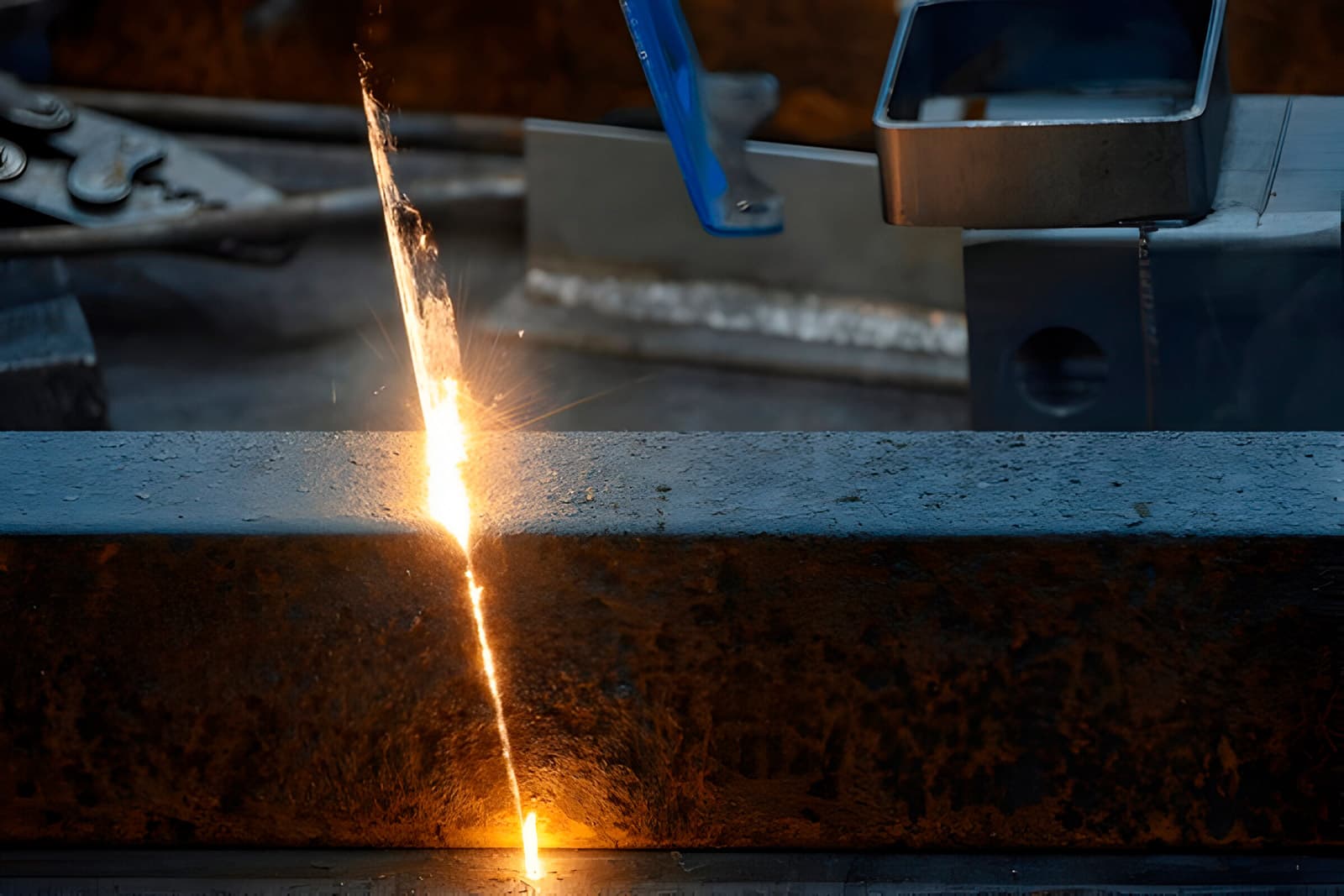
This is where laser and the traditional methods part ways. Laser cleaning uses no blast media and no chemicals. The contaminant is vaporized or lifted as fine dust and pulled straight into the extractor at the head. At the end of the job, the only waste is a filter cartridge and a small bag of collected dust.
Compare that with sandblasting, where spent grit comes back heavier than it went out because it carries the old coating with it. In Metro Vancouver, that waste stream plus containment and WorkSafeBC respirable silica controls often costs more than the cleaning itself. Chemical strippers bring solvent fumes, captured rinse water, drum disposal, and Metro Vancouver sewer bylaw limits on what can go down the drain. Next to the Fraser River or Burrard Inlet, runoff into a storm drain becomes a Fisheries Act problem.
No secondary waste also means no cleanup day. The coatings contractor in the Delta job above started the morning after we left.
When laser cleaning isn’t the cheapest option
We’d rather say this before you pay for it.
- Large open steel with heavy scale, outdoors, where containment is cheap. A yard full of girders that can be blasted in the open will usually cost less per square metre with abrasive.
- Coating specs that call for an angular anchor profile. If the spec requires a 50 to 75 micron profile from grit, laser cleans the surface but usually won’t create that profile on its own. We’ll tell you at the quote stage.
- Grease, production dust and food residue on assembled equipment. Dry ice is often faster and cheaper there. Our breakdown of dry ice blasting cost in BC covers that side.
Because we run laser and dry ice from the same crew, we pick by surface and contamination, not by whichever machine is on the truck. Some jobs get both on the same day.
FAQ
How much does laser cleaning cost per hour in BC?
Typically $180 to $260 an hour, including the operator, the laser unit and fume extraction. Mobilization, lifts, generators and testing are billed separately when the job needs them.
Is there a minimum charge?
Most BC contractors, Laser Sharks included, use a half-day minimum. Small jobs land around $1,200 to $1,800 once mobilization is included.
Can I get a fixed price instead of hourly?
Yes. After a test patch on your actual contamination, we can quote a fixed price for a defined scope. Without one, any fixed price carries a large risk margin.
Is laser cleaning cheaper than sandblasting?
Per hour, no. Per job, often yes on occupied sites, indoors, or near sensitive equipment, once containment, grit disposal and downtime are counted. On large open steel outdoors, sandblasting usually wins.
Do I need to supply power?
It helps. A 240-volt circuit near the work keeps the generator off the quote. If there isn’t one, we bring our own.
Getting an itemized laser cleaning quote
Every quote we send lists these lines separately, so you can see what drives the total and which parts you can change. Laser Sharks is fully insured, WorkSafeBC compliant, and was named Best Cleaning Services in BC for 2025 by CBRB. We work across Greater Vancouver and the Fraser Valley: Burnaby, North Vancouver, New Westminster, Richmond, Delta, Surrey and Coquitlam.
Request a quote or call 236-660-4248. Tell us what’s on the surface, how big the area is, how high it sits, and when you can give us the space. We’ll come back with a line-by-line price, and a test patch if the job needs one.