Most calls that start with "do you do sandblasting?" aren’t really about sand. The person on the line has a rusted frame, a greasy production line, a smoke-stained beam or a coat of paint that has to go, and sandblasting is the only method they’ve heard of. If you landed here looking for a sandblasting service in BC, that’s probably you. Fair enough. Grit has been the default answer for decades.
We don’t run blast pots. We run lasers and dry ice, and on a good share of the jobs people call a sandblaster for, one of those two gets the surface clean without the tarps, the tonnes of spent media or the week of sweeping that follows. On some jobs it doesn’t. I’ll tell you which ones further down.
The short version: if the job is rust, failing paint, grease, soot or mould on equipment or steel that can’t be shut down for long, sits indoors, or sits near people, food or water, laser or dry ice usually costs less once cleanup and downtime are counted. If you need a fresh anchor profile across thousands of square metres of open steel for a new coating system, hire a blaster.
What a sandblasting service quote leaves out
Sandblasting is usually priced per square metre, and in Greater Vancouver the blast itself can look cheap. Open-air work in a remote yard, clean media, no hazardous coating: $45 to $70 per square metre all in. The trouble starts when the job isn’t in a remote yard.
Here’s what tends to sit outside that number, or get buried in it:
- Containment. Tarps, scaffold wrap, negative air and monitoring under WorkSafeBC’s respirable silica requirements run $1,800 to $3,200 per day on a typical structural job in Burnaby or Delta, plus a day or more to build and strip.
- Media in, media out. Expendable abrasive goes through at roughly 15 to 30 kg per square metre. Blast 400 m² and you’re handling six to twelve tonnes of spent grit mixed with paint chips.
- Disposal. Non-hazardous spent media costs around $180 to $320 per tonne at Lower Mainland facilities. If the old coating tests positive for lead, which is common on BC steel painted before the 1990s, the whole pile becomes hazardous waste and that rate climbs several times over.
- Cleanup. Grit works its way into bearings, electrical cabinets, floor drains and every horizontal surface inside the enclosure. Somebody gets paid to vacuum it back out.
- Downtime. Nothing else in the blast zone runs while the nozzle is going. This is the cost facility managers most often forget to write down.
None of this makes blasters dishonest. It’s the nature of the method. The abrasive has to go somewhere, and so does everything it knocked loose.
The silica question nobody puts on the quote
Most reputable blasters in BC moved off silica sand years ago and now use garnet, slag or other low-silica media. That helps. It doesn’t make the silica problem disappear, because on concrete, brick and masonry the substrate itself contains crystalline silica, and every pass of the nozzle puts some of it in the air.
WorkSafeBC expects an exposure control plan wherever workers are or may be exposed to respirable crystalline silica. In practice that means air monitoring, fitted respirators, containment, and in an occupied building, keeping your own staff and tenants out of the zone. On a downtown Vancouver or strata job, the containment build alone can add $8,000 to $25,000 before any blasting starts.
Laser and dry ice add no abrasive media at all. There is still dust from whatever comes off the surface (that never goes away, whatever method you pick), but there’s no extra mineral dust from the cleaning itself, and the waste volume is a small fraction of a blast job. No spent grit to bag, truck or landfill. No chemical stripper to neutralize.
For a lot of our clients, this is where the decision actually gets made. Not on price per metre. On whether the job needs a silica plan, a tent and an air monitor at all.
What a laser crew does on a job you’d have blasted
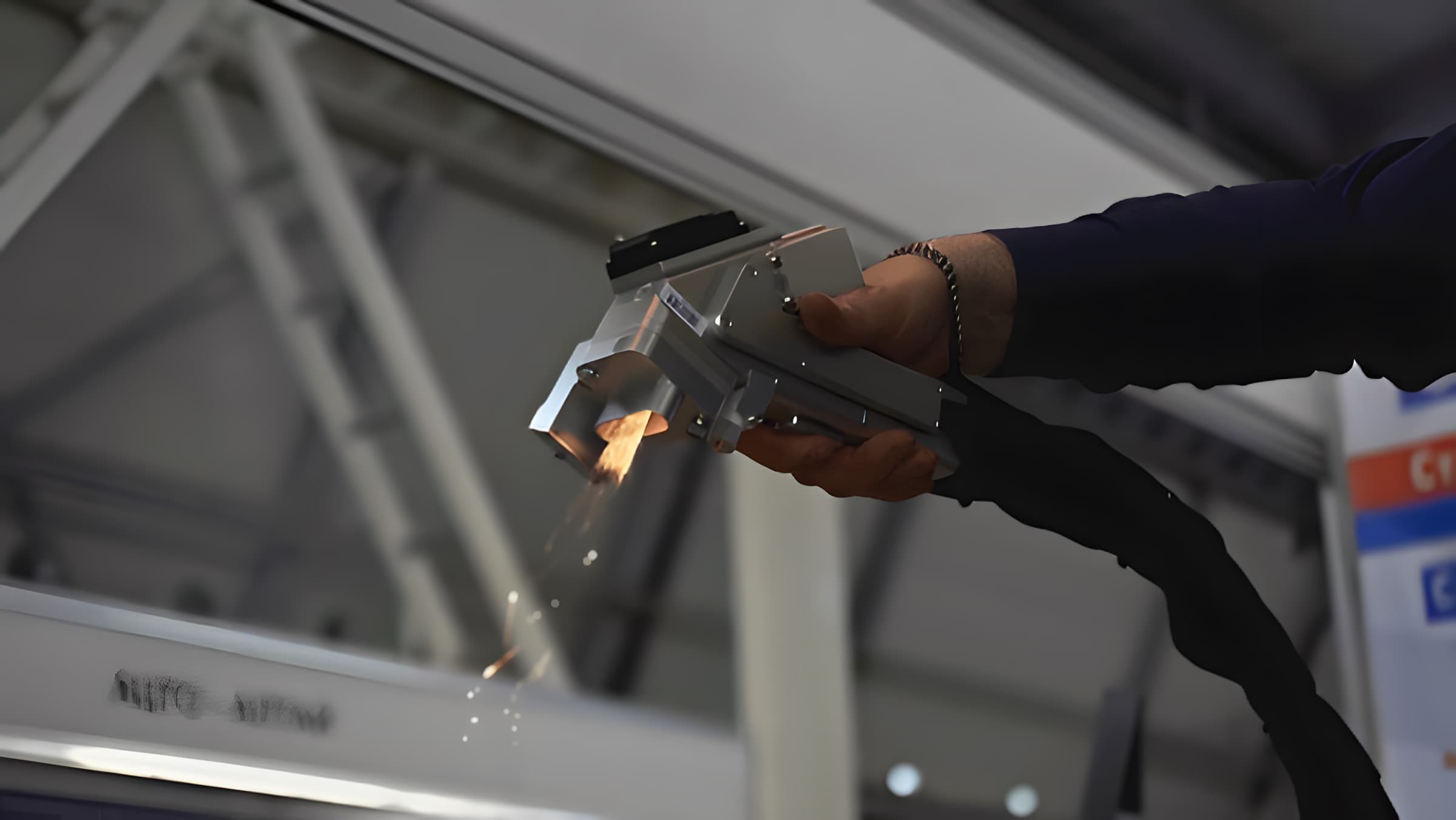
Laser cleaning pulses light at the surface. Rust, mill scale, paint and oil absorb that energy and leave as fine particulate and vapour, which a fume extractor at the head pulls away. Bare steel reflects most of the beam and stays put. No media, no water, no chemicals.
On site, that looks like this:
- Rust and paint come off structural steel, frames and machine bases without wrapping the whole building.
- Bolts, threads, nameplates and weld seams survive intact, because the beam stops doing work once it reaches clean metal.
- The waste ends up in a filter cartridge rather than spread across the floor.
- The crew can work beside running equipment, live production areas or finished surfaces behind a light barrier instead of a full enclosure.
Most laser jobs we quote in Greater Vancouver land between $1,200 and $6,000. Hourly rates sit in the $180 to $260 range, with $350 to $600 for mobilization inside Metro Vancouver. That hourly rate is higher than a blaster’s. The total often isn’t, because the quote has no containment line, no media line and no disposal line.
Where laser is slow: thick, layered coatings over big flat areas. Twenty years of paint on a 600 m² tank shell takes a lot of passes, and we’ll say so when we see it. You can see what typical laser work looks like on our laser cleaning service page.
Dry ice: when the problem isn’t really paint
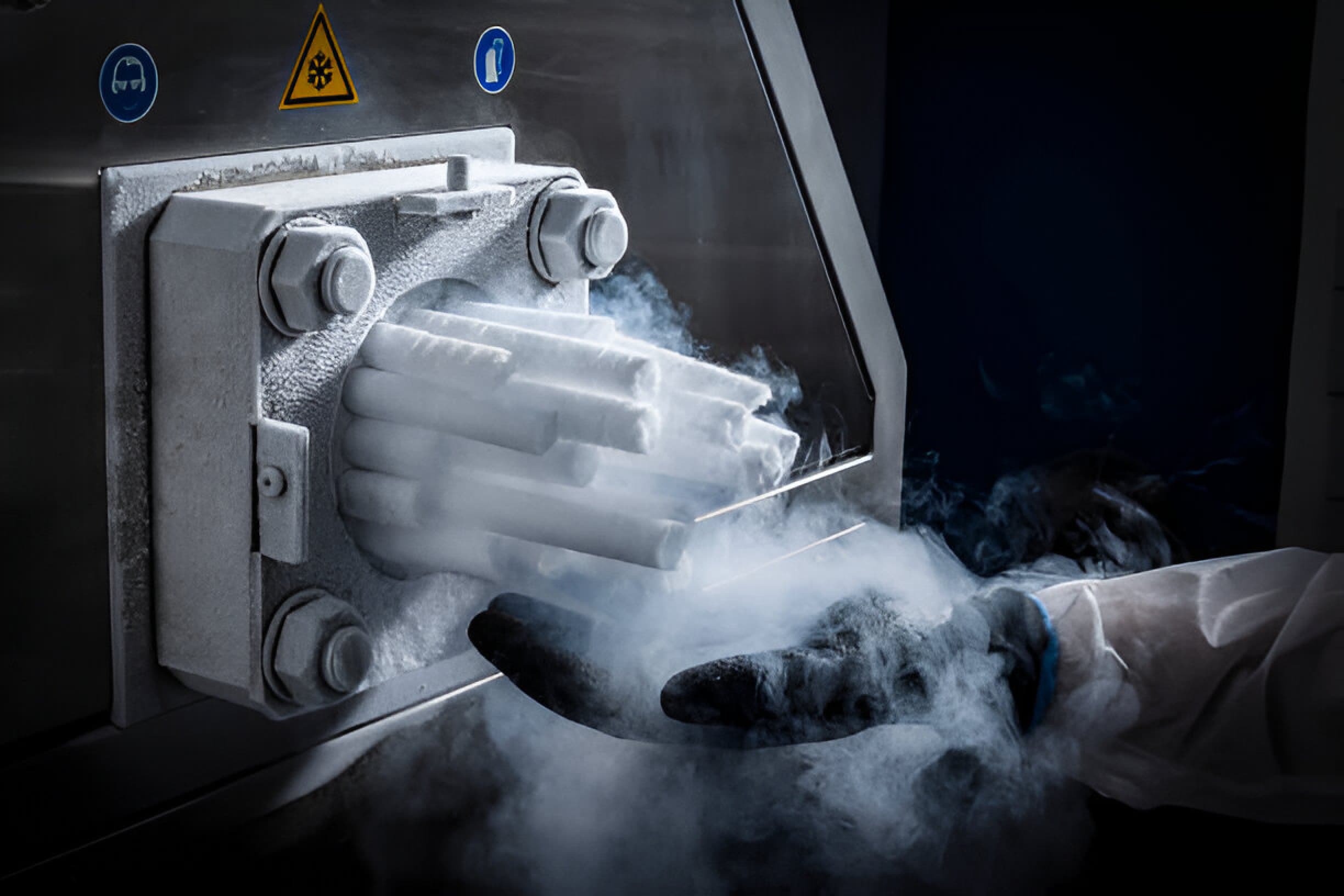
Dry ice blasting fires rice-sized pellets of frozen CO2 at the surface. The cold makes the contaminant brittle and shrinks it away from the substrate, the impact cracks it loose, and the pellet turns straight to gas. What’s left on the floor is only what came off the part.
That matters more than it sounds. Because nothing stays behind and nothing gets wet, dry ice works on equipment that can’t be taken apart or rinsed down: motors, control panels, conveyors, mixers, moulds, printing presses, food lines. It’s accepted in food-grade environments, which is why a lot of our dry ice work happens in plants around Richmond, Delta and Annacis Island.
It’s the better pick for grease, baked-on product, soot after a fire, mould on framing and loose or failing paint. It’s the wrong pick for well-bonded epoxy, or for any job that needs a profile cut into the steel. The pellet simply isn’t hard enough.
Most dry ice jobs in the Lower Mainland run $1,500 to $8,000. The ice costs about $3 to $5 a kilogram delivered, so a long blasting day can go through $700 to $2,100 worth of it. More on the process on our dry ice blasting page.
How a typical "can you sandblast this?" call plays out
Here’s a composite of a call we get a few times a month. Details changed, numbers typical.
A processing plant on Annacis Island has a packaging line with flaking paint on the frames and a crust of product and grease underneath. Maintenance wants it cleaned during a planned shutdown. The first quote came from a blaster: pull the line apart, tent it, blast, reassemble. Four days down, plus most of a fifth vacuuming grit out of gearboxes and junction boxes before anyone would sign off on a restart.
We quoted dry ice on the line in place. Guards off, motors and sensors masked, no teardown. Two people across two shifts, with the laser brought in for the few spots where paint was bonded tight and the frame had to go to bare metal for touch-up. The line was back in production early on day two.
On paper the blast quote was lower: about $4,800 for the blasting. Ours came in around $6,500, ice included. But the plant figures its lost margin at roughly $1,500 an hour on a two-shift schedule. Three and a half fewer days down is about 56 production hours, or $84,000. That covered both invoices several times over.
The cleaning price was never the big number. It rarely is.
When we’d tell you to hire a sandblasting service
We split jobs, and sometimes turn them down, when abrasive is the right tool. The honest list:
New high-performance coating specs. If the coating supplier’s data sheet calls for near-white metal (SSPC-SP 10 / NACE No. 2) with a measured anchor profile of 2 to 4 mils, abrasive blasting is the standard way to get there. Laser takes steel to clean bare metal, but it doesn’t cut a deep profile.
Very large open areas. Thousands of square metres of girder, tank shell or hull plate in an open yard, no neighbours, no lead. Grit wins on speed, full stop.
Heavy pack rust. Scale layered several millimetres thick on old steel. A laser gets through it slowly. A blaster gets through it in an afternoon.
Plenty of jobs end up as hybrids. We clean the sensitive areas (welds, machined faces, anything near electrical or food contact) and a blaster handles the open steel. Saying that costs us some work. It also keeps a client from paying laser rates on a job that grit would finish in half the time, and that client tends to call us back.
Questions to ask whoever you hire
Blast crew or not, these questions separate a clean quote from a surprise invoice:
- Is the old coating tested for lead before work starts, and who pays for the test?
- What does containment look like, how long does it take to build, and is that time on the quote?
- How much waste will this job produce, where does it go, and is disposal priced in?
- Do you carry liability insurance and a WorkSafeBC clearance letter, and will you send both before mobilizing?
- Can you run a test patch on a small area first?
- What has to stop running while you work, and for how long?
A contractor who can’t answer the waste and containment questions in a sentence or two is probably quoting you an incomplete price. Not on purpose, necessarily. Those lines just tend to show up later as change orders.
Getting a price on your job
Laser Sharks works across Greater Vancouver and the Lower Mainland, from North Vancouver and Burnaby down to Richmond, Delta and Surrey, and out into the Fraser Valley. Our crews are fully insured and WorkSafeBC compliant, and CBRB named us Best Cleaning Services in BC for 2025.
The fastest way to a number is a few photos and a rough size of the area through our quote form, or a call to 236-660-4248. If laser or dry ice isn’t the right fit for your surface, we’ll say so on the first call, and tell you what to ask a blaster for instead.