Half of the coating failures I get called back to look at were doomed at surface prep. Fresh urethane peeling off structural steel inside two winters. Zinc-rich primer chalking in six months on a wharf rail. Powder coat lifting from a machine base after one steam-clean cycle. The failure is always at the substrate boundary, not at the topcoat.
Coating contractors in BC know this. What they do not always know is that laser surface treatment now gives them tighter control over the three specs that decide whether coating stays down: profile, cleanliness, and adhesion. If you write specs for coating jobs, or if you tender them, this is a piece for you.
What laser surface treatment does at the metal
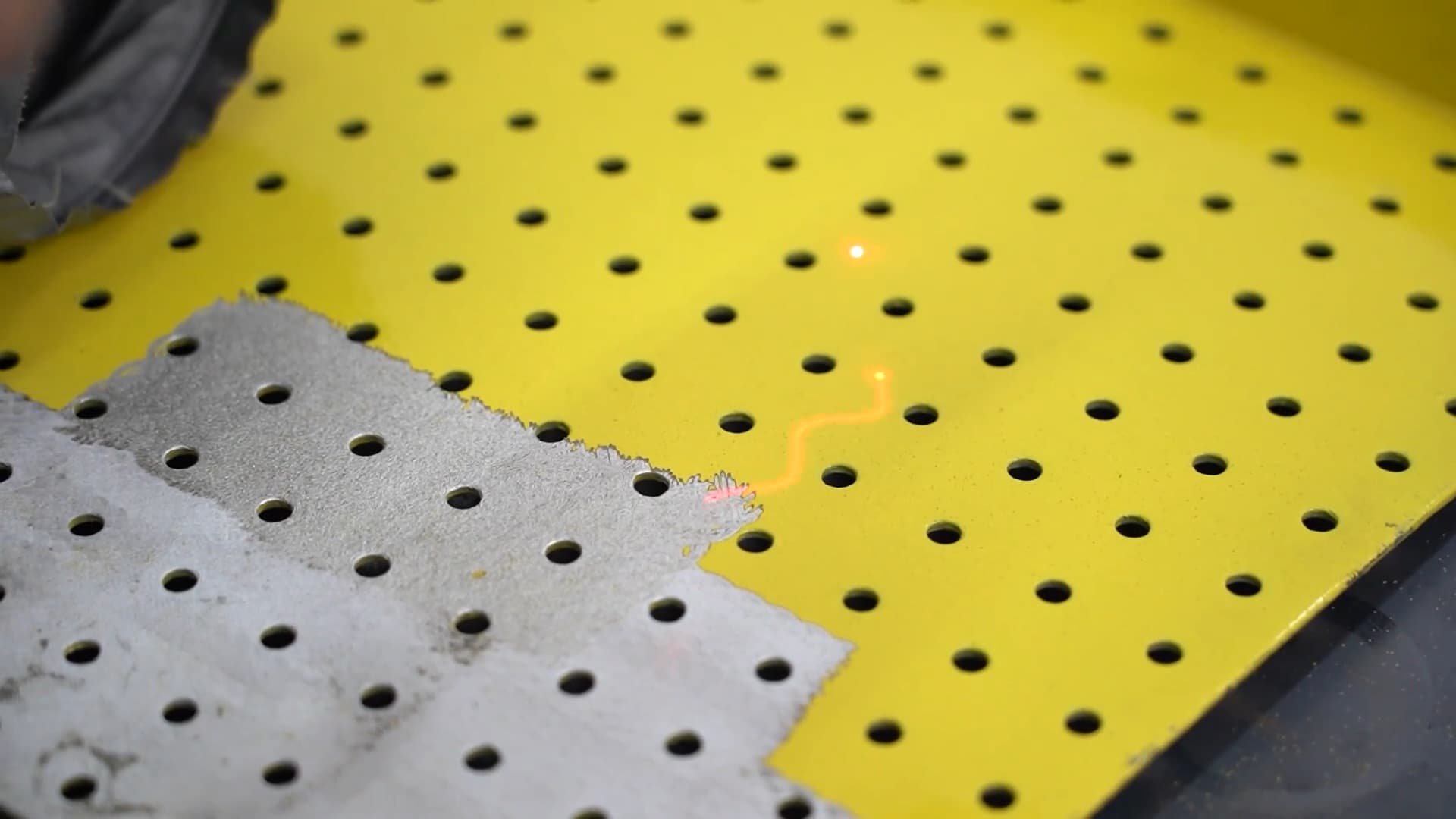
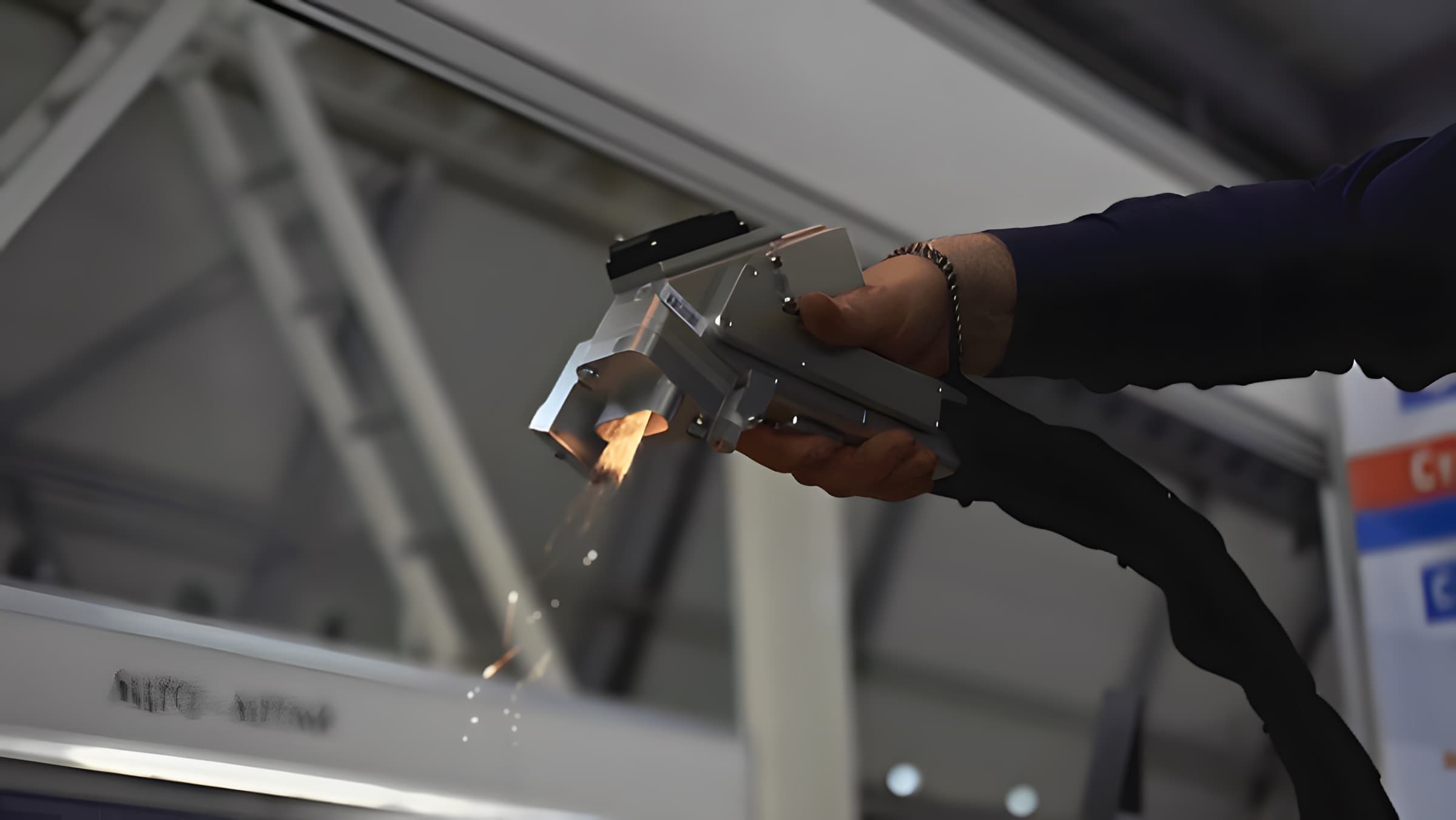
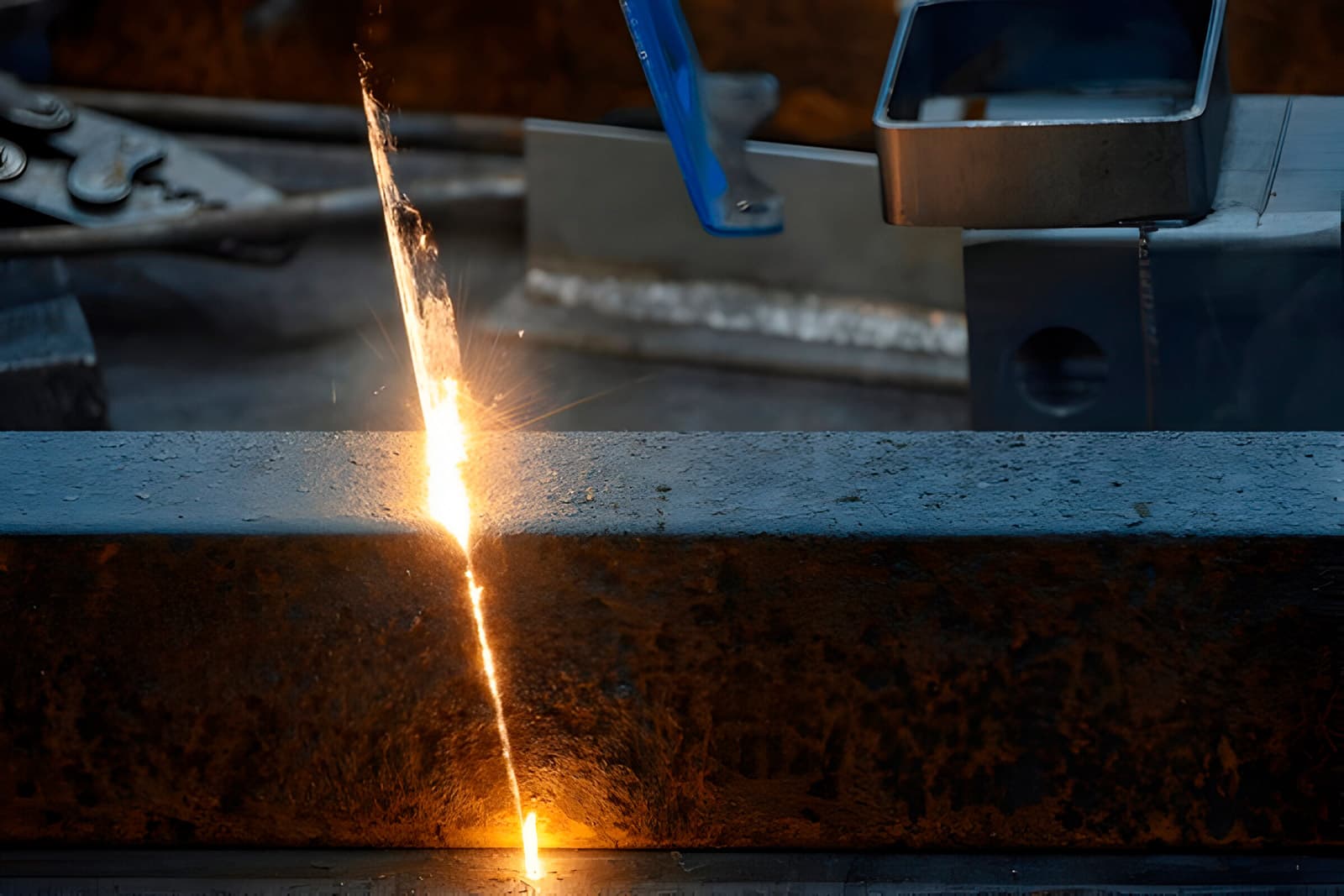
A pulsed fibre laser sends short bursts of infrared energy into the substrate. Rust, mill scale, old coating, salt residue, oil films. All of that absorbs the pulse and vaporises off as a fine dust that our vacuum system captures at the head. Base metal reflects most of the pulse and stays cool. On carbon steel we run under 60 °C at the surface during work, which matters when there is already coating on the other side of a plate.
There is no shot, no media, no water, no chemical. Nothing hits the surface but light and its own vacuum shroud.
That last point is where coating jobs get interesting. When there is no abrasive on site, the finished surface holds its cleanliness for hours instead of minutes. No airborne dust to fall back onto a prepped panel. No wash-down water flashing rust before the primer coat goes on.
The three specs coating jobs live and die by
1. Surface profile (the anchor pattern)
Traditional grit blast leaves a jagged peak-and-valley profile measured in microns. For high-build epoxies most specs call for 50–75 µm Rz. For thin-film primers you want 25–40 µm. Most BC coating specs I read land on 50 µm as the safe middle.
Laser surface treatment does not build the same random profile that grit does. What it does is expose the micro-texture of the steel underneath the mill scale and rust. If the base metal already has a rolled or previously blasted texture, that texture comes back clean. If the surface is smooth cold-rolled sheet, the laser exposes a smoother substrate than grit would produce.
That is a limitation. Not a fatal one, because many modern coating systems (moisture-cure urethanes, epoxy phenolics, thin-film ceramics) are formulated for lower-profile substrates and bond chemically rather than mechanically. But if your spec calls for a strict Rz range and the base metal is smooth, you need to pair laser with a light grit pass, or switch primer chemistry.
Where laser wins on profile is on re-work. When a coating fails at year three and you have to remove it without changing the profile the OEM originally specified, laser strips down to the original anchor pattern without adding a new one. Grit blast will always add fresh profile, which sometimes puts you outside OEM warranty on structural components.
2. Cleanliness (SSPC and ISO standards)
Coating contractors here usually spec to SSPC-SP 10 (near-white) or SSPC-SP 5 (white metal) for immersion service. Both are visual standards.
Laser surface treatment hits SSPC-SP 11 (bare metal) or better as a matter of course. On mill-scaled steel we see visual results equivalent to SP 5 in one pass at the right power setting. That is because there is no fine blast media getting embedded in the surface, and there is no rinse cycle to leave chloride residue behind.
Salt residue is the quiet killer of BC coating jobs. Structural steel that has spent a summer near Roberts Bank or the Fraser estuary picks up chloride contamination that pressure washing does not fully remove. Chloride under an epoxy primer causes osmotic blistering within one wet season. Our surface tests on laser-treated wharf steel come back consistently under 3 µg/cm² soluble salt, which sits inside most owner specs for marine service.
There is one clean-up detail worth calling out. The fine oxide dust our vacuum captures is not blast media. There is no spent grit to dispose of, no contained work area to tear down, no filter changes to bill through. On a mid-sized job that is often $2,000–$5,000 in avoided disposal and containment costs before the primer even goes on.
3. Adhesion (what the pull-off test says)
Pull-off adhesion testing (ASTM D4541) is what decides warranty disputes. I have seen numbers on laser-prepared steel versus grit-blasted steel from three coating manufacturers now.
Short version: adhesion is not identical, but it is not worse.
Two-component epoxies on laser-prepared substrate pull at 15–22 MPa. On grit-blasted equivalent, they pull at 18–25 MPa. What shifts is the mode of failure. Grit-blasted samples typically fail cohesively (the coating tears itself apart before it releases from the steel). Laser-prepared samples fail more often at the interface, meaning the coating separates cleanly from the substrate.
For most BC service environments (building envelopes, machinery, non-immersion structural) this is fine. Both numbers sit well above the 5 MPa most primer specs call for. For high-performance immersion service (potable water tank interiors, chemical storage) the coating manufacturer should be consulted, and in some cases a hybrid prep (laser first, then light sweep blast) gives the best of both.
What laser costs versus grit in the BC market
For a typical BC coating prep job we bracket laser surface treatment at $2,500–$8,000, depending on square footage, alloy, and access. That is per-job pricing, not per hour, because pulsed laser output is more predictable than an abrasive crew’s throughput.
Grit blast on the same work is usually $3,500–$12,000 once you add containment, media, disposal, dehumidification if required, and the WorkSafeBC silica exposure controls that came in with the 2019 revisions. On steel with old lead-based primer, add another $3,000–$8,000 for hazmat handling on the grit-blast side. Laser vaporises the coating and captures it in a HEPA-filtered stream, which does not eliminate hazmat requirements but changes the disposal profile in the client’s favour.
Downtime is the other line item. A parkade beam or structural repair that has to be laser-prepped can stay in service through the work. A grit blast crew shuts the area down for containment, blasting, cleanup, and inspection. On facility work that is often the deciding factor, not the prep cost itself, but the downtime cost avoided.
Where laser is the wrong choice for coating prep
I turn down laser prep on three kinds of job.
Heavy rust pitting with a required 75+ µm profile for high-build coatings on tank exteriors. Grit blast still does that better. Laser cleans the pits but does not deepen them the way angular grit does.
Rough concrete or masonry substrates. Laser is designed for metal. On concrete we use dry ice blasting for cleaning, but neither is a substitute for mechanical profiling with grinders or shot blasters when the coating spec demands it.
Anything the coating manufacturer has not tested laser prep against. If you have a warranty at stake and the primer TDS says "Sa 2½ per ISO 8501" and nothing about laser, you either get manufacturer sign-off in writing or you use grit. Do not assume equivalence.
Real BC jobs where laser is the right call
Coating contractors book us for laser surface treatment on jobs like these.
Machine bases and hydraulic assemblies at pulp mills near Prince George and Powell River, where the old coating has to come off without dropping media into oil reservoirs.
Steel handrails and stair pans on downtown Vancouver mid-rise projects, where the coating crew cannot set up containment on an occupied floor plate.
Bridge and overpass repair work for BC Ministry of Transportation contractors, where lane closures for containment tents would trigger significant traffic-management costs.
Marine fittings and shipyard rework at Annacis Island and North Vancouver, where salt-loaded steel needs a chloride-clean surface before zinc-epoxy build coats.
Food-plant equipment being re-coated during a scheduled shutdown, where CFIA rules do not allow abrasive media anywhere near a production line.
These are not showpiece jobs. They are the ones where the alternative (shut down, tent up, blast, clean, prime) costs more in downtime than the whole prep budget.
What to spec if you are writing a coating job
If you are a coating contractor or the specifier for one, three things go on the tender.
State the profile you actually need, in microns, with a range. Not "SP 10" and stop.
State the salt-limit you need, in µg/cm², if it is marine or high-chloride service. Laser prep hits that number consistently; grit blast usually needs a wash cycle to hit it.
State the manufacturer-approved prep methods on the coating you have chosen. If laser is not on that list, get sign-off before the sub arrives.
That last one is where jobs go sideways. Nobody wants to argue in year two about whether the surface prep matched the TDS.
Trust and what we bring on site
Laser Sharks is based in Vancouver and works across BC on industrial cleaning and surface prep. Our field crew carries 20+ years of collective industrial coating and cleaning experience. Insurance and WorkSafeBC compliance are current and available on request. We carry our own HEPA vacuum systems on every job. When we quote coating prep we quote to a spec, not to a square-foot rate, so the coating contractor knows exactly what will be on the substrate when they arrive.
If you have a coating job coming up and want a second opinion on whether laser surface treatment fits the spec, request a site visit or send the coating manufacturer’s TDS and a description of the substrate condition. We will tell you whether laser is the right call or whether you are better off with grit. Either way you get a straight answer.
For more on what a laser cleaning site visit looks like in BC, see our laser cleaning services page.