Half the calls we get from facility managers in Burnaby and Delta open the same way. “Can you come to us, or do we have to ship the parts out?” The honest answer depends on five things, and the wrong choice can add a week to your downtime or double a $4,000 quote.
Mobile industrial cleaning in Vancouver looks attractive on paper because it removes the shipping and disassembly step. But not every job belongs on-site. Some still need the controlled environment of a shop, and a few sit in the middle where the cost math flips depending on how long your line can stay down.
This guide walks through how we decide when to roll a truck to your plant versus when we tell the client to crate it up. It’s based on jobs we’ve run across Greater Vancouver since 2014, with current pricing in CAD.
Quick answer
Mobile wins when:
- Equipment is too large to move (rolling stock, structural steel, ductwork, marine fittings)
- You can’t tolerate the disassembly and reassembly hours
- The substrate doesn’t need a controlled environment for fine work
- Downtime cost per shift exceeds the mobile premium
In-shop wins when:
- Parts are small and pack-out is easy (under 200 kg, fits on a pallet)
- You need tight tolerance work with bench lighting
- Surface prep requires immediate coating or primer in a dust-free booth
- Site access is genuinely impossible (no power, no parking, contamination risk)
What “mobile” actually means in BC
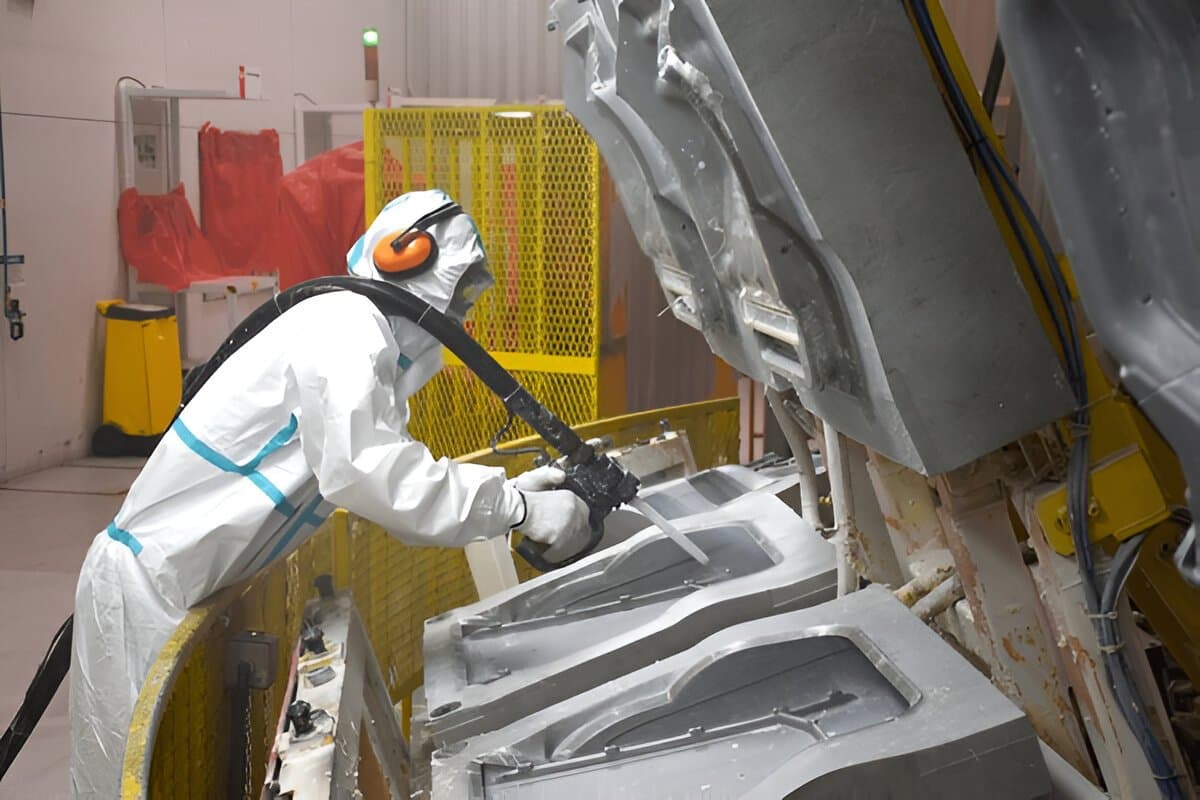
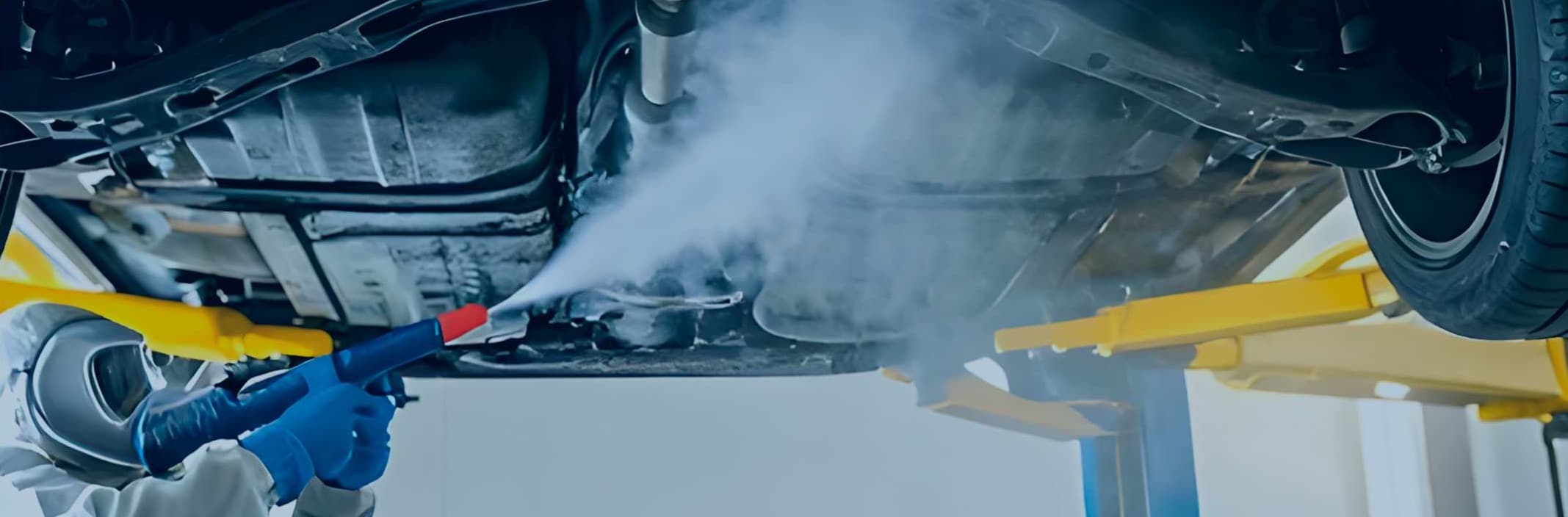
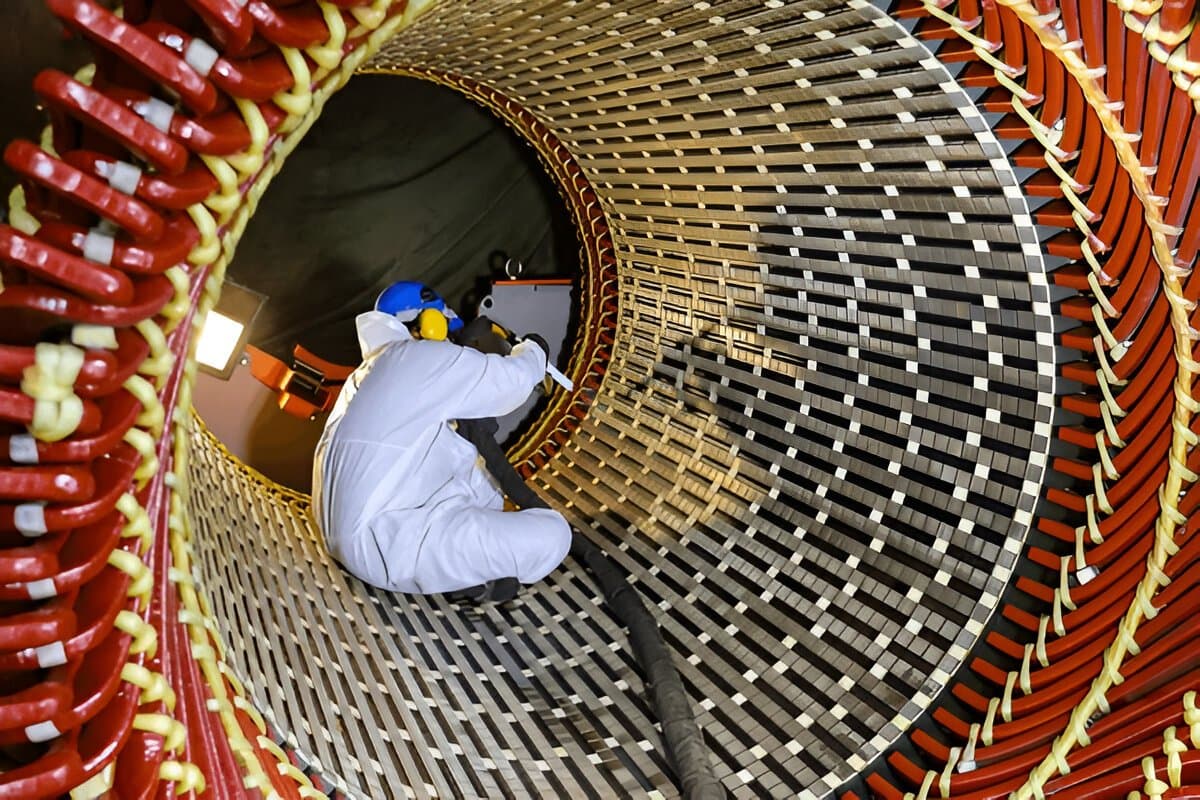
Mobile industrial cleaning means we bring the equipment, generator backup, vacuum recovery, and PPE to your site. For us, that’s typically a 3-ton van with laser cleaning gear, dry ice blasting compressors, and crew. Setup time on-site runs 30 to 90 minutes depending on power access and load-in distance.
What it does NOT mean: a guy with a pressure washer and a chemical jug. Real mobile work for industrial scope brings in the same equipment that runs in a shop, minus the booth. The difference is the controlled environment, not the tooling.
A common assumption from first-time buyers in Richmond and Mount Pleasant: they think mobile is the cheaper version. It usually isn’t. Mobile carries a per-shift premium of 15 to 30 percent over shop rates because of travel, setup, breakdown, and on-site coordination time. The reason to pick mobile isn’t price. It’s that your equipment can’t or shouldn’t leave.
When mobile cleaning is the right call
Three job profiles where rolling the truck always wins.
Rolling stock and large fixed machinery. Cranes at the Port of Vancouver, paint booths in North Burnaby, conveyor systems in Annacis Island food plants. If the asset is bolted down, plumbed in, or weighs more than your forklift can move, you don’t have a choice. We come to you. Laser cleaning works well here because there’s no abrasive media to contain. Dry ice blasting handles the same profile when surface chemistry calls for it.
Tight downtime windows. Food processors in Delta running 24/6 operations can’t afford a 48-hour disassembly cycle. We’ve run overnight mobile shifts on production lines where the client unlocks the door at 11 PM, we work until 5 AM, and the morning crew runs sanitation and restarts the line. Pricing for those jobs lands in the $3,500 to $7,500 range per shift depending on scope. Shop rate would be cheaper per hour but the total clock cost of moving the line is worse.
Marine and structural work. Ship fittings at Vancouver shipyards, transmission towers near Coquitlam, bridge components on Annacis Island. These don’t go in a shop. Mobile laser cleaning handles salt-air corrosion on deck machinery and antenna arrays without the containment tent that abrasive blasting requires under WorkSafeBC silica rules. Typical project pricing runs $1,500 to $6,000 per job depending on access and surface area.
When in-shop work is the smarter spend
There’s a reason shops exist. Three job profiles where pack-out beats mobile.
Small, palletizable parts. Engine components, gearboxes, machinery housings under 200 kg. Throwing them on a pallet and shipping to a shop in Burnaby costs less than a mobile shift and gives us bench lighting, fixturing, and the ability to rotate the part freely. We typically quote shop work at $1,200 to $4,000 per project for parts of this size. Same scope on-site might run $2,500 to $6,000 because of setup time you’re paying for whether the part is 5 kg or 50 kg.
Coating prep with immediate primer. When the next step after cleaning is a primer or epoxy coat that needs a dust-controlled environment, the shop wins every time. Mobile is fine for cleaning, but if you want zero flash rust between cleaning and coating, the booth matters. We see this often on automotive restoration jobs in Mount Pleasant and Burnaby. The client wants the part back already primed.
Sensitive substrates needing fine inspection. Heritage hardware, classic vehicle trim, marine instrumentation. Anything where the operator needs to see what they’re doing under controlled light and make second-by-second decisions about laser power or dry ice flow. Bench work in a shop produces a cleaner result on parts under 1 m² than mobile work in a noisy plant.
The downtime cost math
This is where buyers get the analysis wrong most often. A facility manager in Richmond once pushed back on a $5,800 mobile quote saying the shop alternative was $3,200. Fair comparison? No. The shop option required four maintenance staff hours for disassembly, two days of crating and shipping, four hours of reassembly, plus a planned production gap that cost the line $14,000 in lost throughput.
True comparison:
- Mobile total: $5,800 + 4 hours of operations supervision = ~$6,400
- Shop total: $3,200 + $1,800 disassembly labour + $400 shipping + $1,800 reassembly + $14,000 lost production = ~$21,200
The shop quote looked cheaper on the line item. It wasn’t. This kind of math matters most for plants running on tight production schedules: food processing, packaging, automotive supply. If your line idles at $1,500 per hour or more, mobile usually wins even at a 30 percent premium.
Power, access, and the practical constraints
Three things we ask before quoting mobile work in Greater Vancouver.
Power. Laser cleaning units pull 30 to 50 amps at 240V single phase or three phase, depending on the model. If your plant has industrial 3-phase service, we plug in. If it’s a remote site (transmission tower, marine application, heritage façade), we bring a generator. Generator adds $300 to $600 per shift to the quote depending on fuel and run time.
Access. Can our 3-ton van reach the work? Tight loading docks in older Vancouver buildings sometimes force a smaller setup with portable units. Heritage façade work often needs scaffolding coordination with the GC, which we handle if there’s enough lead time.
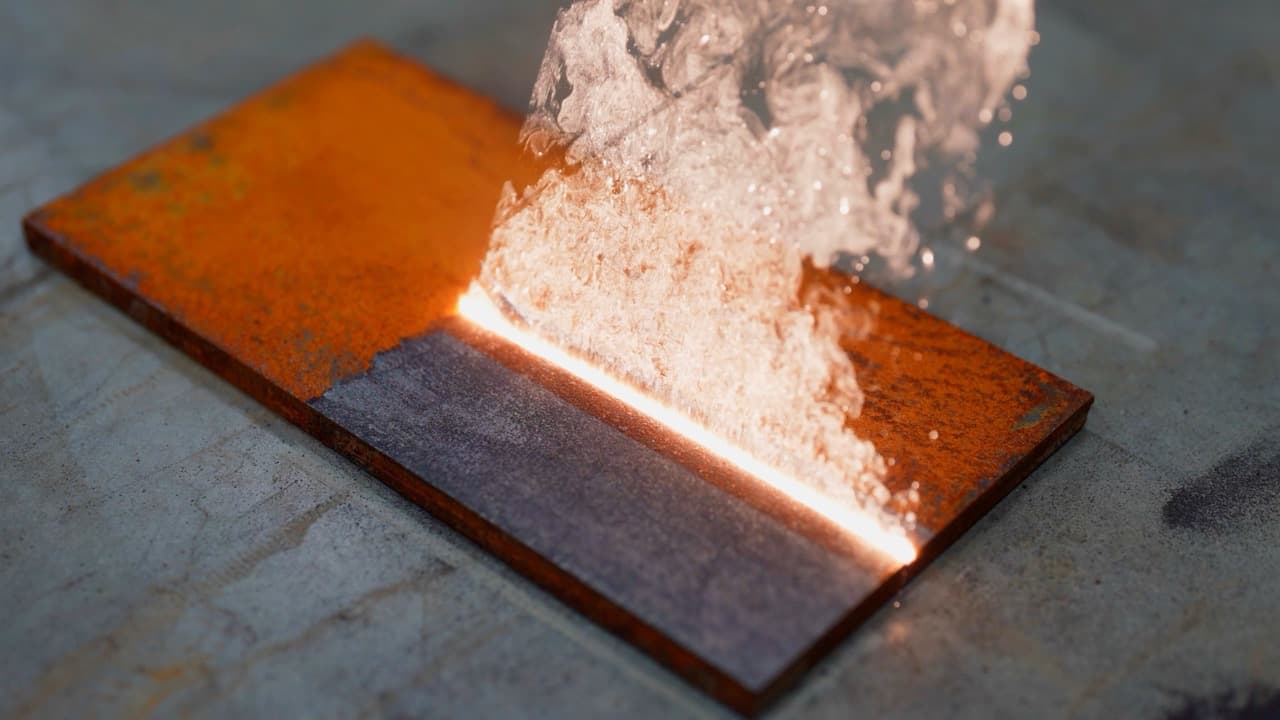
Containment. Mobile dry ice and mobile laser cleaning don’t need containment tents the way sandblasting does. That’s a quiet advantage in occupied buildings. We can work in food processing plants during off-shifts without dragging in plastic sheeting and dust extraction zones. The work is chemical-free and produces no secondary waste, which means cleanup at the end of the shift is fast.
The WorkSafeBC silica factor
WorkSafeBC silica exposure rules have pushed a lot of sandblasting jobs in the Lower Mainland toward either in-shop containment or alternative methods. If your job involves silica-bearing substrates (concrete, masonry, sandblast media itself), the regulatory cost of mobile abrasive work has climbed sharply since 2022. Containment, monitoring, respirators, and disposal add 25 to 40 percent to the abrasive line item.
Laser cleaning sidesteps this because there’s no media. Dry ice blasting sidesteps it because the CO₂ sublimates and the only waste is the contaminant itself, which falls to the floor and gets vacuumed. For BC facility managers comparing options, this is the single biggest cost lever pushing mobile work away from sandblasting and toward laser or dry ice.
How to scope a mobile cleaning quote
When you call for a quote, have three things ready.
- What you need cleaned. Substrate type, contamination type, surface area in square feet or metres, accessibility (floor level vs elevated).
- Your time window. When can we work, what shifts are available, what’s your hard deadline.
- Your site basics. Power available (amperage and phase), loading dock access, parking, any client-specific safety induction we need to complete.
A good quote on mobile industrial cleaning in Greater Vancouver doesn’t come from a phone description alone. We almost always do a free site visit for jobs over $2,000 to confirm scope and access. Same-day site visits in Vancouver, Burnaby, Delta, Richmond, and North Vancouver. Next-day for further out.
What we do, and what we don’t
Our crew has been running industrial cleaning across BC since 2014, fully WorkSafeBC compliant, fully insured. We won CBRB Best Cleaning Services in BC 2025. Most of our recurring work comes from food processors, marine operators, and commercial property managers who’ve been with us for three or more years.
We’re not the cheapest option in the Lower Mainland. We’re the one that gives a straight answer on whether mobile or shop is the right call for your specific job. If shipping to a shop is cheaper for your scope, we’ll tell you, even if it’s a competitor’s shop.
If you’re planning a maintenance shutdown in Q3 or Q4 and want to compare mobile cleaning against your current abrasive or chemical workflow, get the quote in early. Mobile shifts during shutdown windows fill up across Greater Vancouver, especially in the pulp/paper and food processing sectors.
Get a free quote for mobile work at lsharks.ca/quote, or read more about how we run laser cleaning and dry ice blasting on-site.
Common questions
What does mobile industrial cleaning mean in BC?
The crew brings the system to your site instead of you shipping equipment out. It suits fixed or large assets that cannot move.
When is in-shop work the smarter spend?
When parts can be removed and batched, in-shop is often cheaper and faster than mobilizing a crew for a small scope.
What limits mobile cleaning on-site?
Power, access, and the WorkSafeBC silica rules for any abrasive step. Those set whether mobile is practical and what it costs.
Related reading
- Laser Cleaning Service Near Me: What Greater Vancouver Customers Actually Get On-Site
- Industrial Cleaning Costs in BC: Why Quotes Vary 10x and What the Numbers Mean
Compare options for your site with our request a quote service, or request a quote.