Pressure washing has been the default answer for concrete cleaning in Vancouver parkades and loading dock aprons for decades. It is fast, cheap on paper, and the crew has done a thousand of them. The problem is what it leaves behind on the slab and where the water goes after it lifts what it did lift.
Twenty years of parkade and dock work across Metro Vancouver has taught me the same lesson in every stall bay, every ramp apron, every loading bay: water pressure at 3,000 PSI drives motor oil deeper into the pores of the slab rather than removing it. It smears tire rubber into a wider grey band instead of lifting it. And in a Burnaby underground parkade with a floor drain that ties into the sanitary system, that same water carries the contaminants straight into the municipal treatment plant. Or worse, if the drain is stormwater tied, into Burrard Inlet.
There is a better way to handle these jobs, and BC property managers are finding out about it because their strata councils and insurance carriers keep pushing back on old habits.
Why pressure washing keeps failing on parkade slabs
Concrete looks solid. It is not. A finished parkade slab has a surface porosity in the range of 5 to 15 percent depending on the mix, the age, and whether it was sealed at pour. Every one of those pores is a small trap.
When motor oil, transmission fluid, brake dust, and rubber wear drops onto that surface over months and years, the liquids capillary-wick down into the top 2 to 4 mm. A power wash puts kinetic energy into water at the surface. Some of it lifts contaminant. Most of it drives contaminant sideways and downward. What you see after pressure washing is a lighter shade of stain, not a clean slab.
The rubber deposits on ramp aprons and stall entries are worse. Tire rubber vulcanizes into place when it is compressed under a warm tire during a stop. Water pressure does not have enough energy to break that mechanical bond. You get a smear. The smear reads as cleaned to a resident but shows again within two weeks of normal use.
Then there is winter. Metro Vancouver salts a lot less than Toronto or Montreal, but from October to March, road salt tracks into every underground parkade and loading bay in the region. It settles into cracks and construction joints, then re-emerges as white efflorescence in spring when temperatures cycle. Pressure washing removes the surface bloom, feeds fresh water into the crack, and dissolves more salt into the slab body, which then blooms again in a month.
The cycle is expensive and unwinnable with water.
What dry ice blasting does differently
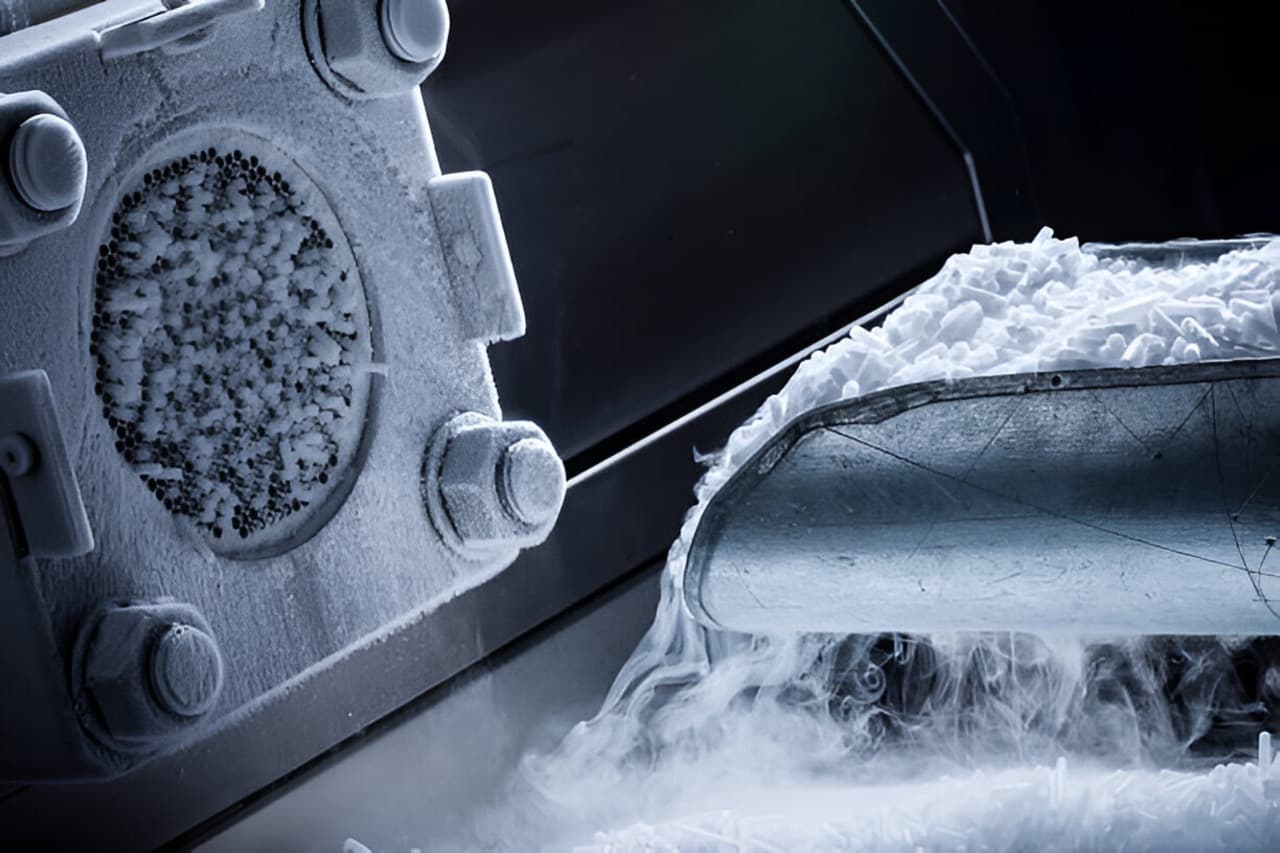
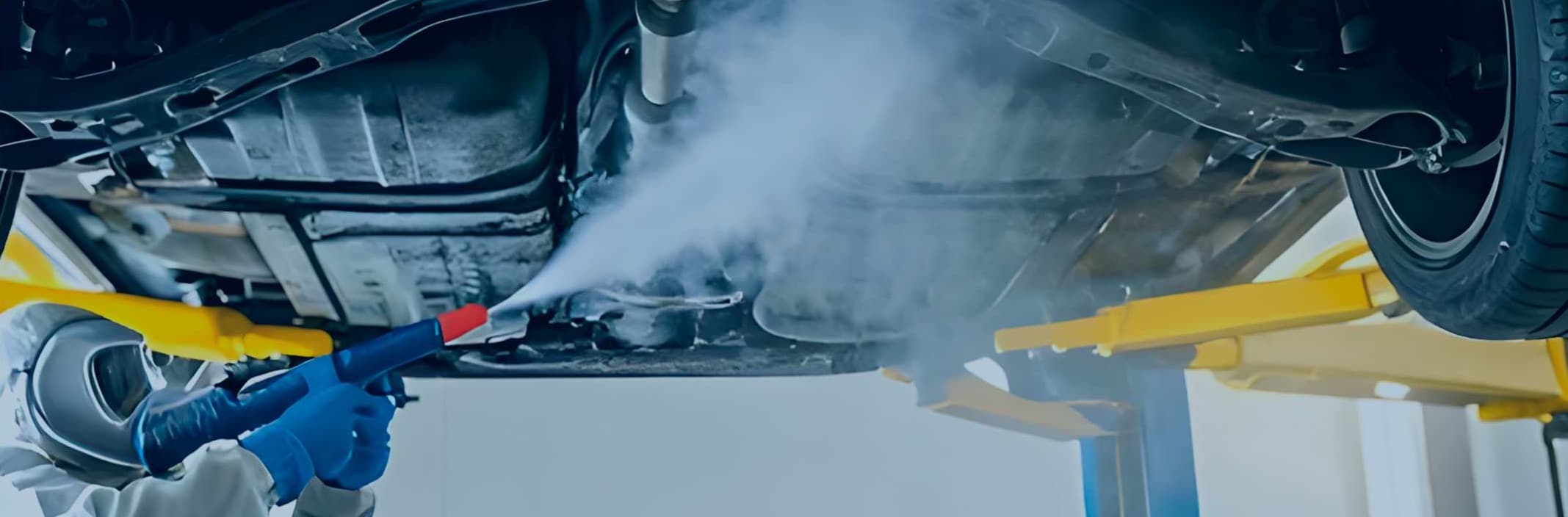
Dry ice blasting fires solid CO2 pellets, roughly 3 mm across, at concrete at high velocity. The pellet strikes, sublimates instantly from solid to gas, and expands about 800 times in volume. That expansion event happens right at the contaminant boundary. Oil, rubber, and salt lift dry, and the CO2 disappears into the atmosphere.
Three things happen that pressure washing cannot do.
No water is added. The slab stays dry. There is no drain load, no runoff into stormwater, no contaminated water to collect or dispose of. A property manager does not need a wet-vac truck standing by and does not need to file a discharge permit.
Contaminant lifts as solids. Motor oil comes up as small dark flakes on top of the slab, ready for a HEPA vacuum. Tire rubber comes up as fine black dust in the same pass. Salt bloom comes off as a white powder. All of it goes into a bag, not down a drain.
Substrate is preserved. Concrete under a laminated dry ice pass is unchanged. No etching, no aggregate exposure, no jointing damage. On a 25-year-old Delta warehouse loading bay we cleaned last year, the original broom finish was fully visible after treatment. The slab looked its age, but it was clean at its age.
The trade-off is speed and cost per square foot on large open areas. Dry ice cleaning is not the right tool for washing 40,000 sq ft of open surface parking lot. It is the right tool for parkade decks, dock aprons, ramp entries, stall boundaries, drive lanes, and any spot where you actually need contaminant off the slab rather than smeared thinner.
BC pricing brackets for parkade and loading bay work
Every quote depends on access, contaminant density, and the number of hours a crew can stay on site without paging out. General ranges for Greater Vancouver in CAD, from real 2026 project files:
- Single-level parkade drive lanes and ramp aprons: $1,800 to $4,500 per pass, roughly 1,500 to 3,500 sq ft treated. Strata pricing on a Vancouver West End building.
- Multi-level underground parkade, full slab clean: $6,000 to $18,000 depending on ceiling height, ventilation, and travel distance for the equipment. A three-level Burnaby residential tower ran $11,400 in spring 2026.
- Commercial loading bay concrete (single dock, apron plus dock face): $2,200 to $5,500 per bay. Richmond distribution center jobs on the lower end, food-grade Delta plants on the higher end where downtime windows are tight.
- Recurring maintenance contracts: $3,500 to $9,000 per visit on quarterly schedules for strata councils that want the slab presentable rather than reactive.
Per-square-foot math tends to land between $1.20 and $3.80 for parkade work when you push us for a number. That number moves fast depending on whether we can back the truck within 20 metres of the work or need to run 30 metres of hose down a ramp with a 5-tonne CO2 pellet supply.
The math that matters more to a property manager is downtime. Dry ice cleaning of an underground parkade level runs a single overnight shift for most residential buildings, 10 pm to 6 am, with no wet floors in the morning. Pressure washing the same slab, when we get called back to redo it in six weeks because the stains bloomed through, costs the strata twice.
Where WorkSafeBC and municipal rules come in
BC has silica exposure rules under WorkSafeBC that apply to any dry method that generates respirable crystalline silica dust from cured concrete. Grinding, shot blasting, and abrasive blasting all trigger the exposure limit and require respirators, containment, and monitoring. A crew doing shot blast on a Burnaby parkade slab is running full-face PPE and often a HEPA-vacuum shroud.
Dry ice blasting on a cured concrete slab does not generate silica dust the same way. The pellet sublimates before it fractures the cement paste at the surface, so the airborne fraction is mostly what was already on the slab as contaminant: oil vapour, rubber particulate, salt dust. We still capture with HEPA vacuum and still run monitoring on longer jobs, but the exposure profile is different and cleaner.
Municipal discharge is the other lever. City of Vancouver, City of Burnaby, and Metro Vancouver bylaws prohibit discharge of oily water, sediment, and contaminated wash water into storm drains. Every commercial pressure wash of a parking area technically requires containment and disposal. Most jobs skip it and rely on the drain running to sanitary, but insurance carriers are starting to check. Dry ice cleaning removes the discharge question entirely because nothing goes into any drain.
When to use pressure washing anyway
Pressure washing is not dead.
Open surface lots, big and flat, without significant oil staining, get pressure washed for a reason. Cost per square foot is lower on those jobs, environmental risk is lower because there is usually no accumulated contaminant, and the aesthetic result is fine for the intended use.
Sidewalks, exterior walkways, façade cleaning below the second floor, and residential driveways all still land in pressure wash territory in most cases.
Concrete cleaning becomes a dry-ice question when three conditions line up. The slab is enclosed or has drain constraints. There is real oil, rubber, or salt contamination that needs removed rather than moved. The space needs to be back in use quickly without waiting for a wet slab to dry.
Parkades hit all three. Loading bays hit all three. Ramps and dock aprons hit all three.
What a property manager should ask on a quote
Most of the calls we take from Metro Vancouver property managers start with the same three questions. Here is what to add to them.
Ask what happens to the contaminant. If the answer is "it goes down the drain," the crew is going to fail an audit sooner or later. Ask for the HEPA vacuum method and the disposal path.
Ask about downtime and what shift the crew can run. Underground parkade cleaning on an overnight shift is a different job than daytime cleaning with residents moving in and out. Get the schedule fit right up front.
Ask what happens if it rains during the job. Pressure washing has a rain-out policy that costs you money. Dry ice cleaning does not depend on weather.
Ask for a small test patch. Any crew that hesitates on a 100 sq ft test area on a Wednesday afternoon is not confident in the result. We have done these tests on parkades in North Vancouver, Delta, and Richmond, and the visible before-after in an hour is usually what closes the decision.
A quick note on new construction handover
BC general contractors handing over parkades on new residential and mixed-use buildings are starting to specify dry ice cleaning for final slab prep before handover to strata. The reason is that final slab cleanliness under strata bylaws sits in a grey zone. Contractors want the slab visibly clean at PDI so occupancy inspections and turnover do not kick back. Pressure washing leaves grout haze and construction debris streaks. Dry ice cleaning gives a slab that looks its actual finish quality.
Same principle applies to industrial building sale prep, insurance restoration handovers, and any time the slab is going to get looked at by a party with a checklist.
What we do
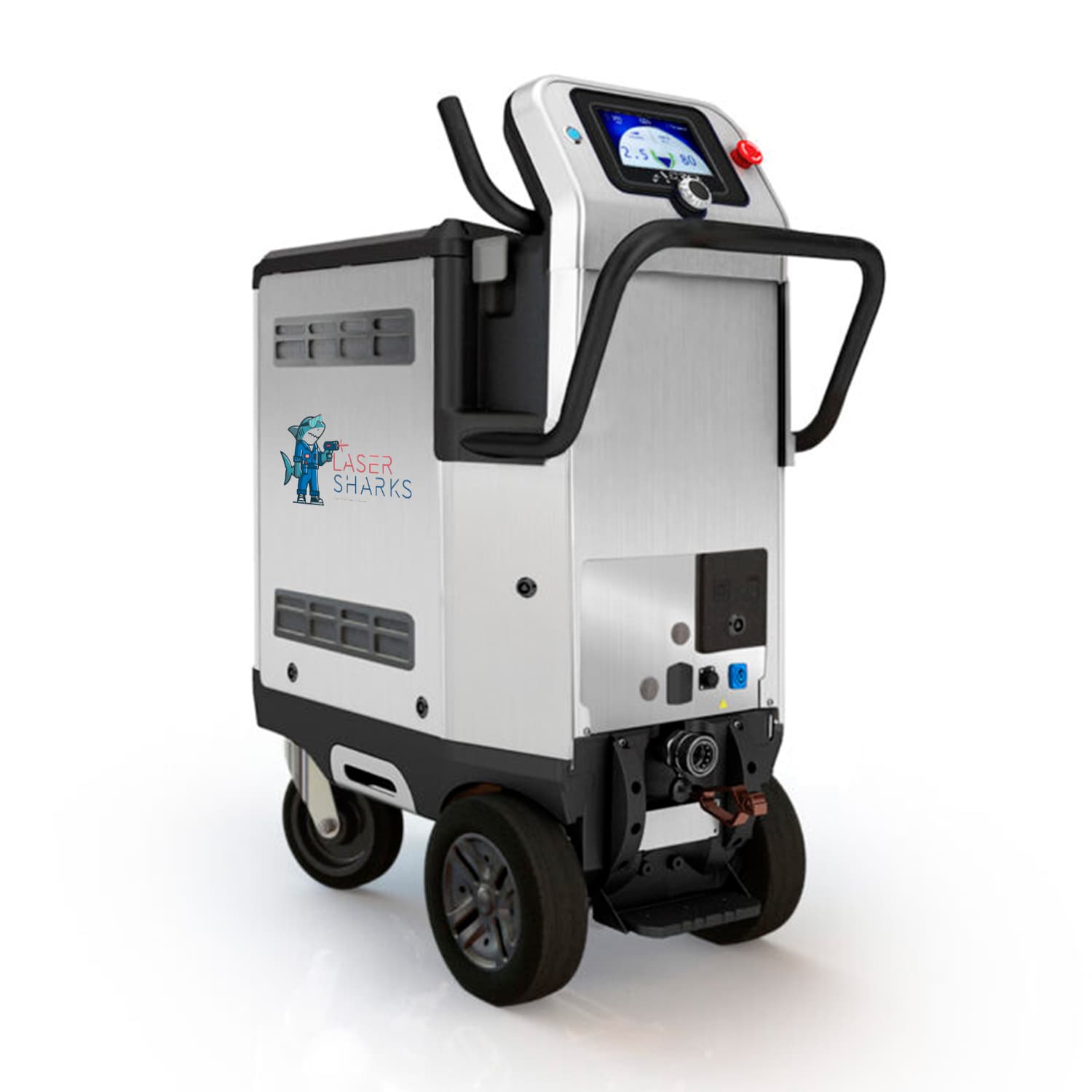
Laser Sharks runs a fleet of industrial-grade dry ice blasting equipment out of Burnaby, servicing Greater Vancouver from Squamish to Chilliwack. WorkSafeBC-compliant, fully insured, and specifically set up for parkade, loading bay, and industrial concrete cleaning work. Ten-plus years of industrial cleaning across BC, and we run our own crews rather than subbing out to third parties.
If you have a slab that needs looked at, request a quote with a few photos and the square footage estimate. Free assessments within the Lower Mainland, and we can usually get a test patch scheduled inside two weeks. The project gallery has before-and-after photos of recent parkade and loading bay work if you want to see the visible result before deciding. For more on the dry ice process itself, the dry ice blasting service page walks through the equipment and the applications.
Concrete gets cleaner when the tool matches the slab. Pressure water is not the right tool for parkade decks anymore. Dry ice is.