A tractor unit comes off the Coquihalla in late January, sits in a Chilliwack yard for two days, and by the time the mechanic puts it on the hoist the frame rails are wearing a grey-white crust you can scrape off with a thumbnail. Underneath that crust the steel is pitted. That is the start of road salt corrosion, and road salt corrosion removal in BC is a bigger line item every winter than most fleet managers budget for, because the damage does not show up until spring, when the trucks are supposed to be earning.
We clean the aftermath of winter on frames, suspensions, hydraulic gear and outdoor plant equipment across the Lower Mainland and the Fraser Valley. This is a guide to what salt does to the metal, why the wash bay does not fix it, and what it costs to strip it properly without taking the vehicle or the equipment apart.
Where the salt comes from, and why BC is worse than it looks
Metro Vancouver salts lightly. A truck that only runs Richmond to Burnaby sees a few applications a year. The trouble starts the moment a route crosses Hope. The Coquihalla, Highway 3 through the Allison Pass, the Fraser Canyon and the Sea-to-Sky all get sodium chloride and, on the steeper grades, magnesium chloride brine sprayed before a storm. Brine is the one that does the damage. It is applied as a liquid, so it atomizes into a mist at highway speed, and it gets into places that a granular salt spread never reaches: inside boxed crossmembers, behind spring hangers, up into the cab mounts, across every electrical connector under the chassis.
Magnesium chloride is also hygroscopic. It pulls moisture out of the air, which means a frame coated with it stays wet in the yard at 60 percent humidity when plain road grime would have dried. Corrosion keeps running overnight. It keeps running in April.
Plant equipment gets the same treatment from a different direction. Outdoor conveyors, hopper legs, transformer skids and loading-dock gear at Fraser Valley plants sit in the splash zone of their own yard, where salted trucks drip and where the maintenance crew spreads product on the apron every freezing morning. Galvanized stair stringers and handrails on the north side of a building in Abbotsford can lose their zinc to salt spray in four or five winters.
What salt does to steel, and what it does to aluminum
Chloride does two things to carbon steel. It speeds up the ordinary rust reaction by making the water film conductive, and it concentrates in pits, where the chemistry turns acidic and the pit digs itself deeper. A frame rail with a pit depth of a millimetre is cosmetic. At two and a half millimetres on a 6.4 mm rail you are starting to talk about a repair, and a commercial vehicle inspector in BC will fail a frame with through-corrosion or significant section loss at a hanger.
Aluminum is a different animal, and fleets with aluminum fuel tanks, cab steps and trailer bodies learn this the hard way. Aluminum does not rust. It pits and it develops a white powdery oxide that looks harmless and is not. Under a steel bracket bolted to an aluminum tank, with brine as the electrolyte, you get galvanic corrosion that eats the aluminum at the contact point. We see cab steps with the mounting holes elongated by a third and fuel tank straps sitting in a groove they have cut into the tank wall.
The one that costs the most money is none of the above. It is the electrical. Brine wicks into connectors on ABS sensors, trailer plugs, lighting harnesses and the wiring that runs along the frame to the rear axle. Green crust on the pins, intermittent faults, a truck parked at the dealer for a day while a tech chases a ground. One tractor off the road for a day costs a regional carrier roughly $800 to $1,500 in lost revenue before the repair bill, and salt in the harness is the kind of thing that happens to the same unit three times in one winter.
Why the wash bay does not solve it
Every fleet we work with washes its trucks, and some wash the undercarriage weekly all winter. The salt is still there in March.
Pressure washing at 3,000 psi removes the loose crust and the mud. It does not pull salt out of a lap joint, out of the gap between a spring leaf and its liner, out of the inside of a boxed crossmember, or out of rust scale. Rust scale is porous. It holds brine like a sponge. Wash the scale and you have rinsed the surface and left a saturated layer of chloride-loaded oxide sitting against the parent metal, now wet again. Several truck wash operators in the Fraser Valley run a hot water neutralizing rinse and that helps on painted surfaces, but it does nothing where the paint is already gone.
Then there is the water itself. Driving 3,000 psi of water into the electrical harness and cab mounts is a bad trade. A lot of the intermittent electrical faults fleets blame on the salt are started by the wash that was supposed to remove it.
So washing is maintenance. It slows the clock. It is not corrosion removal, and once a frame has scale and pitting, you need a method that takes the oxide off down to clean metal without taking the truck apart and without pushing more moisture into the problem.
Removing it: laser on the frame, dry ice on everything else
We run two tools on winter damage, and the split is fairly consistent. Laser cleaning goes on the structural steel. Dry ice goes on the assemblies, the hydraulics and the electrical.
Laser rust removal on frames and suspension
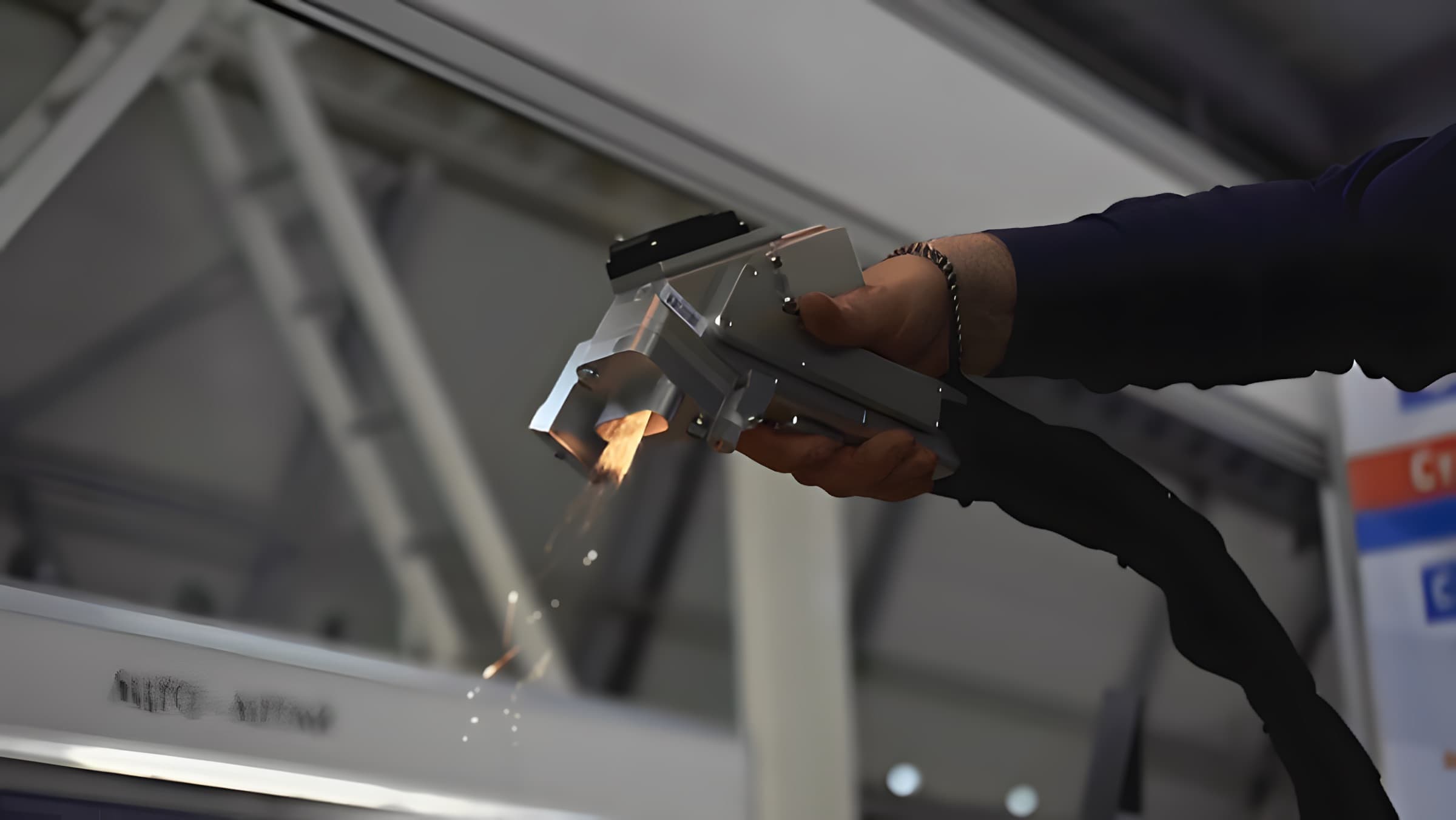
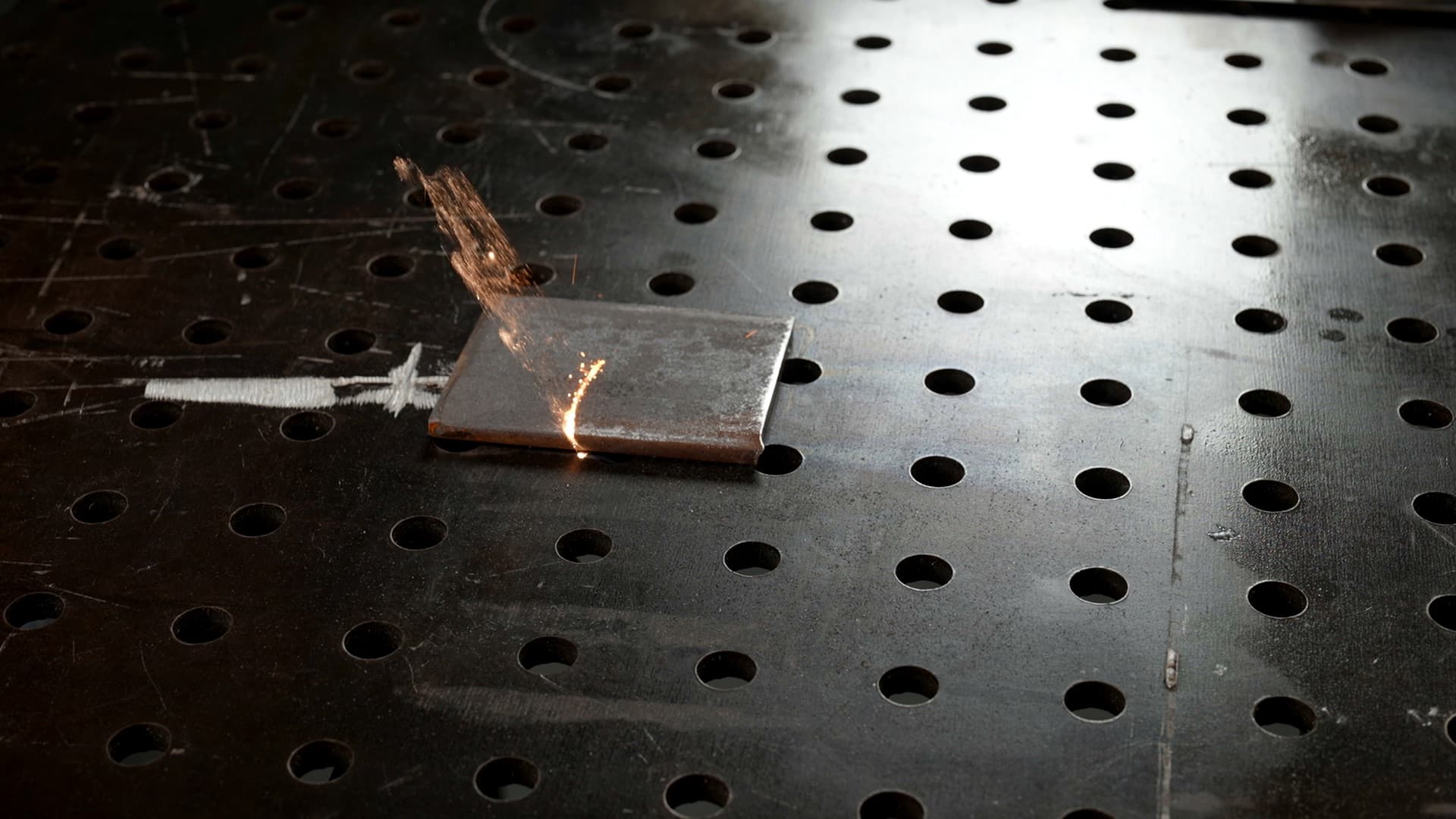
A fibre laser removes rust scale and salt crust by vaporizing it off the surface. The steel underneath does not get hot enough to matter, there is no abrasive to recover, and there is no water. On a frame rail that means we can strip a 300 mm band around a spring hanger down to clean, slightly matte steel while the hanger stays bolted on, the spring stays in place, and the airline running past it stays connected. The scale goes into a fume extractor as dust.
What laser does well on a truck: frame rail flanges, crossmember joints, fifth-wheel mounting plates, hanger brackets, trailer landing-gear mounts, the lower 400 mm of a dump box, and any welded joint where the inspector is going to look for cracks under the rust. What it does not do well: large flat areas where speed matters more than precision. A whole trailer deck is a blasting job, not a laser job.
A single tractor frame, both rails and the crossmembers, stripped at the corrosion points and ready for a rust converter or a frame paint, runs $1,400 to $3,200 in our market depending on how far the scale has spread. A five-unit batch in one yard over two days comes in lower per unit, usually $1,100 to $2,400 each, because the setup and travel are shared.
Dry ice blasting on gear, hydraulics and electrical
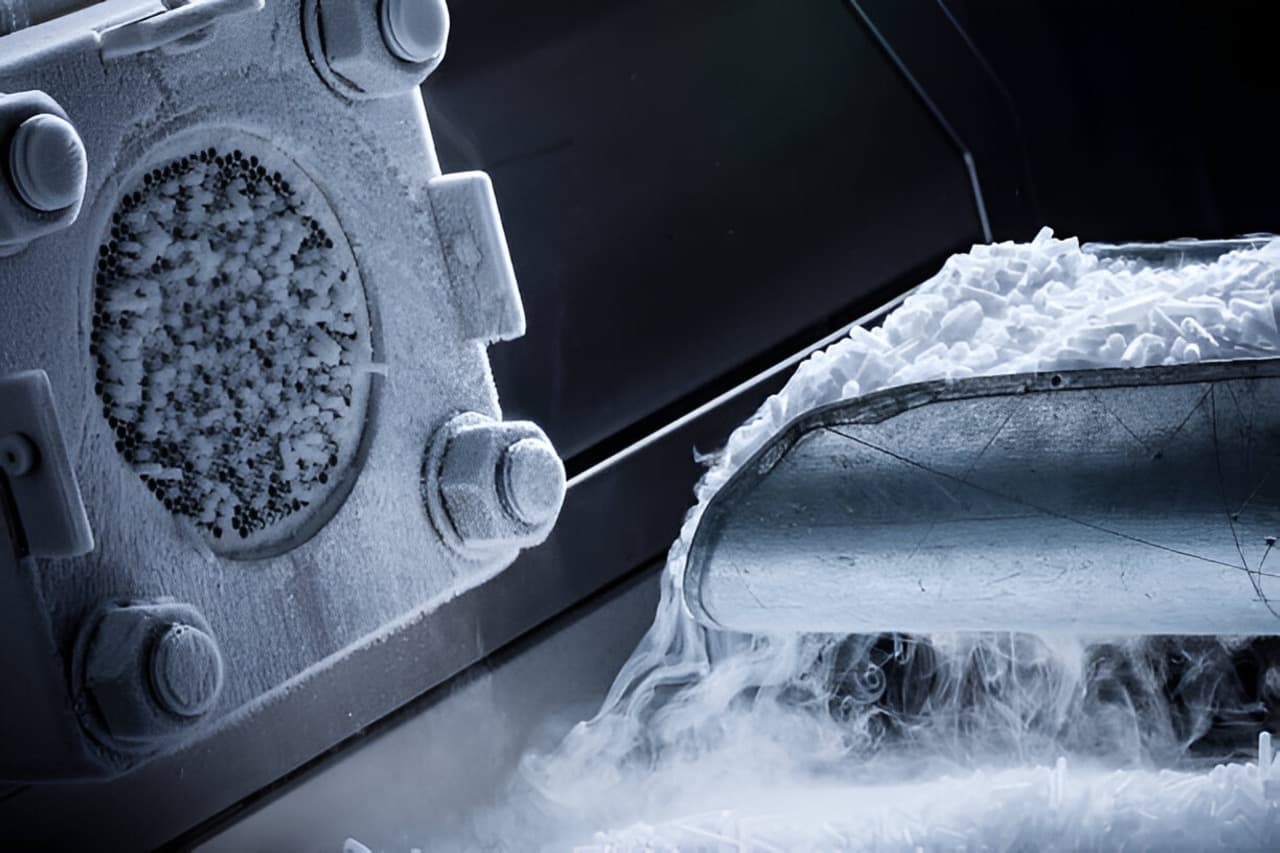
Dry ice blasting uses CO2 pellets fired at the surface. They hit, they sublimate, the thermal shock and the expansion pop the contamination off, and there is nothing left but the dirt that came off. No grit in the hydraulic fittings. No water in the connectors. The pellets are non-conductive, which is why we can blast a salt-crusted trailer harness junction, a transmission with the sensors in place, or the terminal block on an outdoor motor without disconnecting anything.
On a winter-damaged unit the dry ice targets are the salt-and-grease paste on axle housings and differentials, the crust on air tanks and brake chambers, the hydraulic pump and valve body on a dump or a plow unit, the back of the cab where the brine mist collects, and the entire undercarriage of a service truck with a utility body where the laser cannot reach between the compartments and the frame.
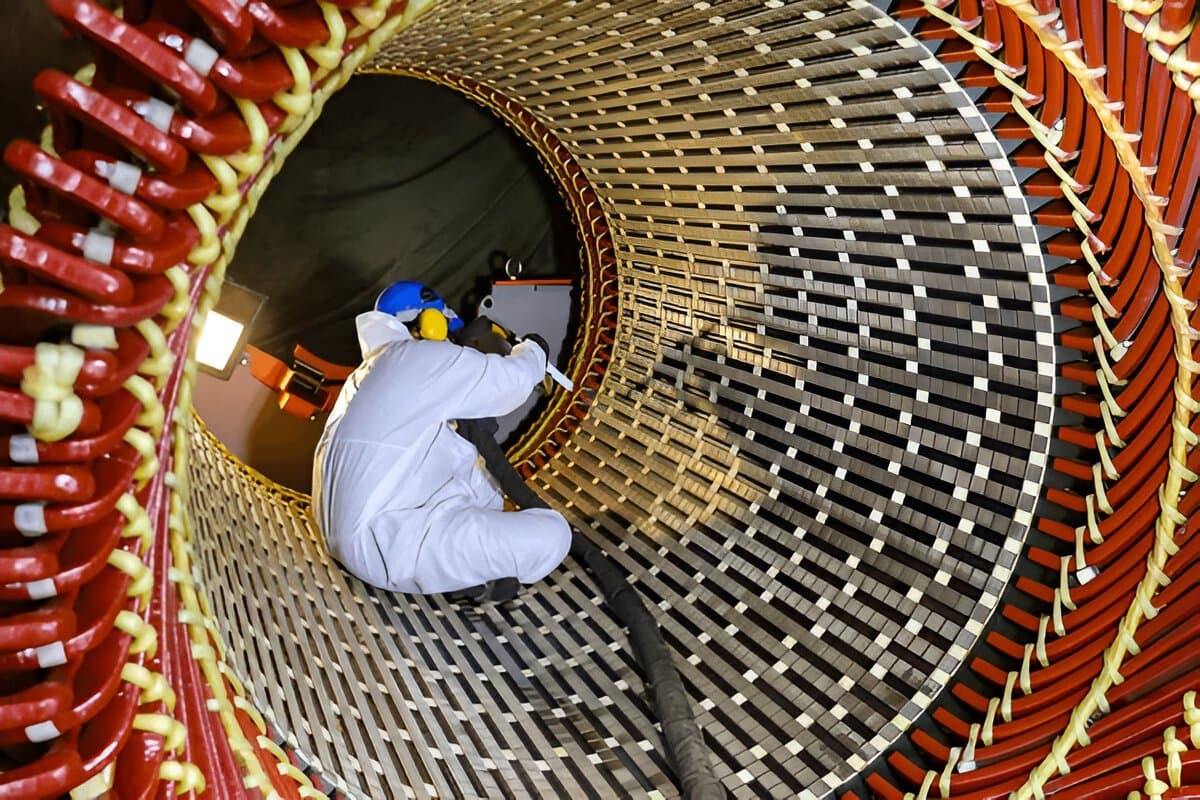
For plant equipment it is the same logic. We blast outdoor gearboxes, conveyor drives, hydraulic power units and electrical cabinets on their mounts, in place, while the plant runs the rest of the line. A dock-leveller pit with four winters of brine, grease and rust comes clean in three or four hours, and the plant does not have to pull the leveller out.
A dry ice job on the running gear and electrical of one highway tractor runs $900 to $2,200. A full undercarriage and body on a plow or sander unit, which is the worst case because the unit has been spreading the salt itself, runs $1,800 to $4,500. Outdoor plant equipment is quoted by the piece; a single conveyor drive and gearbox is often under $1,000, a loading dock with three levellers and the surrounding steel $3,000 to $6,000.
Why not sandblast it
You can. Plenty of shops in Surrey and Langley will. It is the cheapest way to strip a whole frame to bare metal if the truck is already down for a rebuild, the body is off and the harness is out. For a working truck it is the wrong tool. Grit gets into every bearing, fitting, slider and connector on the chassis, and either someone spends a day masking or someone spends a week chasing the fallout. There is also the WorkSafeBC side. Blasting with silica sand is restricted under the Occupational Health and Safety Regulation, and even with a non-silica media the operator needs supplied air and the yard needs containment. Laser and dry ice both run with a fume extractor and a respirator, and we do not generate a pile of contaminated grit for the client to dispose of.
That last point is the one the plant managers care about most. No chemical strippers, no grit, no wastewater. The only thing that leaves the site is the salt and rust that was on the metal, in a bag.
Timing the work so it does not cost you a truck
Fleet managers tend to call us in April, when the trucks come in for spring inspection and the corrosion is obvious. That is the right time to strip and recoat, and the wrong time to find out the frame needs a repair, because every shop in the valley has the same idea the same week.
The better pattern, and the one our repeat fleet clients run, has three stops in it.
In late October, before the first brine application, strip the known trouble spots on the units that run the passes and get a coating on them. A frame wax or a rubberized undercoat over clean metal lasts a winter. The same product sprayed over scale lasts until the first pothole.
In January or February, when a unit is in for a service anyway, blast the running gear and the electrical with dry ice. Two to four hours. The truck leaves the same day. This is the step that cuts the mid-winter electrical faults, because it clears the connectors before the brine has months to work into them.
In April, laser the frames that show pitting, let the inspector see clean steel, and recoat.
For plant equipment the calendar is simpler. Book the outdoor gear in the fall shutdown window and again after the last freeze. One Abbotsford food plant we service has us on the loading dock steel and the yard conveyors every October and every April, and in three years they have not replaced a dock leveller. Before that they were replacing one every second year at about $9,000 installed.
What the quote depends on
Four things move the number.
How far the corrosion has spread beyond the obvious spots. A frame that is scaled at the hangers only is a short laser job. A frame that is scaled along its full length is a different day.
Access. A tractor on a hoist in your shop is fast. A plow unit in a gravel yard in Hope in February is slower, and we bring the generator and the compressor.
Count. Five units in one yard on consecutive days cost less per unit than one unit in five yards.
Whether anything has to come off. We try hard to do this without disassembly, and most of the time we can. A service body that has to be lifted to get at the frame under it is a crane and a half day added.
We are insured for work in your shop and on your site, our crews are WorkSafeBC compliant, and we have been through enough fleet yards in Delta, Surrey, Abbotsford and Chilliwack to quote most of this from a few photos and a unit count. Send the photos and the count through the quote form, tell us which routes the trucks run, and we will come back with a price and a window. If the trucks run the passes, do it before the first brine goes down, not after.