Most comparisons of laser cleaning vs chemical paint stripping stop at the wrong number. Someone prices a jug of stripper, then prices our hourly rate, and the stripper wins by a mile. Then the job starts. Poly goes up. Fans run for four days. The rinse water needs somewhere to go, two drums of sludge sit by the loading door waiting for a licensed carrier, and the primer goes on a week late.
That’s usually when we get the call.
This page prices a paint stripping job the way a maintenance manager in Burnaby or on Annacis Island actually pays for it: every line, start to finish, including the days the area sits out of service. If you want the mechanics of how a laser lifts paint off steel or wood, our guide to laser paint stripping covers that. Here, it’s the total cost.
The short answer
On small, simple jobs, chemical paint stripping is cheaper. Not close. One door, a handful of brackets, a short run of railing: buy the stripper and spend an afternoon on it.
Somewhere around 15 to 20 square metres of multi-coat paint on steel, the numbers cross. Count containment, waste disposal, dry-down time and rework, and laser cleaning usually lands level with chemical stripping or below it. Indoors, in an occupied building, or anywhere near a floor drain, the gap opens faster. Past 40 square metres we rarely see the chemical route win, unless the parts can travel to a dip tank.
The rest of this page shows where those numbers come from.
What a chemical paint stripping job costs, line by line
The stripper is the smallest line on the invoice. Commercial benzyl alcohol strippers run about $70 to $120 per 4-litre jug in the Lower Mainland, and three coats of old alkyd enamel usually need two applications at roughly half a litre per square metre each. Caustic poultice systems cost more per square metre but can take several coats in one go, at the price of an overnight dwell and a neutralizing wash.
Everything else is where the money goes. These are the ranges we see on contractor quotes and in-house tallies around Metro Vancouver for steel carrying two to four coats of enamel:
| Line item | Cost per m² | What drives it |
|---|---|---|
| Stripper, two applications | $18 to $30 | Coating thickness and type |
| Labour: apply, dwell, scrape, reapply, scrape | $55 to $135 | 0.7 to 1.2 m² per worker-hour at $65 to $95 an hour |
| Neutralizing and rinsing | $8 to $15 | Caustic products need it; wax-bearing solvents need a wash |
| Containment and ventilation | $10 to $25 | Poly, drop sheets, fans or negative air for 3 to 5 days |
| Waste pickup and disposal | $20 to $45 | Sludge, rags, poly and captured rinse water |
| Flash rust re-prep before primer | $5 to $20 | Hand tools or a solvent wipe after the steel dries |
| Before downtime and rework | $116 to $270 |
Labour is the line people miss. The label on the jug talks about dwell time. It says nothing about the scraping, the second coat of stripper on the layers that didn’t let go, or the hours spent working sludge out of bolt heads and weld seams. Two people on 40 square metres of three-coat enamel is three and a half to four days of work.
Then there’s waste. Softened paint, spent stripper, contaminated rags and poly can’t go in a dumpster, and none of it can go down a floor drain. Metro Vancouver’s sewer use bylaw limits what a facility can discharge, and stripper that reaches a storm drain running to the Fraser River or Burrard Inlet becomes a federal Fisheries Act matter. So it goes in drums, and a licensed carrier picks them up at roughly $350 to $700 per 205-litre drum, depending on contents and distance. A 40 square metre job typically fills one to three drums. If the old paint contains lead, the whole lot is handled as hazardous waste with a manifest, and the price climbs.
Laser cleaning on the same steel
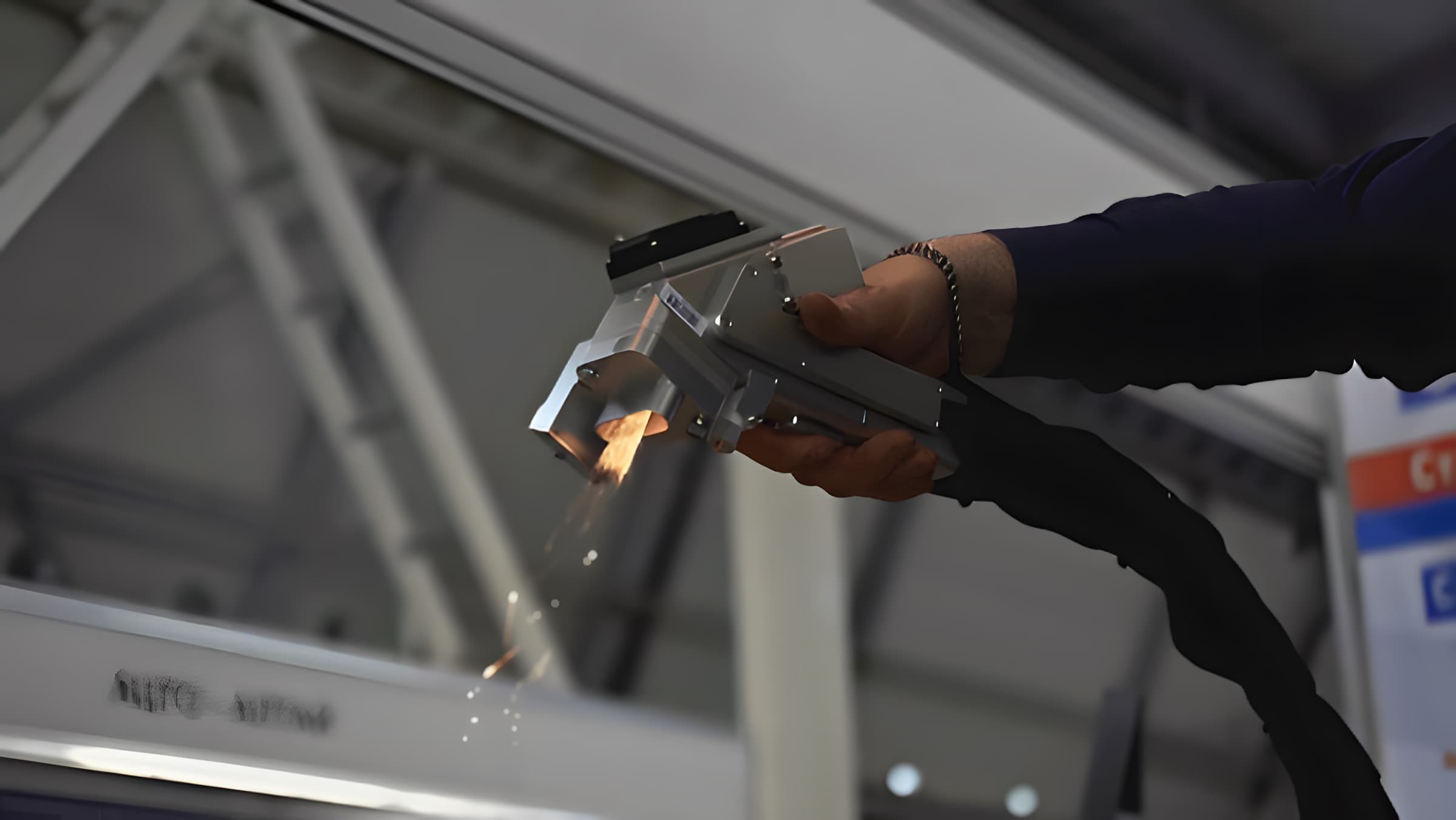
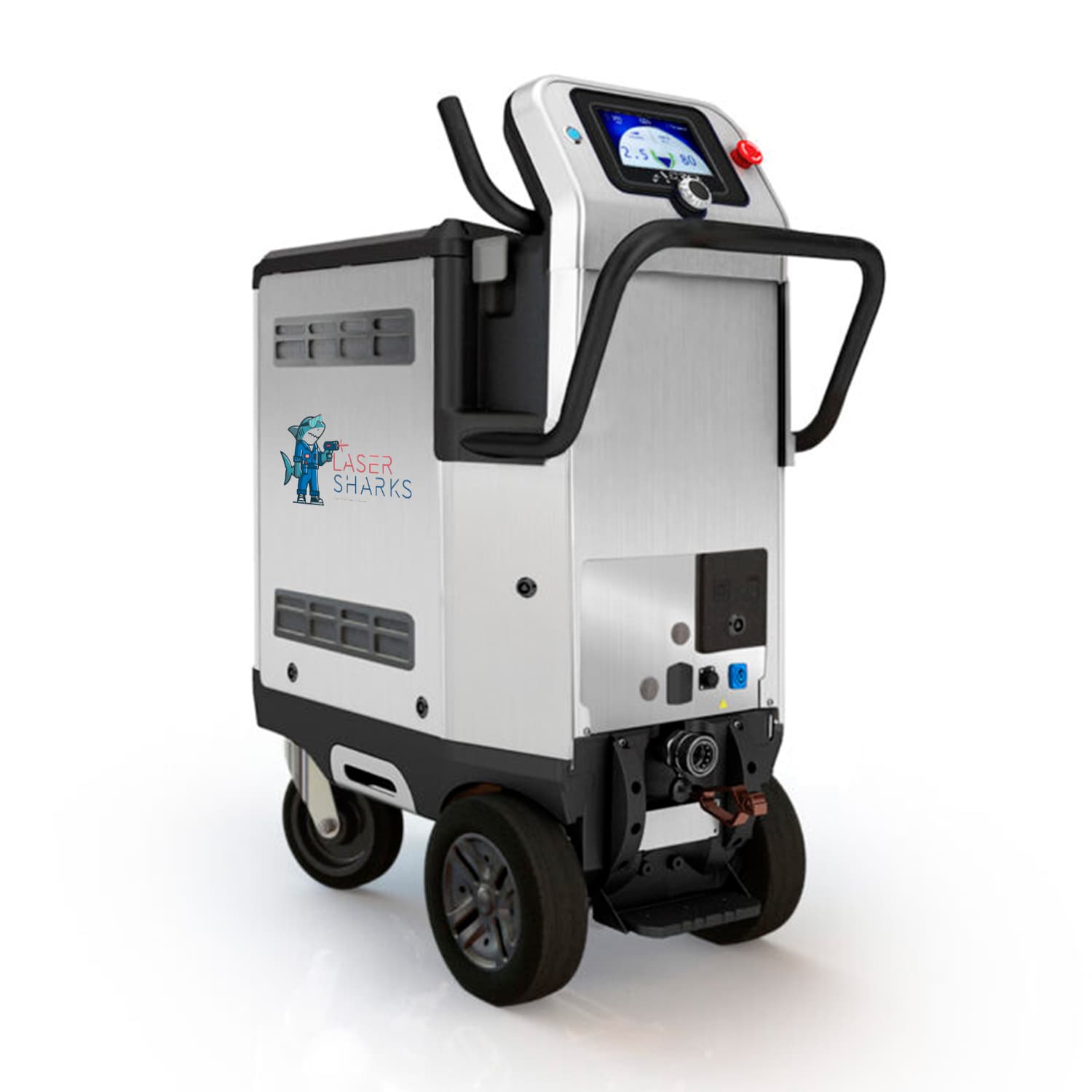
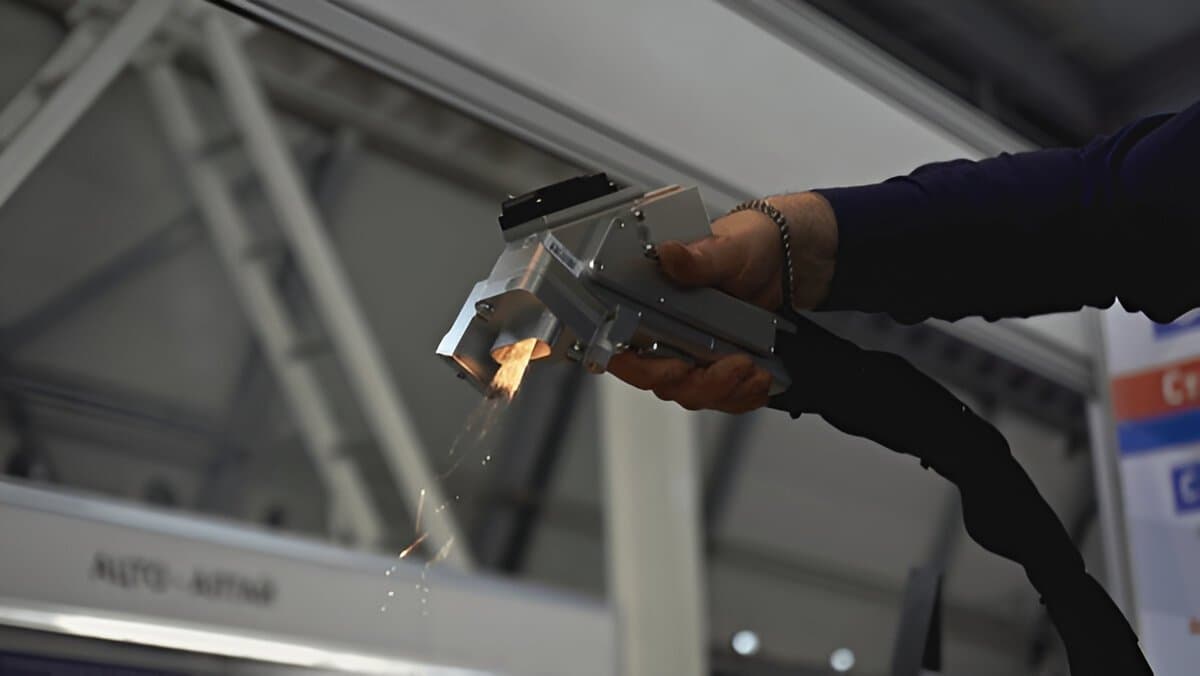
Our laser cleaning rate runs $180 to $260 an hour, and that figure includes the operator, the laser unit and the fume extraction. Mobilization within Metro Vancouver adds $350 to $600, and we carry a half-day minimum. On steel with two to four coats of enamel, a handheld unit typically clears 1.5 to 4 square metres an hour on flat, open surfaces, slower around edges, tube and bolt heads.
That works out to roughly $45 to $175 per square metre. On paper the two ranges overlap.
The difference is in the lines that disappear. A laser job buys no stripper and pours no rinse water, so there’s nothing to neutralize. Waste is a filter cartridge and a small bag of collected dust from the extractor, usually under $200 to dispose of, even on lead jobs. The steel behind the operator is dry and clean, ready for primer the same afternoon, which takes the flash rust line off the sheet as well. Containment shrinks to a marked laser safety zone with barriers and signage instead of a sealed poly room.
No chemicals bought, none disposed of. For a lot of our clients that’s the reason they called in the first place, and it’s the reason we built the company around chemical-free methods. More detail on the service itself is on our laser cleaning page.
The cost neither quote shows: downtime
Most of a chemical job’s calendar is waiting. Dwell time, then scraping, then a second application, then the neutralizing wash, then drying. The area stays sealed off the whole time.
Drying is slower here than people expect. In a Vancouver November, rinsed steel in an unheated bay can stay damp overnight, and bare steel that sits damp starts to flash rust within hours. The primer waits. So does whoever needs the area back.
A laser job moves along the surface instead of sitting on it. Sections finish behind the operator and can be primed while the next section is still being stripped, so the area comes back in pieces rather than all at once at the end.
Put a number on that. If the bay, line or loading dock costs you $3,000 a day in overtime, rerouted work or idle crew, two extra days of chemical stripping add $6,000 to the job. That figure never appears on either quote, and on most projects we price it’s bigger than the gap between the quotes themselves.
Rework: the cost that shows up next winter
Chemical stripping can leave something behind. Many solvent strippers carry wax to slow evaporation, and that film has to be washed off completely before new paint will bond. Caustic residue left in pits and seams attacks alkyd primers from underneath. Neither problem is visible on the day the primer goes on.
It shows up later as blistering or peeling, often within the first wet season. Fixing it means stripping fresh paint plus whatever residue caused the failure, on a job you thought was finished. Redo even a quarter of the area and whatever the chemical route saved is gone.
Laser-stripped steel carries no residue. Primer bonds to clean, dry metal, and this whole category of risk mostly drops out.
A job profile: conveyor frames on Annacis Island
Here’s how laser cleaning vs chemical paint stripping plays out on a typical scope. A beverage plant on Annacis Island wants about 40 square metres of conveyor support frames and machine guarding stripped and repainted during a three-day planned outage. Three coats of enamel, lead-free by chip test. Product lines run within a few metres of the work, so solvent vapour and rinse water near open product are a problem for the plant’s food safety program.
The chemical stripping quote, from a two-person crew, looked roughly like this:
- Stripper, two applications: $1,000
- Labour, about 56 worker-hours at $80: $4,480
- Poly enclosure and negative air for five days: $800
- Two drums of waste by licensed carrier: $1,100
- Flash rust re-prep before primer: $450
About $7,830 in total, and five days start to finish against a three-day window.
The laser cleaning version: about 20 hours of operator time at $220, mobilization at $450, and under $200 for filter and dust disposal. Around $5,050, done inside the outage, with primer going on behind the operator from the first afternoon.
What if the plant’s own maintenance crew did the chemical strip instead? At a loaded $48 an hour, the labour line drops to about $2,690 and the total lands near $6,000 on paper. Closer. But those 56 hours come out of the maintenance schedule during the one window when the line is down, which is exactly when that crew is busiest. And the outage still runs two days long.
When chemical stripping is the better buy
We’d rather lose a small job than sell the wrong method, so here’s where we’d point you to the stripper aisle.
Anything under the half-day minimum. A few square metres of paint, a single door, one gate.
Small parts in volume, if they can travel. A shop with a dip tank or burn-off oven will usually beat on-site work of any kind on brackets, hardware and small castings.
Hollow sections and pipe interiors. A liquid flows in; a laser beam needs line of sight.
Thick, soft coatings like rubber linings, bitumen and heavy elastomeric membranes tend to smear under a beam rather than break up. Depending on the product, scraping or a solvent can be faster.
And if the coating spec calls for an angular anchor profile, a laser strips the paint but won’t cut that profile. You’ll need abrasive blasting for that step regardless, with the WorkSafeBC silica controls that come with it if the media contains crystalline silica. Stripping chemically first just adds a step.
On loose, flaking paint, dry ice blasting often beats both. We run laser and dry ice from the same crew, so on a site visit we pick the method for each surface instead of forcing one machine onto the whole job.
Lead paint changes both columns
Paint on BC equipment and buildings from before the 1990s often contains lead, and some old industrial primers carry chromates too. Get a paint chip test before choosing a method. Lower Mainland labs charge about $50 to $150 a sample, with results in a few days.
A positive result means an exposure control plan under WorkSafeBC rules, whichever method you use. With chemical stripping, every drum of sludge and every litre of rinse water becomes lead-contaminated hazardous waste, and workers handle wet lead residue by hand. With a laser, the lead leaves as fume and fine dust, captured at the nozzle through HEPA filtration, and the waste fits in a sealed bag. Lead raises the cost of both methods. It raises chemical stripping more.
Our recommendation
Under about 10 square metres, or for parts that fit in a dip tank, use chemical stripping and skip the mobilization charge. Over 20 square metres of painted steel, especially indoors, near product, near drains or against a deadline, price laser cleaning first and compare the two methods on total job cost, line by line, with your own downtime figure added in. Between 10 and 20, access and coating type decide it, and a ten-minute test patch settles the question.
FAQ
Is laser cleaning cheaper than chemical paint stripping?
Per hour, no. Per job, often yes, once you count containment, waste disposal, rinse and dry-down time, and the risk of residue causing a coating failure. The crossover on steel with several coats of paint is usually around 15 to 20 square metres.
Does laser paint removal produce hazardous waste?
Far less of it. The removed coating ends up in the extractor’s filter and a small bag of dust. If the paint contains lead, that dust is hazardous waste, but the volume is a small fraction of a chemical job’s sludge, rags and rinse water.
Can a laser remove paint without damaging the steel?
Yes, when it’s set correctly. Paint breaks apart at a lower energy than steel, so the beam strips coating and stops at clean metal, leaving no grit and no chemical residue. Thin aluminum and galvanized steel need lighter settings and a test patch first.
How do you give a fixed price on a stripping job?
Send photos with something in frame for scale, the approximate area, and whatever you know about the coating. On anything over a few hours we run a test patch on your actual paint, measure the production rate, and quote a fixed number from that.
Getting a number for your job
Our crews are fully insured, work under WorkSafeBC requirements on every site, and Laser Sharks was named Best Cleaning Services in BC 2025 by the CBRB. If you have a paint stripping job coming up anywhere from Richmond to North Vancouver, send a few photos and the rough area. We’ll come back with a line-by-line laser cleaning price you can set beside any chemical stripping quote. You can request a free quote or call 236-660-4248.