A fabricator on Annacis Island blasts six wide-flange beams on a Friday afternoon in December. The primer crew can’t get there until Monday. By Monday morning the steel wears a thin orange haze, and the coating spec doesn’t allow it. The beams go back to the blast bay, the paint crew loses half a day, and the shop pays for a second round of abrasive and cleanup.
That is flash rust, and in a coastal BC winter it is one of the most common reasons a recoat schedule slips. Flash rust removal is quick work when it happens at the right moment, which is in the hours right before the primer goes on. Two days earlier is too early. Below: why bare steel turns orange so fast between November and March, how to tell flash rust from corrosion that needs full surface prep, why blast-then-wait keeps failing in our climate, and what laser cleaning just ahead of the paint crew costs in the Lower Mainland.
Why bare steel turns orange so fast in a BC winter
Freshly cleaned steel has no protection at all. With mill scale, old paint and oxide gone, water and oxygen start rusting it within minutes. In Vancouver from November to March, water is easy to come by even on days it isn’t raining.
The number that matters is the dew point. Take a typical January morning in Richmond: air at 6 °C, relative humidity at 90 percent. The dew point works out to about 4.5 °C. Steel that spent the night in an unheated bay with the roll-up door cracked is often colder than the air, say 3 or 4 °C, so moisture condenses on it as a film too thin to see. That film is enough. Within an hour or two the first yellow-brown haze shows up on bare metal.
That is why most coating product data sheets require the steel to be at least 3 °C above the dew point during final surface prep and application, and many cap relative humidity at 85 percent. On that January morning in Richmond, the steel has to reach 7.5 °C before anyone primes it. In an unheated building it won’t get there on its own.
The coast adds its own problems:
- Salt in the air. Steel stored near Burrard Inlet, along the Fraser River or in a North Vancouver marine yard collects chlorides. Chlorides pull moisture out of the air and keep a surface wet at humidity levels that clean steel would shrug off.
- Water from the prep itself. Wet abrasive blasting and water jetting, which many contractors use to control dust, put water straight onto the steel.
- Short days. In December the sun sets around 4:15 pm, so steel cleaned after lunch cools fast and often sits damp until morning.
Flash rust or real corrosion? How to tell on site
Check what you’re looking at before anyone books cleaning. Flash rust is a surface stain. Corrosion that has been working for weeks is a different job with a different price.
Flash rust is an even, thin film of yellow-brown or light orange, sometimes patchy or streaked where water ran or pooled. You can still see the steel and the blast profile underneath. Wipe it with a clean white rag. Light flash rust barely marks the cloth; heavy flash rust leaves an orange-brown smear and comes away as powder. The ISO 8501-4 standard grades it light, medium and heavy along those lines, and many coating data sheets state which grade the primer will tolerate. Some surface-tolerant epoxies accept light flash rust. Zinc-rich primers and many tank linings accept none.
Inspectors call rust on dry-blasted steel left too long "rust-back" and save "flash rust" for the haze after wet blasting or water jetting. On site both get called flash rust, and the cleanup is the same if it’s caught within a few days.
It has gone past flash rust when you see:
- Dark brown or black rust, flaking scale, or rust that lifts in layers under a scraper
- Pits that are still full of rust after the surface around them is clean
- Rust creeping under the edge of existing paint, or blisters in the coating
- Rust that returns in the same spots within hours of cleaning
That last sign usually means salt. Test for soluble salts before coating; a Bresle patch test is cheap, takes a few minutes, and your coating spec sets the chloride limit. Paint over the salt and the surface blisters from underneath.
Anything on that list needs full surface preparation and gets quoted that way. Our guide to laser surface treatment before coating covers profile and adhesion on that kind of work.
Why "blast, wait, then paint" fails between November and March
The traditional sequence is simple. Blast the whole piece, blow it down, prime it within the shift. In July it mostly works. In December, the gap between blasting and priming is where the job goes wrong.
Dry abrasive blasting in the Lower Mainland means containment, and with silica-bearing media or substrates it means a WorkSafeBC exposure control plan for respirable crystalline silica. Many contractors switch to wet abrasive or slurry blasting to keep the dust down. The dust problem goes away, and bare steel gets soaked in the wettest months of the year. Rust inhibitors in the blast water slow the bloom, but the residue they leave has to be compatible with your primer, and only the coating manufacturer can confirm that.
Then comes drying. Wet-blasted steel in an unheated bay at 5 °C dries slowly and often flashes first. Shops blast in small batches, run propane heaters and dehumidifiers, and call the painter in early, which costs money and still depends on the weather.
When the bloom shows up and the spec won’t accept it, the usual fix is to re-blast. That means more abrasive, another setup, another cleanup and a coating crew on standby. A four-person paint crew at a loaded $90 to $110 an hour each costs $360 to $440 for every hour it waits. Lose a morning and that’s about $1,500 before anyone counts abrasive and disposal.
The worst case is the one nobody catches. Primer goes on over medium flash rust that the spec didn’t allow, and the steel looks fine at handover. Six to eighteen months later the coating blisters or rust bleeds out at the edges and bolt holes. The repair means stripping, re-prepping and recoating in place, usually at several times the cost of doing the prep right the first time.
Laser cleaning right before the coat goes on
Laser cleaning changes the order of work. The anchor profile gets created once, in the shop or blast bay, whenever it suits the schedule. The final clean happens on coating day, section by section, a short distance ahead of the brush or spray gun.
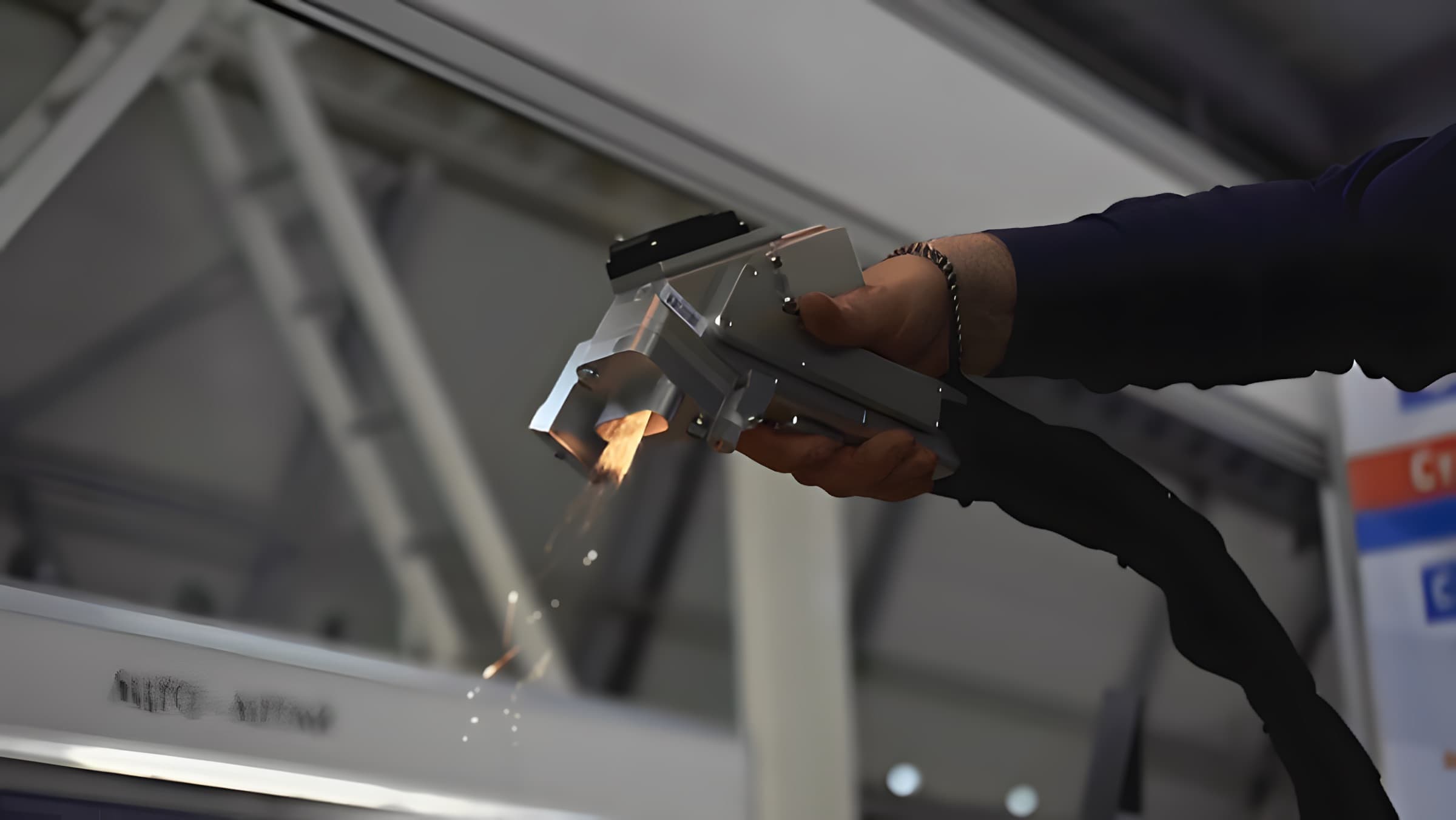
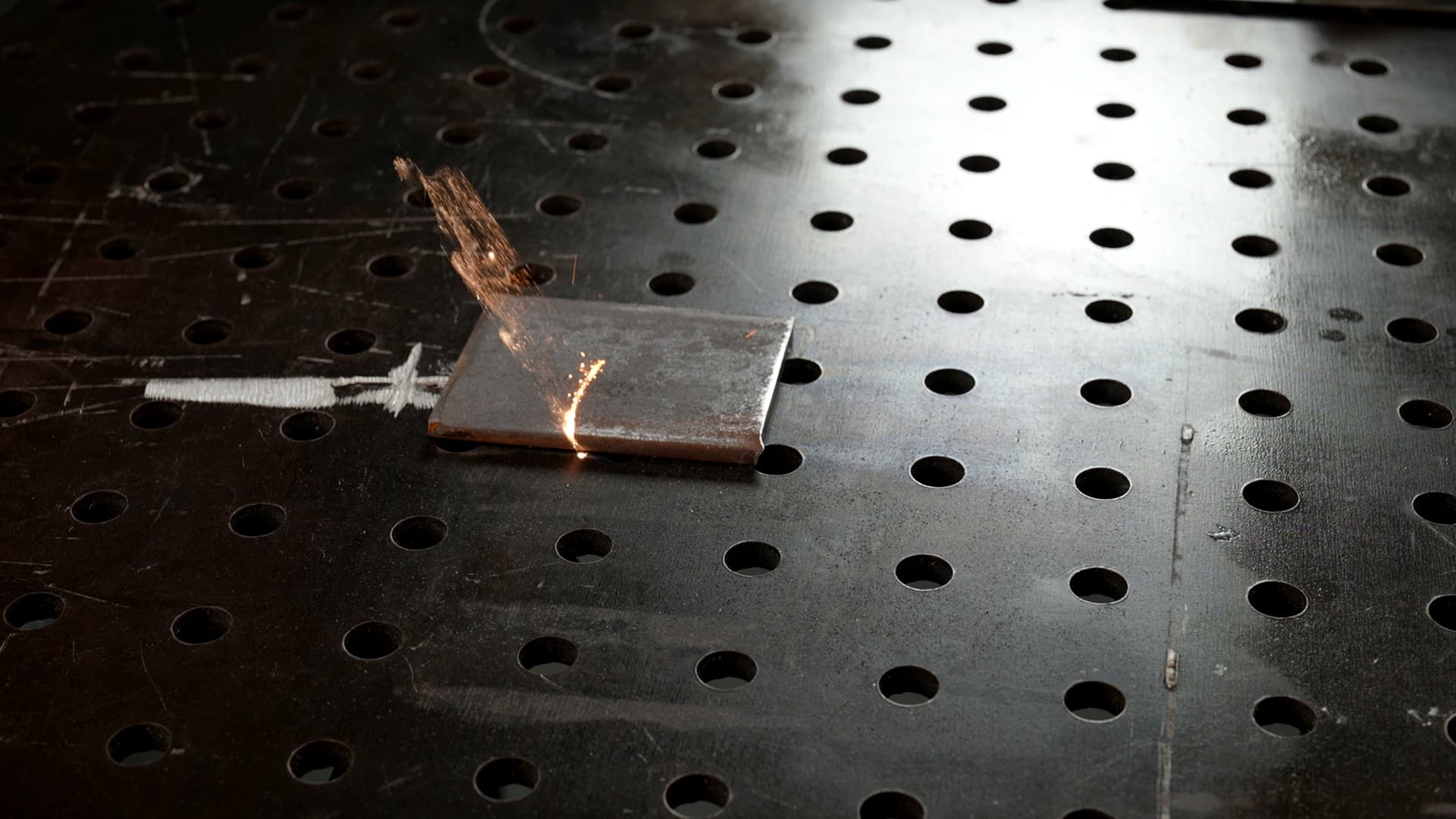
A pulsed fiber laser takes flash rust off as a thin oxide layer and stops at bare metal. No water, media or chemical touches the steel, so there is nothing to dry and nothing to rinse. With the right settings the existing blast profile stays intact; the laser removes the rust sitting in the valleys of the profile without flattening the peaks. Fume extraction at the head captures what comes off. The only waste is a small amount of filter dust, against the spent abrasive a re-blast leaves to sweep up, bag and haul away.
Flash rust is the fastest kind of rust to remove with a laser. On flat plate and open structural members we typically clean 6 to 10 square metres an hour. Connections, bolt holes and stiffener corners go slower.
The clean-to-coat window, hour by hour
On a recoat day in a heated shop, the sequence usually runs like this:
- Before the first pass. Your painter or inspector records air temperature, relative humidity, steel temperature and dew point. If the steel isn’t 3 °C above the dew point, the heaters go on and we wait. Cleaning steel that will sweat again an hour later is money thrown away.
- Clean in sections the paint crew can cover within about an hour. That is usually a few beams, or one face of a frame. We mark the section off, clean it, and the painter follows.
- Re-check readings every two hours, and any time the doors open for a forklift or the heaters cycle off.
- Last hour of the shift. We stop cleaning ahead of the crew. Steel cleaned after the last primer of the day goes on will need cleaning again in the morning.
In an unheated building, or outside under a tarp, the window shrinks. If the steel can’t be held above the dew point, we plan no more than an hour between cleaning and primer, and sometimes the right call is to move the work indoors or wait. We would rather say so at the quote stage than bill for cleaning that rusts again before lunch.
Where the laser stops
The laser does not create an anchor profile. On new steel that has never been blasted, or on a smooth surface where the coating spec calls for 50 to 75 microns of profile, you still need abrasive blasting at some stage. The laser keeps that profile clean until the coating goes on.
It can’t fix cold steel either. The beam warms the surface slightly, nowhere near enough to hold it above the dew point. Heat and humidity control stay with the shop.
Soluble salts at the bottom of pits are the third limit. If the Bresle test fails, the salts need washing out and the steel needs to dry before the final laser pass.
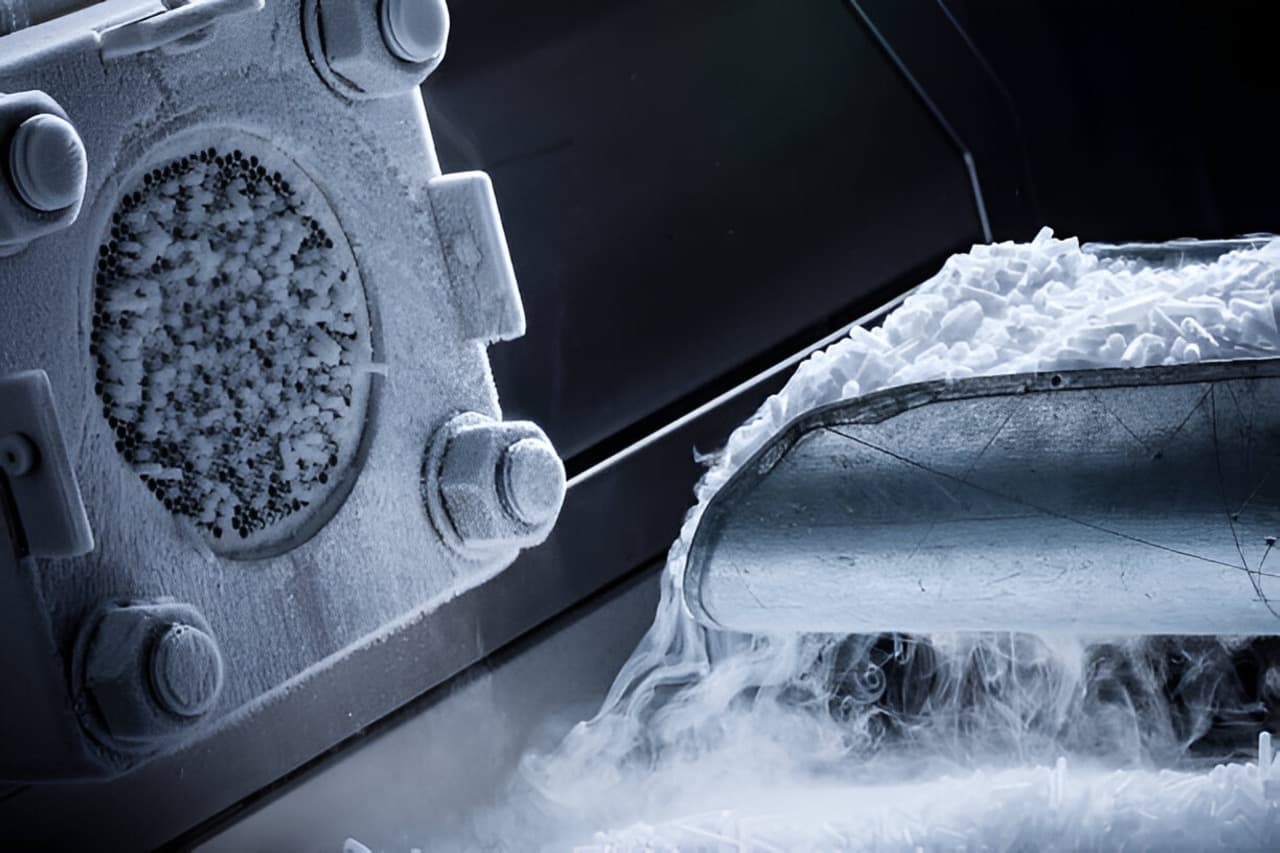
Dry ice blasting has a place on these jobs, earlier in the sequence. It strips oil, grease and cutting fluid from fabricated steel without solvent, ahead of the blast or the laser. We don’t use it as the last step on bare steel in winter. The pellets are at -78.5 °C and chill the surface well below the dew point, which brings the condensation straight back.
What flash rust removal costs in the Lower Mainland
Most pre-coat flash rust jobs we quote land between $1,200 and $3,000, because the paint crew’s day sets the hours. Our laser rate runs $180 to $260 an hour, which covers the operator, the unit and fume extraction. Typical brackets:
- Half a day ahead of a primer crew on a few beams, a frame or an equipment skid: $1,200 to $1,800 with mobilization.
- A full recoat day in a fabrication shop or on a structural job: $2,300 to $3,000.
- Several days on a tank exterior, bridge component or a large steel package coated in phases: $4,000 to $6,500 and up.
By area, light flash rust on open steel works out to roughly $25 to $45 per square metre. Medium flash rust, or rust packed into tight details, costs more per metre.
Quotes move by half in either direction. Heavier bloom and more connection detail add hours, and so do lifts and scaffolding. We need a 240-volt circuit within reach of the work, or we bring a generator at $150 to $350 a day. Outdoor work risks weather stoppages. If the paint crew isn’t ready when we arrive, the waiting is billable on both sides, so confirm the coating schedule the day before.
Set that against the re-blast. On a mid-size steel package, a second blast with abrasive, containment, cleanup and a crew on standby often runs $2,000 to $5,000 in the Lower Mainland, and it puts you right back in the same race against the dew point. One avoided re-blast pays for a day of laser work.
Planning a recoat this winter
A lot of coating work lands in December and January, during holiday shutdowns and the push to ship before year-end. Those are the worst weeks for bare steel, so plan the final clean for the same day as the primer and put the dew point checks in the schedule.
To quote, we need the steel type and rough area, the coating system with its product data sheet (we look for the surface temperature and humidity limits and the flash rust grade the primer accepts), whether the building is heated, photos of the current condition and your coating dates. We work to the painter’s schedule. On a larger package we visit first and clean a test area so your inspector can check it against the spec before anyone commits.
Laser Sharks crews are WorkSafeBC compliant and fully insured. A cleaning laser is a Class 4 device, so we set up a controlled zone with barriers, signage and eye protection, and we work under your site safety program. The company was named CBRB Best Cleaning Services in BC for 2025. We clean steel for fabricators, coating contractors and plant maintenance teams from Delta, Richmond and Burnaby to North Vancouver, Surrey and the Fraser Valley.
Send the details through our quote form or call 236-660-4248. We will tell you whether your steel needs a pre-coat clean, full surface prep, or just a heater and a dry night.