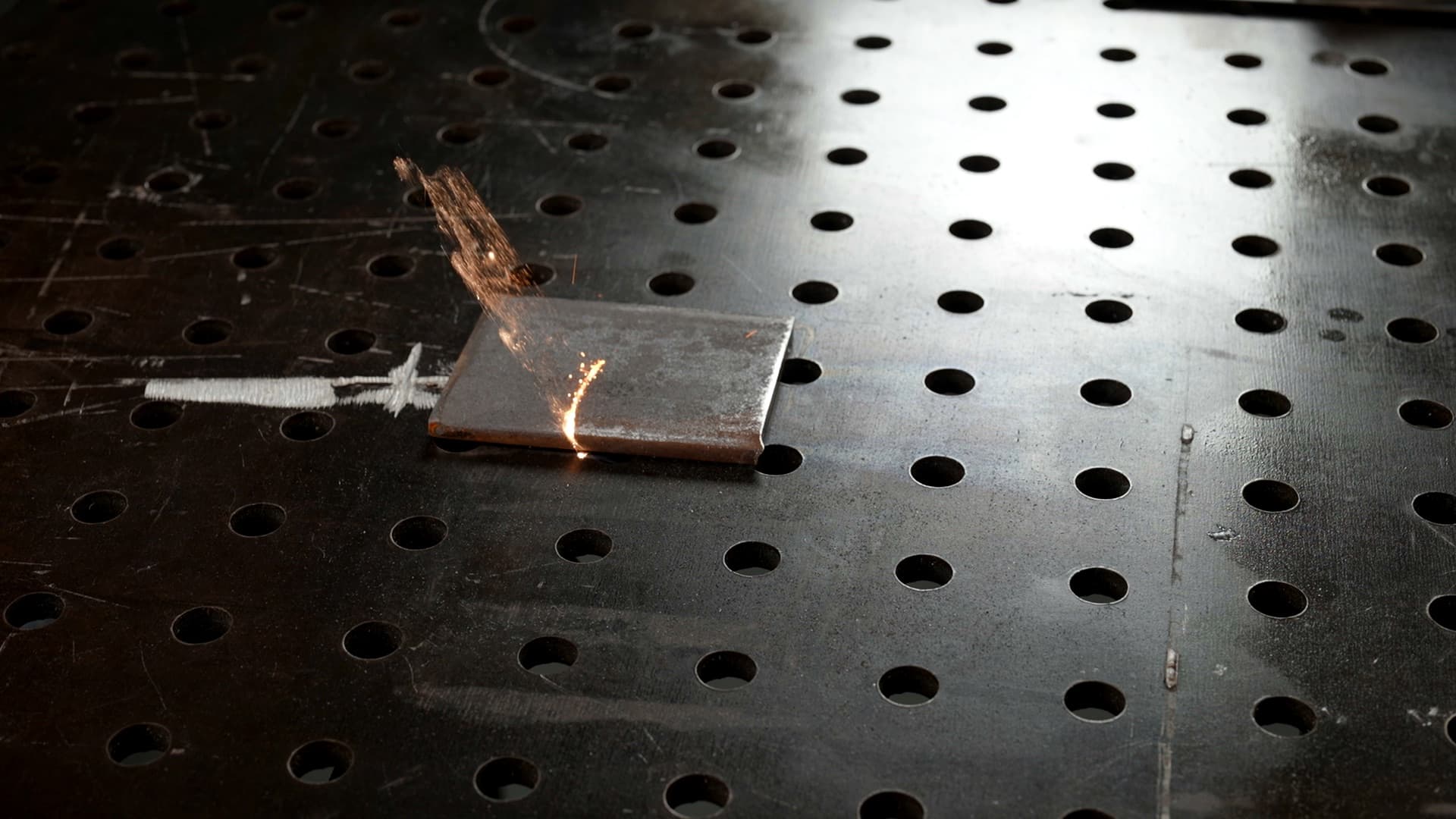
Estimators call and ask one thing about structural steel: what is your rate per square metre.
Fair question. The honest answer on laser cleaning vs sandblasting steel cost is that both methods land somewhere between $40 and $180 per square metre in Greater Vancouver, and the equipment is barely responsible for the spread. What decides the invoice is everything billed around the cleaning itself. Containment. Waste. Air monitoring. The hours your structure sits unavailable while a crew builds a tent around it.
Two quotes for the same beam can differ by a factor of three and both be honest. Below is how to take them apart.
A square metre of steel is not a square metre of wall
Before comparing rates, agree on the take-off. This is where most of the variance starts, and it has nothing to do with method.
A mid-size W-section runs roughly 2.4 to 3.1 square metres of paintable surface per linear metre once you count both flanges, both faces of the web, and the flange edges. Angle and lattice sections are worse. A transmission tower leg looks like a thin silhouette from the ground and prices out at three to four times the area a project manager sketches on the back of a drawing. Add connection plates, gussets, bolt clusters, and the number climbs again.
So when one contractor quotes $52 per square metre and another quotes $110, check whether they measured the same steel. Ask both for the area they used and the basis for it. If a bidder cannot state the number, the rate is decoration.
Complexity multiplies both methods, but not equally. Abrasive crews lose time to masking and re-masking. Laser operators lose time to standoff distance and awkward angles on tight bolt groups.
What abrasive blasting actually bills
Media first. Garnet and expendable slag delivered in the Lower Mainland runs about $0.55 to $1.10 per kilogram, and structural steel with weathered coatings consumes 20 to 30 kilograms per square metre. That is $12 to $30 per square metre before anyone touches a nozzle.
Then the waste. Spent abrasive comes back heavier than it went out because it now carries the old coating with it. Disposal at Lower Mainland facilities sits around $180 to $320 per tonne for non-hazardous material. Strip a pre-1990 alkyd or a chromate primer and the whole waste stream reclassifies, sampling and manifests follow, and the disposal line stops being a rounding error.
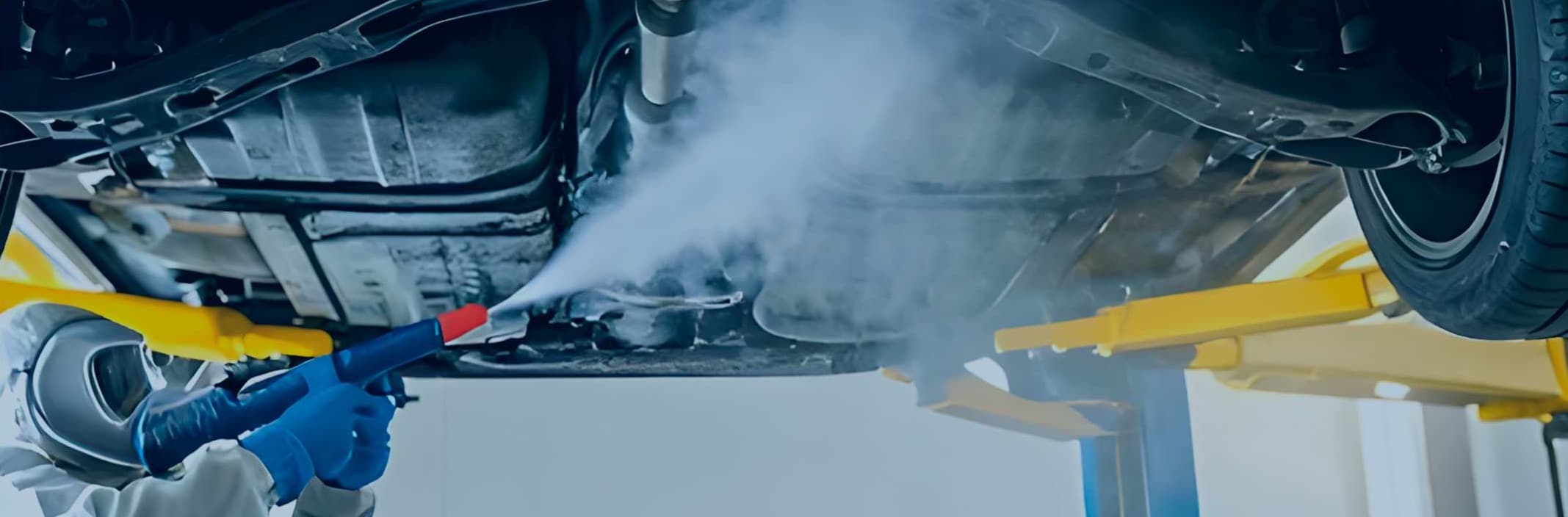
Containment is the third block. Full or partial enclosure, negative air, and third-party monitoring under the WorkSafeBC respirable silica rules add $1,800 to $3,200 per day on a typical structural job in Burnaby or Delta, plus a day and a half of build and strip on either end that produces no cleaning at all.
Open-air blasting in a remote yard with clean media and no coating hazard is cheap: $45 to $70 per square metre all in. The same scope on an occupied site, enclosed, with a hazardous waste stream, gets to $120 to $180. Same crew, same nozzle.
What laser billing looks like
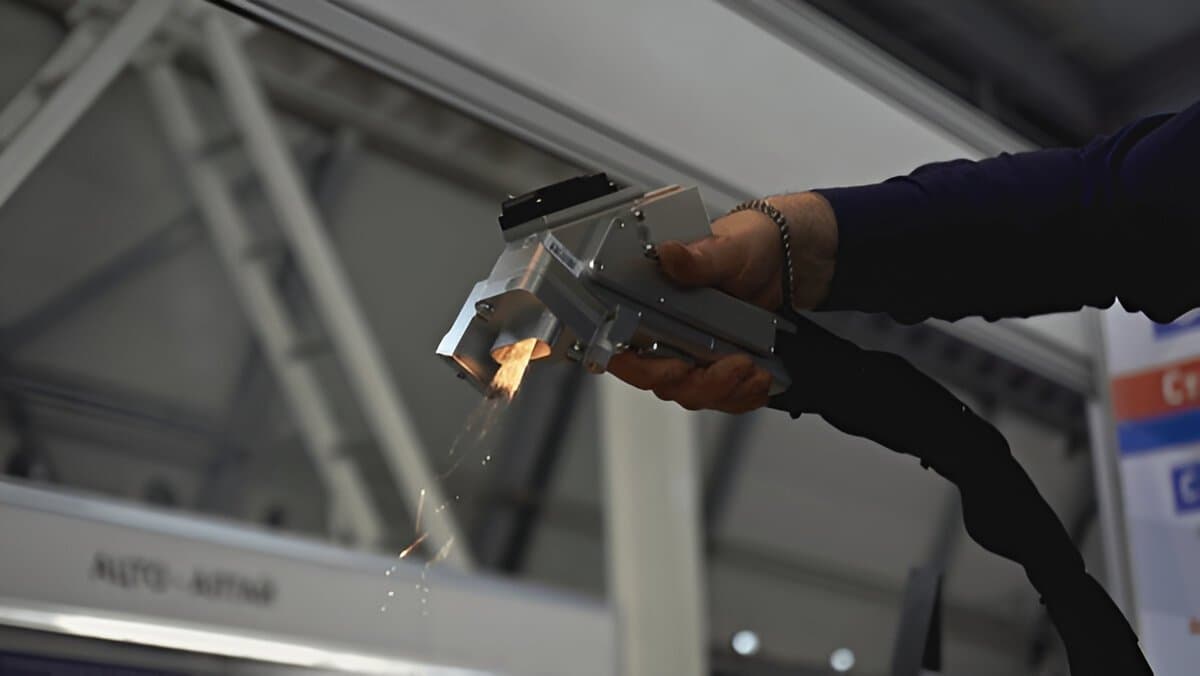
Laser cleaning is sold by the hour, not by area, and the hourly rate is stable. In Greater Vancouver, expect $180 to $260 per hour for a high-power handheld unit with the operator and power supply included, plus $350 to $600 mobilization for a Lower Mainland site.
Coverage is the variable:
- Flash rust and thin oxide on plate: 6 to 10 square metres per hour, so roughly $25 to $45 per square metre.
- Weathered structural rust, the everyday case on erected steel: 3 to 5 square metres per hour, $40 to $85 per square metre.
- Heavy pitted scale or thick multi-coat paint: 1 to 1.5 square metres per hour, which is $150 and up.
That last bracket matters. Laser slows down in direct proportion to how much material it has to vaporize, while abrasive blasting barely notices coating thickness on flat plate. Somewhere past roughly 8 to 10 mils of intact multi-layer paint across a large open surface, blasting wins on raw production and nothing about the compliance stack changes that.
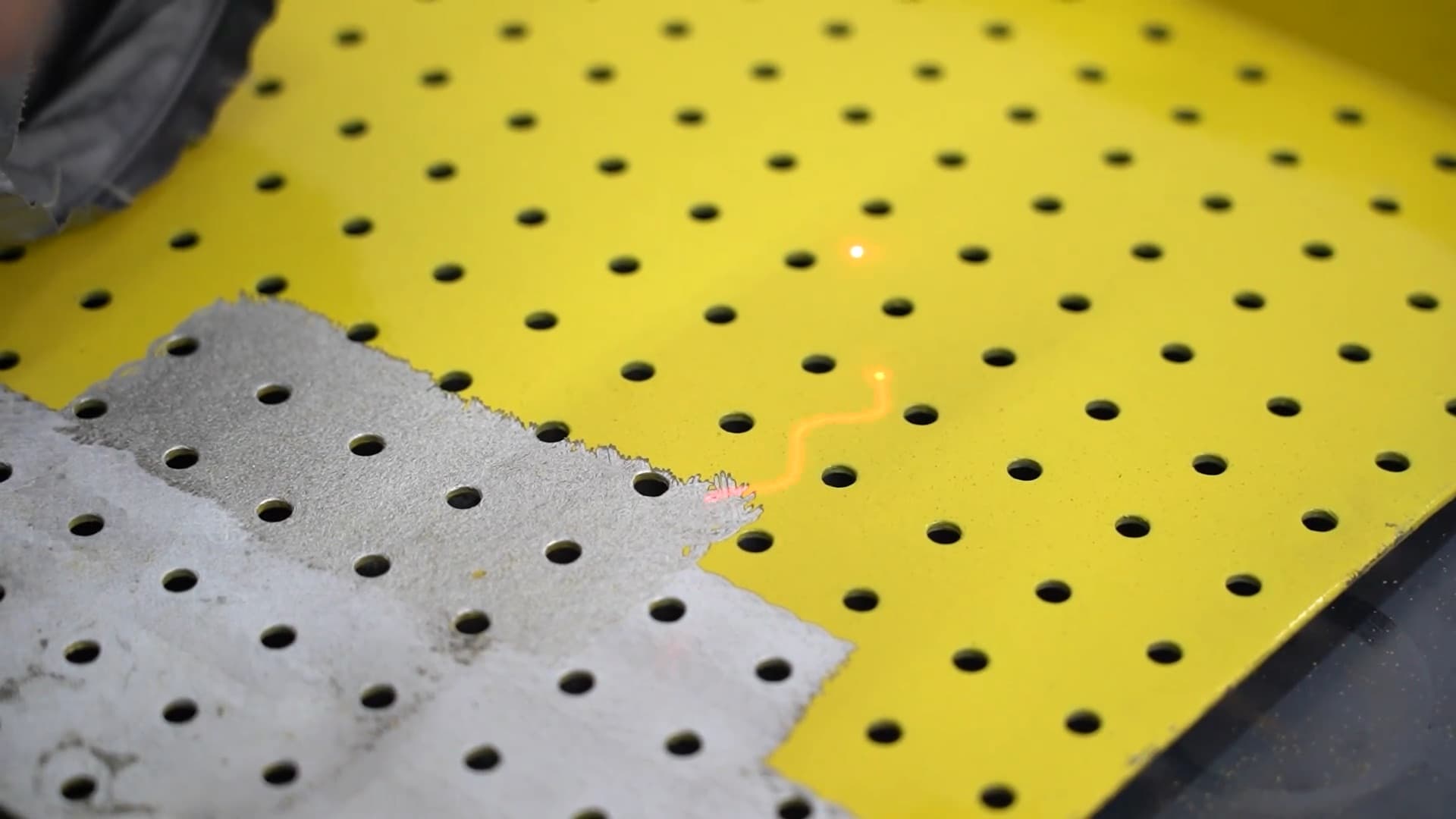
What laser does not bill is the rest of the list. No media purchase. No spent abrasive to weigh, drum, and manifest. No enclosure. Fume goes through HEPA capture at the head, so the neighbouring trades keep working and the site keeps operating. Most of our structural rust jobs invoice between $1,200 and $6,000 in total, because the scope is a defined set of members rather than a whole structure that had to be tented anyway.
Hours lost, not dollars per metre
Facility managers who only compare rates lose money in a place the quote never shows.
A food plant in Richmond needed corrosion pulled off overhead support steel above a packaging line. Blasting meant tenting the line, shutting production for the build, the work, the strip, and a full sanitation cycle afterward because abrasive dust travels. Four days minimum. The line runs at a contribution margin the plant manager put at $9,000 a shift.
Lasering the same steel over two overnight windows cost more per square metre than the blasting bid. It cost the plant nothing in production. That is the comparison that decides real projects, and it never appears on a rate sheet.
Same pattern on public infrastructure. Traffic control on a bridge or overpass component in the Lower Mainland runs $1,400 to $2,600 a day. Cut two days off the schedule and the method choice pays for itself before the first square metre gets cleaned.
What the coatings inspector signs off on
Here is where I will argue against my own service.
If the specification calls for SSPC-SP 10 near-white with a 2 to 3 mil anchor profile for a full re-coat system on smooth new plate, laser gives you the cleanliness and not the profile. Ablation removes oxide and coating; it does not cut a mechanical key into virgin steel the way angular media does. On weathered, previously pitted steel there is usually existing profile to work with, and a chloride check by the Bresle method after lasering tends to come back better than after blasting on coastal steel, since salts get vaporized rather than driven into the surface. But on new plate with a hard profile spec, the correct answer is abrasive, or laser followed by a light sweep blast.
Say that out loud when you compare quotes. A cleaning contractor who will not tell you where their method loses is guessing about the part where it wins.
Adhesion is the proof either way. A pull-off test to ASTM D4541 on a representative area, before the full re-coat, settles arguments that would otherwise run for a year.
The cost nobody quotes: how soon you are back
Salt air on the North Shore and in Delta does not care which method you chose. Coastal structural steel that was cleaned and re-coated properly gives you seven to twelve years before the next cycle. Cleaned badly, or re-coated over embedded chlorides, and you are looking at rust bleed through the topcoat inside two winters.
Divide the project cost by the years it buys. A $9,000 laser scope that holds for a decade beats a $6,000 blast that fails in three, and both of those beat the pressure-wash-and-paint approach that a property manager funds out of the operating budget every second spring. Ask any bidder what surface condition they will hand back and what they expect the coating life to be. Vague answers there predict vague answers on the invoice.
Site conditions that change the number
Laser needs power and access. A high-power handheld unit draws in the range of a 60 amp single-phase feed, and on remote structures that means a generator, which adds fuel and a small delivery charge. Working at height on a boom adds the same lift cost to either method, but abrasive crews also need a place to stage media and collect it back, which some downtown Vancouver and Mount Pleasant sites simply do not have.
Access windows matter more than either. Night work carries a premium of roughly 15 to 25 percent on labour in BC. Weekend shutdowns at a plant usually cost less in total than weekday work at a lower rate, because nothing on the production side stops.
Reading the two quotes side by side
Put them on one page and check five things.
The measured area and how it was derived. Whether containment, air monitoring, and the exposure control plan are inside the number or excluded as a provisional sum. Who owns waste characterization and disposal, named by facility, not implied. How standby, weather days, and access windows are billed. And what surface standard the finished work will be verified against, with the test method spelled out.
Most of the 10x spread in BC industrial cleaning quotes lives in those five lines. Two of them are usually blank on the cheaper bid.
The recommendation
For maintenance rust removal on erected structural steel in Greater Vancouver, on occupied or access-restricted sites, at scopes under roughly 400 square metres per mobilization, laser is the cheaper project even when it is the more expensive rate. The savings sit in waste, compliance, and hours, not in the cleaning line.
For new fabrication in a shop, for stripping thick intact coating systems off large flat plate, and for specifications that demand a fresh anchor profile, abrasive blasting still owns the work. Usually in-shop, where the containment already exists and the waste handling is a fixed overhead instead of a project cost.
Anything in between deserves a site visit rather than a phone rate.
Laser Sharks has run industrial cleaning across British Columbia for years under full WorkSafeBC compliance and commercial liability coverage, on port and shipyard steel in North Vancouver, plant equipment in Delta and Richmond, and heritage and structural work through Mount Pleasant and the rest of the city. Our crews document surface condition before and after, and we will tell you when abrasive is the right call.
Send us the drawings or a few photos of the steel and we will come back with an area take-off and a fixed number. Start with a free site assessment and quote, or read how the laser cleaning process handles rust on heavy sections. For the compliance side of the same decision, see our breakdown of structural steel rust removal in BC.